Quick answer
Sichuan food runs on two separate sensations: là (辣), chili heat, and má (麻), the citrus-numbing tingle of Sichuan peppercorn. They stack. Order at 微辣 (mild) your first night, cool your mouth with soy milk or yogurt — not water — and learn the four words 微辣 / 中辣 / 特辣 / 免辣 before you touch a hotpot menu. Dishes run CNY 15–50; hotpot lands at CNY 80–150 per person. Last verified October 11, 2026.
Why this matters in 2026
Sichuan cuisine is built on some 20-plus flavor profiles, of which the fiery 麻辣 is only the loudest — 鱼香 (sweet-sour-garlic), 怪味 (everything-at-once), and 椒麻 (peppercorn-herb) are its quieter siblings. The engine room is two ingredients: Pixian broad-bean chili paste (郫县豆瓣, fermented up to 3 years) and the green-and-red huajiao peppercorn of Hanyuan. A traveler who treats it all as "very spicy" misses the point; a traveler who orders 特辣 on night one spends the next day regretting it. The spice scale is real, negotiable, and printed on every menu — you just have to know the words.
Key facts at a glance
- The two sensations: là = capsaicin heat; má = hydroxy-α-sanshool numbness from huajiao — water fixes neither
- Spice levels on menus: 免辣 (none) / 微辣 (mild) / 中辣 (medium) / 特辣 (extra) — hotpot adds 牛油 (beef-tallow) base as the default
- Anchor dishes: mapo tofu CNY 15–28, kung pao chicken CNY 25–45, boiled fish (水煮鱼) CNY 58–98, twice-cooked pork CNY 30–48
- Hotpot: CNY 80–150 per person; the sesame-oil dip (油碟) is the official coolant
- Where: Chengdu for refined xiaocan (small dishes), Chongqing for the heavier, hotter, tallow-dipped school
Step-by-step walkthrough
Step 1: Learn the spice vocabulary
Say 微辣 (wēi là) for mild, 中辣 (zhōng là) for medium, 特辣 (tè là) if you have proven yourself, and 免辣 (miǎn là) for none. Start one notch below your confidence: Chongqing kitchens run hotter than Chengdu's at the same label.
Step 2: Understand what má feels like
Huajiao contains hydroxy-α-sanshool, which vibrates your lip receptors at a faint hum — like a mild static shock in slow motion. It is not pain; it is static. First-timers mistake it for heat and panic. It fades in 2–5 minutes.
Step 3: Order a spread, not one dish
A first Sichuan meal: one mild anchor (kung pao), one medium signature (mapo tofu), one vegetable (蒜蓉空心菜), one rice. Four dishes for two people, CNY 80–150 total. Never judge Sichuan by a single red dish.
Step 4: Deploy the coolant correctly
Water spreads capsaicin; dairy binds it; sugar buffers it. Local answers: cold soy milk (豆浆), sweet 酸梅汤, or a scoop of yogurt. At hotpot, swish each piece through the sesame-oil-garlic dip — it drops the surface temperature and coats the burn.
Step 5: Eat hotpot with the system
Yuanyang (鸳鸯) pot = half tallow-red, half mild bone broth — the beginner's standard. Cook thin slices 10–30 seconds, lotus root and potato 3–5 minutes. The red side thickens and intensifies as it reduces; the last 20 minutes of a hotpot are the hottest.
Step 6: Recover like a local
Breakfast after: a bowl of plain congee or sweet rice balls. Sichuanese households swear by 豆浆 and plain rice; pharmacies sell 藿香正气液, the folk remedy for a spicy night. Your stomach adjusts within 2–3 days of honest eating.
Common scenarios and use cases
1. First night in Chengdu
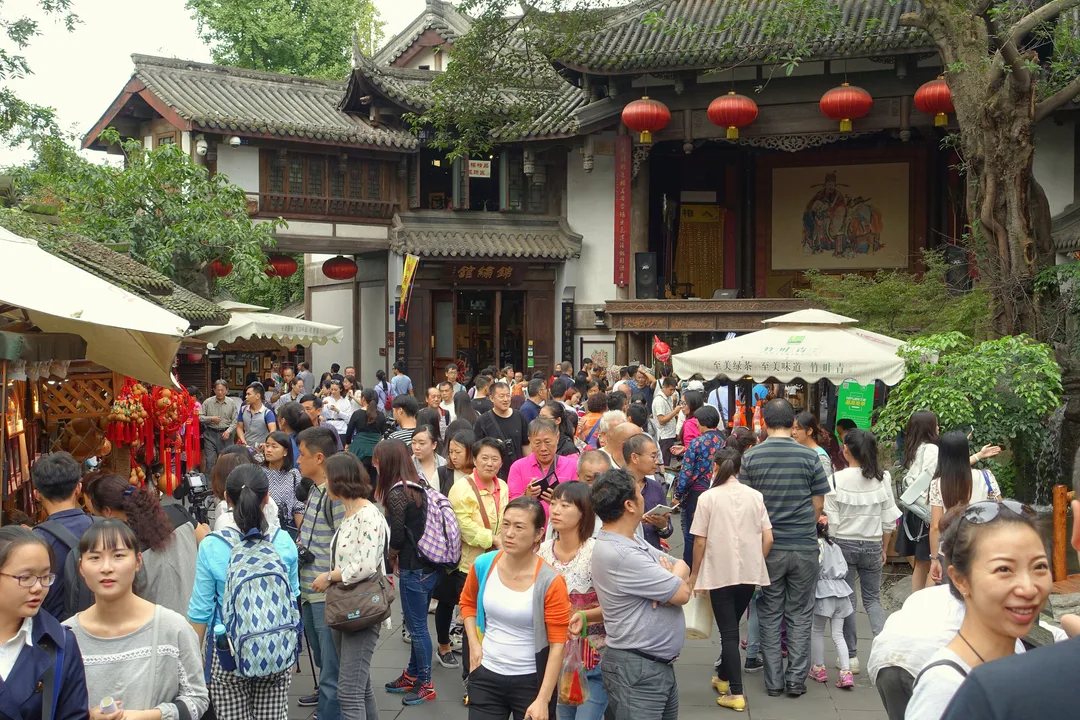
Go to a classic xiaocan street (建设路 or 奎星楼街), order kung pao chicken, mapo tofu at 微辣, and cold noodles. Total CNY 60–100 for two. Skip the tourist block at Jinli for dinner; shop there instead.
2. Chongqing hotpot pilgrimage
Book a neighborhood hotpot (not the river-view tourist ones), ask for 中辣 yuanyang, and dip everything in the 油碟. Budget CNY 100–150 per person; go before 18:30 to dodge the queue.
3. You genuinely cannot eat spice
Say 免辣 and order around it: sweet-water noodles (甜水面 aside), 白果炖鸡 chicken soup, zhong dumplings with the chili oil on the side (红油 separate), and Cantonese-style greens. Chengdu has a full non-spicy repertory.
4. Want to cook it back home
Pixian doubanjiang, whole huajiao, and sweet potato noodles all pack and travel. A 90-minute market-to-kitchen class in Chengdu (CNY 250–400) teaches mapo tofu and kung pao with the real paste.
Costs and pricing breakdown
- Mapo tofu: CNY 15–28
- Kung pao chicken: CNY 25–45
- Twice-cooked pork (回锅肉): CNY 30–48
- Boiled fish (水煮鱼), whole: CNY 58–98 by fish weight
- Cold noodles / zhong dumplings: CNY 8–18
- Hotpot: CNY 80–150 per person; yuanyang pot split adds CNY 10–20
Pitfalls to avoid
- Trusting "not spicy" by color: white-looking fish in red broth still carries full heat. Ask, don't eyeball.
- Drinking water to kill the burn: it spreads the oil-based capsaicin. Soy milk, yogurt, or a sweet drink instead.
- Ordering 特辣 to prove something: Chongqing 特辣 is a local sport. Nobody is impressed by your medical visit.
- Skipping the 油碟 at hotpot: raw sesame oil + garlic is the designed antidote, not an optional sauce.
- Eating the peppercorns themselves: huajiao berries are flavoring, not garnish — bite one and the hum becomes a shout.
Alternatives and trade-offs
- Cantonese day: after two heavy Sichuan days, one day of steamed food resets your stomach — every big city has good Cantonese.
- Mild-Sichuan houses: new chains market 微辣-only menus for tourists; consistent, slightly dull, CNY 60–90 per person.
- Hotpot at home (home-style 火锅): smaller pots, milder base, half the price of the famous houses.
- Cold-noodle strategy: Sichuan cold dishes (钵钵鸡, 凉面) deliver the flavor profile with half the burn — the connoisseur's summer route.
Local context and customs
The Sichuan basin is humid and grey for half the year; the local theory is that sweat-inducing, numbing food keeps the body in balance — "以辣祛湿", spice against damp. That is why locals eat red tallow hotpot in 35°C summer with air-conditioning at full blast. The table order matters: cold appetizers and 钵钵鸡 first, hot dishes next, rice as ballast. And the má/là pair is a chemistry lesson at every table — grandparents explain sanshool to kids with the same pride Sichuanese explain their peppercorn grades.
Verifying current information
Dish prices are stable; famous shops' queues and branches change yearly. Last verified October 11, 2026. Reconfirm through:
- Dianping (大众点评): https://www.dianping.com — live queues and per-dish prices
- Local Xiaohongshu/Douyin food accounts: this year's queue-worthy openings
- Your hotel desk: which neighborhood fits your spice level, not just your budget
- Cooking schools in Chengdu: the fastest way to ask technical questions in English
Putting it all together
Learn five words (微辣/中辣/特辣/免辣/鸳鸯), eat a three-dish spread on night one at mild, keep soy milk on the table, and let your tolerance climb one notch per day. Budget CNY 60–100 for xiaocan dinners and CNY 100–150 for hotpot. Do one Chongqing tallow hotpot before you leave — at 中辣 — and you will understand why this cuisine colonized the rest of China's appetite without ever needing to translate itself.
FAQ
Is Sichuan pepper the same as black pepper?
No. Huajiao (花椒) is a citrus-family husk that numbs; black pepper burns. They never substitute for each other in Sichuan cooking.
Can I order Sichuan food completely non-spicy?
Yes. 免辣 works in most kitchens for dishes like 鱼香 eggplant (sweet-sour) or white-cut styles; hotpot has the mild-broth half of a yuanyang pot.
Why does the numbness make my lips vibrate?
Hydroxy-α-sanshool lightly activates touch receptors — the same ones that sense vibration — so your lips literally hum at around 50 hertz. It is harmless and fades in minutes.
Is the red oil in hotpot pure chili?
It is beef tallow infused with dried chilies and huajiao — the tallow is the body, the chili is the color and bite. That is why it congeals when it cools.
What drink do locals actually pair with hotpot?
Cold soy milk, suanmeitang, or beer. Rice wine and baijiu amplify the burn; sweet cold drinks buffer it.
How do I explain an allergy to peanuts in Sichuan food?
Kung pao and cold dishes often contain peanuts. Show a translation card: "花生过敏" (huāshēng guòmǐn). Kitchens take it seriously and will reroute the dish.
Is Chongqing or Chengdu hotter?
Chongqing, consistently — heavier tallow, more dried chili by weight, less mercy. Chengdu's food is spicy with an exit ramp.
Can I take huajiao through customs home?
Dried huajiao and doubanjiang are fine for most destinations in sealed retail packs. Check your home country's customs list; the US restricts some dried seed spices.