Quick answer
A Chinese tea ceremony — gongfu cha (功夫茶) — is small pots, tiny cups, and short steeps: leaves rinsed once, steeped ten to thirty seconds, and re-infused five to eight times. The etiquette is gentle: accept cups with both hands, tap two bent fingers on the table when someone pours for you, refill others before yourself. A teahouse session costs CNY 20 in Chengdu and up to CNY 300 with a performance in Beijing. I have drunk my way through Fujian, Yunnan, Hangzhou, and Chengdu's parks since 2022 — this guide covers the ritual, the teas, and the one famous scam to avoid.
Why this matters in 2026
Tea is China's social operating system: business opens over it, grandmothers drink it from glass jars all day, and teahouses remain the default third place in cities like Chengdu. Travelers who understand the ritual get invited into it — shop tastings, farmhouse tables in Longjing village, park benches with refills. Travelers who don't often overpay for a "ceremony" aimed at tourists, or worse, accept the street invitation that ends in a padded bill. Twenty minutes of background buys you the real thing.
Key facts at a glance
- The kit: gaiwan (盖碗, lidded bowl) or Yixing clay pot (紫砂壶), a pitcher, small tasting cups — aroma cups in Fujian style
- The rinse: the first quick infusion (洗茶) is poured off to wake the leaves — it is not for drinking
- The thanks: tap two bent fingers on the table when someone pours for you (叩指礼)
- The steeps: 10–30 seconds each, lengthening slightly; good leaves give 5–8 infusions
- Starter teas: Longjing (green), Tieguanyin (Anxi oolong), Da Hong Pao (Wuyi rock oolong), Pu'er (aged, Yunnan)
Step-by-step walkthrough
Step 1: Warm everything
Hot water goes into pot, pitcher, and cups first, then out. Warm porcelain holds the aroma and the water temperature you actually want.
Step 2: Rinse the leaves
Cover the leaves with hot water, count two or three seconds, and pour it off. In nicer sessions the rinse is poured over the pot or into the aroma cups — it scents them.
Step 3: Steep short
Ten to twenty seconds for the first real infusion, adding a few seconds each round. Green teas want 80–85°C water; oolongs and pu'er take a full boil. Bitter tea almost always means water too hot or too long, not bad leaves.
Step 4: Pour high, smell first
Pour from a little height into the pitcher, then the small cups. If there are aroma cups, empty the tasting cup onto the narrow one and inhale — that long nose is half the point of Fujian-style gongfu.
Step 5: Sip small
Three sips is the classic rhythm. Slurping a little air through the tea is fine here; it is how you taste.
Step 6: Serve others, tap thanks
Refill your neighbors' cups before your own; when someone pours for you, tap two bent fingers on the table — the gesture says thanks so you don't interrupt conversation.
Common scenarios and use cases
1. A Chengdu park teahouse
People's Park's Heming Teahouse is the classic: a glass of jasmine or green tea for CNY 20–40, free hot-water refills all afternoon, newspapers, and ear-cleaners working the tables for an extra fee. This is tea as a way of spending a day, not a performance.
2. A Beijing teahouse show
Laoshe Teahouse-style venues pair the ceremony with opera or acrobatics — CNY 150–400 with the show included. Tourist-oriented but genuinely pleasant; book ahead for evening performances.
3. A Hangzhou Longjing farmhouse
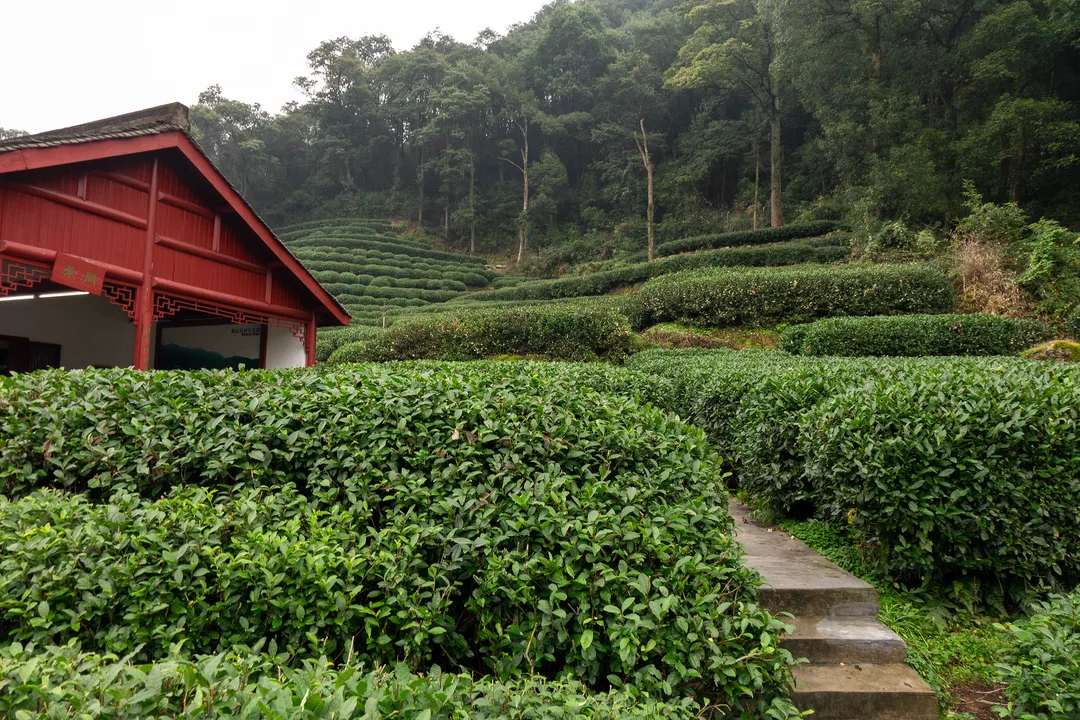
West Lake's tea villages offer tasting sessions at the growers' tables, usually free with purchase. Spring (pre-Qingming, before April 5) is the famous harvest; the village terraces are the reason this page's photo looks the way it does.
4. A tea shop tasting before buying
Free tastings are standard in proper tea shops — it is how they sell. Sit down, drink several teas, ask prices per 500g, and buy what you liked; there is no obligation.
Costs and pricing breakdown
- Chengdu park teahouse glass: CNY 20–40 with refills
- Gongfu session in a shop: free with purchase, or CNY 50–150 standalone
- Performance teahouse (Beijing): CNY 150–400 with show
- Longjing green tea (500g): CNY 100 everyday grade; CNY 1,000+ for pre-Qingming lots
- Pu'er cake (357g): CNY 60–500 for young tea; properly aged runs far higher
- Tieguanyin / Da Hong Pao (500g): CNY 150–600 drinkable grades
Pitfalls to avoid
- The friendly-stranger tea invitation near tourist sights: "practice English, then taste tea" walks end at quiet upstairs rooms with bills of CNY 1,000+. Polite rule: never follow a tea invitation from someone who approached you.
- Drinking the rinse: the first pour is washed off to wake the leaves; drinking it marks you out, harmlessly, as new.
- Boiling green tea: 80–85°C or it turns bitter. If the water just boiled, wait two minutes before pouring.
- Chugging the small cup: these are sipping volumes; three sips per cup keeps the sequence of flavors.
- Buying "20-year-aged pu'er" at street prices: real aged pu'er is expensive and authenticated. From street carts it is moldy or dyed — buy aged tea from established shops only.
Alternatives and trade-offs
- Modern tea counters: Heytea (喜茶) and Mixue (蜜雪冰城) show what Chinese tea culture looks like in 2026 — cheese-foam jasmine and CNY 6 lemon tea, queues out the door.
- The National Tea Museum, Hangzhou: free entry, calm grounds, and the context that makes village tastings meaningful.
- Supermarket brands for gifts: ten yuan tins of jasmine are what many households actually drink; honest and welcome gifts.
- Skip the ceremony, keep the habit: hotels give you a gaiwan and hot water in every room — travelers who brew in-room save the teahouse budget for one good session.
Local context and customs
Every office keeps a glass jar of leaves topped up all day; every visit starts with tea whether you want it or not — accept it, even a few sips. In Fujian and Chaozhou, gongfu cha is a daily family ritual with real choreography. When a shopkeeper pours for you, stay and talk; the tea is the conversation's clock. And the finger-tap: the story goes that a Qianlong-era emperor traveling incognito poured for his companions, who could not kneel and instead tapped bent fingers on the table — a kneeling substitute you can still use today.
Verifying current information
Teahouse prices and harvest timing drift; confirm the latest through:
- Dianping (大众点评): teahouse ratings, current prices, and booking
- Hangzhou West Lake tea village notices: harvest dates and official tasting houses
- The National Tea Museum (Hangzhou): exhibitions and public sessions
- Established tea brands' shops: baseline price references before you bargain anywhere
- Your teahouse host: honest ones volunteer the origin and grade of every brew
Putting it all together
Book one real session — Chengdu's park teahouse or a Longjing farmhouse table — and let the ritual teach itself: rinse, short steeps, finger-tap thanks. Buy tea where you tasted it, skip the street invitations entirely, and bring home vacuum-packed leaves that will survive the suitcase. In my experience one unhurried afternoon with a gaiwan explains Chinese tea better than any museum.
FAQ
What is gongfu cha?
The Chinese small-pot brewing method: many short infusions of a high leaf-to-water ratio, drunk from small cups. "Gongfu" means skill — it is tea made with attention.
Do I pour for others or myself?
Others first, always; refill your own last. When poured for, tap two bent fingers on the table as thanks.
What does the finger tap mean?
Thanks — a light kneel of the fingers. Use it whenever someone refills your cup; nobody will explain it, but everyone notices it.
Which tea should a beginner try?
Longjing for green, Tieguanyin for oolong, a young pu'er for something earthy. Three teas in one tasting session will map your tastes fast.
How much does a teahouse cost?
CNY 20–40 in Chengdu's parks, CNY 50–150 for a gongfu session, CNY 150–400 for dinner-show venues in Beijing.
Is the street "tea tasting" invitation a scam?
The ones that start with a friendly stranger approaching you usually are — they end in rooms with padded bills. Decline politely and keep walking; drink at established teahouses instead.
Can I take tea home?
Yes — vacuum-packed leaves fly fine and make the best souvenir per kilo. Buy where you tasted; note the grade and price per 500g.