Quick answer
Tipping at restaurants in China is straightforward in 2026 once you know the rule: it is not expected anywhere, and the bill works differently from the West. This guide covers when a tip is welcome, where a service charge already covers it, and the dining etiquette around paying. I have eaten my way through 11 Chinese provinces since 2022 and updated this guide in August 2026.
Why this matters in 2026
Chinese cuisine varies dramatically by region: Sichuan food is numbing-spicy, Cantonese is lightly steamed, Beijing is hearty and wheat-based, Shanghai is sweet. Foreign travelers who order the same dish they had in their home country are often surprised by how different regional Chinese food actually is. Knowing what to order, the dining customs, and the proper way to use chopsticks makes the difference between a memorable meal and an awkward one.
Key facts at a glance
- Regional cuisines (8 traditions): Sichuan, Cantonese, Shandong, Jiangsu, Zhejiang, Fujian, Hunan, Anhui
- Average meal cost (mid-range restaurant): CNY 80–200 per person in tier-1 cities
- Tipping: not customary; some upscale restaurants add a 10–15% service charge
- Common allergens: peanuts, soybeans, sesame, gluten, shellfish, eggs
- Vegetarian: most restaurants have vegetarian sections; "素" (sù) means vegetarian on menus
Step-by-step walkthrough
Step 1: Pick the right region for your taste
Spicy: Sichuan (成都/重庆) and Hunan (长沙). Light: Cantonese (广州/香港) and Jiangsu (苏州/扬州). Sweet: Shanghai and Zhejiang.
Step 2: Find a recommended restaurant
Use the Dianping (大众点评) app, the Chinese equivalent of Yelp. Most menus have photo translations.
Step 3: Order a mix of dishes
A balanced Chinese meal includes 1 meat, 1 vegetable, 1 starch, and 1 soup. For 2 people, order 3–4 dishes.
Step 4: Learn the table customs
The host sits facing the door. The first dish is presented to the elder or guest. Try a small portion of everything before ordering more.
Step 5: Master the chopsticks
Hold the bottom chopstick still, move the top one. Never stick them upright in rice (it resembles funeral incense).
Step 6: Pay and tip
Scan the merchant's QR code with Alipay or WeChat Pay. Tipping is not expected; a 10% service charge may already be on the bill.
Common scenarios and use cases
1. First-time visitor to Beijing
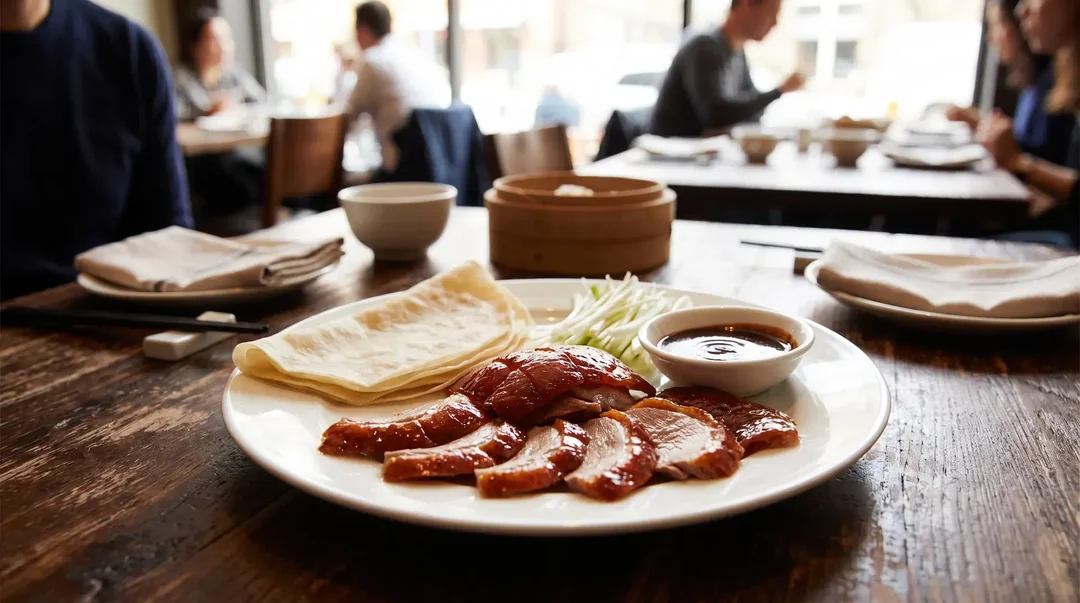
Try Peking duck (北京烤鸭) at Quanjude or Da Dong. Order a half duck (around CNY 250), sliced tableside, with hoisin sauce, scallions, and thin pancakes.
2. Adventurous eater in Chengdu
Try the Sichuan hotpot at Shujiuxiang. Choose yuanyang (鸳鸯) pot for half spicy / half mild. Dip cooked ingredients in sesame oil to balance the heat.
3. Vegetarian in Shanghai
Try Buddha Jumps Over the Wall (vegetarian version) at a Buddhist restaurant like Jesse Restaurant. Or order multiple vegetable dishes at a Cantonese restaurant.
4. Family with children
Pick a Cantonese restaurant for the mildest flavors. Order sweet and sour pork, fried rice, and steamed fish.
Costs and pricing breakdown
- Street food breakfast (jianbing, baozi): CNY 8–20
- Casual lunch (noodle or rice bowl): CNY 30–60
- Mid-range dinner (3 dishes + rice): CNY 150–300 for 2
- Upscale restaurant: CNY 400–1000 per person
- Hotpot (Sichuan, all-you-can-eat): CNY 100–200 per person
- Service charge (upscale): 10–15%, sometimes optional
Pitfalls to avoid
- Ordering too spicy by accident: ask "不辣" (bù là, "not spicy") if you are unsure; many Sichuan dishes are extremely hot.
- Tipping when not necessary: it can confuse the staff; a polite "thank you" is enough.
- Using the chopsticks incorrectly: stabbing food is considered impolite; lift it instead.
- Drinking the soup with the spoon left in the bowl: place the spoon on the plate or beside the bowl, never standing in the soup.
- Leaving chopsticks upright in rice: resembles funeral incense; rest them on the chopstick rest or across the bowl edge.
Alternatives and trade-offs
- International chains: Starbucks, McDonald's, KFC, Pizza Hut are in every tier-1 city; useful as a fallback for picky eaters.
- Hotel buffet breakfast: usually CNY 100–200; a good way to ease into Chinese food.
- Food delivery via Meituan or Eleme: install the app, set your hotel address, browse English-friendly menus.
- Cooking class: many cities offer 3-hour Chinese cooking classes for CNY 250–500 per person.
Local context and customs
Chinese meals are communal: dishes are placed in the center and shared. Use the serving chopsticks (公筷) if provided. Toasting (干杯, gānbēi) is common at business dinners — when someone toasts you, stand up, clink glasses lower than theirs as a sign of respect, and drink. Tea is poured for the table; refill your neighbors' cups before your own. Loud talking and laughing are normal and not considered rude. Slurping noodles is acceptable and even a sign of enjoyment.
Verifying current information
Restaurant recommendations and hours change frequently. Confirm the latest information through:
- Dianping (大众点评): https://www.dianping.com
- Trip.com restaurants: https://www.trip.com/restaurants
- SmartShanghai / SmartBeijing: English-language local food guides
- Reddit r/chinesefood: real user reviews and recommendations
- Your hotel concierge: most will book restaurants for you and note dietary needs
Putting it all together
In my experience, the two most useful tips for foreign travelers are: (1) start mild — Cantonese or Shanghai-style food first, then work up to Sichuan and Hunan; (2) use the Dianping app to find highly-rated places near you. We recommend booking 1 day in advance for upscale restaurants, especially on weekends. Carry a translation app on your phone for menu items; the Baidu Translate app's camera mode translates Chinese menus in real time.
FAQ
Is Chinese food safe for foreign travelers?
Yes. Eat at busy restaurants, avoid pre-cut fruit from street vendors, and stick to bottled water. Most travelers experience no stomach issues.
Can I find vegetarian food?
Yes. Look for "素" on the menu or search "素食" (sùshí, vegetarian food) on Dianping. Buddhist restaurants are fully vegetarian.
What if I have food allergies?
Carry a translation card listing your allergies in Chinese. Most restaurants can accommodate peanut, gluten, and dairy allergies with advance notice.
Is the meat halal?
Muslim-friendly restaurants display "清真" (qīngzhēn). Look for the green crescent symbol on storefronts, especially in Beijing, Xi'an, and Ningxia.
Can I use my hands to eat?
Generally no, except for specific dishes like Peking duck pancakes. Use chopsticks or the spoon provided.
What is the red water in the hotpot?
Spicy Sichuan hotpot base — Sichuan peppercorns (花椒), dried chilies, beef tallow, and 20+ spices. The numbing sensation is the Sichuan peppercorn, not the chili.
Can I bring food back to my hotel?
Yes, leftovers are common. Get a 打包 (dǎbāo, "takeaway") container from the restaurant — usually free.
What is the proper way to thank the chef?
Say "好吃" (hǎochī, "delicious") or "谢谢老板" (xièxie lǎobǎn, "thank you, boss") to the server. The chef will appreciate it.