Quick answer
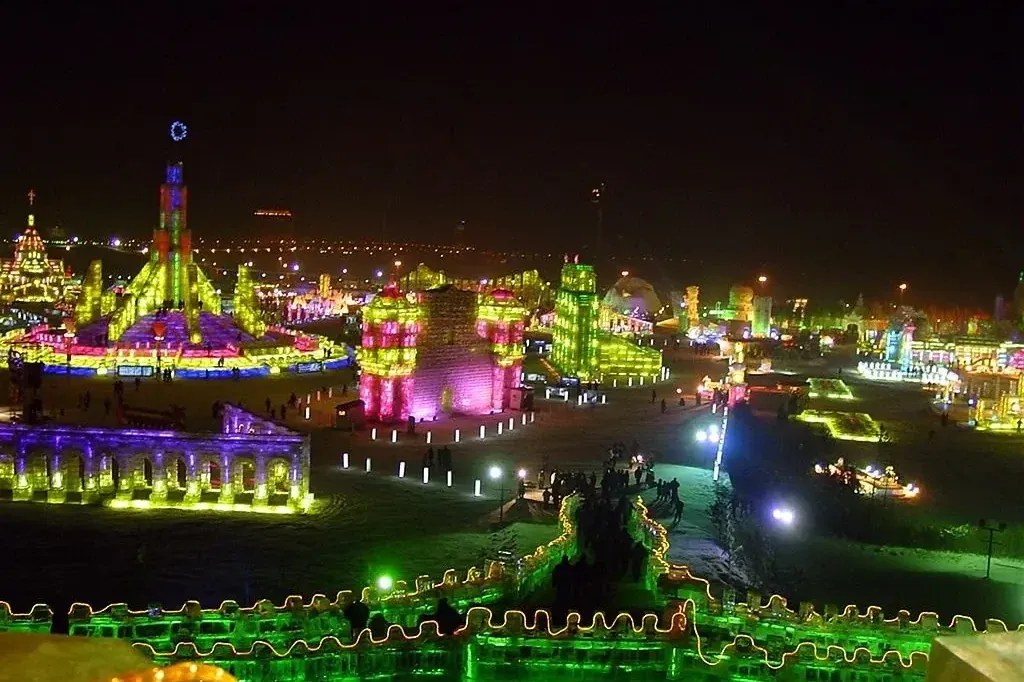
Harbin in festival season is a city built out of winter itself: the Harbin International Ice and Snow Festival opens officially on January 5, Harbin Ice and Snow World lights up its full-size ice architecture from late December (typically around December 20) into February, and January temperatures of -15°C to -25°C — colder at night — are part of the ticket. The working plan for a foreign visitor is 2–3 days: one evening at Ice and Snow World (budget 3–4 hours and around CNY 300 admission), one day along Central Street (中央大街), Saint Sophia Cathedral, and the frozen Songhua River, and an optional half-day at Sun Island's Snow Expo across the river. Dress for -25°C, book ice-world tickets in advance, and go in January for the festival at full throttle.
Why this matters in 2026
Ice and Snow World has become one of China's headline winter attractions, which changes the logistics: weekends and Chinese New Year (late January–mid February some years) bring the heaviest crowds, and admission has hovered around CNY 300 with timed entry. The festival's appeal is time-boxed — the ice stands hold until late February or early March, then melt — so a wrong-week trip is a missed trip. Meanwhile the city itself repays attention: Harbin's Russian-built core on Central Street, the cathedral square, and riverside ice activities are free or cheap, and the food (guobaorou sweet-sour pork, dumplings, roadside frozen-pear desserts) is reason enough to extend a stay.
Key facts at a glance
- Season: Ice and Snow World typically runs late December (around Dec 20) through February; the festival officially opens January 5
- Temperature: January days -15°C to -20°C, nights -20°C to -25°C and below — plan clothing for -30°C wind chill
- Ticket: Ice and Snow World admission around CNY 300 (timed entry; buy ahead on official channels or Trip.com)
- Getting there: about 5 hours by high-speed rail from Beijing; 2 hours from Changchun; flights to Taiping International Airport
- Stay: Central Street/Daoli district puts you inside the walking core; 3-star hotels CNY 350–600
- Pay: QR payments dominate; carry CNY 200–500 cash for street snacks
Step-by-step walkthrough
Step 1: Pick the week
Early-to-mid January is the sweet spot: full ice architecture, festival programming, and thinner crowds than Chinese New Year week. Late December means construction scaffolding on later sculptures; late February means melting edges.
Step 2: Book the ice-world ticket
Buy timed-entry tickets in advance through the official WeChat channel or Trip.com. Evening entry (after ~15:30–16:00) is the point: the illuminated palaces need darkness, and 3–4 hours inside is standard.
Step 3: Plan the cold kit
Layered system: thermal base, fleece mid-layer, down coat with hood, double socks, insulated boots with grip, balaclava or scarf, touchscreen gloves plus backup mittens, heat packs (暖宝宝) for hands and phone. The phone dies fast below -20°C — keep it against your body and carry a power bank.
Step 4: Structure the day for warmth
Indoor-outdoor alternation: museums, cafés, and malls every 2–3 hours. Save the open-air ice world for the evening and let daylight hours cover Central Street and indoor sights.
Step 5: Walk the core
Central Street's cobblestones and Russian façades run about 1.4 km to Flood Control Memorial Tower at the river; Saint Sophia Cathedral's square is a 10-minute detour; the frozen Songhua River hosts ice slides, sledges, and ice-bike rentals.
Step 6: Eat the city
Guobaorou (sweet-sour crispy pork), dumplings, Northeast stews, and the street ritual of frozen pears and frozen persimmons thawed in cold water. Meals run CNY 40–100 per person away from the tourist strip.
Common scenarios and use cases
1. The 3-day classic
Day 1: arrive, Central Street, cathedral, river ice at dusk. Day 2: Sun Island Snow Expo by day, Ice and Snow World by night. Day 3: local markets, an indoor museum, guobaorou, depart.
2. The photographer
Two evening sessions at Ice and Snow World (timed entry allows one visit — buy two days if needed), dawn blue-hour on the river, and the cathedral square lit at night.
3. Family with children
Ice slides and sledges on the frozen river outscale any amusement park; budget indoor breaks every 2 hours and rent snowsuits locally instead of packing bulk.
4. Beijing add-on
A weekend extension: Friday evening HSR north, Saturday full festival day, Sunday river and return. Trains take about 5 hours each way.
Costs and pricing breakdown
- Ice and Snow World: around CNY 300 admission
- Sun Island Snow Expo: roughly CNY 100–240 by season
- River ice activities: CNY 30–100 per ride/activity
- 3-star hotel: CNY 350–600 per night (festival weekends price up)
- Meals: CNY 40–100 per person; street snacks CNY 5–20
- HSR Beijing–Harbin: roughly CNY 300–550 second class by train type
Pitfalls to avoid
- Underdressing for the real number: weather apps show -18°C; wind on the river makes it feel -28°C. Cover every gap — exposed skin stings within minutes.
- Arriving before the ice is done: pre–December 20 trips find construction zones, not palaces; check the opening announcement each year.
- Chinese New Year week: peak domestic travel, peak prices, peak queues; go before or after unless you love crowds.
- Dead-phone photography plans: batteries drain in under an hour at -20°C; a chest pocket and a power bank are the difference between photos and regret.
- Slipping on ice: polished cobblestones on Central Street are skating rinks after snow; grippy boots and penguin steps — not fashion sneakers — are the correct gear.
Alternatives and trade-offs
- Ice and Snow World only (1 evening): the headline act; skip the rest if time is short.
- Sun Island Snow Expo: snow sculpture focus — pairs with, but doesn't replace, the ice world at night.
- VOLGDA-style indoor ice attractions and warm museums: your scheduled rewarm stops; build them in.
- Yabuli ski resort (3 hours away): add a ski day if winter sports outrank city sights.
- Skip winter entirely: Harbin is a real city in summer with Russian architecture and beer culture — but then it isn't the ice festival.
Local context and customs
Harbiners treat -20°C as Tuesday: they stroll Central Street eating a popsicle brand founded in 1906 (Madieer/Modern), and ice-fishing holes dot the river on weekends. The local rhythm is warm interiors, cold transits — malls and restaurants keep coat checks and strong heating. Vendors on the river are blunt about safety: stay on marked ice areas. And when a local tells you the frozen pear is "just a pear," the correct response is to eat the whole thing.
Verifying current information
Opening dates, ticket prices, and event schedules shift every season. Confirm via the festival's official WeChat announcements, Trip.com attraction listings (https://www.trip.com/attractions), your hotel concierge, and recent traveler reports on Reddit r/China before booking flights. This page was last verified 2026-10-11.
Putting it all together
Harbin's festival is a two-evening, one-full-day affair inside a 3-day trip: book Ice and Snow World timed tickets for a night after ~15:30, spend daylight on Central Street, the cathedral, and the frozen river, add Sun Island if snow sculpture matters to you, and dress for -25°C with heat packs and a body-warmed phone. Go in early-to-mid January, avoid Chinese New Year week, budget around CNY 300 for the headline ticket, and eat the guobaorou. Winter is the product here — buy the whole thing.
FAQ
When does the Harbin Ice Festival open?
The festival officially opens January 5; Ice and Snow World typically opens around December 20 with some sculptures still under construction, and runs through February.
How cold does it get?
January days run -15°C to -20°C and nights -20°C to -25°C or below; wind chill on the river can approach -30°C. Plan clothing accordingly.
How much are tickets?
Ice and Snow World admission is around CNY 300 with timed entry; Sun Island's Snow Expo runs roughly CNY 100–240 by season.
How many days do I need?
2–3 days: one evening for the ice world, one day for Central Street, cathedral, and river, optional half-day at Sun Island.
How do I get to Harbin?
About 5 hours by high-speed rail from Beijing, 2 from Changchun, or fly into Taiping International Airport.
Can I use foreign cards and mobile payments?
Alipay/WeChat Pay with a linked foreign card work everywhere QR is shown; carry CNY 200–500 for street snacks and small river activities.
Is it safe to walk on the frozen Songhua River?
Stay in the marked, busy activity zones near the riverfront; vendors operate slides and sledges there. Avoid thin-ice areas away from the crowd.
What should I eat?
Guobaorou (sweet-sour pork), dumplings, Northeast stews, Madieer popsicles in the street, and frozen pears thawed in cold water.