
Mianyang at a Glance
Mianyang is Sichuan's second city and its least advertised one — the "Science City", where the country's nuclear-research institutes sit behind quiet gates, and where Tang poetry has a hometown forty minutes north. Give it two days, three with Jiangyou: day one covers the riverfront — the 99-metre Yuewang Tower, first raised by a Tang prince who governed here around 656-660, with Du Fu among the poets who later wrote about it — plus Fule Hill, where Liu Bei and Liu Zhang met in 211; day two goes indoors, to the science museum built around the "Two Bombs, One Satellite" programme and the city museum with its nearly 2-metre Eastern Han bronze money tree; day three rides forty minutes north to Qinglian town, where Li Bai (701-762) grew up, and the wild magnolia valleys of the hills go pink for a few weeks in spring.
The numbers: a mid-range day runs 500-1000 CNY per person including a 300-600 CNY hotel; the HSR puts Chengdu about 40-50 minutes east of you; and the science museum asks nothing but your passport.
Why Mianyang
Mianyang works because it does not perform. The city built its wealth on defence electronics and nuclear physics, not tourism, and the result is an honest river city — wide Fu River, lit bridges, a nightlife street with more local than tourist queues — whose museums are genuinely world-class on their own topics. You can stand under a tower a Tang governor built, read the physicist's story in the morning, and eat Sichuan street food at night for a fraction of Chengdu's prices.
The trade-offs: the headline sights are intellectual rather than photogenic, English signage is thin outside the two museums, and the best spring sight — the wild magnolia valleys of the hills — is seasonal and road-dependent. What you get is the easiest big-city base in northern Sichuan, with Li Bai's front door an easy morning away.
Yuewang Tower and the Riverfront
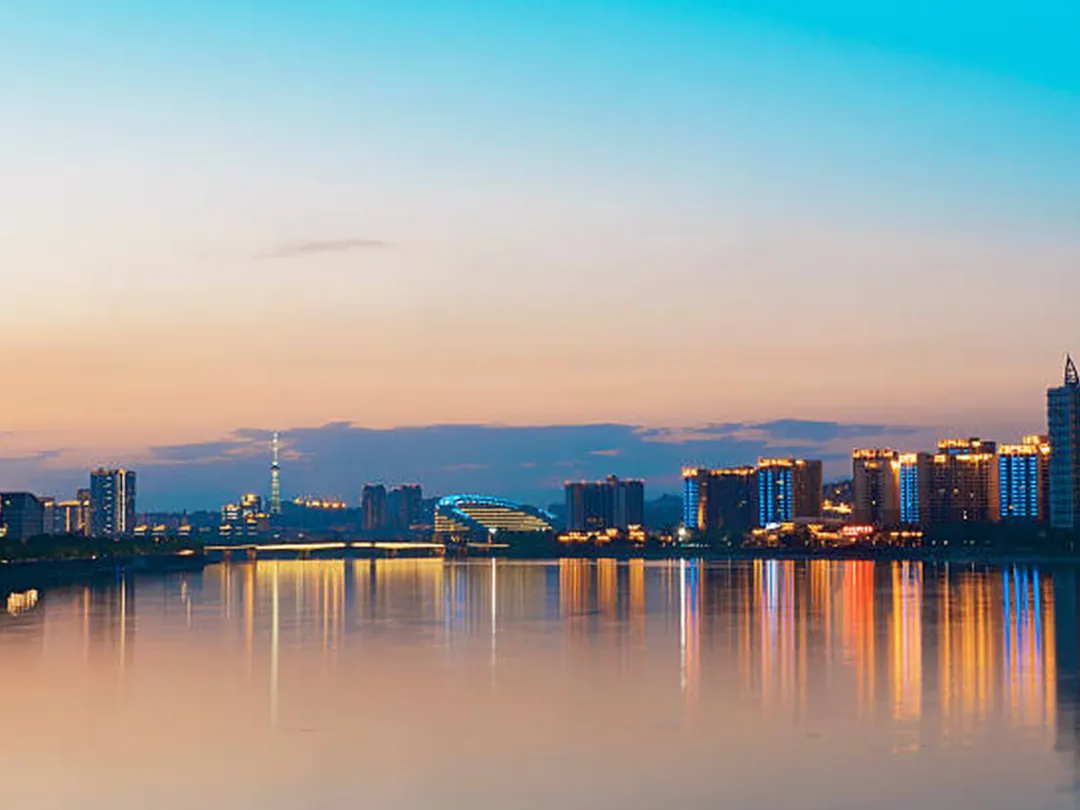
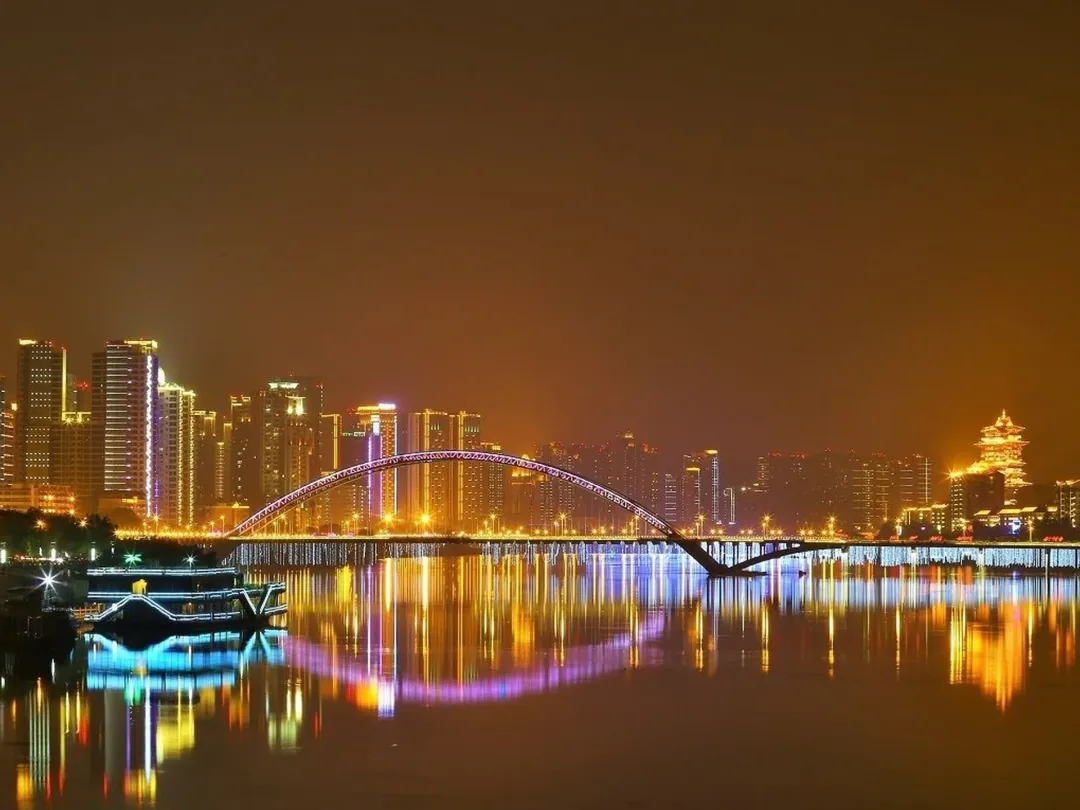
The tower in the city's memory is Yuewang Tower (越王楼), the "Tower of the Prince of Yue": Li Zhen, a son of the Tang founder, governed Mianyang as prefect around 656-660 and raised the first tower on this spot; poets queued to write about it — Du Fu, Lu You, and a hundred others across the centuries — and the present rebuild stands 99 metres over the Fu River. Climb at dusk for the river lights, then walk the embankment: the arc bridge in the night photo below is the classic frame.
Fule Hill (富乐山) closes the day: the park where, in 211, Liu Bei and Liu Zhang feasted before their alliance soured — "herein lies happiness" gave the hill its name. Lotus ponds, pavilions and a slow climb; an hour or two, entry low.
The Science City Museums
Mianyang hosts China's nuclear-research institutes, and the Mianyang Science and Technology Museum builds its halls around the "Two Bombs, One Satellite" programme — the atomic bomb, the hydrogen bomb and the satellite that made the country a space power. Models, original instruments and the biographies of the physicists who worked in the mountains nearby; captions run thin on English, so read the bilingual sections or bring a translation app. The city museum next tier keeps the region's older genius: an Eastern Han bronze "money tree" nearly 2 metres tall, cast some 1,800 years ago, plus pottery figurines and river valley tombs. Both museums sit near the centre, need passports for free or low entry, and close Mondays in most seasons.
The Night Market and the Street Food
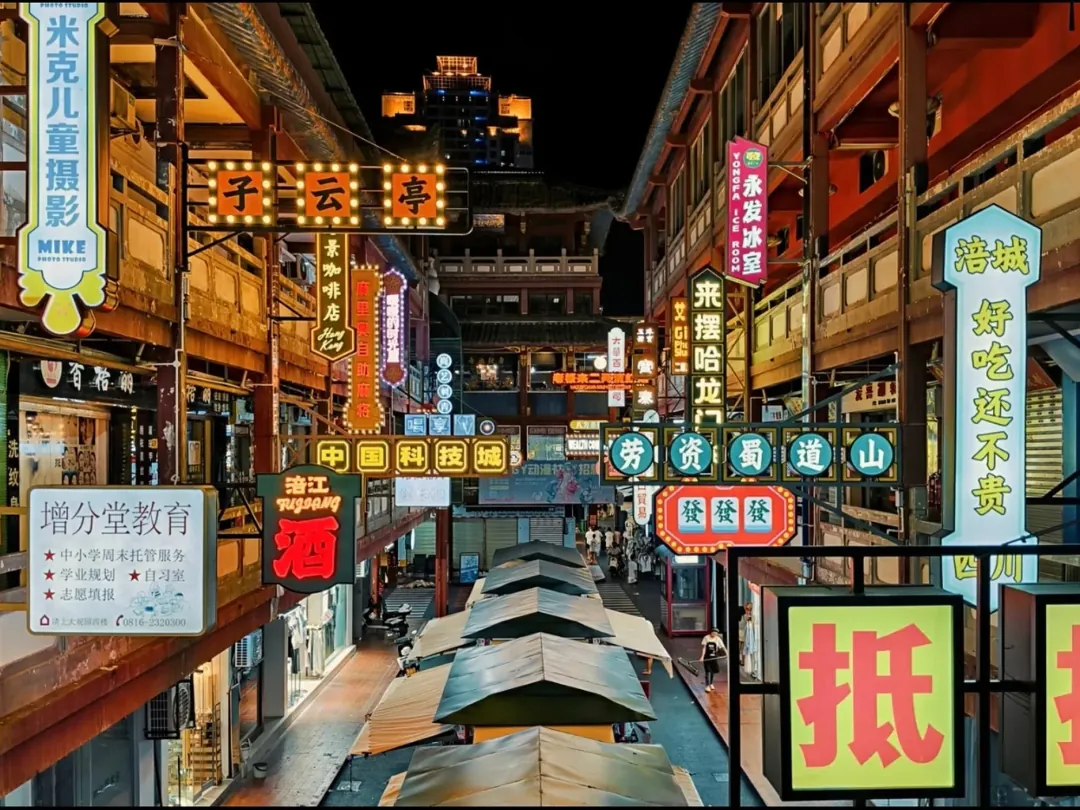
The photo above is the evening Mianyang actually lives in: a night-market lane of stacked signboards — the lantern characters read Ziyun Pavilion and "China Science City" — griddle smoke, and queues that are entirely local. Work the counters: cold noodles, rice dumplings in brown sugar, skewers, and the Sichuan staples at river-town prices.
Li Bai's Hometown: Qinglian, Forty Minutes North
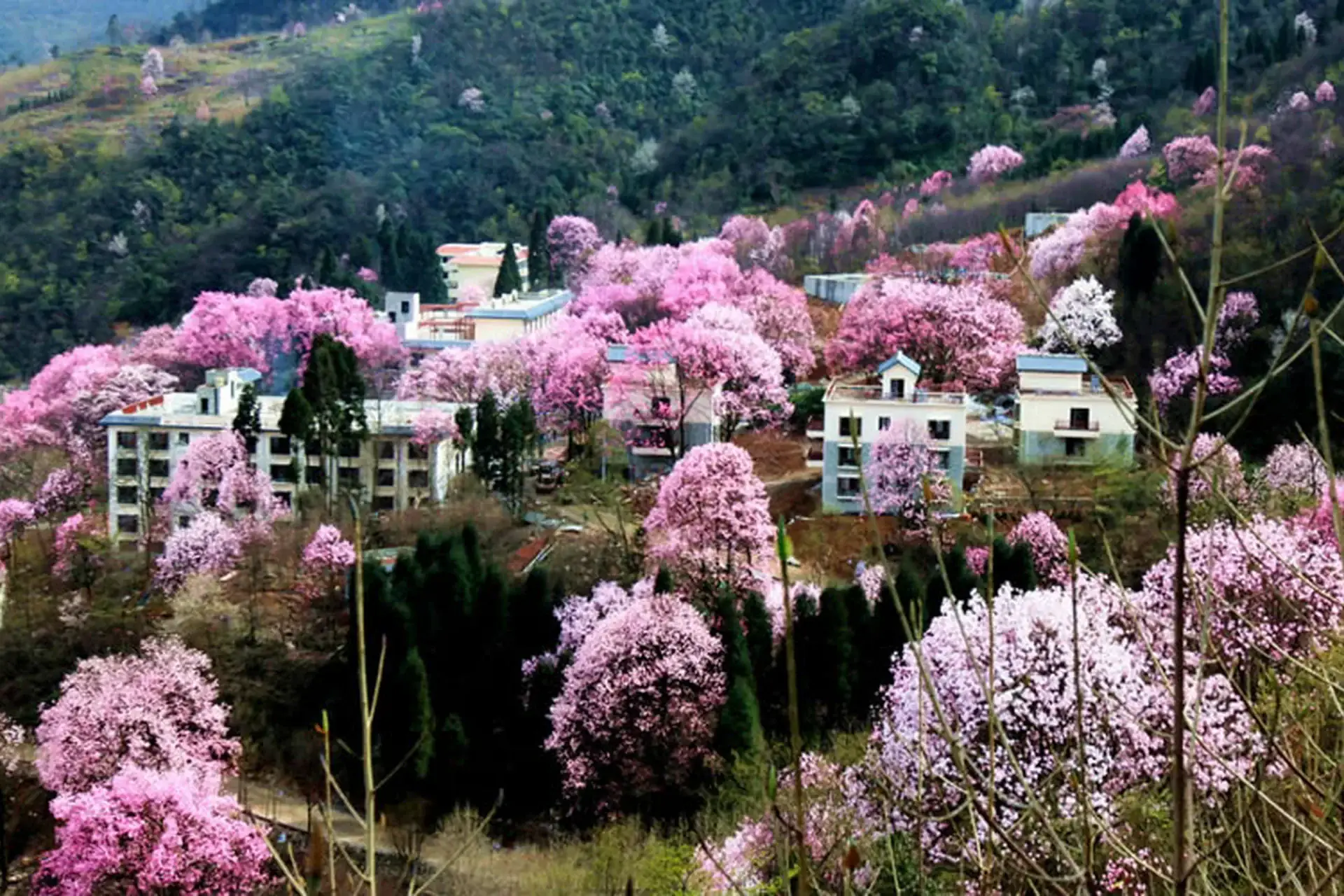
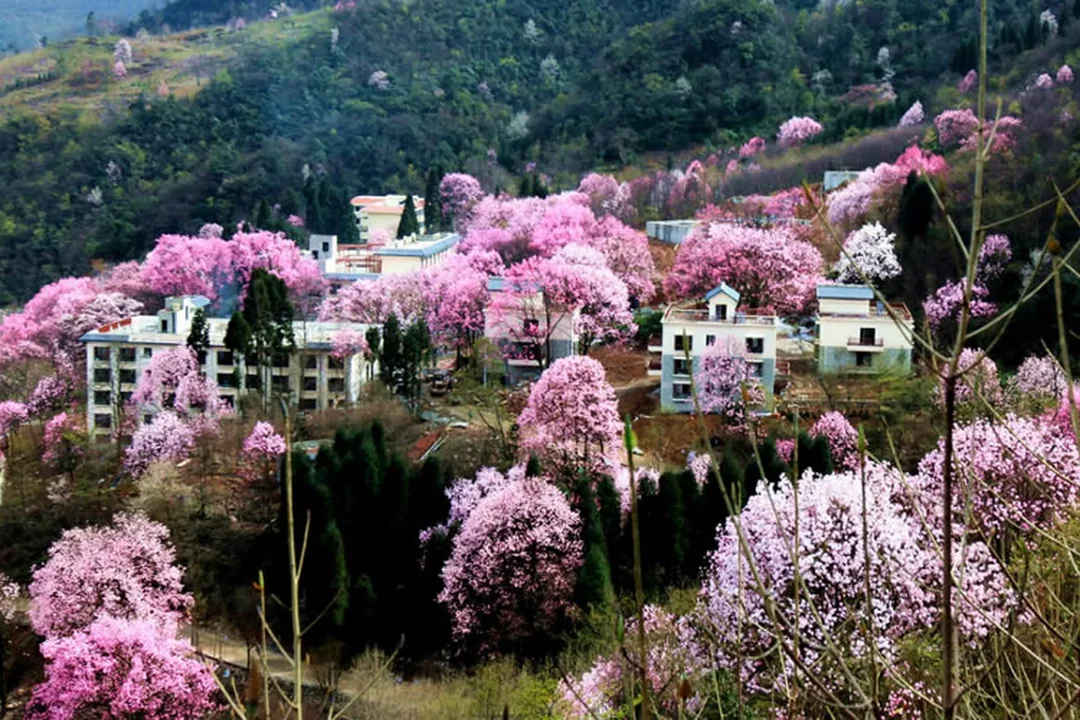
Jiangyou, north of the city, is where Li Bai (701-762) — the wildest talent of Tang poetry — spent his boyhood. Qinglian town keeps the memorial halls, the Longxi Yuan residence site and the Taibai shrines; the exhibits walk you from the boy reciting to the exile writing moon poems on the Yangtze. Pair it in spring with the magnolia country: the hill villages around the bloom valleys turn pink for a few weeks around March, as in the valley photo above, and the blossom season is the best reason to keep a car for a day.
What to Eat in Mianyang
The local bowl is Mianyang rice noodles (mianyang mifen) — thin rice noodles in red broth, the city's breakfast identity, 8-15 CNY. Beyond it:
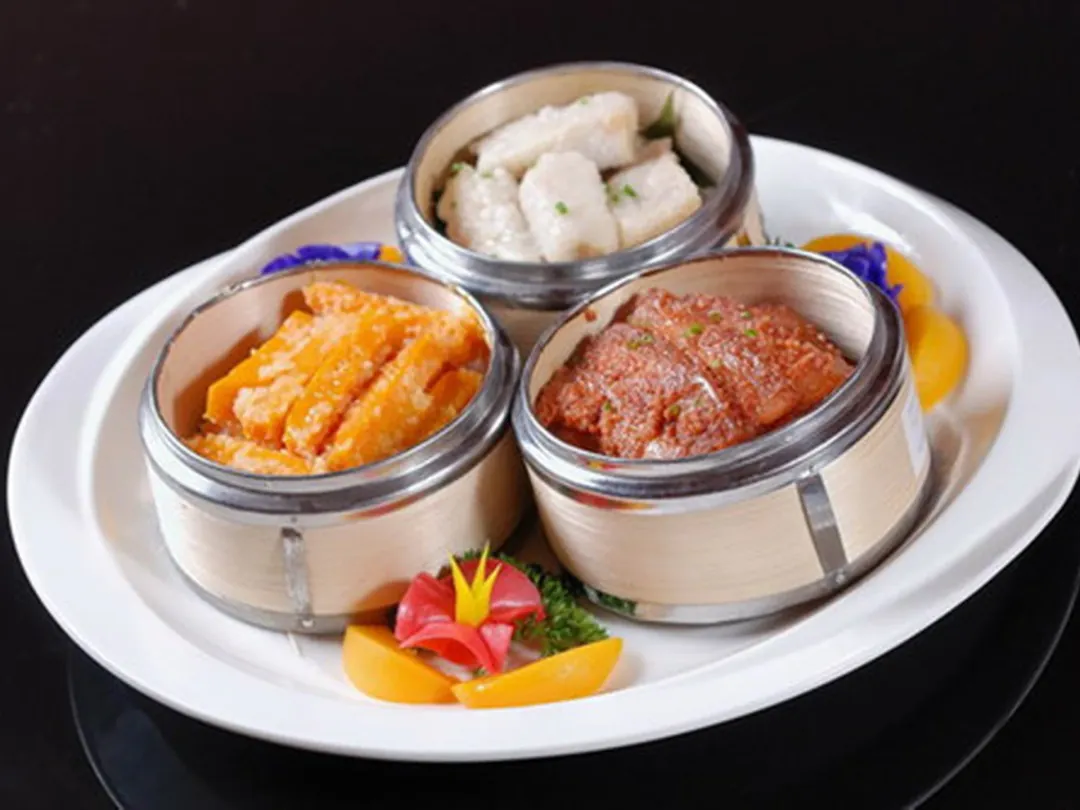
- Steamed dishes — rice-flour beef and pumpkin steamed in bamboo, the Sichuan orthodoxy.
- Cold noodles and skewers — the night-market default, 1-3 CNY a stick.
- River fish — the Fu River's contribution to the evening table.
Count 60-120 CNY a day for eating well; the noodle breakfast is the cheapest good meal in northern Sichuan.
A Three-Day Plan
- Day 1 — the tower and the hill. Yuewang Tower at dusk, the riverfront after dark; Fule Hill if you arrive early.
- Day 2 — the museums. Science and technology museum in the morning, city museum and the money tree after lunch, night-market lane for dinner.
- Day 3 — Li Bai's valley. Qinglian town and the Li Bai memorial halls in Jiangyou; magnolia valleys in March-April; back for the evening train.
The hour-by-hour versions live in our 3-day Mianyang trip builder, and the 5-day and 7-day routes fold in Chengdu and the northern Sichuan loop.
Getting There: HSR, Airport and Local Transport
Mianyang sits on the Xi'an–Chengdu HSR line: Chengdu is about 40-50 minutes, Xi'an about 3 hours. The city's Nanjiao airport covers the main provincial routes. Inside the city, buses and taxis are cheap; the museums, tower and hill cluster within short rides, and Jiangyou needs a half-day by car or train.
| Route | Time | Notes |
|---|---|---|
| Chengdu → Mianyang (HSR) | about 40-50 min | Xi'an–Chengdu line |
| Xi'an → Mianyang (HSR) | about 3 h | same line, northbound |
| Mianyang station → city centre | 10-15 min by taxi | short hop |
| City → science museum | 10 min by taxi | passport entry |
| City → Yuewang Tower | 10 min by taxi | riverside |
| Mianyang → Qinglian town (Jiangyou) | about 40-60 min by road | Li Bai country |
| City → magnolia valleys | half-day by car | March-April bloom |
Keep the Chinese name of your destination written down — 绵阳 for the city, 青莲 for Qinglian — as drivers rarely read English.
Where to Stay
Stay between the riverfront and the central district: mid-range hotels run 300-600 CNY a night, the night-market lane is walkable, and the tower lights are across the water. Hotels near the HSR station suit early trains to Chengdu or Xi'an. There is no crush season here — book normally, earlier only for the first week of October.
What a Day Costs
| Item | Price | Notes |
|---|---|---|
| Yuewang Tower | low fee | 99 m river view |
| Fule Hill park | free to low | Liu Bei's banquet hill |
| Science museum | free to low | passport entry |
| City museum | free to low | Han money tree |
| Qinglian town (Li Bai sites) | combined ticket | memorial halls and shrines |
| Mid-range hotel | 300-600 CNY/night | riverfront or centre |
| Meals | 100-200 CNY/day | rice noodles to steamed dishes |
| Local transport | 30-60 CNY/day | buses and taxis |
| Attractions | 50-150 CNY/day | one headliner a day |
Match this against our roster's estimate for the city — accommodation 300-600 CNY, food 100-200 CNY, transport 30-60 CNY and tickets 50-150 CNY — for a mid-range total of 500-1000 CNY per person per day. A backpacker day on hostels, buses and noodle shops lands near 40; the luxury ceiling is about 300.
When to Go
March-May and September-November are the comfort windows; March adds the wild magnolia bloom in the hill valleys. Summer is hot and humid on the river; winter is grey but the museums do not care about weather. The only avoid-window is the first week of October, when the whole country travels.
Practical Tips
- Payment: link an international card to Alipay or WeChat Pay before arrival; keep 50-100 CNY in small notes for the night-market counters.
- eSIM: a tourist data eSIM (about 5-30 USD) avoids the phone-shop passport queue; install a VPN before you fly, since Google, WhatsApp and Instagram are blocked on the mainland.
- Museum days: both big museums close Mondays in most seasons — plan around it.
- Spring bloom: the magnolia valleys are weather-dependent; a local driver knows which valley is peaking.
- Emergencies: police 110, ambulance 120, fire 119, national tourist hotline 12301.
Frequently Asked Questions
How many days do I need in Mianyang?
Two cover the city: the tower, the riverfront, both museums and the night market. The third goes to Qinglian town and the Li Bai country in Jiangyou — essential for poetry readers, a pleasant half-day otherwise.
How do I get from Chengdu to Mianyang?
High-speed trains on the Xi'an–Chengdu line take about 40-50 minutes and run through most of the day. Buy on the 12306 app with a passport; Mianyang station is 10-15 minutes by taxi from the centre.
What is the Science City?
Mianyang's working title since the state located its nuclear-research institutes here. The science museum tells that story — the "Two Bombs, One Satellite" programme, the instruments, the physicists — and the city museum holds the region's Han-era bronze money tree, nearly 2 metres tall. Both are cheap or free with a passport.
Is Yuewang Tower worth climbing?
At dusk, yes: the present tower stands 99 metres over the Fu River on a site first built by a Tang prince around 656-660, and the river lights are the city's best panorama. Du Fu wrote about the earlier tower; you get the view he asked for.
What should I eat in Mianyang?
Mianyang rice noodles in red broth for breakfast (8-15 CNY), steamed rice-flour beef and pumpkin for lunch, and the night-market lane for cold noodles and skewers at 1-3 CNY. Eating well costs 60-120 CNY a day.
Is Qinglian town worth the trip from Mianyang?
If Li Bai means anything to you, yes: the memorial halls, the Longxi Yuan residence site and the Taibai shrines sit forty-plus minutes north in Jiangyou, and in spring the magnolia valleys around the hills turn pink. Combine both for a full day with a car.
Do I need cash in Mianyang?
Mostly no: Alipay or WeChat Pay linked to an international card works across the city, the museums and the night market. Keep 50-100 CNY in small notes for the oldest stall rows and the village vendors in the blossom valleys.
Useful Phrases
| Chinese | Pinyin | Meaning |
|---|---|---|
| 你好 | nǐhǎo | hello |
| 谢谢 | xièxie | thank you |
| 多少钱 | duōshǎo qián | how much |
| 绵阳 | Miányáng | Mianyang, the Science City |
| 越王楼 | Yuèwáng Lóu | Yuewang Tower |
| 富乐山 | Fùlè Shān | Fule Hill |
| 青莲镇 | Qīnglián Zhèn | Qinglian, Li Bai's town |
| 李白 | Lǐ Bái | Li Bai, the Tang poet |
| 米粉 | mǐfěn | the local rice noodles |
Final Notes
Every figure above — the 99-metre tower over a Tang prefect's site of 656-660, the 211 meeting on Fule Hill, the 2-metre Han money tree cast some 1,800 years ago, Li Bai's 701-762 lifetime and the 40-minute road to his hometown, the 40-50-minute HSR to Chengdu and the 500-1000 CNY daily band — was checked in October 2026 against our Mianyang trip-days data and the museums' published listings. Prices move; reconfirm within a fortnight of travel. The Science City will not chase you — that is its charm. Climb the prince's tower at dusk, stand in front of the money tree, and go shake the hand of the moon poet in his own valley.
- Source: China National Tourism Administration — policy and seasonal notices.
- Source: Trip.com — live train and hotel listings for cross-checks.
Last verified 2026-10-16.