Haikou · history museum
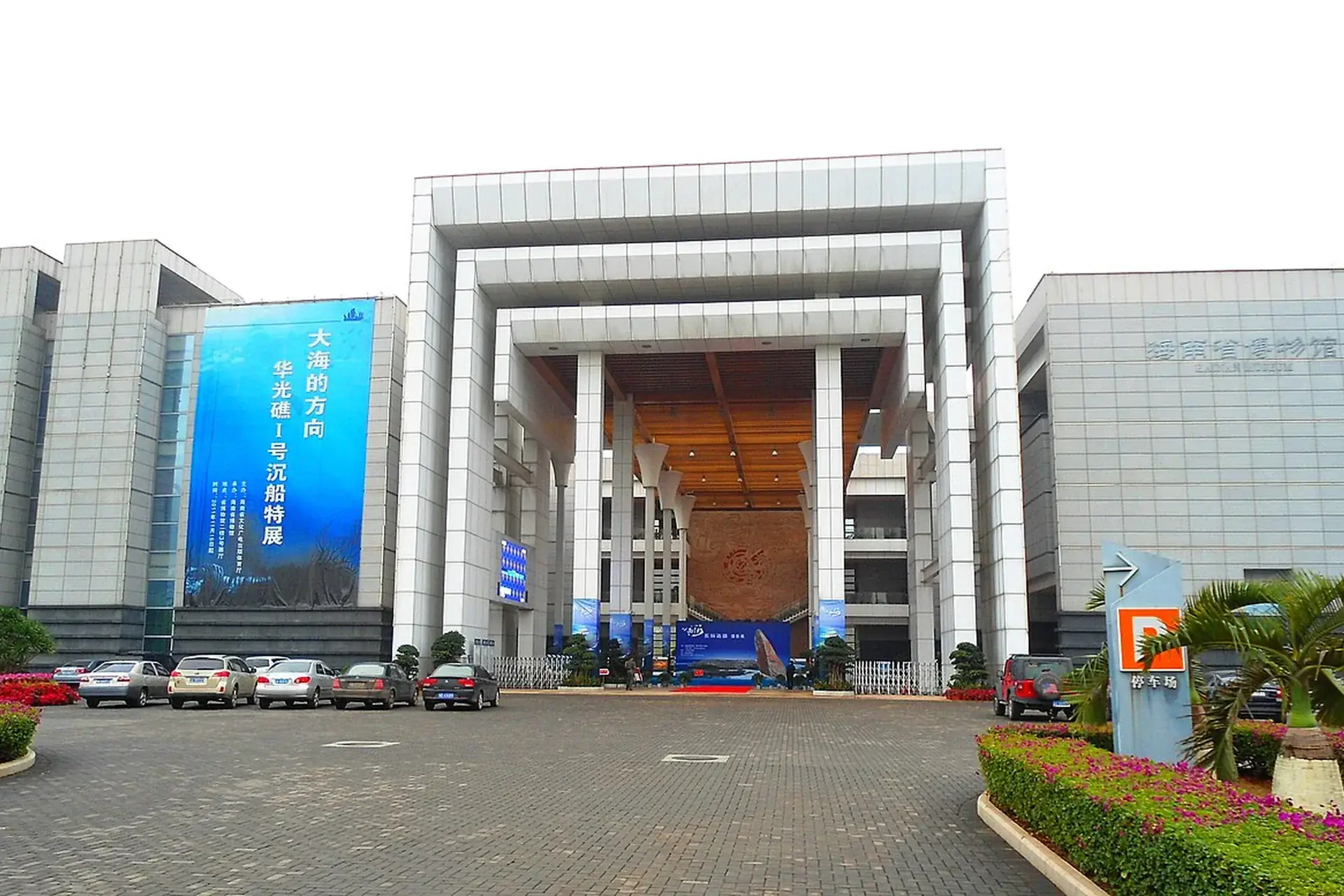
Hainan Provincial Museum (海南省博物馆, Hǎinán Shěng Bówùguǎn)
"\"The Hainan Provincial Museum in Haikou is the definitive institution for understanding China's tropical island province. Its collection covers three main themes: the indigenous Li (黎族) and Miao (苗族) ethnic cultures — the Li are Hainan's original inhabitants, with a history stretching back 3,000+ years; Hainan's role in South China Sea maritime history, including the Huaguang Reef No. 1 shipwreck; and the island's history as a place of exile, frontier settlement, and eventual tourism destination. The museum opened in 2008 and underwent a major renovation in 2018.\".".
Last updated:
Quick Answer
Is Hainan Provincial Museum worth visiting?
Li and Miao ethnic cultures, South China Sea maritime history, and Hainan's unique tropical island story. Free entry in Haikou. Allow 2–2.5 hours.
Quick facts
| Category | history |
|---|---|
| Ticket | Free. Passport required. Reserve via the Hainan Museum WeChat mini-program or scan QR code at the entrance. |
| Hours | 9:00-17:00 (last entry 16:30). Closed Mondays. |
| Recommended duration | 2-2.5 hours. |
| Best time to visit | Weekday mornings. Haikou is warm year-round (average 24°C). November-March is the dry season and most comfortable. Avoid October Golden Week and Chinese New Year. |
| How to get there | Bus routes 12, 27, 29, 31, 33, 39, 43, 45, 48, 51, 52, 56, 67, 68 to Hainan Museum (海南博物馆) stop. DiDi from central Haikou is ¥20-35. There is no direct metro — Haikou's metro system is limited. |
| English signage | partial |
Why visit
The Li brocade (黎锦) textile collection is extraordinary — intricate woven patterns that encode Li history and mythology, recognized as a UNESCO Intangible Cultural Heritage. The South China Sea shipwreck artifacts (Song through Qing Dynasty ceramics recovered from the seabed) connect Hainan to the wider maritime world.
Collection highlights
- Li Brocade (黎锦) Gallery — intricately woven textiles with geometric patterns in red, black, and yellow. Li women's brocade skills are transmitted mother-to-daughter and recognized as UNESCO Intangible Cultural Heritage
- Li Tattooed Woman exhibit — historical photographs and oral histories of Li women who bore facial tattoos, a tradition that ended in the 1950s-60s. The last tattooed Li women are now in their 70s and 80s
- Huaguang Reef No. 1 Shipwreck artifacts — Song Dynasty (12th century) ceramics recovered from a shipwreck in the South China Sea, including celadon bowls and storage jars
- South China Sea gallery — maps, navigational instruments, and historical records documenting Chinese maritime activity in the South China Sea (Nanhai 南海)
- Hainan Exile Literature section — Hainan was a place of exile for disgraced officials, most famously Su Dongpo (苏东坡), the great Song Dynasty poet who spent three years on the island and profoundly influenced its culture
Tips
- The Li brocade gallery is the museum's strength — spend the most time here. The weaving demonstrations (if available) show the backstrap loom technique
- The museum is located on Guoxing Avenue in Haikou, near the Hainan Provincial Government buildings. It is a 15-minute DiDi ride from Haikou's historic Qilou Old Street (骑楼老街)
- Combine with a visit to the Hainan Provincial Library (next door) and the Haikou Qilou Old Street (骑楼老街) historic arcade district for a full Haikou cultural day
- I found the Li tattooing exhibit in June 2026 particularly moving — it documented a tradition that is literally disappearing as the last generation passes
- Haikou is less visited by foreign tourists than Sanya (Hainan's beach resort city 300 km south) — the museum is uncrowded and the experience is unhurried
Frequently asked questions
Who are the Li people?
The Li (黎族) are Hainan's indigenous people, with archaeological evidence of their presence on the island dating back 3,000+ years. They speak a Tai-Kadai language (related to Thai and Zhuang) and are known for their brocade weaving, facial tattooing tradition (now extinct), and distinctive boat-shaped houses. They number about 1.5 million and are one of China's 56 officially recognized ethnic groups.
What is Li brocade (黎锦)?
Li brocade is a traditional textile woven by Li women on backstrap looms using cotton and silk threads. The patterns — geometric designs in red, black, yellow, and white — encode Li mythology, history, and cosmology. Each pattern has a specific meaning. Li brocade techniques were added to the UNESCO Intangible Cultural Heritage list in 2009 as in need of urgent safeguarding.
Is the Hainan Provincial Museum worth visiting if I am mainly going to Sanya for beaches?
If you are interested in Hainan beyond the beach resorts, yes. The Li brocade collection and South China Sea shipwreck exhibits provide cultural and historical depth that the resort experience lacks. However, the museum is in Haikou, 300 km north of Sanya (1.5 hours by high-speed train). If your trip is solely a beach holiday, the museum may not justify the travel time.
How do I get from Sanya to the Hainan Provincial Museum?
High-speed train from Sanya Station (三亚站) to Haikou East Station (海口东站) takes 1.5 hours (¥100). Then DiDi 20 minutes to the museum (¥25-35). It is feasible as a day trip but makes for a long day.
What is the Huaguang Reef shipwreck?
The Huaguang Reef No. 1 (华光礁1号) is a Song Dynasty (12th century) shipwreck discovered in 1996 off the Paracel Islands (Xisha 西沙) in the South China Sea. It carried a cargo of primarily Fujian and Guangdong ceramics — celadon bowls, dishes, and storage jars. The wreck provides evidence of the Song Dynasty maritime trade routes that connected China to Southeast Asia and beyond.
What is Su Dongpo's connection to Hainan?
Su Dongpo (苏东坡, 1037-1101), one of China's greatest poets, was exiled to Hainan in 1097 at age 60 — at the time, it was considered a remote tropical backwater. He spent three years on the island, during which he taught local children, wrote prolifically, and maintained his characteristic humor and resilience. Hainanese people revere him as a cultural founding figure. The museum has a section on his exile.