Hohhot · ethnic museum
Inner Mongolia Museum (内蒙古博物院, Nèi Měnggǔ Bówùyuàn)
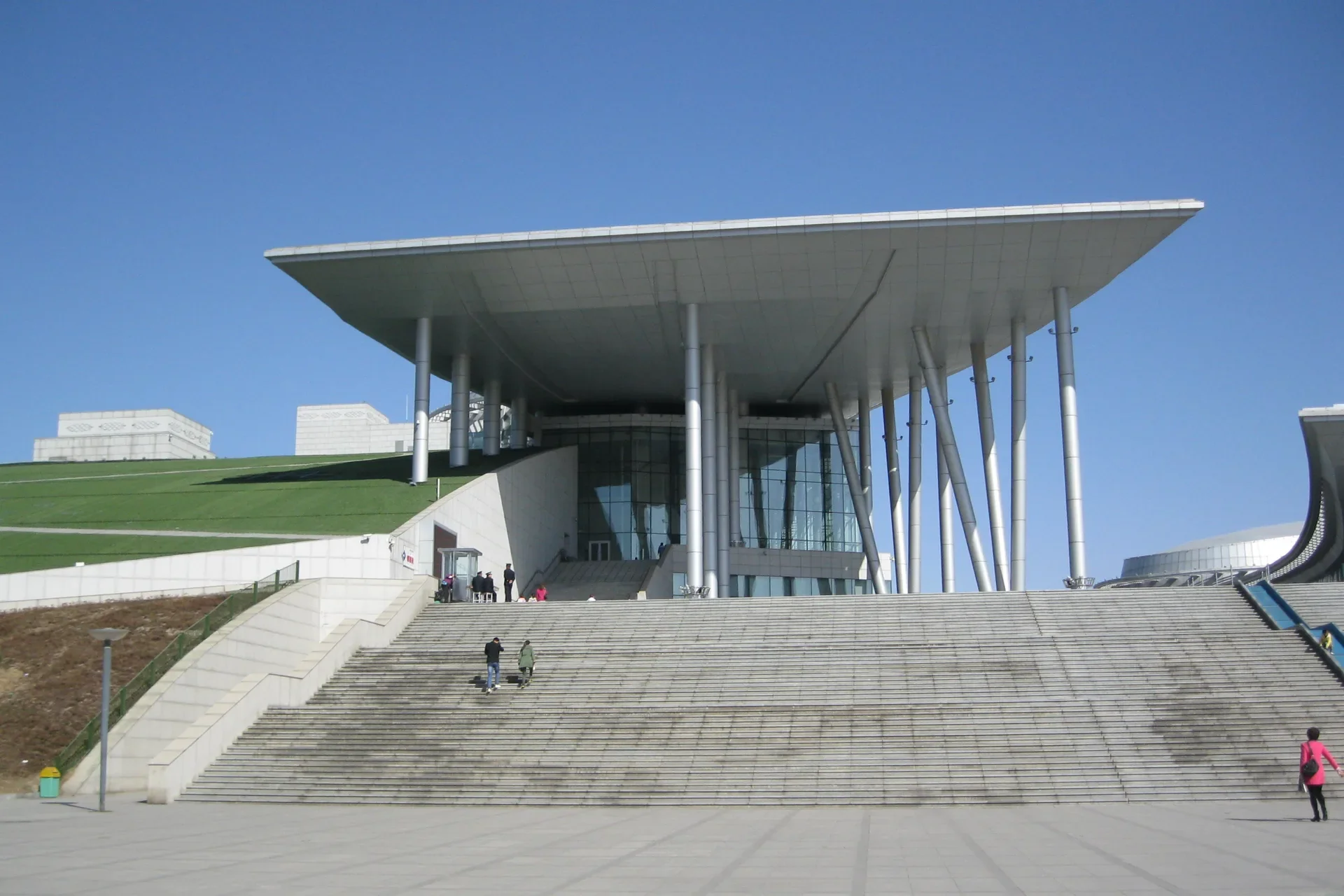
"\"The Inner Mongolia Museum in Hohhot occupies a striking 2007 building whose roof undulates like a grassland horizon. The collection is split between two strengths rarely found together: paleontology and steppe ethnography. The dinosaur hall displays some of the largest mounted sauropod skeletons in China, excavated from the Cretaceous deposits of the Inner Mongolian Gobi — including a 26-meter Mamenchisaurus (马门溪龙) that dominates the central atrium. The ethnic galleries cover the history of the Mongolian, Daur, Ewenki, and Oroqen peoples, from the Xiongnu confederation (3rd century BC) through the Mongol Empire (13th century) to modern pastoral culture. The Genghis Khan section includes replica weapons, a reconstructed ger (yurt), and maps showing the extent of the Mongol Empire at its peak — the largest contiguous land empire in history.\".".
Last updated:
Quick Answer
Is Inner Mongolia Museum worth visiting?
"Genghis Khan's legacy, towering dinosaur fossils from the Gobi Desert, and the living culture of the Mongolian steppe — all in Hohhot's landmark 2007 building. Free.".
Quick facts
| Category | ethnic |
|---|---|
| Ticket | Free. Passport required. Reserve via the Inner Mongolia Museum WeChat mini-program or scan QR code at the entrance. Walk-ins welcome on weekdays. |
| Hours | 9:00-17:00 (last entry 16:00). Closed Mondays. |
| Recommended duration | 2.5-3 hours. Add 1 hour for the paleontology hall if you read all the labels. |
| Best time to visit | Tuesday-Thursday mornings year-round. Hohhot's best weather is June-September — July is pleasant (25°C average high) while the rest of China swelters. The museum gets busy during Naadam Festival (July 11-13) — book ahead. |
| How to get there | Metro Line 1 to Inner Mongolia Museum (内蒙古博物院), Exit A. Walk east 2 minutes. Or bus routes 2, 3, 16, 27, 51, 53, 59, 66, 67, 72, 75, 89, 92, 95, 97, 98, 102, K1 to Museum stop. DiDi from central Hohhot costs ¥10-20. |
| English signage | partial |
Why visit
The combination of world-class dinosaur fossils and Mongol Empire history under one roof is unusual. The dinosaur hall alone is worth the visit — Inner Mongolia is one of the world's richest dinosaur fossil regions, and the mounted skeletons here are genuinely enormous. The grassland culture exhibit provides essential context for anyone traveling onward to the Inner Mongolian grasslands.
Collection highlights
- Mamenchisaurus mounted skeleton — 26 meters long, a sauropod from the Jurassic-Cretaceous boundary, Inner Mongolian Gobi Desert excavation. The central atrium installation is one of the largest mounted dinosaurs in any Chinese museum
- Protoceratops nest with eggs — a complete fossilized nest of the sheep-sized ceratopsian, with 15 eggs arranged in a spiral, from the Djadokhta Formation
- Genghis Khan and the Mongol Empire gallery — replica weapons, silk armor, a full-size ger (yurt), and maps tracing the Mongol conquests from the Pacific to the Danube
- Xiongnu gold crown — a golden eagle-shaped headdress from the 3rd century BC, excavated from a Xiongnu noble tomb in Ordos. The eagle has turquoise-inlaid eyes
- Mongolian traditional clothing and musical instruments — including a horse-head fiddle (morin khuur, 马头琴) with a carved horse-head scroll
- Liao Dynasty (907-1125) tomb mural reproductions — vivid scenes of Khitan noble life, including the famous "Preparation for a Hunt" mural showing falcons and hunting cheetahs
Tips
- The museum is organized by theme, not chronology — start on the 3rd floor with paleontology and work your way down through the ethnic and historical galleries
- The dinosaur hall has excellent English signage — the paleontologists who work here publish internationally and the labels reflect that
- I visited in July 2026, just after Naadam Festival, and found the ethnic culture galleries particularly resonant after seeing horse racing and wrestling in the grasslands the day before
- The museum shop sells small dinosaur fossil casts (¥50-150) and Mongolian silver jewelry (¥80-300) — both are authentic and well-priced
- Combine with a visit to the Dazhao Temple (大召寺, the largest Tibetan Buddhist temple in Hohhot, 4 km west) for a full day of Hohhot culture
- Hohhot's altitude is 1,065 m — the sun is strong even on cool days. The museum is fully air-conditioned and a good midday refuge in summer
Frequently asked questions
Does the Inner Mongolia Museum have real dinosaur fossils?
Yes, the museum displays authentic fossil material from the Cretaceous deposits of the Inner Mongolian Gobi Desert, one of the world's richest dinosaur-producing regions. The mounted sauropod skeletons in the central atrium are casts (the originals are too heavy to mount at that height), but the display cases contain original fossil bones, eggs, and trackways. The Protoceratops nest with eggs is an original fossil — one of the best-preserved dinosaur nests ever found.
What is the connection between Inner Mongolia and Genghis Khan?
Genghis Khan (Chinggis Khan, c. 1162-1227) was born in what is now Khentii Province, Mongolia, about 600 km north of Hohhot. The Inner Mongolia Autonomous Region is part of China and is culturally and linguistically Mongolian — it is the southern part of historical Mongolia. The museum covers both the Mongol Empire period and the subsequent history of Mongolian people in China, including the Yuan Dynasty (1271-1368) when Kublai Khan ruled from Beijing.
Is the Inner Mongolia Museum in Hohhot worth visiting?
Yes, especially if you are traveling in northern China and want context for grasslands culture and dinosaur paleontology. Hohhot is on the Beijing-Baotou high-speed rail line (2.5 hours from Beijing), and the museum is the best single introduction to Inner Mongolian history and culture. It also has one of China's better dinosaur halls.
How is the Inner Mongolia Museum different from museums in Beijing?
Two key differences: (1) the dinosaur and paleontology collection is far superior — Inner Mongolia's Gobi Desert is a globally significant fossil region and the museum reflects that, and (2) the ethnic focus on Mongolian, Daur, Ewenki, and Oroqen cultures is unique — you will not find this depth of steppe ethnography in a Beijing museum. The building itself is also worth seeing — its undulating roof is a deliberate landscape reference.
What is Naadam and when does it happen?
Naadam (那达慕, Nàdámù) is the traditional Mongolian festival featuring the "three manly sports" of wrestling, horse racing, and archery. It is celebrated across Inner Mongolia in July and August, with the largest event near Hohhot on July 11-13. The museum provides excellent cultural background for Naadam — visit before attending the festival if possible.
Does the Inner Mongolia Museum have English signage?
Partial — the paleontology hall has good English throughout because the research is internationally collaborative. The Genghis Khan gallery has English for major exhibits. The grassland culture and ethnic costumes galleries have Chinese-only labels for most objects. The WeChat audio guide is Chinese-only.