Lu-shan · history museum
Lushan Museum (庐山博物馆, Lúshān Bówùguǎn)
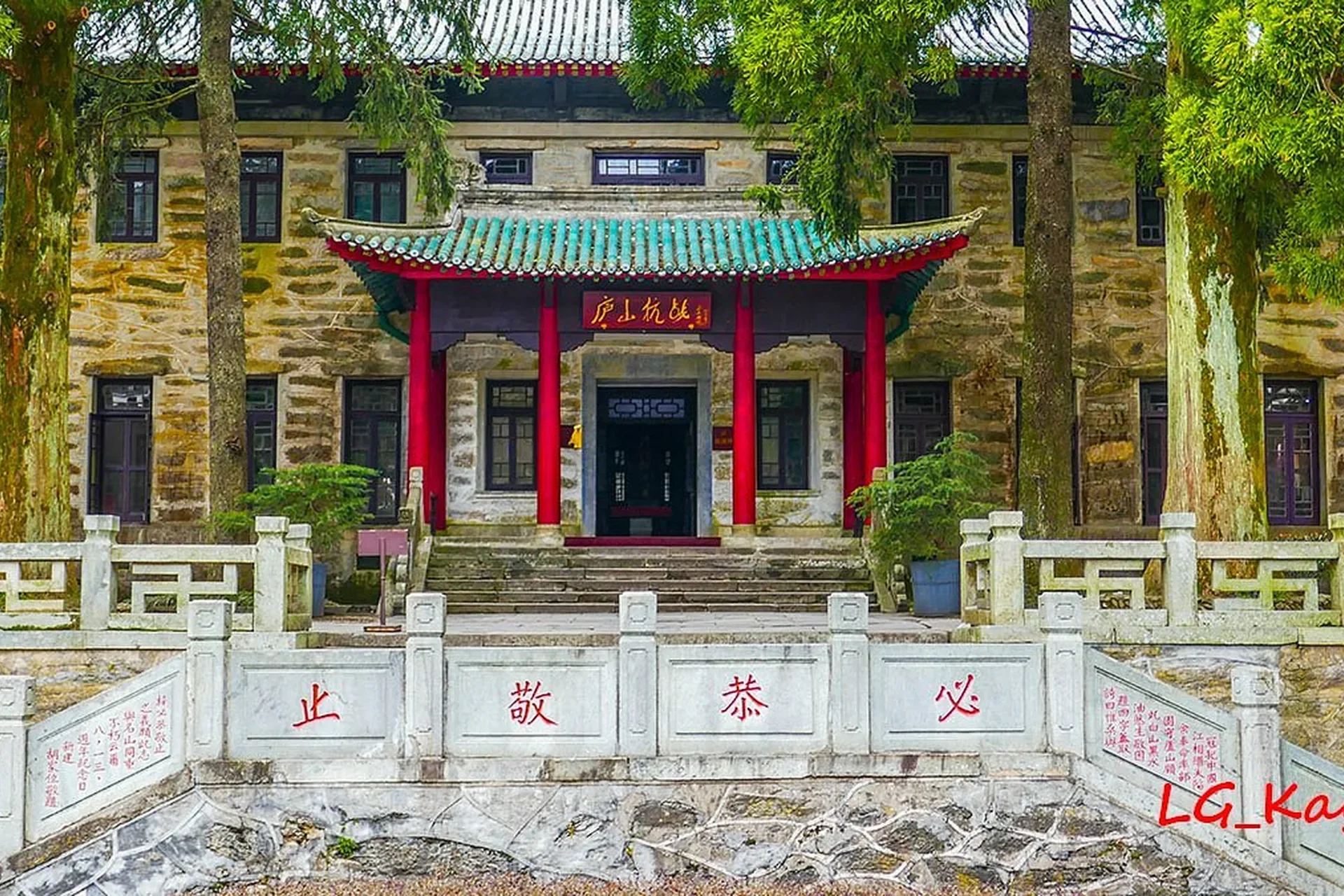
"The Lushan Museum sits in the old northeastern suburb of Guling town on庐山 (Mount Lu), housed in a converted 1897 British Presbyterian church with later additions. Its galleries track Jiangxi prehistory, ceramics from the Han through the Ming, Qing imperial calligraphy and porcelain, and Republican-era artefacts tied to Chiang Kai-shek's summer capital. It functions as the cultural anchor of the Lushan UNESCO cultural landscape rather than a single-purpose art museum.".
Last updated:
Quick Answer
Is Lushan Museum worth visiting?
"A compact mountain-top museum on庐山 with around 10,000 relics from the Han to the Republic era; plan 45–60 minutes inside, half a day with the surrounding villas.".
Quick facts
| Category | history |
|---|---|
| Ticket | Free with valid庐山 scenic-area entry ticket (¥160 in peak season as of 2026; verify). The museum itself charges no separate admission. |
| Hours | Daily 09:00–17:00 (last entry 16:30); closed on major public holidays varies (verify). |
| Recommended duration | 45–90 minutes; 2 hours if reading every panel. |
| Best time to visit | May–October for clear lake views; weekdays outside Chinese Golden Week (Oct 1–7) to avoid the worst tour-bus queues at the church doors. |
| How to get there | Take the K-train or G-train to Jiujiang Station, then bus 25 or the庐山 tourist shuttle to Guling town (about 1 hour, ¥15). Within Guling the museum is a 10-minute walk east of the main roundabout, or ¥10 by electric sightseeing cart. From Lushan North high-speed rail station, tourist buses run roughly every 30 minutes (verify current schedule). |
| English signage | partial |
Why visit
Most visitors come to庐山 for the cliffs, the waterfalls, and the mock-Tudor villas. The museum is the one place that tells the story underneath those villas: who lived here, what they collected, and why this mountain was a 20th-century political stage. If you have even 90 minutes between a morning hike and a lunch of stone-fish stew, the galleries reorganise the rest of the mountain into something you can actually read. The English signage is patchy, but the building itself — a stone church with a bell tower, built when the Yangzi treaty ports were still young — is part of the exhibit.
Collection highlights
- Stone church building (1897) — the original Presbyterian mission chapel, one of the oldest Western-style structures still standing in Jiangxi
- Han Dynasty bronze mirror and pottery gallery with locally excavated tomb finds
- White-porcelain (qingci) display, including Lushan kiln wares from the Song period (verify provenance)
- Qing imperial calligraphy scroll hall with Qianlong- and Kangxi-era pieces (verify rotation)
- Republican-era gallery on the 1930s–40s "summer capital" period, including photos of the Chongqing-era wartime meetings held on the mountain
- Mogao and Dunhuang-style Buddhist stone rubbings and a small pavilion housing Tang Buddhist sculpture fragments (verify current exhibition)
Tips
- Don't bother with a taxi from Jiujiang city centre; the public bus is cheaper and the mountain roads are jam-prone in summer.
- Buy the庐山 entry ticket online (WeChat 庐山旅游小程序) the day before — the on-site queue at the north gate regularly exceeds 40 minutes in July and August.
- English audio guides are not reliably available; download a translation app and photograph the Chinese panels, or hire a local guide for ¥200/hour at the Guling tourist centre.
- The museum is small enough to combine with the nearby Meilu Villa (formerly Chiang's residence) and the old chapel of Saint Paul in a single two-hour walking loop.
- Skip if you've already done the Shanghai Museum — the ceramics and bronzes here are local rather than national-tier, and the draw is the mountain setting, not the collection depth.
Frequently asked questions
How much does it cost to enter the Lushan Museum?
Entry to the museum itself is free; you only need the main庐山 scenic-area ticket, which was ¥160 in peak season as of 2026. Off-peak (December–March) the same ticket drops to ¥135 (verify).
What are the Lushan Museum's opening hours?
09:00 to 17:00 daily, with last entry at 16:30. Closed for occasional maintenance Mondays in low season (verify).
How do I get to the Lushan Museum from Jiujiang?
From Jiujiang Railway Station take bus 25 or the庐山 tourist shuttle to Guling town (about 60 minutes, ¥15). From there the museum is a 10-minute walk east of the main roundabout, or a ¥10 electric cart ride.
How long should I spend inside the Lushan Museum?
45 to 90 minutes is enough to see all six main galleries; budget 2 hours if you read every Chinese panel and look at the Republican-era photo archive.
Is the Lushan Museum inside the main庐山 scenic area?
Yes — it sits in Guling town inside the scenic-area boundary, so the same entry ticket covers both the mountain and the museum. No separate museum ticket is sold.
Does the Lushan Museum have English signage?
Partially. Main gallery labels carry short English captions, but detailed object descriptions are in Chinese only. Plan to use a translation app or a hired local guide if you want full context.
When was the Lushan Museum founded?
The museum was established in 1972, though the building it occupies — a former Presbyterian church — dates to 1897 and was the first Western-style stone church in the Lushan area.
Is the Lushan Museum air-conditioned?
Only partially — the older church nave retains its stone walls and can be warm in July. Mornings before 11:00 are the most comfortable time to visit.
Can I photograph exhibits inside the Lushan Museum?
Non-flash photography is allowed in most galleries; tripods and selfie sticks are restricted in the Qing calligraphy hall (verify current policy at the entrance).
Is the Lushan Museum suitable for children?
Yes for ages 8 and up — the Han bronze gallery and the Republican-era photo wall hold attention. Younger kids tend to bounce off the dense text panels quickly; the grounds outside are a better fallback.