- Home
- Mount Emei
- Mount Emei Museum
Mount Emei · history museum
Mount Emei Museum (峨眉山博物馆, Éméishān Bówùguǎn)
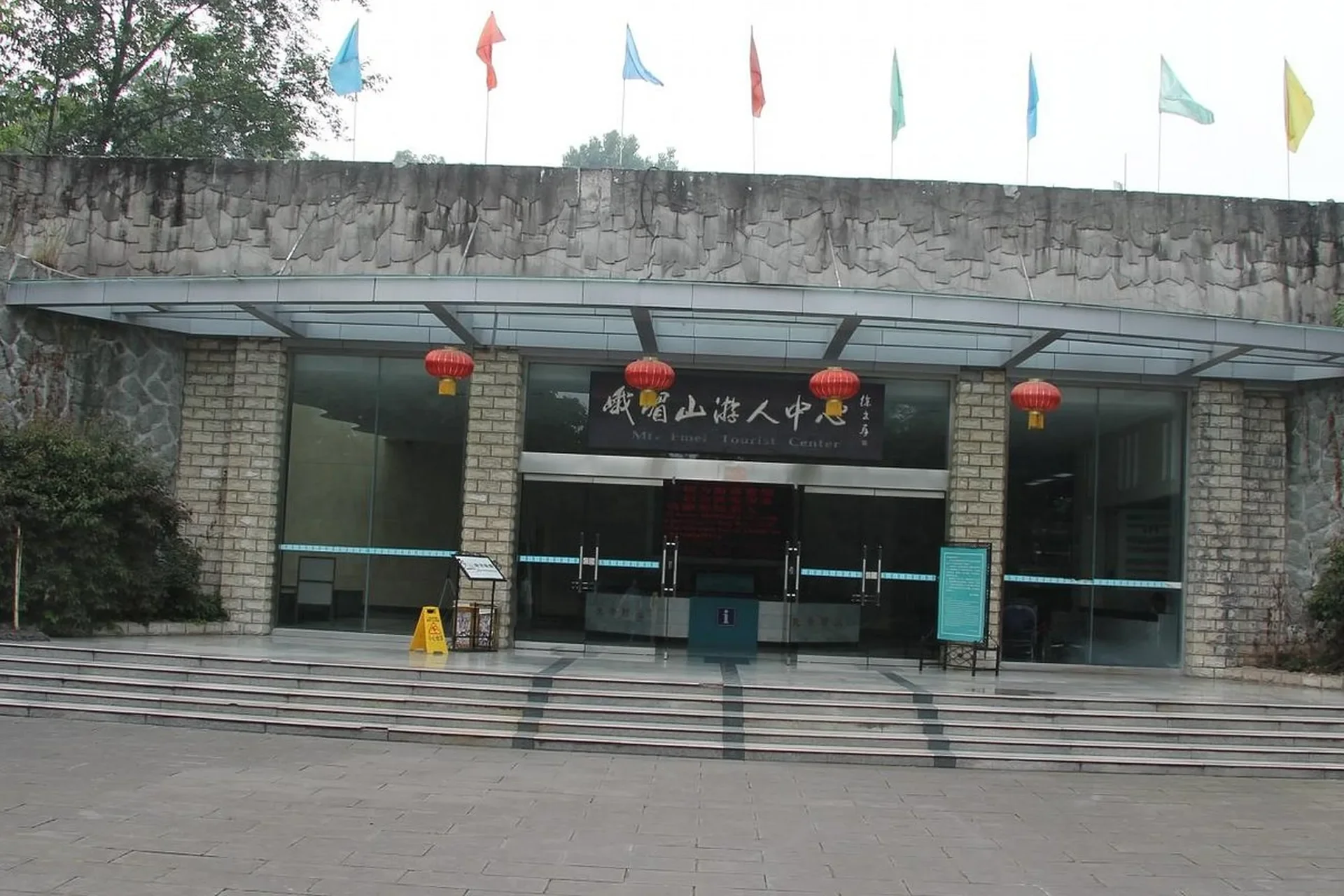
The Mount Emei Museum sits just outside Baoguo Temple (报国寺) at the mountain's base in Emeishan city, Sichuan. Opened in 1986 and significantly expanded in 2003, it holds around 3,000 items spanning Buddhist sculpture, regional geology, local flora and fauna, and Ming-Qing calligraphy. It serves as the standard primer before climbing the UNESCO sacred Buddhist mountain.
Last updated:
Quick Answer
Is Mount Emei Museum worth visiting?
"A 3,000-piece regional museum at the foot of sacred Emei Shan covering Buddhism, geology, and wildlife, walkable in 60-90 minutes.".
Quick facts
| Category | history |
|---|---|
| Ticket | Free (ID/passport required for entry, as of 2026) |
| Hours | Tuesday-Sunday 09:00-17:30, closed Mondays (as of 2026; verify on-site) |
| Recommended duration | 60-90 minutes |
| Best time to visit | Late morning (10:00-11:30) on day 1 of your Emei itinerary, before ascending the mountain. |
| How to get there | Inside Baoguo Scenic Area, ~3 km from Emeishan Railway Station; city buses 1 and 5 stop at Baoguo Temple; a taxi from Emeishan center costs about RMB 15-20. |
| English signage | partial |
Why visit
Most travelers ride straight to the cable car at Jinding or Jieyin Hall and never stop at this museum, which is a mistake: it is the only place that contextualizes why Emei Shan became one of the Four Sacred Buddhist Mountains of China (the bodhisattva Samantabhadra's mountain). The geological wing explains the dramatic terrain you'll be walking through, and the Buddhist sculpture galleries introduce the iconography you'll see in Baoguo, Fuhu, and Qingyin temples. Spend 90 minutes here and the climb becomes a different experience.
Collection highlights
- Samantabhadra (Puxian) iconography hall with gilt-bronze Ming and Qing statues
- Geology gallery explaining Emei's 800-million-year-old granite, fossils, and seismic history
- Regional flora and fauna exhibit including snub-nosed monkey and takin specimens
- Bronze Age Sanxingdui-influenced artifacts from nearby Leshan and Emei sites
- Ming-Qing calligraphy and rubbings from Baoguo, Fuhu, and Leiyin Temples
- Scale model of the mountain showing the 154 temples spread across 100+ km of trails
Tips
- Free entry — bring your passport; you must register at the gate for the day's visitor count.
- Closed on Mondays, which catches a lot of travelers. Plan accordingly.
- Skip if you have less than 6 hours total on Emei — the cable car plus Golden Summit takes priority.
- Limited English captions; grab the bilingual leaflet at reception if available.
- Combined with Baoguo Temple next door (free), they make a tidy 2-hour cultural taster before the climb.
Frequently asked questions
How much does Mount Emei Museum cost?
Free, as of 2026. Just bring your passport for ID registration at the entrance gate.
What are the opening hours?
Tuesday through Sunday, 09:00 to 17:30. Closed Mondays, as of 2026.
How long does a visit take?
Most visitors spend 60-90 minutes. A slow reader with translation app will need about 2 hours.
Is English signage available?
Partial. Hall titles and main exhibits are bilingual; detailed exhibit captions are mostly Chinese only.
Is the museum inside the Mount Emei scenic area ticket?
No — it's outside the main RMB 160 entrance ticket for the mountain itself, located in the Baoguo temple cluster zone which is separately free.
How do I get there from Emeishan Railway Station?
About 3 km south; city bus 1 or 5 takes 15 minutes and drops at Baoguo Temple. A taxi or Didi runs RMB 15-20.
Is it worth visiting if I'm climbing the mountain the same day?
Yes — 90 minutes before your cable car gives you meaningful context, especially for the Buddhist temples above. Skip it only if you are arriving mid-afternoon with no buffer.
Is the museum accessible for wheelchairs?
Yes — single-floor galleries, ramps at the entrance, and elevator between levels (verify).
What is the collection size?
About 3,000 items, with roughly 800 in regular display rotation (verify current count on-site).
When was the museum founded?
Opened in 1986; the current exhibition halls were rebuilt and reopened in 2003.