This page is archived and no longer updated — see the current guide: See the current guide
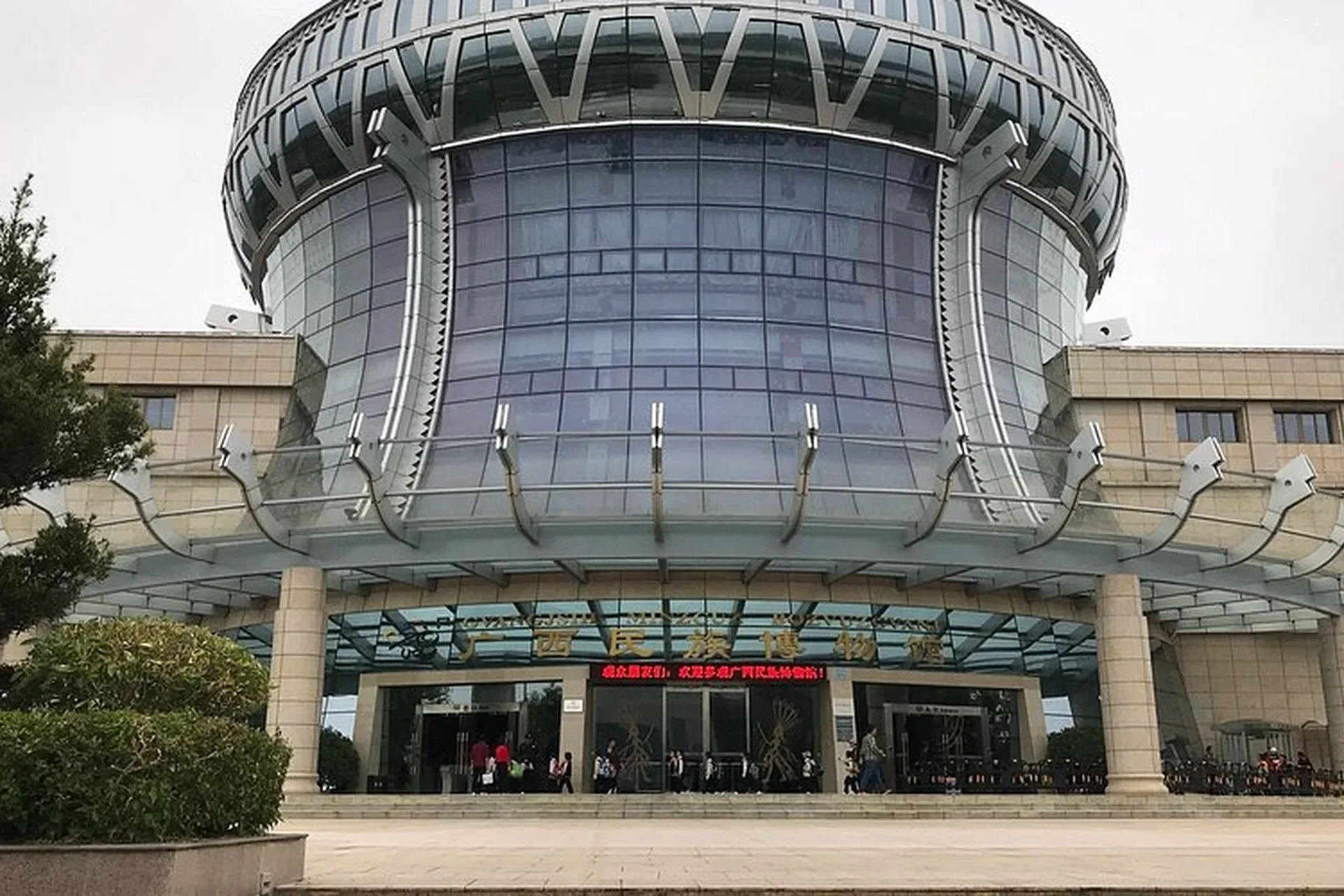
Guangxi Museum
The Guangxi Museum (广西壮族自治区博物馆) in Nanning is the primary cultural institution for the Guangxi Zhuang Autonomous Region, covering 2,000 years of history across one of China's most geographically distinct provinces. The museum's strengths are threefold: (1) Zhuang cultural heritage — the largest collection of Zhuang ethnic minority artifacts in China, including bronze drums, embroidered textiles, and the famous 'Buluo' clan totems; (2) the Rong River and Li River prehistoric archaeology — artifacts from the 100,000-year-old Bailong Cave hominid sites and Nanning basin Neolithic finds; and (3) maritime Silk Road archaeology — objects recovered from shipwrecks in the South China Sea and Gulf of Tonkin, documenting Guangxi's role in the maritime trade route.
Nanning · history museum2026-10-19
Quick Answer
Is Guangxi Museum worth visiting?
Nanning's provincial museum covering Zhuang culture, the famous bronze drums and Guangxi's maritime links with Vietnam. Free with ID; the bronze-drum hall is the standout. Allow 2 hours.
Quick facts
| Category | history |
|---|---|
| Ticket | Free admission (with ID or reservation code). Free. Passport required. Walk-in tickets available at the north entrance. Some special exhibitions charge ¥30-60. |
| Hours | 9:00-17:00 (last entry 16:00). Closed Mondays. |
| Recommended duration | 2-3 hours. |
| Best time to visit | Weekday mornings year-round. Nanning is warm (15-28°C) October through April and hot/humid (28-35°C) May through September. The best time for visiting Nanning and the surrounding Guilin/Guangxi karst region is October through March. |
| How to get there | Metro Line 1 to Museum Station (博物馆站), Exit A. Bus routes 6, 11, 23, 30, 33, 205 to Guangxi Museum stop. DiDi from Nanning Railway Station: ¥15-20. From Nanning Wuxu International Airport: ¥50-70. |
| English signage | Partial |
Why visit
For understanding China's ethnic diversity and the Zhuang culture (China's largest ethnic minority at 16 million people), the Guangxi Museum provides essential context before visiting the Longsheng Rice Terraces, the Zhuang villages near Guilin, or the Detian Waterfall. The bronze drum collection is the finest in China — these instruments were sacred objects across southern Chinese and Southeast Asian cultures for 2,500 years.
Collection highlights
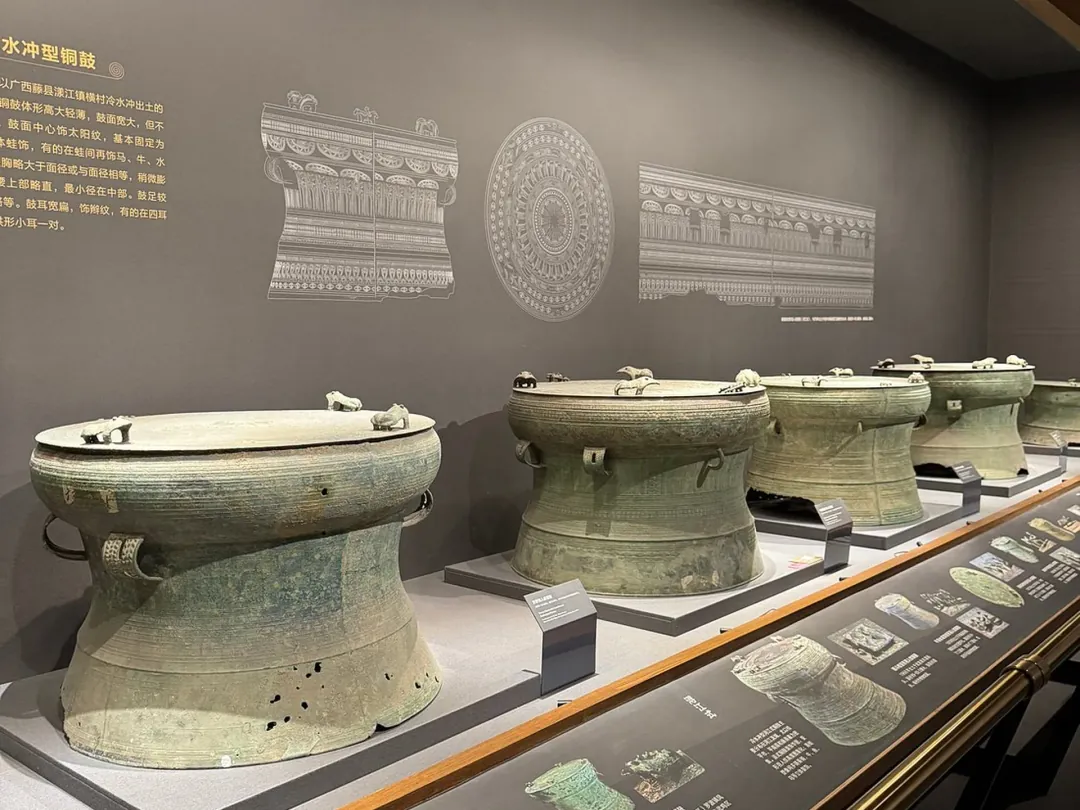
- Zhuang bronze drum collection — the world's largest collection of ancient bronze drums (铜鼓), sacred ceremonial instruments used by Zhuang, Dong, and other southern Chinese peoples for over 2,500 years
- Zhuang embroidered textiles — intricate hand-embroidered Zhuang costumes and panel textiles, including famous "Mirror Cloth" (镜绣) pieces with reflective metallic threading
- "Buluo" clan totem stones — ancient carved stones from Zhuang village entrances marking clan identity, unique to the Guangxi region
- South China Sea shipwreck archaeology — objects recovered from Song Dynasty (10th-13th century) merchant ships that sank in the South China Sea, documenting maritime Silk Road trade
- Guilin karst geology model — a large-scale geological relief model of the Guangxi karst landscape explaining the formation of Guilin's famous tower karst formations
- "Three Cups of Tea" ceramic set — an extremely rare complete Tang Dynasty ceramic tea service set excavated from a Nanning tomb, showing Vietnamese and Chinese tea culture fusion
Tips
- Combine with the Guangxi Cooking Museum (广西烹饪博物馆) nearby for a complete Guangxi cultural experience
- The Zhuang culture section is the most distinctive — prioritize it over the general Chinese history galleries
- Nanning is primarily a transit hub for visiting Guilin, Yangshuo, and the Detian/Baomei Falls — the museum is best as a half-day stop on arrival or before departure
- The museum has a small cafe and the Nanning People's Park (人民公园) is adjacent for a post-visit walk
- Nanning's Nanning International Convention Center nearby is architecturally notable if you have extra time
Frequently asked questions
What is the Zhuang ethnic group?
The Zhuang (壮族) are China's largest ethnic minority at 16 million people, concentrated in Guangxi and Yunnan. They have their own language (classified as part of the Tai language family) and a distinct culture of bronze drum music, embroidered textiles, and the famous "Buluo" village communal system. The Guangxi Museum has the most comprehensive Zhuang cultural collection in China.
What are bronze drums?
Bronze drums (铜鼓) are hollow bronze vessels with a flat surface and flared rim, cast in southern China and Southeast Asia for over 2,500 years. They functioned as musical instruments, religious objects, and symbols of political power. The Guangxi Museum's collection of 400+ drums is the largest in the world.
How does this museum compare to the Guilin Museum?
The Guilin Museum (桂林博物馆) is much smaller and focuses on Guilin-specific archaeology and the Li River minority cultures. The Guangxi Museum in Nanning is the provincial-level institution with a broader regional scope and larger collection.
Can I see Guilin karst geology here?
The museum has an excellent geological relief model and explanation of how the Guilin karst (tower karst) formations were created. For actual karst geology, you need to visit the Guilin/Yangshuo region itself — this museum provides the scientific context before or after that visit.
Does the museum have English signage?
Partial — the Zhuang cultural section has the most English. The general history galleries have some English labels on major pieces. No English audio guide as of 2026.
Read next
Museums in Nanning
Guangxi Provincial Museum
Zhuang culture, ancient bronze drums, and maritime Silk Road history from the Gulf of Tonkin. Free. Allow 2–3 hours for the renovated galleries with the world's finest bronze drum collection.
Guangxi Nationalities Museum
The definitive museum of Zhuang (壮族) and Guangxi's 12 ethnic minorities — with the world's largest collection of bronze drums (铜鼓). Free.