Turpan · history museum
Turpan Museum (吐鲁番博物馆, Tǔlǔfān Bówùguǎn)
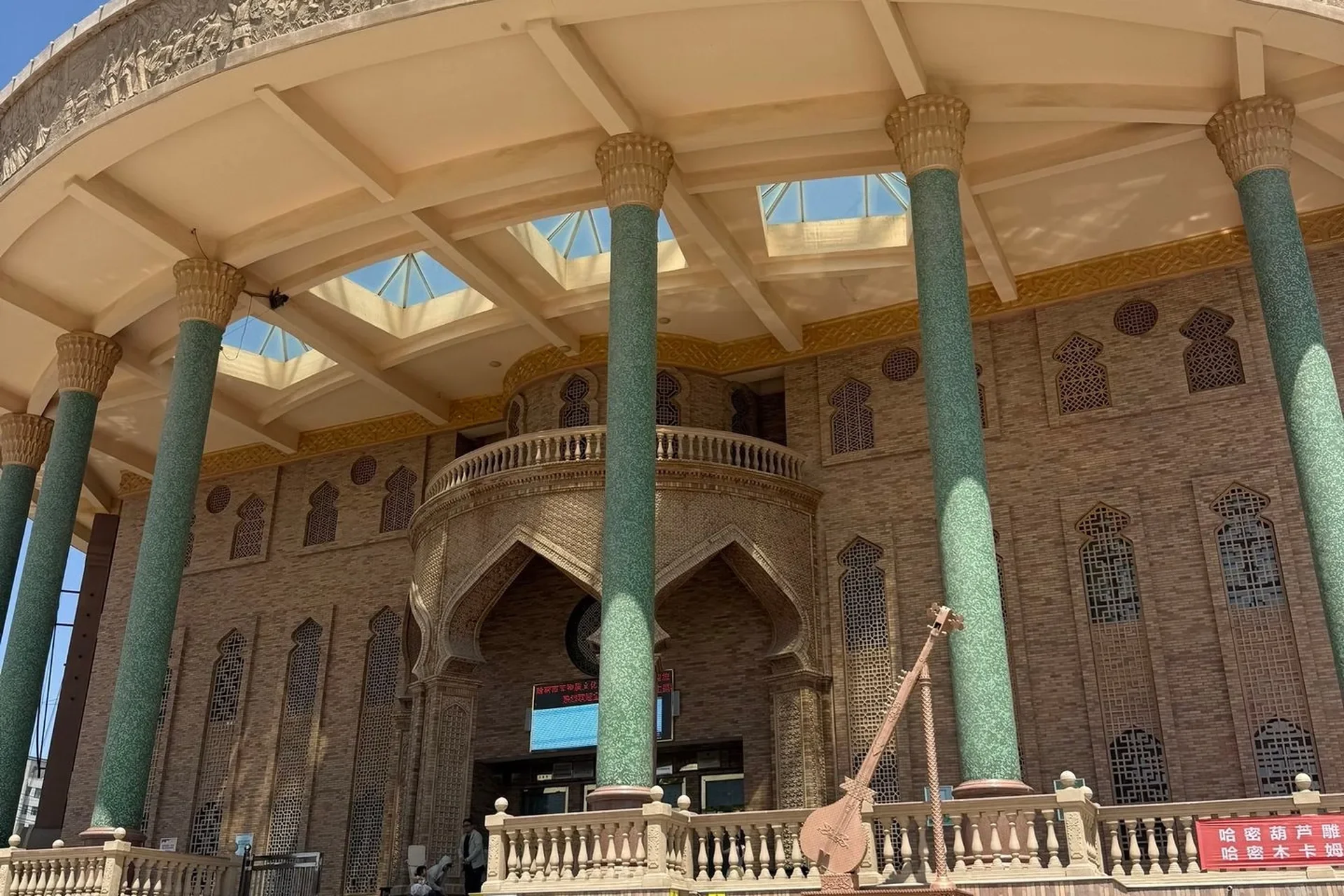
Turpan Museum is the second-largest museum in Xinjiang, founded in 1991 on Xingfu Road in the city of Turpan. Its 5,000-plus-strong collection focuses on Silk Road history, Uyghur material culture, and prehistoric finds from the Flaming Mountains basin. The highlight is its unmatched holdings of ancient mummies recovered from the Astana-Karahoja tombs.
Last updated:
Quick Answer
Is Turpan Museum worth visiting?
"Home to over 5,000 Silk Road artefacts including naturally mummified corpses dating back 3,000 years, the museum can be toured thoroughly in about 2 hours and is free to enter (as of 2026).".
Quick facts
| Category | history |
|---|---|
| Ticket | Free (as of 2026) |
| Hours | Tuesday-Sunday 10:00-18:30 (last entry 18:00); closed Mondays (verify) |
| Recommended duration | 1.5-2.5 hours |
| Best time to visit | Morning, before 12:00, to avoid tour-bus crowds and the worst of the afternoon heat; October grape-harvest season adds atmospheric context to the agricultural exhibits. |
| How to get there | About 3 km east of Turpan city centre on Xingfu Road; taxi/DiDi from the old town runs ¥10-15 (as of 2026); no metro; city buses 1, 5, and 102 stop within walking distance. |
| English signage | partial |
Why visit
Most tourists come to Turpan for the grapes, the Flaming Mountains, and the ancient karez irrigation — then discover this museum and realise they've been walking past the real reason to spend an extra night. The Astana tombs, just 40 km east, produced thousands of naturally preserved human remains that ended up here, including a man buried around 1,800 BCE whose hair, skin, and facial features are still legible. Urumqi has bigger museums, but Turpan is where the actual Silk Road human story is told, with bilingual panels and surprisingly good lighting. If you have any interest in ancient Central Asia, this belongs on the itinerary over the Xinjiang Regional Museum 4 hours north.
Collection highlights
- Astana-Karahoja ancient tomb gallery with naturally mummified remains, including the famous 3,800-year-old Loulan Beauty and a Han-dynasty (206 BCE-220 CE) couple preserved by the basin's extreme dryness
- Silk Road textiles hall — fragments of patterned Han and Tang silks recovered from tomb burials, plus Sogdian merchant documents on paper and wood
- Ancient Gaochang Kingdom (327-640 CE) gallery with clay figurines, mural reproductions, and bilingual Sogdian-Chinese contract tablets
- Grape and karez irrigation exhibit explaining the underground water channels that have supported Turpan agriculture for 2,000 years
- Buddhist stone and stucco sculpture hall with Beiting-era (7th-8th century CE) bodhisattva fragments rescued from the Jiaohe ruins
- Uyghur folk-culture room with embroidered hats, copperware, and traditional instruments from the Idiqut period (9th-13th century CE)
Tips
- Skip Mondays — the museum closes for weekly maintenance, a fact most English guidebooks still get wrong
- Ask at the front desk for the English-language leaflet; full English wall-text covers about 60% of exhibits, the rest is Chinese-only with Uyghur subtitles
- Photography without flash is allowed in most halls but forbidden in the mummy gallery — guards enforce this strictly
- Pair the visit with the Jiaohe ruins (40 km west) on the same day; the museum's Beiting sculpture gallery is much easier to appreciate if you've seen the source site
- There's no official cafe inside; the Shengli Road night market is a 15-minute walk south for lunch afterwards
Frequently asked questions
Is Turpan Museum free to enter?
Yes, admission has been free since the current building opened, with valid ID required for entry at the gate (as of 2026).
What are the opening hours?
Tuesday through Sunday, 10:00 to 18:30, with last admission at 18:00; the museum is closed every Monday (verify).
How long should I spend there?
Most visitors take 90 minutes to 2.5 hours; history buffs can easily stretch it to 3 hours because the bilingual interpretive panels reward slow reading.
Can I see the ancient mummies here?
Yes, the Astana-Karahoja mummy gallery holds dozens of naturally preserved human remains dating from roughly 1,800 BCE to the Tang dynasty, with one of the world's oldest surviving haircuts on display.
Is there English signage?
About 60% of the permanent collection has English wall-text; an English leaflet is available at reception, but there is no audio guide in English as of 2026 (verify).
How do I get there from Turpan city centre?
A taxi or DiDi from the old town costs about ¥10-15 and takes 10 minutes; city buses 1, 5, and 102 also stop nearby (as of 2026).
When was the museum founded?
The institution dates to 1991, but the current purpose-built building on Xingfu Road opened in 2004 to house the expanded Silk Road collection.
How many items are in the collection?
The permanent collection holds more than 5,000 catalogued artefacts, with another roughly 10,000 smaller items in storage (verify).
Can I take photos inside?
Photography without flash is allowed in most halls; flash and tripods are banned in the mummy gallery, and security guards will ask you to put your phone away.
Is it worth visiting if I'm already going to the Xinjiang Regional Museum in Urumqi?
Yes — Turpan's collection is smaller but more focused on the local Silk Road story, with mummies and textiles that are either absent or under-displayed in Urumqi, making it a complementary stop rather than a duplicate.
Read next
Other things to do in Turpan
Flaming Mountains
A 100-km wall of red sandstone east of Turpan that glows crimson and orange at sunset — surface temperatures hit 80°C in summer.…
Grape Valley
Grape Valley is an 8-km corridor of grape trellises and Uyghur farmhouses east of Turpan where you can eat seedless green grapes straight from the vine from July to October.…
Jiaohe Ancient City
A 2,300-year-old Silk Road city carved into a Turpan plateau — streets and buildings dug out of the earth, not built on it.…
Karez Wells
An underground aqueduct system of about 5,000 km of tunnels and vertical wells that has watered the Turpan oasis for over 2,000 years.…