Zhengzhou · history museum
Henan Museum (河南博物院, Hénán Bówùyuàn)
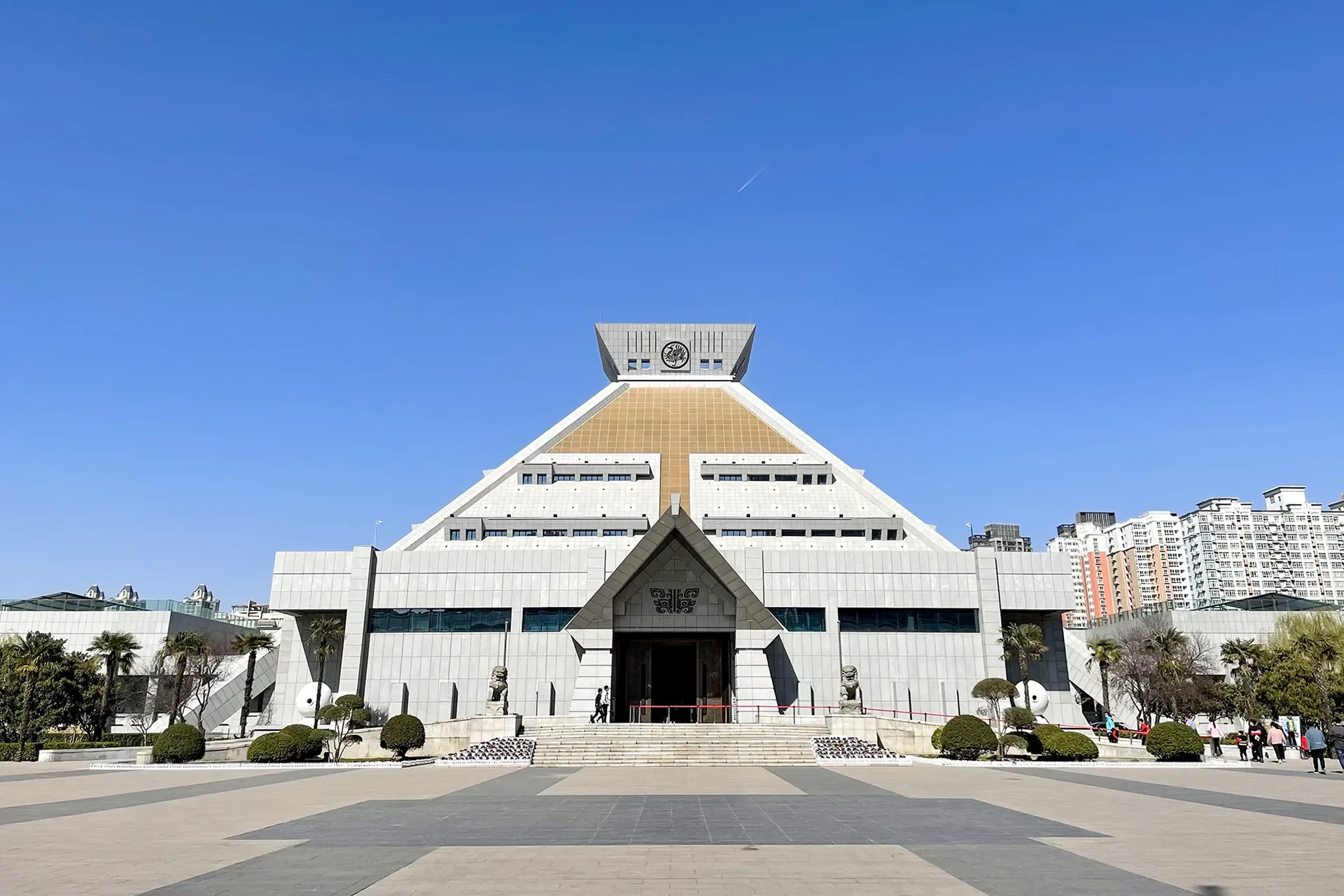
"The Henan Museum (河南博物院) opened its current building in 2009 in Zhengzhou's CBD, replacing the original 1927 museum in Kaifeng. Henan's province was the seat of 13 dynasties and home to the Yellow River civilizations that became Chinese civilization. The collection of 170,000 objects is unrivaled in: (1) Shang Dynasty bronze — including the famous Zongzhou Zun (周公尊) and Houmuwu Ding (后母戊鼎), China's largest surviving bronze vessel; (2) Eastern Han/Western Han stone reliefs — the famous Han Wu Di (汉武大帝) stone reliefs and tomb tiles; (3) Tang Dynasty tri-color glazed ceramics (唐三彩); (4) the Dengfeng Shaolin Temple archaeological materials.".
Last updated:
Quick Answer
Is Henan Museum worth visiting?
""China's oldest and most archaeologically significant museum — built on the Central Plain (Zhongyuan) civilization that gave rise to the Shang, Zhou, Han, and Tang dynasties.".".. 2026 ve...
Quick facts
| Category | history |
|---|---|
| Ticket | Free. Passport required. Timed entry via Henan Museum WeChat mini-program. Special exhibitions in the East Wing charge ¥80-150. |
| Hours | 9:00-17:00 (last entry 16:00). Closed Mondays. |
| Recommended duration | 3-5 hours. |
| Best time to visit | Weekday mornings (Tuesday-Thursday). Zhengzhou has a continental climate — hot humid summers (June-August, 35°C+) and cold dry winters (December-February, -5°C to 8°C). Best seasons: April-June and September-October. |
| How to get there | Metro Line 1 to Henan Museum (河南博物院站), Exit A. Bus routes 46, 49, 58, 84, 111, 305, 603 to Henan Museum stop. From Zhengzhou Railway Station by DiDi: ¥20-30. From Zhengzhou East Station by DiDi: ¥25-35. |
| English signage | partial |
Why visit
Houmuwu Ding (后母戊鼎) alone is worth the trip — this 875kg Shang Dynasty bronze ritual vessel is the largest and heaviest bronze object ever cast in world history. The Shang Dynasty bronze collection, which this ding anchors, is the finest of its kind anywhere. If you are interested in the origins of Chinese civilization and the Bronze Age, this is the most important museum in China outside Beijing.
Collection highlights
- Houmuwu Ding (后母戊鼎) — China's largest and heaviest bronze vessel at 875kg, cast in the late Shang Dynasty (~1300 BCE). The largest piece of bronze ever cast in human history.
- Zongzhou Zun (周公尊) — a Western Zhou bronze wine vessel with a 74-character inscription documenting the Zhou Dynasty's institutional reforms, one of the most historically significant bronze inscriptions known
- Shang Dynasty jade figures — rare jade figurines from Yinxu (Anyang) showing early Chinese jade carving at its finest
- Tang Dynasty tri-color glazed ceramics (唐三彩) — the museum's collection of Tang "sancai" glazed pottery includes horses, camels, and court figures in lively amber, green, and white glazes
- Han Dynasty stone reliefs — carved stone panels from Eastern Han tombs depicting historical scenes, mythological figures, and daily life
- Eastern Han "Nine Tripod Cauldrons" replica — a full-scale reconstruction of the Nine Ding (九鼎), the ancient symbol of Chinese state power, based on archaeological evidence from Henan sites
Tips
- The Houmuwu Ding is displayed on the 1st floor — it is always surrounded by crowds; go right when doors open
- The bronze galleries (1st-2nd floors) are the highlight — the later period galleries have less English
- Combine with the Henan Science and Technology Museum ( nearby) for families with children
- Zhengzhou is primarily a business city — most tourists use it as a transit hub for the Shaolin Temple (嵩山少林寺, 1.5 hours by bus from Zhengzhou) and Luoyang Longmen Grottoes (1 hour by high-speed train)
- The museum has no hotel — stay at the JW Marriott Zhengzhou or similar for a business-level option
Frequently asked questions
How does Henan Museum compare to the National Museum of China in Beijing?
The National Museum of China (国家博物馆) is the national institution and has the largest collection in China, including many objects from Henan. But Henan Museum is the most archaeologically concentrated collection in the country — it is "all core" because every major discovery in Henan reshapes Chinese history textbooks. For Bronze Age and Shang-Zhou civilization specifically, Henan Museum is often considered more focused and impressive than the national museum.
What is the Houmuwu Ding?
The Houmuwu Ding (后母戊鼎, formerly read as "Simuwu Ding") is a massive Shang Dynasty bronze ritual vessel (ding cauldron) weighing 875kg and standing 133cm tall, cast around 1300 BCE. It is the largest bronze object ever made in human history. Its four characters (后母戊) on the interior are the name of the vessel's owner — a queen or consort of the Shang king. It was discovered in 1939 in Anyang, Henan.
Is Henan Museum worth visiting for someone with only 2 days in Henan?
Yes — allocate 3 hours at the museum, then take the high-speed train to Luoyang (1 hour) to see the Longmen Grottoes, then the bus to Shaolin Temple (1.5 hours). This gives you: Day 1 morning Henan Museum + afternoon Longmen Grottoes; Day 2 morning Shaolin Temple + afternoon return.
Does Henan Museum have English signage?
Partial — the Houmuwu Ding gallery and major Shang Dynasty bronzes have English. The Western Zhou and Han galleries have limited English. No English audio guides as of 2026.