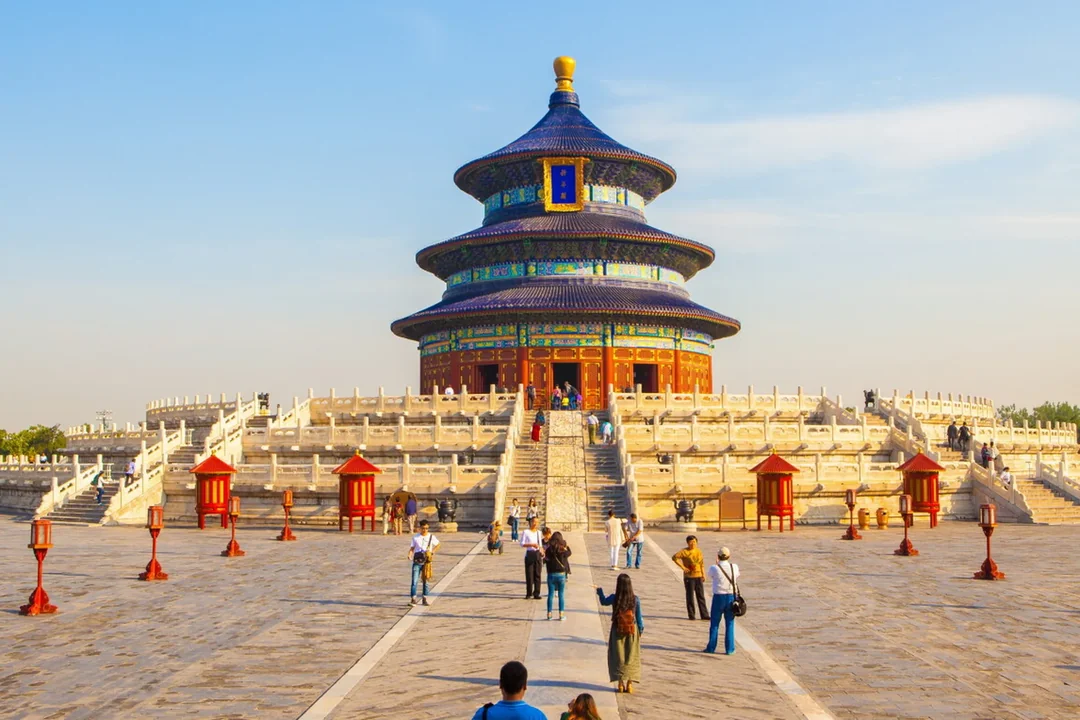
Temple of Heaven: an Imperial Sacrificial Altar in Beijing
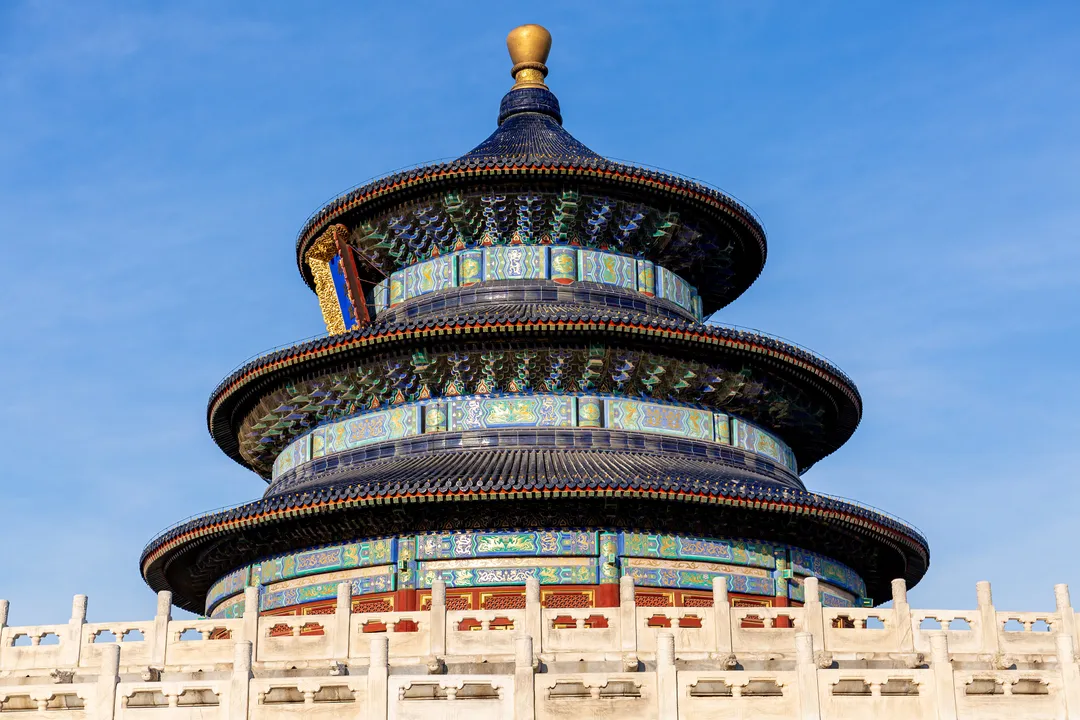
Where Ming and Qing emperors prayed for harvest — the Hall of Prayer for Good Harvests is the most perfect wooden structure in China. 2.73 km² of park. 2–3 hours. ¥35.
unesco2026-10-27
At a glance
- ticket
- ¥35 (Apr–Oct) / ¥30 (Nov–Mar). Park grounds: ¥15 / ¥10. Combo: ¥35 year-round.
- hours
- Park: 6:00–21:00. Monuments: 8:00–17:30 (last entry 17:00).
- bestTime
- 6:30–7:30 AM for the park atmosphere (tai chi, singers, kites). 8:00 AM sharp for empty-monument photos. Weekdays essential.
- transport
- Tiantan Dongmen station (Metro Line 5), Exit A. Walk 1 min to the East Gate.
- duration
- 2–3 hours. 1 hour for the monuments, 1–2 hours for the park.
- Category
- cultural
- Year inscribed
- 1,998
- Category
- cultural
Why visit
Go at 7:00 AM — not for the monuments (they open at 8:00), but for the park. Hundreds of Beijing retirees doing tai chi, playing erhu, singing Peking opera, flying elaborate kites, playing Chinese chess. It is the best people-watching in Beijing and costs nothing — the park grounds are free for morning exercisers before 8:00. The Hall of Prayer itself, with its azure roof tiles and perfect proportions, is worth the ¥35 ticket alone. I prefer it architecturally to anything in the Forbidden City.
Highlights
- Hall of Prayer for Good Harvests — triple-eaved, 38 m tall, azure tile roof, zero nails, perfect Ming geometry
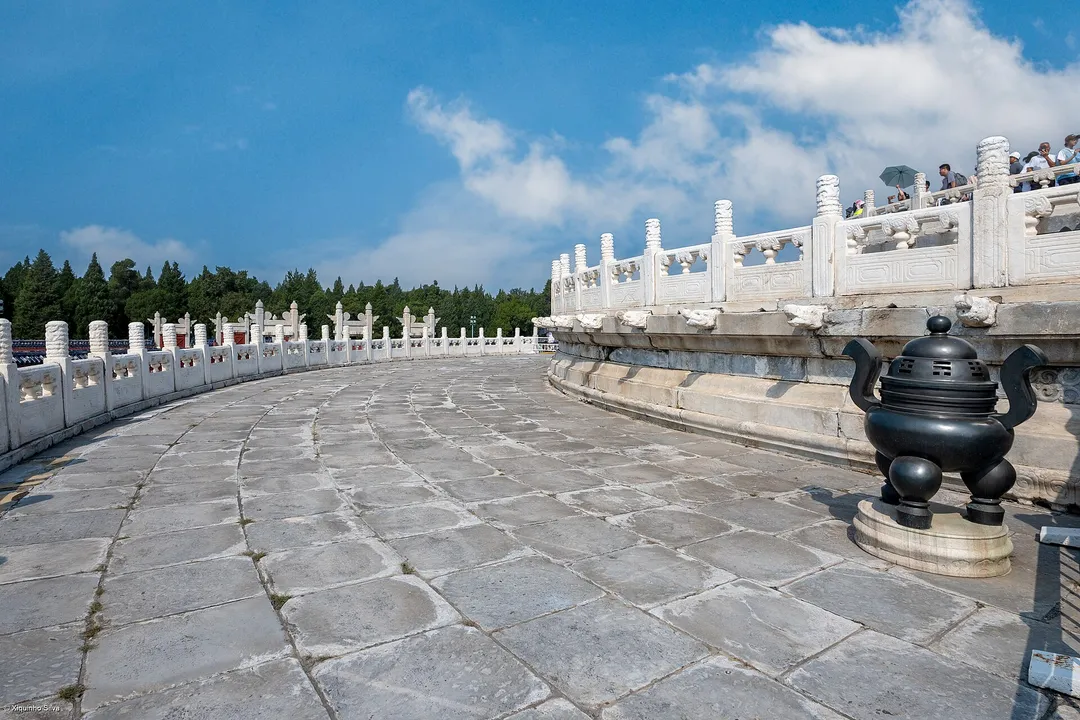
- Circular Mound Altar — the open-air altar where the emperor knelt, with acoustic amplification at the center stone
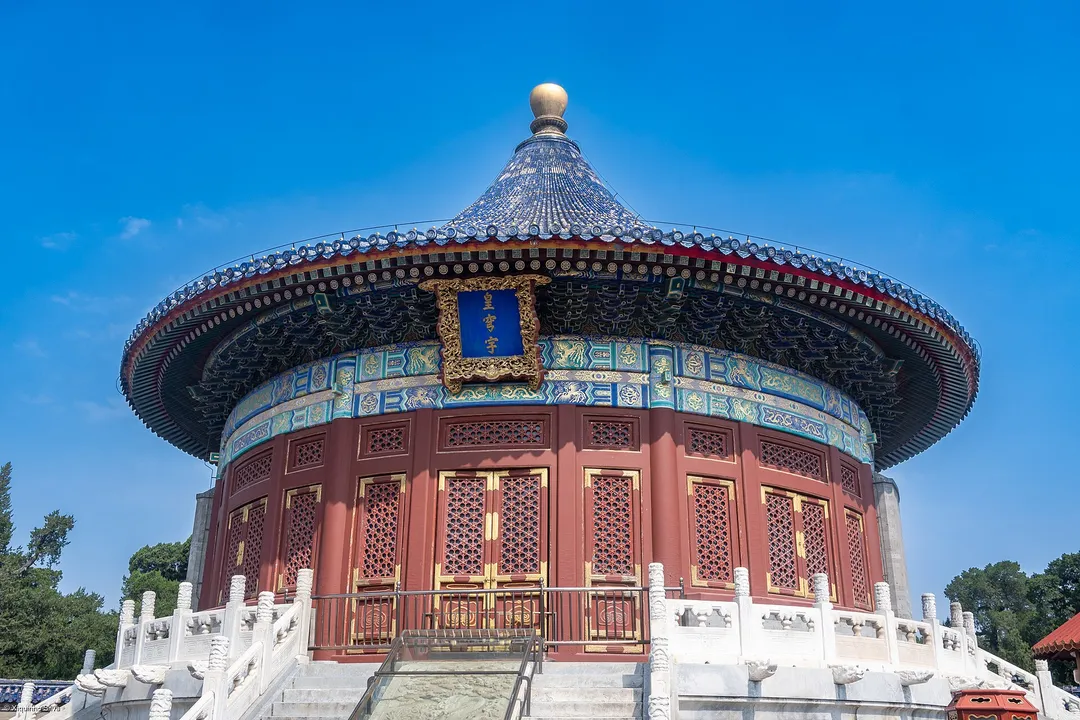
- Imperial Vault of Heaven — surrounded by the Echo Wall, where a whisper carries 65 m along the curved wall
- Long Corridor (outside the monuments) — the morning gathering spot for pensioner musicians and card players
Tips
- Go at 6:30 AM — the park outside the ticketed monuments is free for morning exercisers (before 8:00) and full of life
- Buy the combo ticket (¥35) not the park-only ticket — you will regret standing outside the Hall of Prayer
- The Echo Wall is less impressive than its reputation — crowd noise usually drowns the effect
- Combine with Hongqiao Pearl Market (10 min walk, 5 floors of pearls and souvenirs) for a half-day outing
FAQs
What did the emperors do at the Temple of Heaven?
On the winter solstice, the emperor fasted, bathed, and processed from the Forbidden City to the Temple of Heaven to perform the Heaven Worship Ceremony on the Circular Mound Altar. The ritual was the most important state ceremony of the year — a successful sacrifice ensured good harvests and, by extension, the dynasty's legitimacy. The last ceremony was in 1914 (Yuan Shikai, briefly).
Is the Hall of Prayer really built without nails?
Yes — the 38 m-tall, 36 m-diameter structure uses interlocking wooden brackets (dougong) and mortise-and-tenon joinery exclusively. No nails, no screws. The 28 pillars supporting the triple roof represent the 28 lunar mansions. The four central dragon pillars represent the four seasons. Built in 1420, rebuilt identically in 1889 after a lightning fire.
What time should I visit?
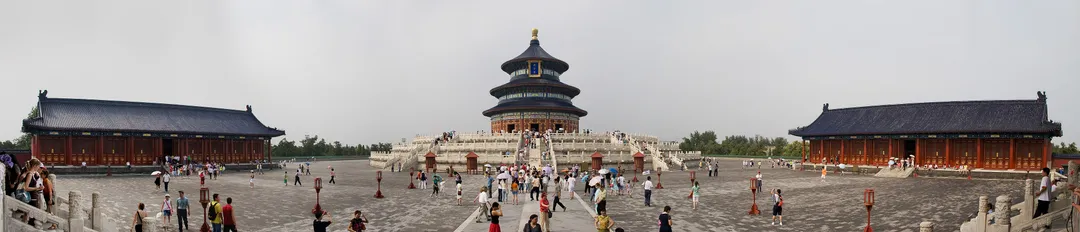
6:30–7:30 AM for the park (tai chi, opera, kites — free before 8:00). Enter the monuments at 8:00 AM sharp for the Hall of Prayer without the tour groups. By 9:30 the square in front of the Hall is shoulder-to-shoulder.