Xiamen · Visitor Guide

Xiamen University (厦门大学, Xiàmén Dàxué)

Xiamen University (XMU) is widely considered one of China's most beautiful university campuses, blending Spanish Moorish Revival architecture from its 1920s founding with tropical landscaping — banyan trees, palm avenues, lotus ponds, and hibiscus hedges. Founded by Tan Kah Kee in 1921, it sits on a hillside overlooking Xiamen Bay. The campus is open to visitors and can be explored on foot in 2–3 hours.

Last updated:

Xiamen University travel photo

Quick Answer

Is Xiamen University worth visiting?

China's most beautiful university campuses. Colonial-era architecture, lakes, and palm-lined avenues. Free to walk through.

Quick facts

TicketFree entry (as of 2026). Campus museums: ¥10–20. Visitors must present ID and register via the XMU WeChat mini-program.
HoursCampus: open to visitors 12:00–13:00 and 17:00–21:00 on weekdays; all day on weekends and public holidays. Museum hours: 8:00–11:30, 14:30–17:00.
Recommended duration2–3 hours.
Best time to visitWeekday lunch hours (12:00–13:00) when students are absent. Autumn (October–November) for mild weather and campus events. Avoid Chinese public holidays when the campus is overwhelmed with visitors.
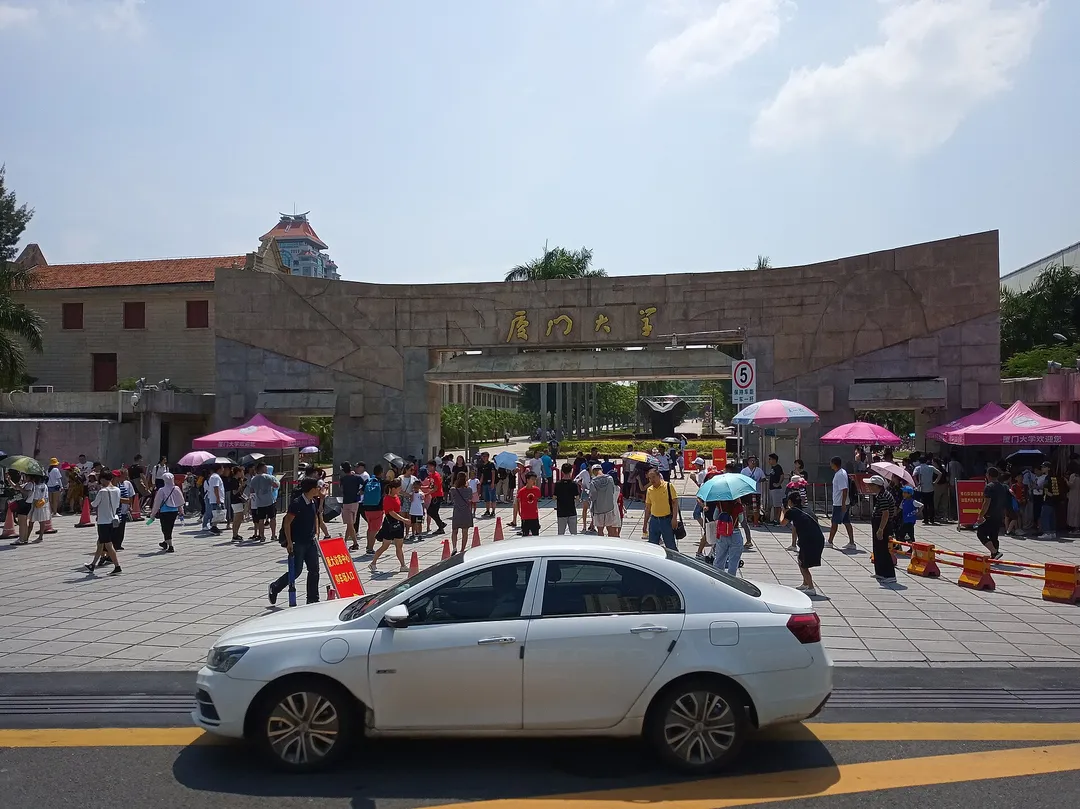
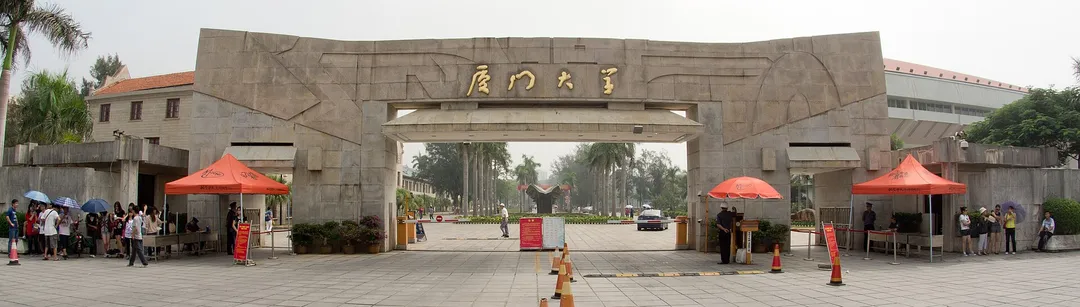
How to get thereMetro Line 1 to Xiamen University Station (厦门大学站) on the west side, or Nanputuo Station (南普陀站), Exit 2, then walk 5 minutes to the main south gate on Siming South Road. Register via the "XMU Visitor" WeChat mini-program before entering. Bring your passport or Chinese ID card for registration.
English signageyes
Wheelchair accessiblepartial
Founded1921 by Tan Kah Kee
Students40,000+ (undergraduate and graduate)
Notable alumniMo Yan (Nobel Prize in Literature 2012)
Architectural styleSpanish Moorish Revival (1920s)
Campus area0.9 km² (main campus)

What to expect

Xiamen University was founded in 1921 by Tan Kah Kee, a wealthy overseas Chinese businessman who made his fortune in Singapore and returned to China to invest in education. Tan's vision was to create a modern university for Fujian Province, and he hired American-trained architect Chen Zhiqian to design the campus in a Spanish Moorish Revival style — white walls, red-tile roofs, arched colonnades, and decorative ceramic tiles — that was unusual for China at the time and remains distinctive today.

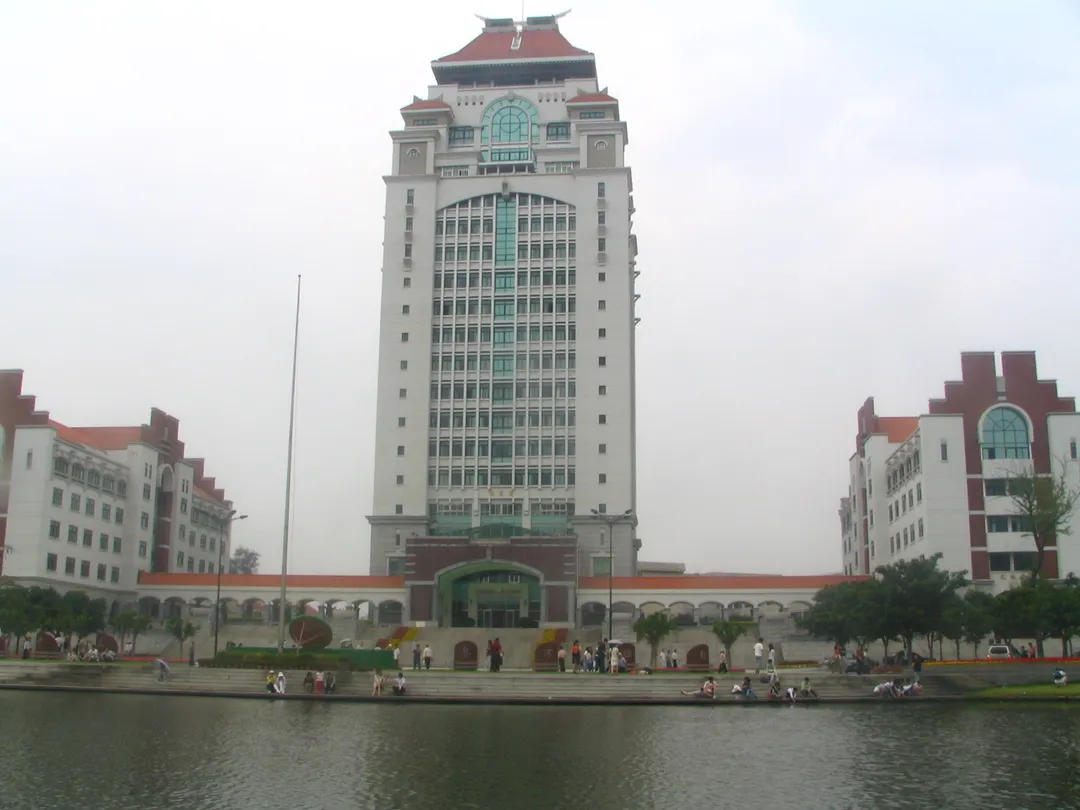
The campus is built on a hillside that descends to Xiamen Bay, with the main academic buildings occupying the center and student dormitories climbing the slopes to the west. A network of banyan-shaded paths connects the various colleges, libraries, and sports facilities. The university's two landmark buildings — the Upper Campus (上弦场) sports stadium with its grandstand overlooking a lake, and the Faculty of Arts building with its iconic twin clock towers — are among the most photographed spots in Xiamen.

XMU has a large international student body and offers programs taught in English. The campus feels lively year-round with students cycling between classes, playing basketball, and studying in the shade of banyan trees. The campus is open to the public during specific hours, and on weekends it fills with tourists, especially families with children.

How to get there

Metro Line 1 to Xiamen University Station (厦门大学站) on the west side, or Nanputuo Station (南普陀站), Exit 2, then walk 5 minutes to the main south gate on Siming South Road. Register via the "XMU Visitor" WeChat mini-program before entering. Bring your passport or Chinese ID card for registration.

Best photo spots

Tips

Scams to avoid

Frequently asked questions

Do I need to register to visit Xiamen University?

Yes. Foreign visitors must register via the "XMU Visitor" WeChat mini-program and present their passport at the gate. Chinese visitors can use their national ID. Registration is free. On weekdays, entry is limited to 12:00–13:00 and 17:00–21:00; on weekends and holidays, it is open all day.

Can I eat at the university cafeterias?

Yes. The student cafeterias are open to the public and offer very cheap, authentic Chinese food (¥15–30 per meal). The quality is good. Bring cash. The Faculty Club (师生服务中心) has a broader selection including Western options.

Is XMU wheelchair accessible?

Partially. The main flat areas (central square, Upper Campus lake area) are accessible, but many historic buildings have stairs. Newer buildings and the museum are generally accessible. The hilly western dormitory area is not.

What is there to see inside XMU besides architecture?

The campus has a good museum of natural history (厦门大学人类博物馆, ¥10), an art gallery (厦门大学艺术学院展厅), and several memorial halls for Tan Kah Kee. The seaside area with volleyball courts and the lake are pleasant for a stroll.

How long do I need to explore XMU?

Two to three hours for a thorough walk. A quick highlight tour takes 1 hour. Combine with Nanputuo Temple next door for a half-day itinerary.

Read next

Other things to do in Xiamen

Museums in Xiamen

Sources