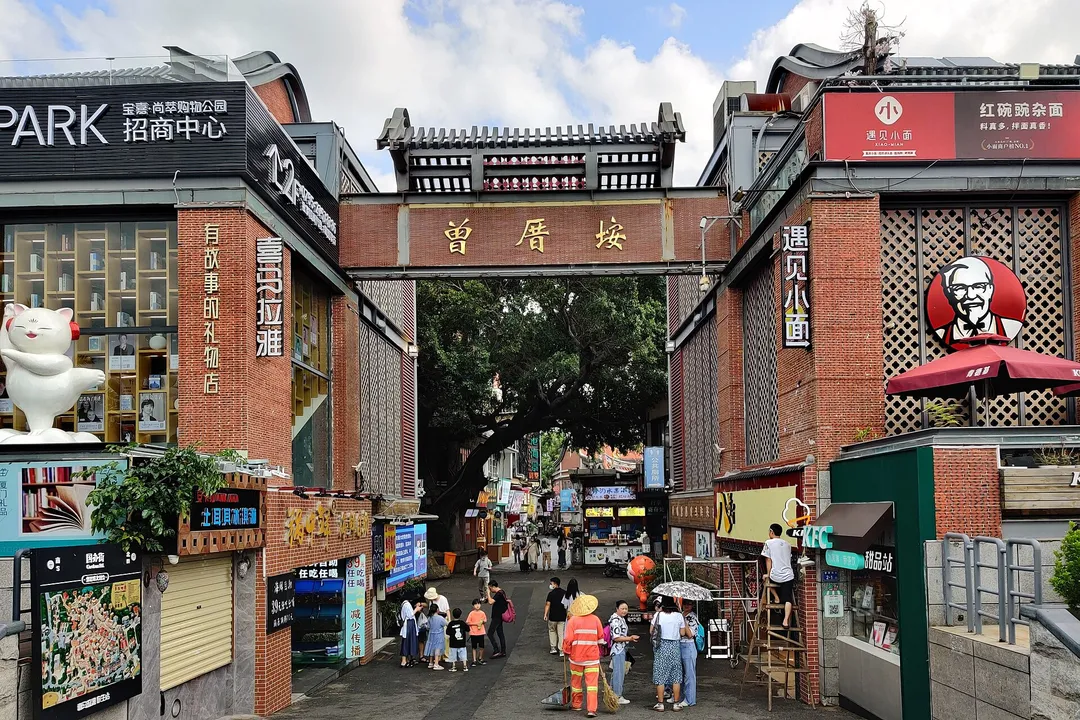
Zengcuoan Ancient Village曾厝垵
Zengcuoan is a former fishing village on Xiamen's southeastern coast that was incorporated into the city in the early 2000s. Its maze of narrow lanes — once the domain of fishermen and their families — is now lined with food stalls, souvenir shops, budget hostels, and cafés. The village retains some traditional Minnan (Southern Fujian) architecture amid the commercial trappings, and its location between the beach and the hills makes it a convenient base for budget travelers.
Xiamen · Visitor Guide2026-10-18

Quick Answer
Is Zengcuoan Ancient Village worth visiting?
Former fishing village turned tourist food street. Narrow lanes, local snacks, and budget hostels. Free to walk through; 1–2 hours, best as an evening food walk.
Quick facts
| Ticket | Free entry (as of 2026). Individual shops and food stalls charge their own prices. |
|---|---|
| Hours | The village is a commercial area — shops typically open 9:00–22:00, with food stalls busiest 17:00–21:00. |
| Recommended duration | 1–2 hours (evening food walk recommended). |
| Best time to visit | Late afternoon into evening for the best atmosphere and food stalls in full swing. Spring and autumn for pleasant outdoor walking. Summer evenings are crowded with domestic tourists. |
| How to get there | Take Metro Line 1 to Zengcuoan Station (曾厝垵站), then walk 3 minutes to the village's main entrance on Zengcuoan Road. Bus routes 29, 47, 48, 92, 310, B3 also stop at the Zengcuonan stop near the village's east gate. |
| English signage | Partial |
| Wheelchair accessible | No |
| Original inhabitants | Fishermen (village established in Ming Dynasty) |
| Current status | Tourist commercial street (no longer a working fishing village) |
| Architecture | Mix of traditional Minnan townhouses and commercial conversions |
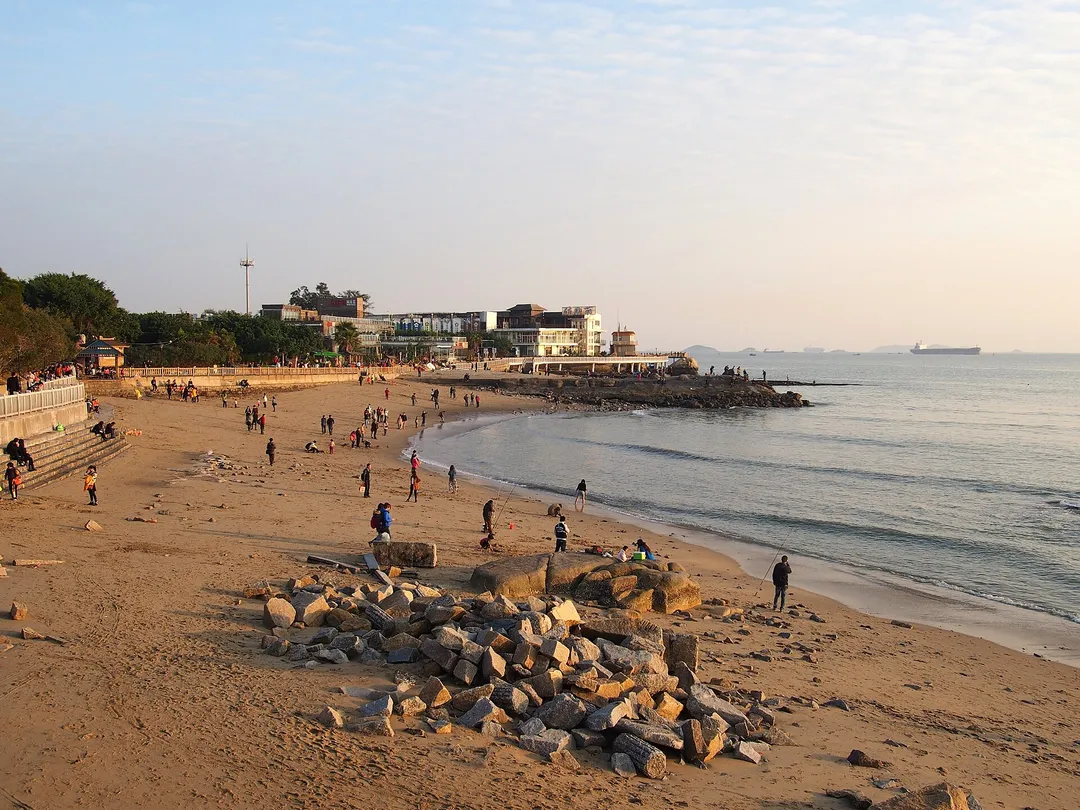
| Nearby beach | Zengcuoan Beach (曾厝垵海边) — 5-minute walk east |
| Budget accommodation | Dozens of hostels and budget hotels on the side streets |
What to expect
Zengcuoan was originally a small coastal village of fishermen and their families, established during the Ming Dynasty (1368–1644). For centuries, its residents made their living from the sea, and the village's narrow lanes were designed for the easy handling of fishing nets and boats rather than for tourists. The traditional Minnan architecture — gabled roofs, white-plastered walls, and brick courtyards — reflected the prosperity of Fujian's coastal communities.
Starting around 2010, Zengcuoan underwent rapid commercialization as Xiamen's tourism boom drove property owners to convert their homes into shops, hostels, and food stalls. Today the village is almost entirely given over to tourism — the fishermen are gone, replaced by vendors selling freshly grilled squid, mochi, pineapple buns, and oyster omelets. The transformation has been complete and, some would say, irreversible. The commercialized Zengcuoan has become Xiamen's answer to Wangfujing or, for foreign tourists, a more compact and walkable version of Nanjing's Confucius Temple area.
Despite the commercialization, a few pockets of traditional architecture survive on the side lanes away from the main commercial drag. Some Minnan courtyard houses have been preserved and converted into small museums or tea houses. The village also retains its position as a convenient budget traveler's base, with dozens of hostels within walking distance of the beach and the Huandao Road (环岛路) coastal path.
How to get there
Metro Line 1 to Zengcuoan Station (曾厝垵站), Exit 3. Walk west along Zengcuoan Road for 3 minutes to the village's main gate on the left. Alternatively, take bus routes 29, 47, 48, 92, 310, or B3 to the Zengcuonan stop. The village is a 5-minute walk from the beach.
Best photo spots
- The main commercial lane at golden hour — colorful lanterns and food stalls
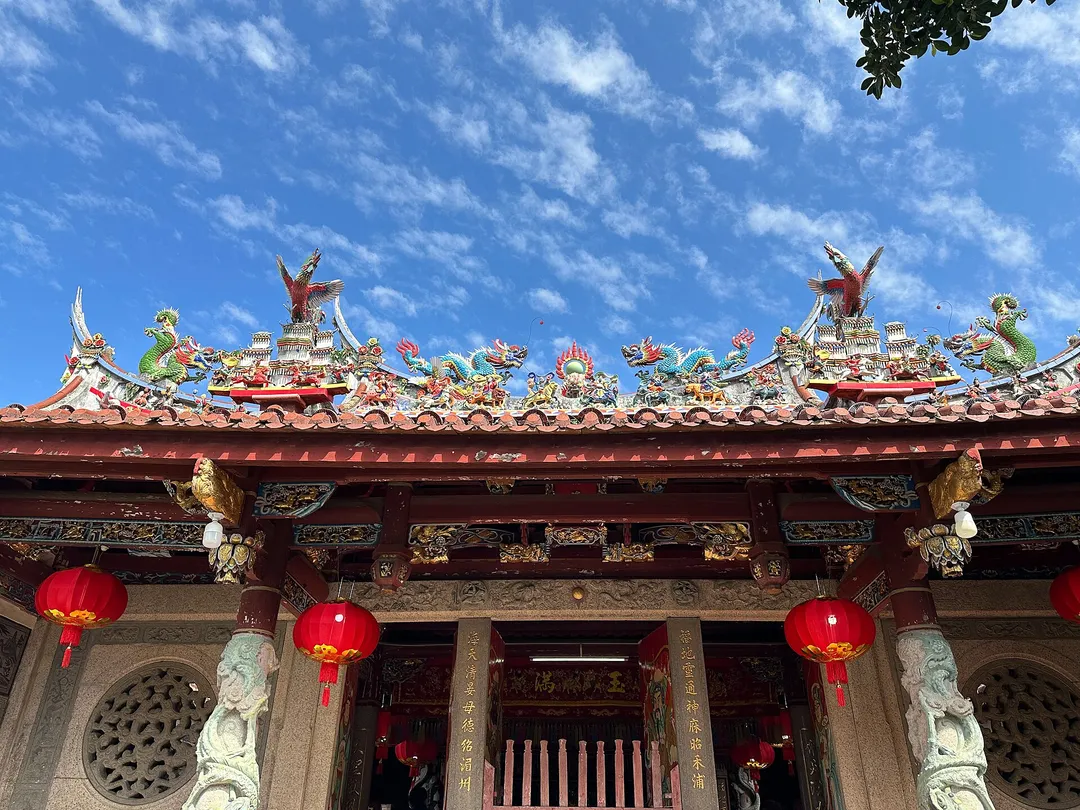
- The small Mazu Temple (妈祖宫) hidden in a side alley near the east gate — one of the oldest structures in the village
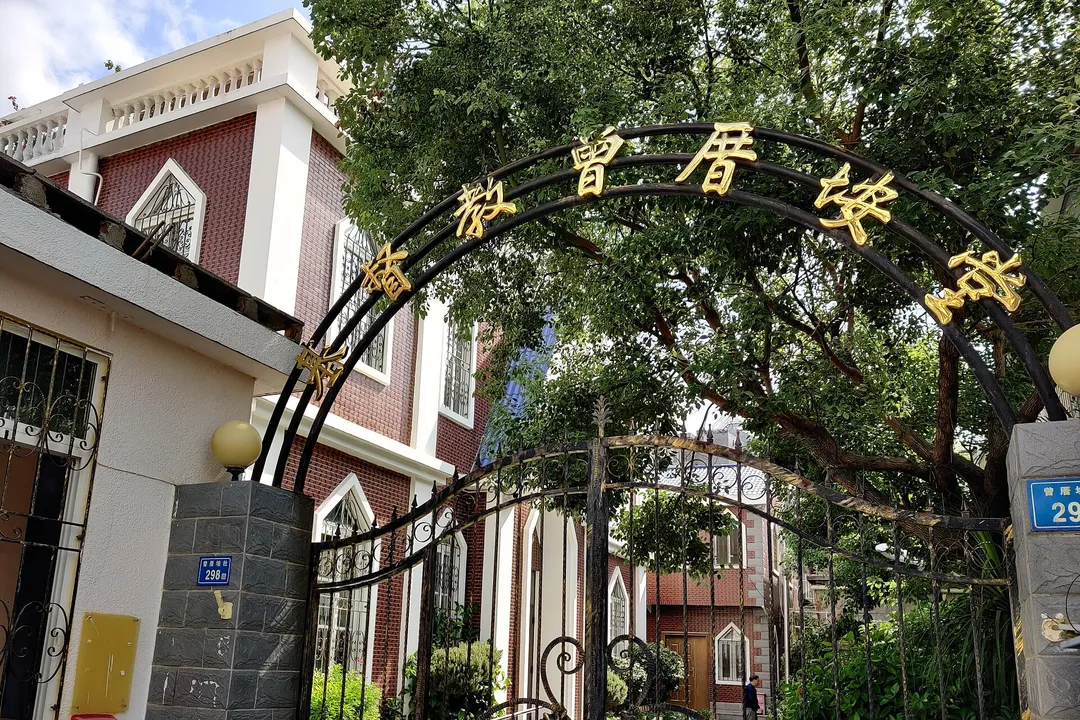
- The "Zengcuoan" arch at the village entrance — the classic landmark photo
- The quiet residential lanes on the north side of the village — drying laundry and old stone walls
Tips
- Come hungry — the food is the main attraction; try the oyster omelets, mochi, and freshly squeezed sugarcane juice
- Prices are fixed in the main lane but negotiable in side shops — bargain politely
- Best time to visit is after 5 PM when the food stalls start cooking and the evening atmosphere kicks in
- Stay overnight at one of the hostels to experience the quiet early morning before the tour buses arrive
- Walk east to the beach after your food tour for a post-meal sea breeze
Scams to avoid
- Some souvenir shops inflate prices significantly for tourists — compare prices at multiple stalls before buying
- "Fresh" seafood stalls that may serve frozen seafood at fresh prices — look for stalls where you can see the seafood being cooked from raw
Frequently asked questions
Is Zengcuoan worth visiting?
If you enjoy local food and people-watching, yes. If you want to experience an authentic fishing village, no — it has been fully commercialized since about 2015. For a more authentic coastal village experience, consider the fishing port at Dayu (大嶝) or the old town of Tong'an nearby.
What are the must-try foods in Zengcuoan?
Oyster omelet (海蛎煎), mochi rice cakes (麻糍), pineapple buns (菠萝包), grilled squid (烤鱿鱼), and sugarcane juice (甘蔗汁). Prices range from ¥5–25 per item.
Is Zengcuoan accessible for wheelchair users?
No. The narrow lanes, cobblestones, and multiple steps throughout the village make it impassable for wheelchairs.
How does Zengcuoan compare to other night markets in Xiamen?
Zengcuoan is the most famous and tourist-oriented food village in Xiamen. The more local 中山路 (Zhongshan Road) 步行街 has better-preserved colonial architecture but less focused on food. Gulangyu Island has a more atmospheric evening scene but is less commercialized overall.
Read next
Other things to do in Xiamen
Gulangyu Island
Car-free island with colonial architecture, piano museum, and seaside charm. Ferries from Xiamen (¥35 round trip). Best for a full day of 5–8 hours with ferry crossings.
Gulangyu Piano Museum
World's largest public piano collection on car-free Gulangyu Island. Antique pianos from the 18th–20th century. ¥20 entry.
Huandao Road (Island Ring Road)
43 km coastal scenic road around Xiamen Island. Best explored by bicycle. Free. Beaches, palm trees, and sea views.
Nanputuo Temple
Buddhist temple at the foot of Wulao Peak, Xiamen. Free entry; the vegetarian restaurant on site is a draw. One of China's most active monasteries; allow 2–3 hours.
Xiamen University
Often called China's most beautiful campus: colonial-era architecture, lakes, palm-lined avenues. Free entry with ID registration; campus museums ¥10–20. Allow 2–3 hours.
Museums in Xiamen
Gulangyu Organ Museum
Asia's finest organ museum on Gulangyu Island — with concerts at 10:00, 12:00, 14:00, 16:00.
Gulangyu Maritime Museum
Gulangyu Island's museum documenting the UNESCO-listed colonial island's 140-year history as a piano island and treaty port. Free (island entry ¥50-100 for non-residents).