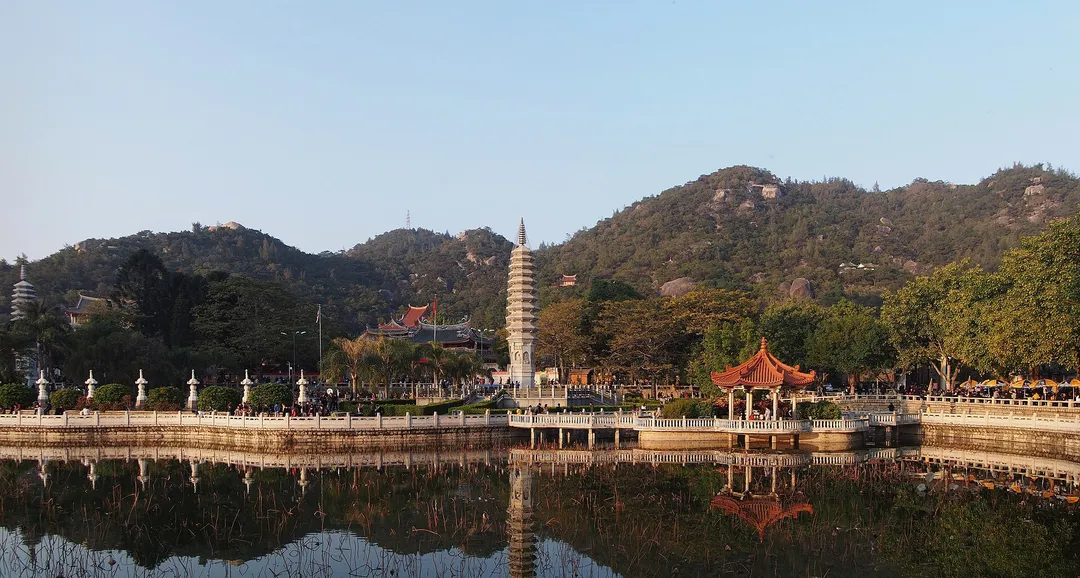
Nanputuo Temple南普陀寺
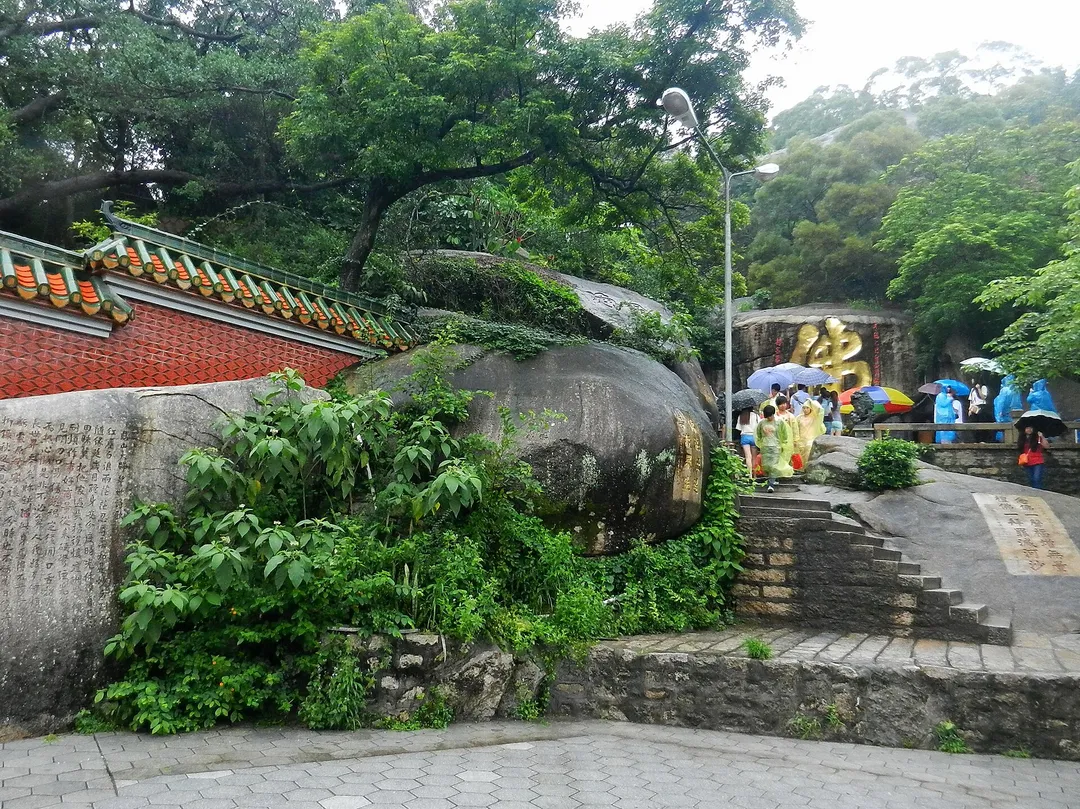
Nanputuo Temple is a centuries-old Buddhist monastery tucked against the forested slopes of Wulao Peak in southern Xiamen. It is one of the most important Buddhist temples in Fujian Province and one of China's most active monasteries, home to a large resident monastic community and a Buddhist academy. The temple's tiered layout ascending the hillside, its golden-tiled halls, and the mountain backdrop make it visually striking. Entry is free, and a celebrated vegetarian restaurant operates on the premises.
Xiamen · Visitor Guide2026-10-18
Quick Answer
Is Nanputuo Temple worth visiting?
Buddhist temple at the foot of Wulao Peak, Xiamen. Free entry; the vegetarian restaurant on site is a draw. One of China's most active monasteries; allow 2–3 hours.
Quick facts
| Ticket | Free entry (as of 2026). Buddhist Academy hall: ¥5. Wulao Peak hike: free. Vegetarian restaurant: ~¥50–100 per person. |
|---|---|
| Hours | Temple: 5:30–21:00 (summer), 6:00–20:00 (winter). Vegetarian restaurant: 10:30–14:00, 16:30–19:30. |
| Recommended duration | 2–3 hours (temple visit + optional Wulao Peak hike adds 1–2 hours). |
| Best time to visit | Early morning (7:00–9:00) for peaceful incense-lit rituals. Spring and autumn for pleasant hiking weather. Avoid major Buddhist holidays when crowds swell. |
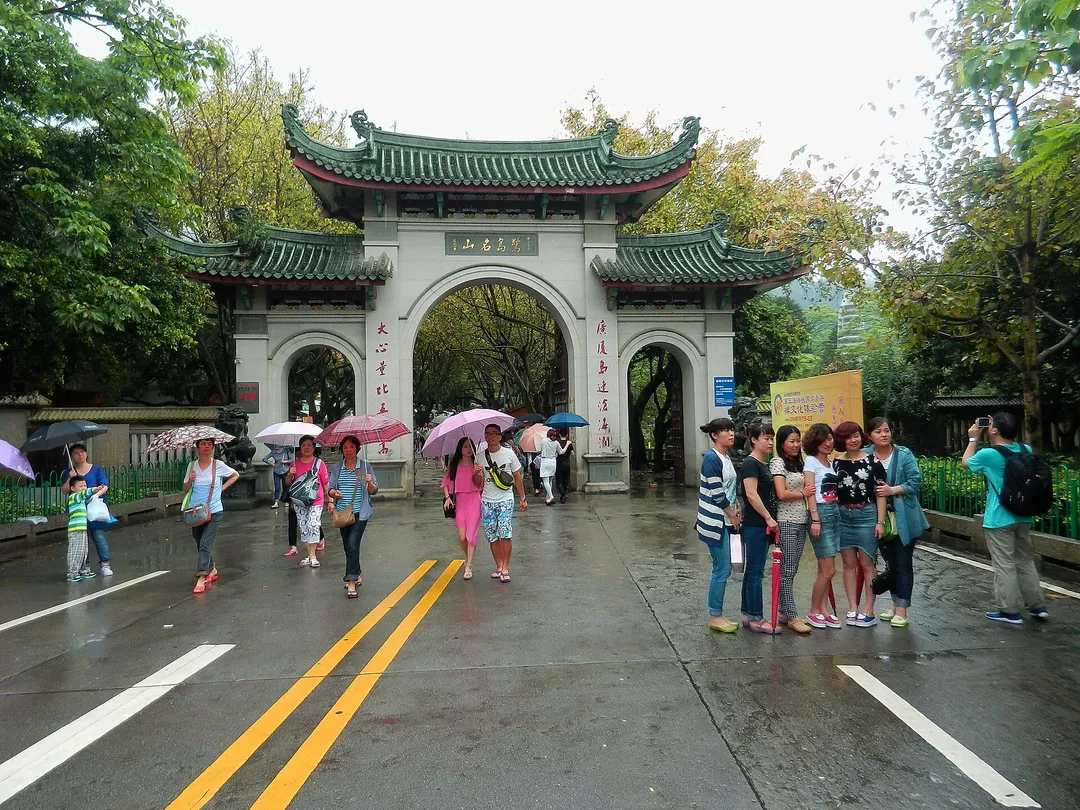
| How to get there | Take Metro Line 1 to Nanputuo Station (南普陀站), Exit 1, then walk 5 minutes east. The temple is on the south side of Xiamen University campus. Buses 1, 15, 21, 29, 45, 47, 71, 87, 135, 309, 751, 841 also stop nearby. |
| English signage | Yes |
| Wheelchair accessible | Partial |
| Founded | Tang Dynasty (839 AD) |
| Denomination | Pure Land Buddhism (净土宗) |
| Key feature | Five halls ascending a hillside with Wulao Peak backdrop |
| Academy | Fujian Buddhist Academy on site |
| Vegetarian restaurant | Famous temple vegetarian restaurant since 1959 |
What to expect
Nanputuo was founded in 839 AD during the Tang Dynasty, though the current buildings are mostly reconstructions from the Qing Dynasty and later. The temple's name means "Southern Mount Putuo" — a reference to the famous Mount Putuo in Zhejiang, one of the Four Sacred Buddhist Mountains of China. Legend has it that monks from that temple traveled south and established this monastery at the foot of Wulao Peak, which they considered a miniature sacred mountain.
The temple complex follows a traditional Chinese Buddhist layout with five progressive halls: the Mountain Gate (山门), the Heavenly King Hall (天王殿), the Grand Hall (大雄宝殿), the Mahavira Hall (大悲殿), and the Buddhist Library (藏经楼). What makes Nanputuo distinctive is the way these halls climb the hillside, each one elevated above the last, with Wulao Peak rising dramatically behind. Incense fills the air throughout the day as worshippers light candles and place incense at the great bronze incense cauldron in the courtyard.
The temple operates a well-known vegetarian restaurant that serves Buddhist vegetarian cuisine — elaborate mock-meat dishes made from gluten, mushrooms, and vegetables. The restaurant is wildly popular with Chinese tourists; expect long queues at lunch. The temple also has a Buddhist bookstore and runs the Fujian Buddhist Academy, making it one of China's most active centers of Buddhist learning.
How to get there
Metro Line 1 to Nanputuo Station (南普陀站), Exit 1. Walk east along Siming South Road (思明南路) for 5 minutes. The temple's main gate faces south. Alternatively, take bus routes 1, 15, 21, 29, 45, 47, 71, 87, 135, 309, 751, or 841 and get off at the Nanputuo stop. The temple is a 10-minute walk from Xiamen University.
Best photo spots
- The grand bronze incense cauldron in the main courtyard with Wulao Peak as backdrop
- The five-hall ascending staircase — shoot upward from the Grand Hall courtyard
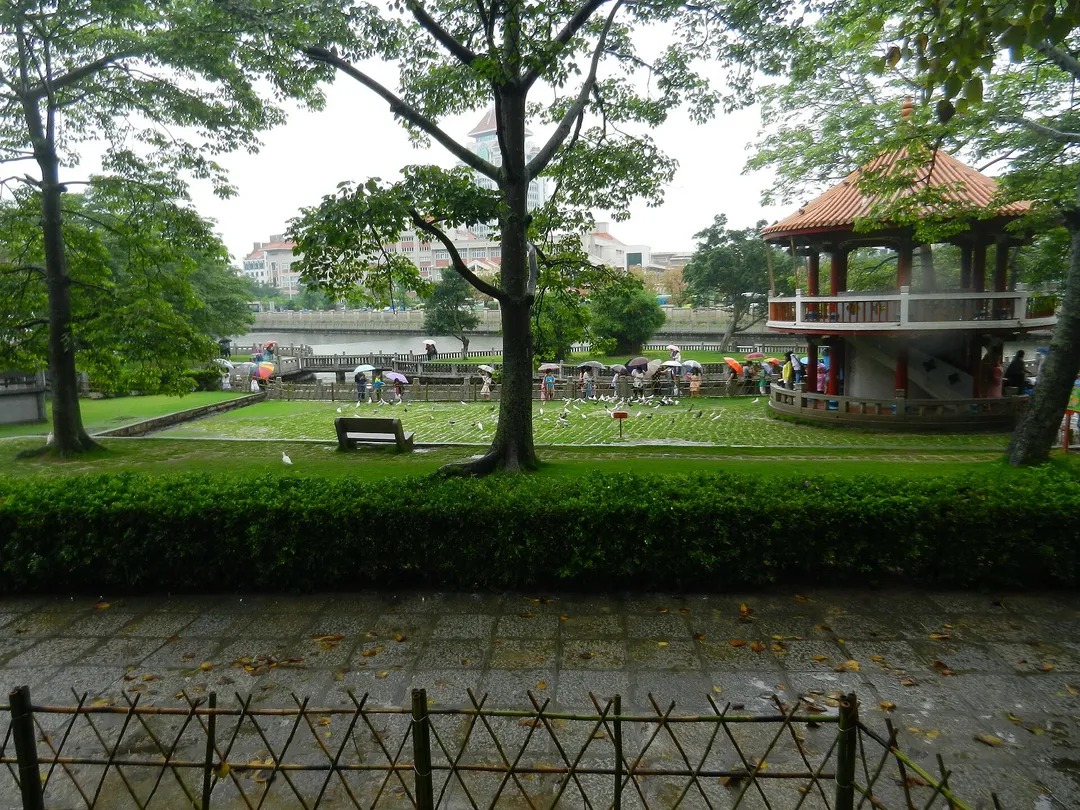
- The lotus pond in front of the Mahavira Hall — particularly beautiful in summer bloom
- The banyan trees lining the approach road from the metro station
Tips
- Go early morning (7:00 AM) to see monks performing dawn rituals and avoid tour groups
- The vegetarian restaurant is excellent but crowded — arrive before 10:30 or after 14:00 to avoid queues
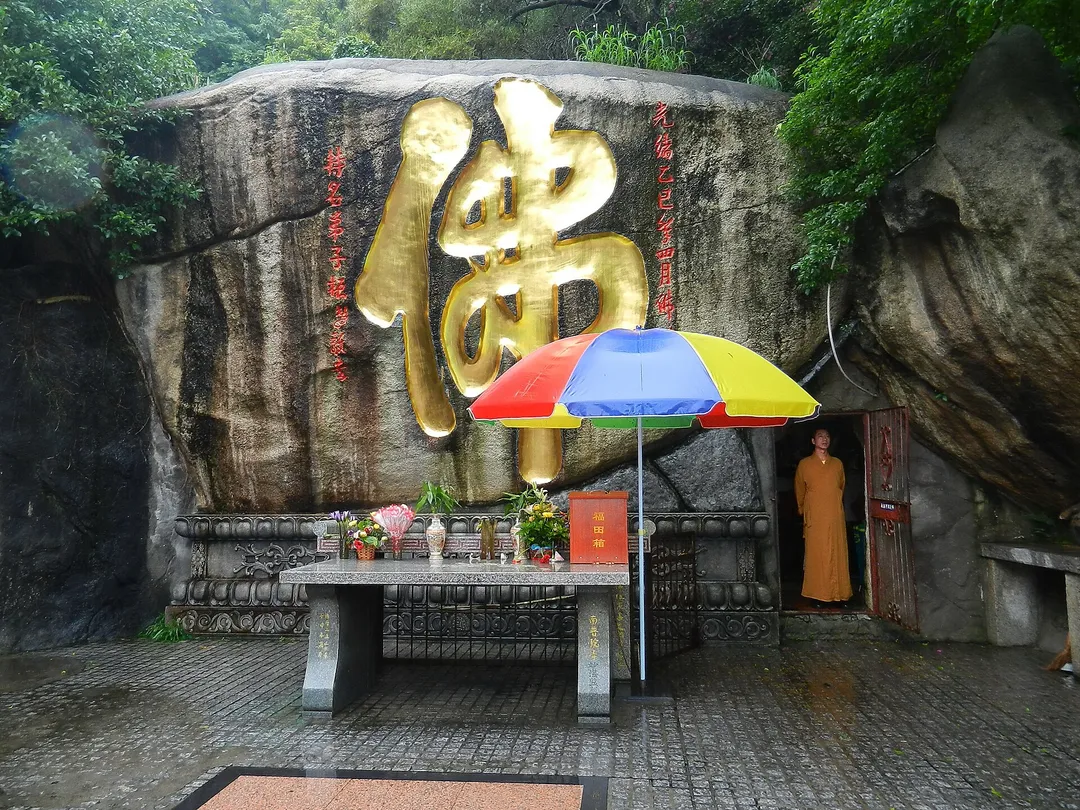
- Wear modest clothing covering shoulders and knees — this is an active monastery, not just a tourist site
- Combine with a visit to Xiamen University, which is a 10-minute walk to the north
- Wulao Peak hike takes 1.5–2 hours round trip and offers views over Xiamen — start before 10:00 AM to avoid midday heat
Scams to avoid
- "Fortune-telling monks" near the temple entrance who approach foreign tourists and demand payment for readings — ignore them; genuine Buddhist monks do not solicit money this way
- Street vendors just outside the temple selling "blessed" items at inflated prices
Frequently asked questions
Is Nanputuo Temple free to enter?
Yes, admission to the temple grounds is free. The Buddhist Academy exhibition hall costs ¥5. The Wulao Peak hike is free. The vegetarian restaurant is a separate paid experience (¥50–100 per person).
Is the temple wheelchair accessible?
Partially. The main courtyard and lower halls are accessible, but the upper halls (Mahavira Hall, Buddhist Library) require climbing stairs. The Wulao Peak hike is not accessible. Wheelchair users can access the vegetarian restaurant without climbing.
Can I take photos inside the temple halls?
Photography is allowed in the outdoor courtyards and hallways but prohibited inside the main halls where Buddhist images are displayed. Look for the no-photography signs at the hall entrances.
What is appropriate temple etiquette?
Walk clockwise around the incense cauldron, light incense with both hands, bow at the hall entrances, and保持 quiet. Do not point at Buddhist statues, touch monks' robes without permission, or wear revealing clothing.
How do I get to Nanputuo from Gulangyu Island?
Take the return ferry from Gulangyu to Dongdu Pier, then take Metro Line 2 to Lundu Road (鹭江道), transfer to Line 1, and ride to Nanputuo Station. Total time approximately 45 minutes.
Read next
Other things to do in Xiamen
Gulangyu Island
Car-free island with colonial architecture, piano museum, and seaside charm. Ferries from Xiamen (¥35 round trip). Best for a full day of 5–8 hours with ferry crossings.
Gulangyu Piano Museum
World's largest public piano collection on car-free Gulangyu Island. Antique pianos from the 18th–20th century. ¥20 entry.
Huandao Road (Island Ring Road)
43 km coastal scenic road around Xiamen Island. Best explored by bicycle. Free. Beaches, palm trees, and sea views.
Xiamen University
Often called China's most beautiful campus: colonial-era architecture, lakes, palm-lined avenues. Free entry with ID registration; campus museums ¥10–20. Allow 2–3 hours.
Zengcuoan Ancient Village
Former fishing village turned tourist food street. Narrow lanes, local snacks, and budget hostels. Free to walk through; 1–2 hours, best as an evening food walk.
Museums in Xiamen
Gulangyu Organ Museum
Asia's finest organ museum on Gulangyu Island — with concerts at 10:00, 12:00, 14:00, 16:00.
Gulangyu Maritime Museum
Gulangyu Island's museum documenting the UNESCO-listed colonial island's 140-year history as a piano island and treaty port. Free (island entry ¥50-100 for non-residents).