Summary
Xiamen (厦门) is a compact island city on the southeast coast of Fujian province, directly across the strait from Kinmen, an hour's flight from Hong Kong and Shenzhen, and four to five hours from Shanghai by high-speed rail. It is one of the few Chinese cities where the headline sights sit within walking or cycling distance of one another, where the sea stays visible from most downtown rooftops, and where the tempo drops a gear without the place ever feeling sleepy. We have used Xiamen as a weekend destination, as a base for exploring inland Fujian, and as a stopover between the Pearl River and Yangtze deltas, and it performs well in all three roles.
Two to three days is the right stay. One full day belongs to Gulangyu, the car-free island 600 meters offshore that UNESCO inscribed as a World Heritage Site in 2017. A second day covers Nanputuo Temple, Xiamen University, the Island Ring Road, Zengcuoan and Shapowei — five stops concentrated in one walkable corner of the main island. A third day, if you have it, goes to Jimei School Village or to the tulou fortress villages two and a half hours inland. The most common planning mistake we see is squeezing Gulangyu into half a day: the island only empties of day-trippers in the late afternoon, and that is precisely when it starts to reward you.
This guide concentrates on the decisions that actually shape the trip: which ferry terminal non-residents must depart from, how the visitor caps on Gulangyu and the university campus work, what a bowl of shacha noodles should cost, and how to read the typhoon calendar. Prices are given in CNY. Where a figure can shift — ferry classes, tour fares, campus quotas — we give ranges and explain how to verify the current number before you commit.
Why Xiamen
Xiamen entered the modern world as Amoy, one of the five treaty ports opened after the First Opium War in 1843. The island nearest the harbor, Gulangyu, became an international settlement in 1903, and over the following half-century consulates, churches, hospitals and the mansions of returning Hokkien merchants from Southeast Asia crowded onto two square kilometers of rock. That layered past is still the physical fabric of the city: colonial-era arcades along Zhongshan Road, Fujian-style temple roofs behind them, 1920s villas on Gulangyu, and the campus that the philanthropist Tan Kah Kee built in 1921 on the slope above the sea. In 1980 Xiamen became one of China's first Special Economic Zones, which paid for the twin towers and glass banks you now see across the harbor.
Geography does the rest. The city core occupies a green island of roughly 130 square kilometers, with Gulangyu anchored offshore, the mainland districts of Jimei and Haicang across short bridges, and the outlines of Kinmen visible on clear days to the east. The climate is subtropical: camphor and banyan trees shade the pavements, and something is usually flowering. The sea here is not scenery — fishing boats still tie up at Shapowei, the Eighth Market still sells whatever came in that morning, and the ring road exists because locals actually cycle it on weekends.
The food alone justifies the trip. This is Minnan (southern Fujian) cooking: shacha noodles descended from Southeast Asian satay via returning emigrants, oyster omelettes fried on flat griddles, cold sea-worm aspic for the adventurous, ginger duck in clay pots, and sweet peanut soup for breakfast. It is one of China's great regional kitchens, and Xiamen is its most convenient showcase, with the cooking done in front of you at prices that rarely sting.
Our honest framing: Xiamen is not a museum city on the scale of Beijing or Xi'an, and no single building here will reorder your sense of history. It works as a sequence of pleasures — a walk, a bowl of noodles, a ferry ride, a sunset over a working harbor — and as a case study in how a Chinese port town absorbed the outside world without being flattened by it. If your itinerary demands one blockbuster monument after another, choose another city. If you want the place that Chinese surveys keep ranking among the country's most livable, come here, and give it two unhurried days.
Top Attractions
Almost everything listed below sits in Siming district on the island's south side, along a strip about five kilometers long between Xiamen University and Shapowei, plus the short ferry hop to Gulangyu. We list the sights in the order we would prioritize them. Gulangyu comes first because it is the only attraction that strictly requires advance booking, and because it deserves more of your time than any of the others combined.
Gulangyu (鼓浪屿)
Gulangyu is a two-square-kilometer island of about 20,000 permanent residents with no cars, no motorcycles and no bicycles, facing the downtown skyline across 600 meters of water. Between 1903 and 1943 it was governed as an international settlement, and the legacy is close to a thousand surviving historical buildings: consulates, churches, hospitals and the villa compounds of overseas-Chinese families. UNESCO inscribed it in 2017 as Gulangyu, Historic International Settlement. The piano association is genuine, not marketing — the island produced a remarkable share of China's concert pianists, and it still maintains a piano museum and an organ museum inside its oldest surviving buildings.
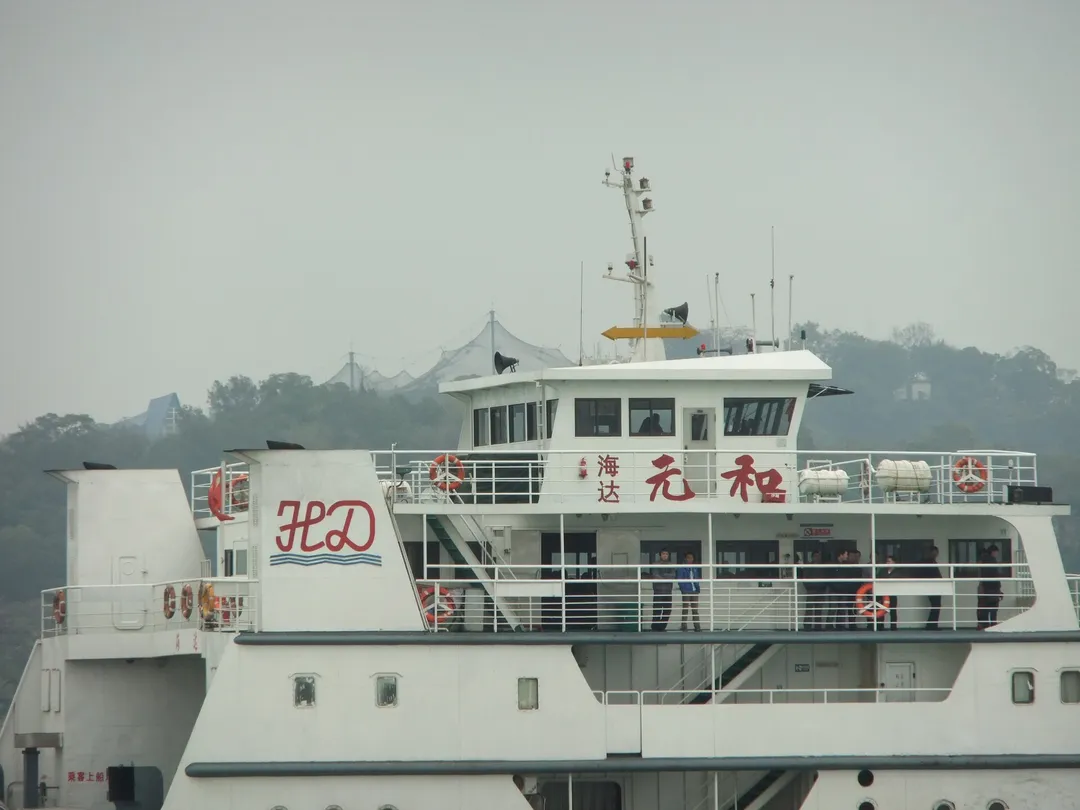
Getting there is the part most guides botch, so here is the drill. Visitors (anyone without a Xiamen resident ID) depart from the Dongdu International Cruise Terminal (东渡邮轮中心), not the historic Lundu ferry pier opposite Zhongshan Road, which is reserved for residents during the day. The standard round trip to the island's Sanqiutian terminal costs 35 CNY; premium class boats and night sailings — the evening departures that do leave from Lundu — run roughly 35-50 CNY. The crossing takes about 20 minutes. Tickets are real-name and tied to your passport: book through the official Xiamen Ferry WeChat account or at the terminal, up to fifteen days ahead. Daily visitor numbers are capped on the order of 50,000, and in July and August, on weekends and around public holidays the early slots sell out days in advance. Take the first ferry you can manage — around 7:10 AM in high season — and plan to stay until after 4 PM.
On the island, a combo ticket of about 90 CNY covers the five gated core sights: Sunlight Rock (日光岩, the 92.7-meter high point; 50 CNY on its own), Shuzhuang Garden (菽庄花园; 30 CNY on its own) with its clifftop Piano Museum, Haoyue Garden with its tall Koxinga statue, the Organ Museum inside the octagonal Bagua Building, and the international seal-carving museum. Our route: climb Sunlight Rock at 8 AM, before the tour groups and the heat, for the only full panorama of red roofs against the blue harbor; descend to Shuzhuang Garden to walk the Forty-Four Bridge, which threads across the tide at the base of the cliff; then Longtou Road for lunch — fish ball soup, and the famous hand-rolled mochi from the old stall outside, a few CNY a piece. Give the early afternoon to the Bagua Building's organ hall, then deliberately get lost in the lanes south and west around Neicuo'ao, where guesthouses, studios and cats outnumber visitors. Do not try to see everything. On this island, wandering is the attraction.
Nanputuo Temple and Xiamen University (南普陀寺与厦门大学)
These two share one address at the foot of Wulao Peak, and they belong to a single morning. Nanputuo is a large, active Buddhist monastery — monks, incense smoke and a vegetarian restaurant that locals queue for — with free entry and free incense at the gate (take three sticks; more is not better). On busy days the temple manages flow through a WeChat reservation, so have the mini-program ready. Dress modestly, keep your voice down near the halls, and step over rather than on the raised door thresholds. Behind the main halls, a steep stone path climbs the lower ridge of Wulao Peak; allow forty minutes round trip for the view over the university's red roofs to the sea.
Xiamen University next door, founded by Tan Kah Kee in 1921, appears on most "most beautiful campus in China" lists, and the ranking is earned: Furong Lake ringed with banyans, halls in the local idiom that architects summarize as "a Western suit with a Hokkien hat" — concrete bodies under curved southern-Fujian roofs. Visitor access is free but quota-controlled through the U厦大 mini-program: bring your passport, book several days ahead, and expect weekday caps and occasional full closures around exam periods. The policy has shifted repeatedly in recent years, so verify the week you travel rather than trusting any article, this one included. Inside, walk the lake, then the full length of Furong Tunnel, a 1.1-kilometer service tunnel painted end to end in graduating-class graffiti. Exit at the south gate onto Baicheng Beach, where the campus meets the sea and the ring road begins.
Island Ring Road (环岛路)
The ring road strings together roughly 31 kilometers of the island's southern and eastern shoreline, and the section between Baicheng Beach and the convention center — about nine kilometers — is the part worth your time: a wooden boardwalk for walkers, a separate bike lane, sandy coves, and the skyline of the twin towers behind you. Rent a bicycle from the stands near Baicheng for 20-40 CNY per hour, or unlock a shared bike (Hellobike, Meituan, Qingju) for about 1.5 CNY per half hour. Ride it in the first two hours of the morning or in the hour before sunset; at midday from June to September the sand is painful and the light flat. En route, Hulishan Fortress (胡里山炮台) is a coastal battery completed in the 1890s around a German Krupp 28-centimeter gun, one of the largest surviving anywhere; entry is about 25 CNY, and the morning artillery-drill reenactment is kitsch but well staged. Our verdict: cycling this stretch at sunset is the best free experience on the main island.
Zengcuoan (曾厝垵)
Zengcuoan is a former fishing village swallowed by the city and reborn as a dense maze of snack stalls, guesthouses and craft shops, five minutes' walk from the beach. We are ambivalent about it. At eight in the evening it is a crush of very similar street food aimed at tour groups, with prices to match; at five, before the crowds arrive, it is genuinely pleasant — narrow lanes, a small village temple tucked between the cafes, seafood grills firing up their charcoal, and the long beach a block away. Go in the late afternoon, eat either early or late, and treat the village as staging for the shoreline rather than as a destination in itself. Courtyard hostel beds run 60-150 CNY; seaside inns 300-600.
Shapowei (沙坡尾)
Shapowei is Xiamen's original harbor, a sheltered dock where small fishing boats still unload under the concrete ribs of the Yanwu Bridge viaduct. The warehouses and workshops around it have become the city's creative quarter — the converted-factory Art West zone with its skate bowl and indie shops, coffee roasters, young kitchens, and the "cat street" alley climbing the hill behind. It is the best place in Xiamen to do nothing in particular for two hours. Come an hour before sunset, walk the dock, then take a table facing the water. Dinner runs 40-80 CNY; craft beer 30-50.
Where to Stay
Three bases cover every travel style, and none of them is wrong — the decision is about which trade-offs you prefer.
Zhongshan Road and the old town — our default pick. This is the dense, arcaded heart of the island-side city: Metro Line 1 at Zhenhai Road, a five-minute walk to the Lundu pier for night ferries, and the Eighth Market within range for breakfast. Business-chain rooms run 250-450 CNY, boutique hotels in restored qilou buildings 400-700. The transport math is unbeatable — everything in this guide is reachable without a taxi. The one downside: dining directly on the pedestrian street is tourist-priced and mediocre; eat a few blocks off it, where the queues are local.
Gulangyu — the splurge that earns itself. Staying overnight on the island converts it from a crowded day trip into the best evening of your trip: after the last day-boat leaves, the lanes go quiet and the villas light up. Heritage guesthouses in restored buildings run 400-900 CNY and sell out four to six weeks ahead in season. Complications are real: you wheel your own luggage over cobbled lanes (porters can be hired at the terminal), and late arrivals depend on the night ferry schedule from Lundu. Worth it for couples and photographers; wrong for anyone who wants a swimming pool and a lobby.
Ring Road, Zengcuoan and Baicheng — for beach mornings. Sea-view inns 300-800 CNY, hostel beds 60-150, with the boardwalk at your door for sunrise runs and evening rides. The trade-off is transport: metro coverage out here is thin, so budget for buses or 15-25 CNY taxi rides into the old town.
Booking windows: for Golden Week (October 1-7), May Day and Chinese New Year, book four to six weeks out — the ferry slot and the room should be reserved the same week. For marathon weekend in early January, do the same. Otherwise one to two weeks ahead is enough, except Gulangyu in July and August.
Gastronomy
Minnan cooking is the reason some of us return to Xiamen at all. It is a seafood kitchen with a sweet edge, shaped by the trade routes that carried Hokkien emigrants to Southeast Asia and brought their taste for satay, spice and peanuts back home. Everything below is findable within a kilometer of Zhongshan Road or along University Road near Shapowei.
- Shacha noodles (沙茶面): the city's signature dish. The broth is simmered from dried shrimp, dried fish and ground peanuts — a direct descendant of satay, richer and less sweet — and you assemble the bowl yourself by pointing at toppings: fresh squid, pork liver, fried tofu, duck blood curd, leafy greens, 15-35 CNY depending on how many you stack. The famous shops (Wutang on Minzu Road is the canonical one) run 30-50 CNY fully loaded and queue from dawn. Our rule: if the stockpot has been going since morning and the stools are full of locals in work clothes, sit down; if the menu has photographs and English, walk on.
- Oyster omelette (海蛎煎): small winter-sweet oysters bound in sweet-potato starch, fried with egg until the edges crisp, eaten with a dip of fish sauce. 20-50 CNY. Best around the Eighth Market and University Road; acceptable in Zengcuoan at a markup.
- Sea-worm aspic (土笋冻): the rite of passage. Sea peanut worms are boiled until their collagen sets into a clear, cold jelly, served with mustard and vinegar. Flavor is mild and clean; the texture is the challenge. 10-25 CNY. Try it once at a shop with a glass counter and fast turnover — it is a far better dish than its description suggests, and saying you ate it earns you permanent credibility in Fujian.
- Ginger duck (姜母鸭): half or whole duck braised in a clay pot with whole ginger and sesame oil until the sauce reduces to a glaze. 120-200 CNY feeds two with rice and greens. A cold-evening dish; order it your second night.
- Mianxian hu (面线糊): fine rice vermicelli dissolved almost to a porridge in light broth, with oysters or pork offal stirred in. Breakfast of the working city, 15-30 CNY.
- Peanut soup (花生汤): peanuts simmered until they collapse into sweet milk, served with a fried cruller for dipping. 8-15 CNY; the century-old counter on Zhongshan Road still does it properly.
On Gulangyu, eat the fish ball soup and the hand-pounded mochi on Longtou Road, and do not expect more — the island's kitchens lean on nostalgia. For the deepest cut, go to the Eighth Market (八市) before ten in the morning: the city's stomach, where live seafood is sold by the jin (500 grams), and some stalls will cook your purchase for a fee — agree on both prices before anything hits the scale. Payment is QR code everywhere; carry 100-200 CNY cash for the oldest stalls.
Practical Information
Four things trip up first-time visitors here: entry rules, payments, the ferry regulations, and the weather calendar. None is difficult once you know it exists.
Visa
China's entry rules loosened sharply through 2024-2026: unilateral visa-free entry for stays up to 30 days now covers most of Europe and a growing list of Asia-Pacific and Latin American countries, and 240-hour (ten-day) visa-free transit is available to travelers from more than fifty countries arriving with confirmed onward tickets — Xiamen's airport is among the qualifying ports of entry. The lists change a few times a year, so confirm your own status with your airline or the nearest Chinese embassy before booking rather than relying on any guide. Passports should carry six months' validity. Hong Kong and Macau require separate entry arrangements from mainland China.
Currency and Payments
The currency is the renminbi yuan (CNY), trading around seven to the US dollar. In practice Xiamen is close to cashless: Alipay and WeChat Pay both accept international Visa and Mastercard, a change made in 2023 that transformed travel in China — install the app, link the card, and complete a test payment before you fly. Keep a cash buffer of 300-500 CNY withdrawn from ICBC or Bank of China ATMs (they accept foreign cards reliably) for old market stalls and small temples. Tipping is not practiced anywhere, and attempts to tip are politely refused. Prices in this guide are in CNY unless marked otherwise.
Getting Around
Metro. Three lines matter to visitors. Line 1 (opened 2017) runs the length of the main island north to Jimei — the sea-crossing stretch between Gaoqi and Jimei School Village stations, with water on both sides of the bridge, is photographed like a tourist attraction in its own right. Line 2 (2019) cuts west beneath the strait to Haicang. Line 3 (2021) dives east through an undersea road-rail tunnel to Xiang'an on the mainland coast. Fares run 2-7 CNY by distance; every station has security scanning, and the transit QR codes inside Alipay and WeChat work at the gates. Trains run roughly 6 AM to 11 PM.
Ferries. The rule bears repeating because it ruins trips: daytime Gulangyu ferries for visitors leave from Dongdu Cruise Terminal (35 CNY round trip standard), not the downtown Lundu pier. Night sailings after roughly 5:30 PM switch to Lundu, at 35-50 CNY. Real-name booking, passport required, cap on daily visitors.
Everything else. An elevated BRT busway connects the train stations and northern districts for a few yuan. Taxis start around 10 CNY for the first three kilometers and are honest; DiDi's English-language app works and is cheaper at rush hour. Shared bikes cost about 1.5 CNY per half hour and are ideal on the ring road — they are banned on Gulangyu. Gaoqi Airport (XMN) is unusually central: ten kilometers, 20-40 minutes, 30-50 CNY by taxi from downtown. The new Xiang'an International Airport to the northeast has been slated to open in the mid-2020s; if you are booking flights for 2026 or later, confirm which airport your itinerary actually uses before reserving a hotel.
Best Time to Visit
April-May and October-November are the two good windows: 20-28 degrees, lower rainfall, and in October the sea is still warm enough for swimming. June through September runs 33-36 degrees and humid, and July-September is typhoon season — one storm can close the airport and the ferries for two days, so any summer itinerary should carry one unscheduled buffer day. December to February is mild at 10-18 degrees, windy, and by far the cheapest, with no indoor heating anywhere in the city, so pack layers. Golden Weeks (Chinese New Year, May 1-5, October 1-7) multiply domestic crowds and ferry demand several-fold; Mid-Autumn is crowded too, but the city-wide dice games described below may make it worth the squeeze.
Cultural Considerations
Xiamen is a Minnan city first and a Chinese city second, in local eyes. The dialect spoken across three generations is Hokkien, the same language heard in Taipei and in Kuala Lumpur's old quarters; family networks run through Quanzhou and Zhangzhou inland, and across the water to Kinmen and Taiwan, whose coastlines are visible from the ring road on clear days. This is the closest mainland city to Taiwanese-held territory, and the history sits close — the artillery duels of 1958 targeted these hills, and the trade and family ties since the 1990s rebuilt them. Locals discuss cross-strait politics with a matter-of-factness that can startle visitors; our advice is to listen and ask rather than lecture, and to treat it as a family matter that is not yours to adjudicate.
At Nanputuo and other working temples, behave as you would in any active house of worship: modest dress, quiet voice, three sticks of the free incense, no flash photography of worshippers, and step over the raised thresholds rather than on them. Tea is the social operating system of the province. Any shopkeeper with a tea table may offer gongfu cha — small cups, repeated infusions, the leaves re-steeped all afternoon. Accept at least one cup; when someone pours for you, tap your index and middle fingers on the table twice, a thanks that frees everyone from conversation.
Queuing discipline is looser than in northern China, especially at ferry gates and market counters; a firm, polite stance works better than protest. Tipping does not exist in any context. English penetration is thin outside the major sights — install Pleco (dictionary) and a translation app with camera mode before arrival, and screenshot your hotel address in Chinese characters.
Mandarin gets you everywhere in Xiamen; a few words of Hokkien, the local language, earn visibly warmer treatment. Visitors mostly need the food words.
| Chinese | Pinyin | Meaning | | --- | --- | --- | | 你好 | nǐ hǎo | hello (Hokkien: lí-hó) | | 谢谢 | xiè xie | thank you | | 多少钱 | duō shao qián | how much | | 好吃 | hǎo chī | tasty (Hokkien: hó-tsiah) | | 沙茶面 | shā chá miàn | shacha noodles | | 海蛎煎 | hǎi lì jiān | oyster omelette | | 土笋冻 | tǔ sǔn dòng | sea-worm aspic | | 面线糊 | miàn xiàn hú | rice vermicelli soup | | 不要辣 | bú yào là | no chili, please |
Two-Day Itinerary
Day 1 — Gulangyu, start to finish. Taxi to the Dongdu cruise terminal by 6:45 for the first ferry (around 7:10 in high season; 20-minute crossing). Climb Sunlight Rock for the 8 AM opening while the platform is still uncrowded, then descend through the lanes to Shuzhuang Garden and the Piano Museum via the Forty-Four Bridge. Lunch on Longtou Road: fish ball soup, mochi from the old stall, and whatever the bakery windows look proud of. Early afternoon for the Organ Museum in the Bagua Building, then wander west into the Neicuo'ao lanes and the island's quiet southern shore. At 4:30, find a seat in Haoyue Garden facing the Koxinga statue and watch the day-trippers drain away and the light turn gold on the water. Return on a night ferry to Lundu — the downtown skyline crosses to meet you — and walk the lit arcades of Zhongshan Road on the way to dinner: oyster omelette and half a ginger duck near the Eighth Market.
Day 2 — the university quarter to Shapowei. At 7:30, Nanputuo Temple while the courtyards are full of incense and morning recitation rather than tour flags; free incense, then the forty-minute climb on the Wulao ridge for the view over the campus. Enter Xiamen University on your reserved slot at ten: Furong Lake, the halls under their Hokkien roofs, the full length of the graffiti tunnel, out the south gate to Baicheng Beach. Lunch is shacha noodles on University Road — Wutang, if the queue looks under twenty minutes. At two, rent bicycles and ride the boardwalk east: Hulishan Fortress and its Krupp gun (about 25 CNY, brief but worth it), then the long curve of beaches to the convention center. Swing back through Zengcuoan by five for grilled seafood at the civil hour, and end at Shapowei for sunset over the fishing dock, a walk around the Art West zone, and a last drink facing the harbor. If you still have legs, the twin towers' observation deck stays open into the evening.
A third day, well spent. Morning in Jimei School Village by Metro Line 1, afternoon in the Wanshi Botanical Garden's rainforest zone — or a full-day tulou excursion inland (see Day Trips). What you should not do is bolt Gulangyu onto an already-full day. It is the one sight in Xiamen that repays slowness with interest.
Beyond the Highlights
After the first pass through the headline sights, these two fill a third day or a rainy one, and both are lighter on foreign visitors.
Jimei School Village (集美学村)
Jimei, on the mainland side reached by Line 1, is the hometown of Tan Kah Kee, the overseas-Chinese philanthropist who also founded Xiamen University — and who began here, in 1913, by building schools for his village. The resulting campus town is architecture as autobiography: school halls in the "Western suit, Hokkien hat" manner, with granite bodies shipped stone by stone and sweeping southern roofs, arranged around the Dragon Boat Pond where June's festival races are still rowed. Entry to the grounds is free; the Ao Garden monument and the Tan Kah Kee Memorial Museum beside it charge at most a token fee. It is a working school district, not a theme park — go on a weekday morning, and read even a little of the story before you arrive, because the site explains itself modestly. The ride out on Line 1, crossing the strait with water on both sides, is a fair part of the excursion.
Railway Culture Park (铁路文化公园)
A decommissioned spur of the Yingxia Railway — the line that in 1957 first connected island Xiamen to China's national network — has been converted into about 4.5 kilometers of walking trail threaded through Siming district on the old embankment: leafy, quiet, used by morning exercisers and photographers of the twin towers framed in banyans. Free, with entrances near the Wanshi Botanical Garden. Pair the two: the botanical garden charges 30-40 CNY and covers a steep hillside — take the internal shuttle — and its two signatures are the misty rainforest zone (misting hours run roughly 9 to 11 AM; go inside them) and the glassed cactus dome. Together they make the best non-Gulangyu half day in the city.
Nightlife
Xiamen runs early by Shanghai standards, but it is far from asleep. Shapowei is the center of gravity: craft breweries and long-running livehouses around the old harbor, with door charges typically 50-100 CNY including a drink, and sets from local indie bands most weekends. Zengcuoan's folk-guitar bars run until midnight and skew cover-song; Gulangyu goes quiet by design, with a handful of wine bars off Longtou Road — check the last return ferry, which runs to about midnight, before ordering a second bottle. The paid view is the 55th-floor observation deck of the Shimao twin towers, roughly 100-150 CNY at dusk; the free view, and in our opinion the better one, is the Yanwu Bridge boardwalk at Shapowei with the fishing boats underneath. KTV remains the local default for group evenings, at 100-300 CNY per hour for a private room plus drinks. Prices in bars: local beer 10-20 CNY, craft 30-50, cocktails 50-80. Our standing recommendation for a last night: sunset on the dock, one live set in Shapowei, bed by one. This city's best hours are its mornings, and you will want to be awake for them.
Day Trips
Two excursions justify their travel time; both are long days. (Quanzhou, the Song-dynasty UNESCO port city, is only 30-50 minutes away by high-speed train, but it deserves its own overnight rather than being reduced to a day trip.)
Fujian Tulou (福建土楼)
The rammed-earth fortress villages of the Hakka and Minnan hill country — UNESCO-listed in 2008 — sit two and a half to three hours inland by road. The clusters nearest Xiamen are in Nanjing county: Tianluokeng's arrangement of four round towers around one square, locally nicknamed "four dishes and a soup"; Yuchang Building, a leaning tower from the fourteenth century with five centuries of occupation visible in its swaying wooden galleries; and Yunshuiyao, a banyan-shaded village strung along a slow stream. Yongding county's giants, such as Chengqi Building with four concentric rings and four hundred rooms, add another hour but reward it.
Group day tours from Xiamen run 200-500 CNY including transport, entry and lunch, and are bookable through any hotel or hostel a day or two ahead. Entry to each scenic cluster runs roughly 90-100 CNY. A chartered car with driver costs about 600-900 CNY for the day and buys you the freedom to skip the souvenir stops and linger where the tour buses do not. Leave by 7:30 AM and expect to return between 7 and 8 PM. If your schedule allows, the better move is to overnight in a converted tulou guesthouse (150-300 CNY, rooms are basic) — after the buses leave at five, the courtyards return to the families who still own them, and that, and not the photographs, is what the buildings are for.
Wuyishan (武夷山)
Call this one a two-day extension rather than a day trip. High-speed trains from Xiamen North reach Wuyishan East in roughly three to three and a half hours, putting you in the Danxiao cliffs of China's most celebrated rock-tea region. The scenic area's entry runs about 140 CNY per day, the Nine-Bend River bamboo raft — the definitive experience — about 140 CNY more, booked ahead, with the earliest departures getting the best light and the quietest water. Add tastings in the valleys where da hong pao is grown, and do the whole thing in October or November when the cliffs go red and the harvest is in. Our advice: Wuyishan only earns its train time if your total Fujian budget is five days or more. On a shorter trip, give those hours to Gulangyu after dark, and save the mountains for a dedicated journey.
Events and Festivals
- Xiamen Marathon (early January): one of Asia's highest-rated road races, run point-to-point along the ring road with the sea on one side the whole way. Hotels near the course spike the night before; spectators can simply walk onto the boardwalk.
- Chinese New Year (late January to mid-February, by lunar calendar): temple fairs at Nanputuo, lantern displays along the arcades, and many family restaurants closed for two or three days around the new moon. Book ferries and rooms early; the overseas-Chinese relatives come home this week.
- Mazu's birthday (23rd day of the third lunar month, usually April): processions and opera stages around the old harbor temples of a fishing city that still takes its patroness of seafarers seriously.
- Dragon Boat Festival (June): races on Jimei's Dragon Boat Pond — the best single morning to combine sport with Tan Kah Kee's architecture, and a short Metro Line 1 ride away.
- Mid-Autumn Festival (September or October): the one that belongs to Xiamen alone. For roughly a month beforehand the entire city plays bo bing (博饼), a dice game said to originate with a garrison general's homesick troops: six dice thrown into a porcelain bowl, the combinations ranked to win mooncakes and, in modern office leagues, rice cookers and toothpaste. Hotel lobbies, bars and any group of friends will have a table. Ask, and someone will put the bowl in your hands. The festival day itself is the most crowded of the year; the weeks before it are the sweet spot.
- Typhoon caveat: from July to September, any outdoor event can move or vanish on a day's notice. Check the forecast the evening before, not three days before.
Shopping
Tea is the serious purchase. Anxi tieguanyin oolong and Wuyi rock tea are both within this city's trading orbit, and honest drinking grades run 60-400 CNY per 500 grams from specialist shops around the old town. Any reputable shop will brew three or four rounds before you commit — the refusal to do so is itself the answer. Avoid anything sold as mother-tree da hong pao at airport prices; the real article is not for sale.
Dried seafood and fruit from the Eighth Market and the side streets off Zhongshan Road: dried mango, shrimp, squid, cuttlefish and the local pork floss (肉松), mostly vacuum-sealed for flights. Prices are quoted by the jin (500 grams); compare two stalls before buying and knock gently.
Crafts and souvenirs: seal-carving studios (the island's seal museum keeps working carvers), Gulangyu's piano trinkets for what they are, and hand-pounded mochi, which should be eaten the day it is made. For international brands, the SM City complex and Vientiane City (万象城) downtown cover the ground; some large malls offer departure tax refunds for overseas visitors — carry your passport and ask at the service desk, because no one will volunteer it.
Our warning, repeated for effect: nothing on Gulangyu is cheap, because every rent on the island is priced against one-time visitors. Buy the view; skip the souvenirs.
Decision Support
If you read only one section, read this one: it compresses every choice above into the four decisions that shape the trip.
Map
Ninety percent of a standard visit happens inside a five-kilometer radius: the university quarter, the ring road, Shapowei, the old town, and the two ferry terminals, with Gulangyu ten minutes offshore and Jimei forty minutes up Line 1. Download offline maps before arrival — Amap (an English-language app) and Baidu Maps are more accurate inside China than Google Maps, which misplaces addresses here. A paper city map from any hotel desk is a serviceable backup. The four pins worth saving immediately: Dongdu cruise terminal (daytime Gulangyu ferries), Lundu pier (night ferries), Zhenhai Road station (old-town base), and Jimei School Village station (the architecture half-day).
Cost breakdown
Realistic daily ranges per person, in CNY, at mid-2020s prices:
- Budget: 250-400 — hostel bed 60-150, street food and market meals 60-100, buses and metro 20-40, one paid sight 30-90.
- Mid-range: 500-900 — hotel room 300-600, restaurant meals 150-250, taxis plus metro 50-80, Gulangyu combo and campus-area sights 90-150.
- Comfort: 1,500 and up — sea-view or heritage hotels 900+, fine dining 300+, private car days 600-900.
One-off costs: Gulangyu ferry 35-50 round trip; island core-sights combo about 90; tulou day tour 200-500; the Wuyishan extension 1,500-2,500 including trains and two nights. Our recommended two-day plan, mid-range, totals roughly 1,200-2,000 CNY per person excluding flights — Xiamen remains one of the better-value cities on China's coast.
When to go
In order of preference: first, mid-October to November — dry, warm sea, post-Golden-Week calm; second, April to May — everything flowering, comfortably warm; third, early March or early December — shoulder-season rates with acceptable weather; fourth, June — hot but ahead of peak typhoon probability; fifth, July to September — perfectly enjoyable if your plans flex and you accept a possible two-day storm stoppage; last, the Golden Weeks, workable only with ferry slots and rooms booked weeks ahead. Two dates justify planning the whole trip around them deliberately: the marathon in early January, and the bo bing season before Mid-Autumn.
Practical
Reservations decide this itinerary: the Gulangyu ferry (official Xiamen Ferry WeChat account, real-name, passport, up to fifteen days ahead), Xiamen University (the U厦大 mini-program, passport, several days ahead, policies shift by semester), and tulou tours (any hotel or hostel, a day or two ahead). Carry your passport at all times — ferry and campus gates check it. Payments: Alipay or WeChat Pay bound to a foreign card, plus a 300-500 CNY cash buffer from an ICBC or Bank of China ATM. Connectivity: a tourist eSIM covering a week of data, or a local SIM at the airport with your passport. Weather: from July to September, hold one buffer day for typhoon cancellations and reconfirm the last night-ferry time on the day itself. And the one rule we would tattoo on the itinerary: never schedule Gulangyu as a half day.
Emergency numbers: police 110, ambulance 120, fire 119, national tourism hotline 12301. The two large public hospitals are Zhongshan Hospital and the First Affiliated Hospital of Xiamen University; registration desks operate in Chinese, so bring your passport, your phone's translation app and patience. Typhoon warnings are broadcast through the official weather accounts and the city's sirens; when the ferries stop, they stop for everyone. Carry travel insurance that covers medical evacuation — as everywhere in China, the private international-facing clinics bill at first-world rates.
Sources
https://whc.unesco.org/en/list/1541 UNESCO's World Heritage listing for Gulangyu, Historic International Settlement (inscribed 2017) — the nomination documentation maps the protected buildings and explains the international-settlement period behind them.
https://www.xmferry.com The Xiamen ferry operator's official site: Gulangyu routes, timetables, fares and the real-name booking channel — the primary source for the 35-50 CNY tickets, the Dongdu-versus-Lundu terminal rules and the daily visitor cap.
https://www.trip.com/travel-guide/xiamen/ Aggregated traveler reviews and current ticket prices for Xiamen attractions — the fastest cross-check for opening hours and reservation requirements, which shift several times a year.