This page is archived and no longer updated — see the current guide: See the current guide
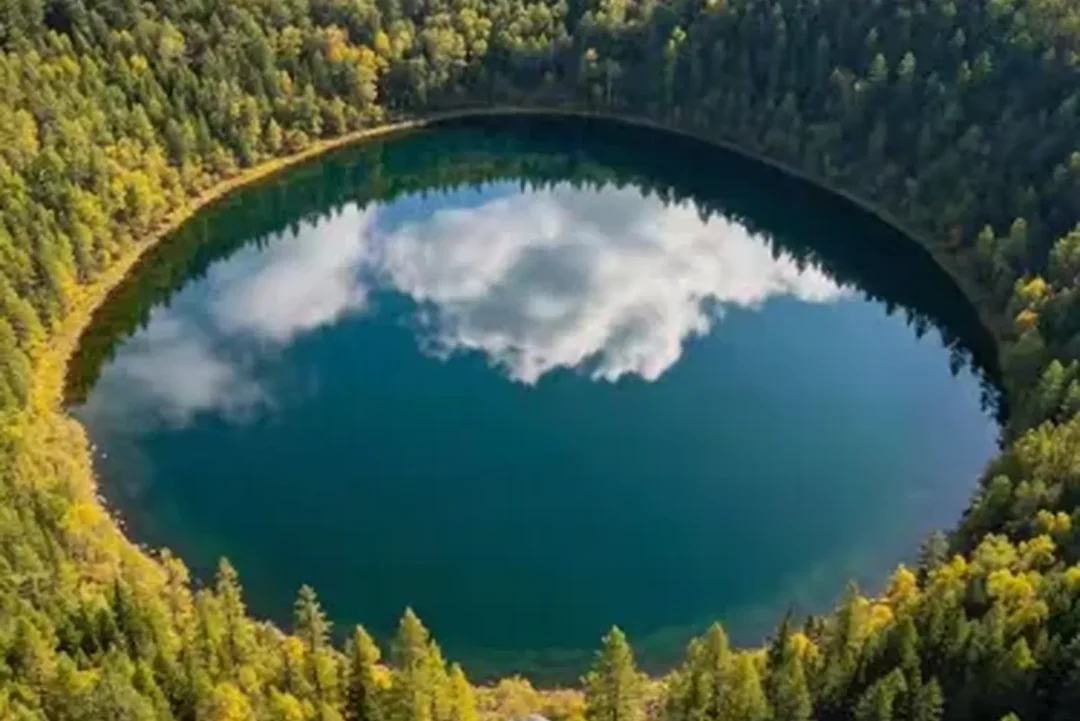
Arxan Tianchi (Heavenly Lake)阿尔山天池
Arxan Tianchi sits at the top of a dormant rhyolitic volcano inside the A'ershan Stone Forest (Arxan National Forest Park) in northern Inner Mongolia, near the Mongolia border. It is one of several high-altitude crater lakes in the area and the centerpiece attraction for most day-trippers coming from Arxan town. The lake never freezes at the surface in summer despite the sub-zero winters, and no rivers feed it or drain it — water levels are held by rainfall and snowmelt alone.
Arxan · Visitor Guide2026-10-19
Quick Answer
Is Arxan Tianchi (Heavenly Lake) worth visiting?
A 1,324-meter-high volcanic crater lake reached by a 998-step climb, doable in about 3 hours round-trip from the park entrance — and you'll be back at your Arxan-town hotel by dinner if you star.
Quick facts
| Ticket | 180 CNY (as of 2025) for the combined Arxan National Forest Park entry, valid for 48 hours and covering all seven scenic zones including Tianchi. Verify at the gate — peak-season surcharges (CNY 50-80) sometimes apply. |
|---|---|
| Hours | Park gates open 07:00-17:30 (May 1 - October 15, as of 2025); Tianchi sub-zone closes to climbers at 15:00 in peak season (verify). Closed in winter. |
| Recommended duration | Allow 2-3 hours for Tianchi alone (998-step climb takes 25-40 min up, 20 min down, plus 30-60 min on the rim); 6-8 hours for the whole park. |
| Best time to visit | Late June to early September for the green season; mid-September for autumn foliage around the lake. Arxan is one of China's coldest inhabited places — pack a fleece even in July. |
| How to get there | From Arxan (Yiershi) town center, take the Arxan-Yuquan mountain scenic-area shuttle bus (about 40 min, CNY 20-30 one way, verify) or a DiDi/taxi for ~CNY 80-100. No metro; nearest airport is Arxan Airport (YIE) with flights to Beijing, Hohhot, and Manzhouli. |
| English signage | Partial |
| Wheelchair accessible | No |
| Elevation | 1,324 m above sea level (verify) |
| Steps to rim | 998 stone steps (the standard number cited by park staff) |
| Lake type | Volcanic crater lake — no inlet, no outlet |
| Volcano age | Formed during Late Pleistocene-Holocene volcanism (approx. 100,000+ years ago) |
| Park area | ~809 km² for the whole Arxan National Forest Park (verify) |
| UNESCO status | Part of the UNESCO Global Geopark network (verify year) |
What to expect
The climb up to Tianchi starts at a small pavilion near the Tianchi service area inside the park; the 998 steps are paved but steep in the middle section. At the rim, the lake is roughly oval, about 350 m across, and sits in a bowl of rhyolite walls that drop 30-50 m to the water. Expect cool air, occasional mist rolling off the surface, and a viewing loop that takes 20-30 minutes on flat gravel paths. The trail is one-way at busy times in July and August, so follow the crowd direction.
The lake sits inside one of several Holocene-age stratovolcanoes in the Greater Khingan range; geologists classify the local volcanism as part of the Late Pleistocene-Holocene Da Hinggan volcanic field. Locally it is grouped with two other Tianchi in the area — the Arxan one is the most visited, the others are harder to reach and less developed. The surrounding Arxan Stone Forest and the rhyolite columns nearby share the same volcanic origin. There is no documented written history from before the 20th century — the Mongolian name A'ershan means "holy water," and the lake is still occasionally called "Heavenly Lake" by tour guides.
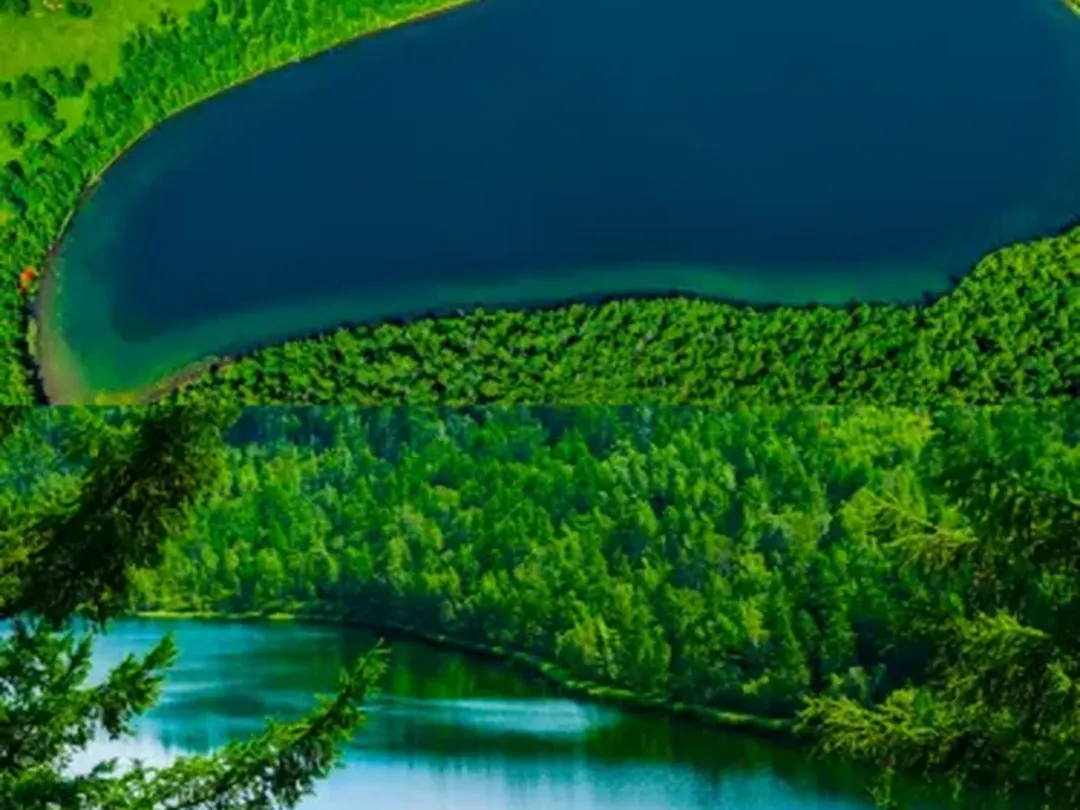
Practical reality: Tianchi is the single most-photographed spot in the park, so the steps get crowded between 10:00 and 14:00 in July. The lake itself rarely photographs well — flat light, gray water — and you should not expect the deep-blue look you see in heavily edited posters. Bring water, a windbreaker, and comfortable shoes; the steps are uneven and there is no chairlift. The single biggest mistake foreign visitors make is treating Tianchi as a 30-minute stop and then realizing they needed 2.5 hours round-trip from the parking lot.
How to get there
From Arxan town (also called Yiershi, 阿尔山市): the park entrance is about 50 km north. The cheapest option is the regular shuttle bus from outside Arxan railway station (verify current schedule — roughly 6:30, 8:30, and 13:30 departures, 40-60 min ride, CNY 25-40). A DiDi from town center to the gate costs about CNY 80-120; ask the driver to wait (parking is small and return DiDis are scarce). By air: fly into Yiershi Airport (YIE) — flights from Beijing Capital (3 hours), Hohhot (2 hours), and Manzhouli. There is no metro anywhere in the region; the only practical access is bus, taxi, or private car from Arxan town. If you are coming from Ulanhot or Hailar, expect a 4-6 hour drive on the G5511 or provincial highway.
Best photo spots
- The third viewpoint on the rim loop (looking north) — usually the least crowded.
- The bottom of the stair climb, looking up: the zig-zagging steps with the lake rim above.
- Early-morning side of the lake when mist is still on the water (before 8 a.m.).
- From the opposite ridge on the Stone Forest trail — a side-view that fits the whole crater.
Tips
- Start the climb before 9:30 a.m. to avoid the 10:00-14:00 crowd; the steps are one-way during peak weeks.
- Bring a windbreaker even in August — at 1,324 m the wind off the lake is consistently 10°C colder than the base.
- Combine Tianchi with the nearby Dujuan Lake (Rhododendron Lake) on the same ticket — it's a 5-minute walk from the Tianchi parking lot and most tourists skip it.
- Buy the combined 48-hour ticket rather than the 24-hour version: if your weather is bad on day one you can re-try Tianchi on day two.
- Skip the horse-cart "shortcut" touts at the trailhead — it's the same steps, plus a hard sell afterward.
Scams to avoid
- Fake "skip-the-line" guides at the Tianchi trailhead offering to take you up a back route — there is no back route; it's the same 998 steps.
- Horse-cart touts who quote CNY 50-200 for a ride that does not exist; report to the gate office.
- Generic: unlicensed "photo assistants" who charge CNY 20 per shot and pressure you into buying prints.
Frequently asked questions
How much is the Arxan Tianchi ticket?
CNY 180 (as of 2025) for the combined Arxan National Forest Park entry — Tianchi is included. The ticket is valid 48 hours, so you can re-enter if weather is bad. Verify on-site for any peak-season surcharges.
Is Tianchi open year-round?
No. The park is open roughly May 1 to October 15 (verify exact dates); in winter (November to April) the road closes and temperatures drop below -30°C. Tianchi itself does freeze in winter, but you cannot drive in.
How many steps are there to climb?
998 stone steps from the trailhead to the rim, taking 25-40 minutes up depending on fitness. The middle section is the steepest; take breaks on the two flat landings.
How high is Arxan Tianchi?
The lake sits at about 1,324 m above sea level. The crater rim is roughly 30-50 m above the water surface.
How deep is the lake?
Park materials cite depths around 30-40 m (verify). It has no visible inlet or outlet — water level depends only on rain and snowmelt.
How do I get from Arxan town to the park?
Shuttle bus from outside Arxan railway station, about 40-60 min, CNY 25-40 (verify schedule). A DiDi/taxi is CNY 80-120; book the return in advance because there are few cars at the gate.
Can I visit Tianchi with kids or elderly?
Not really — the 998 steps are steep and there is no chairlift. The lake at the bottom is visible by a separate road (Rhododendron Lake viewing area) but you cannot see the crater lake without climbing.
Is it crowded?
Yes, on weekends in July and August. Best window is a weekday before 9:30 a.m. or after 15:00. Autumn (mid-September) is quieter but colder.
Are drones allowed?
No, the park prohibits drones without prior registration at the gate office. The crater is also a no-fly zone for security reasons.
Is Tianchi worth the climb?
Honestly, the view is less dramatic than the marketing posters — the lake is small and the water is usually gray. Most visitors say the climb itself and the surrounding Stone Forest are the real highlights.