This page is archived and no longer updated — see the current guide: See the current guide
Jiayuguan Fort (Jiayu Pass)嘉峪关
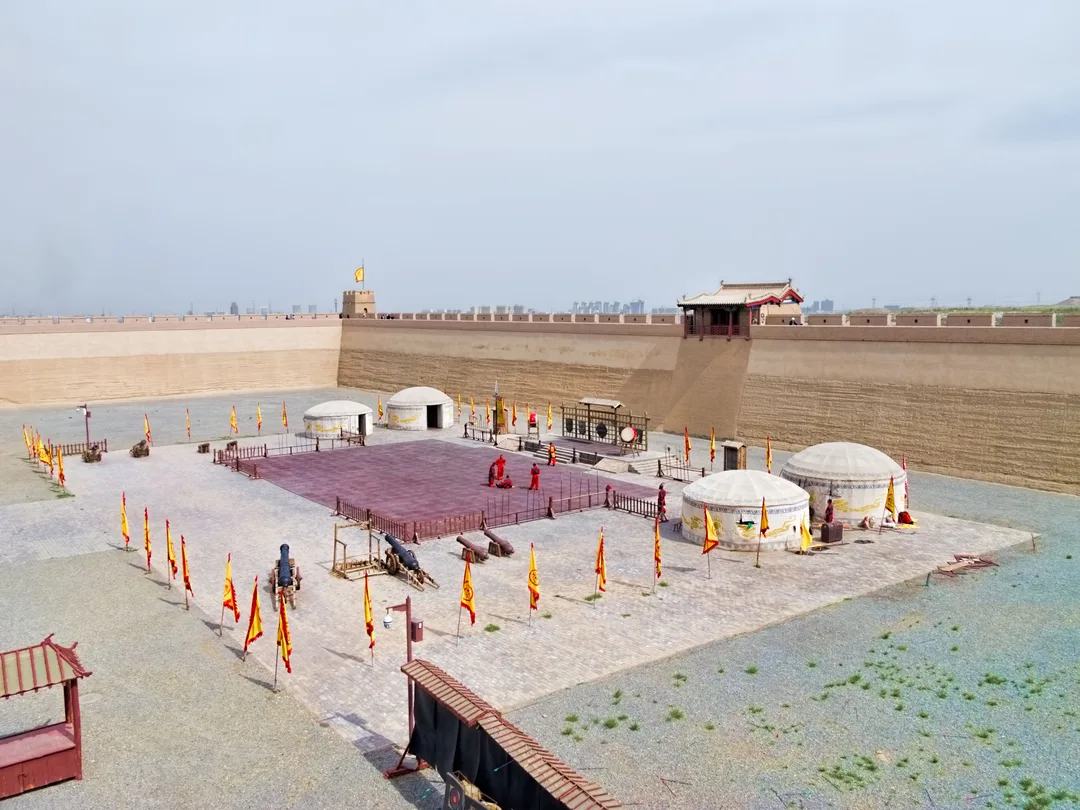
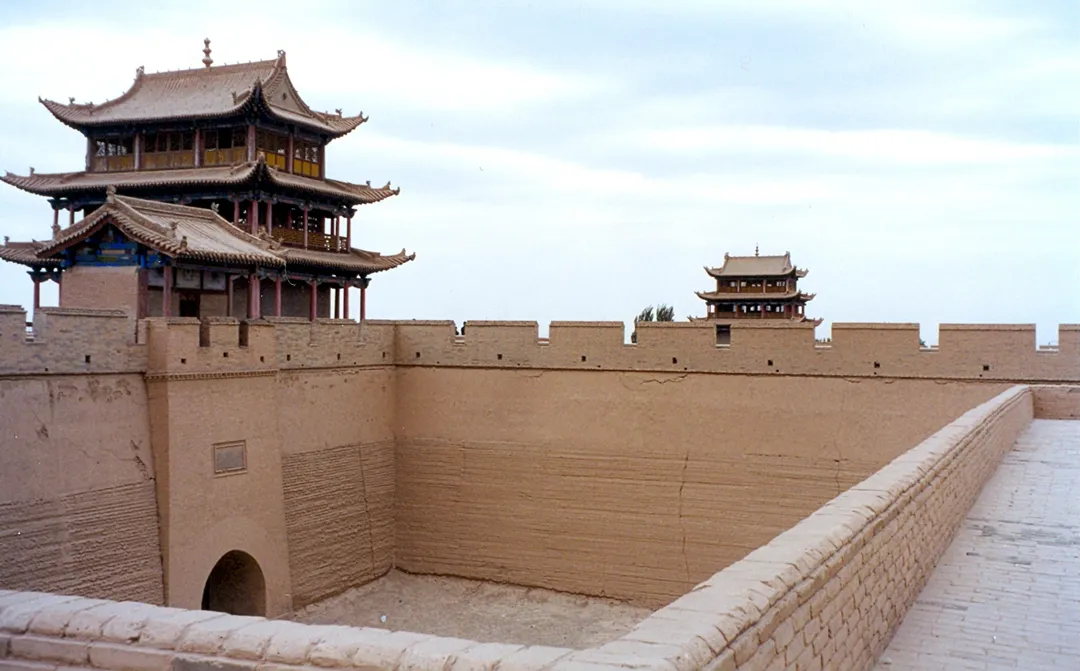
Jiayuguan Fort (Jiayu Pass) is the western terminus of the Ming dynasty Great Wall (1368-1644), built in 1372 at a strategic choke point between the Qilian Mountains and the Black Mountains in the Gobi Desert. It was the westernmost gate of the Ming empire — beyond it lay "the lands beyond the pass," a euphemism for exile and the unknown. The fort is a massive rectangular walled complex (733m perimeter) with inner and outer walls, watchtowers, and a gate that still bears the inscription "Jiayu Pass" in Ming-era calligraphy. The Overhanging Wall (Xuanbi Changcheng), 8 km north, is a 750m section of Great Wall that climbs a near-vertical ridge — one of the most dramatic Wall settings in China.
Jiayuguan · Visitor Guide2026-10-19
Quick Answer
Is Jiayuguan Fort (Jiayu Pass) worth visiting?
The western end of the Ming Great Wall — "The First and Greatest Pass Under Heaven." Overhanging Wall + fort museum. ¥120. Half-day. Combine with Dunhuang.
Quick facts
| Ticket | ¥120 (includes fort + Overhanging Wall + Great Wall Museum). |
|---|---|
| Hours | 8:30-18:00 (summer) / 9:00-17:30 (winter). |
| Recommended duration | Half-day (4-5h): fort 2h, Overhanging Wall 1.5h, museum 1h. |
| Best time to visit | May-October. Sunset at the fort — the western gate faces the Gobi, and the evening light is impressive. September-October for clearest skies. |
| How to get there | HSR to Jiayuguan South from Lanzhou (4.5h, ¥250) or Xi'an (6h, ¥350). Bus 4 from Jiayuguan city to the fort: 30 min, ¥2. Taxi/DiDi: 15 min, ¥15-20. DiDi to Overhanging Wall: 20 min, ¥30. |
| English signage | Partial |
| Wheelchair accessible | Partial |
| Built | 1372 (Ming dynasty) |
| Perimeter | 733 m (fortress walls) |
| Overhanging Wall | 750 m, climbs 45° ridge |
| From Lanzhou | 4.5h HSR |
| End of Ming Wall | Western terminus |
What to expect
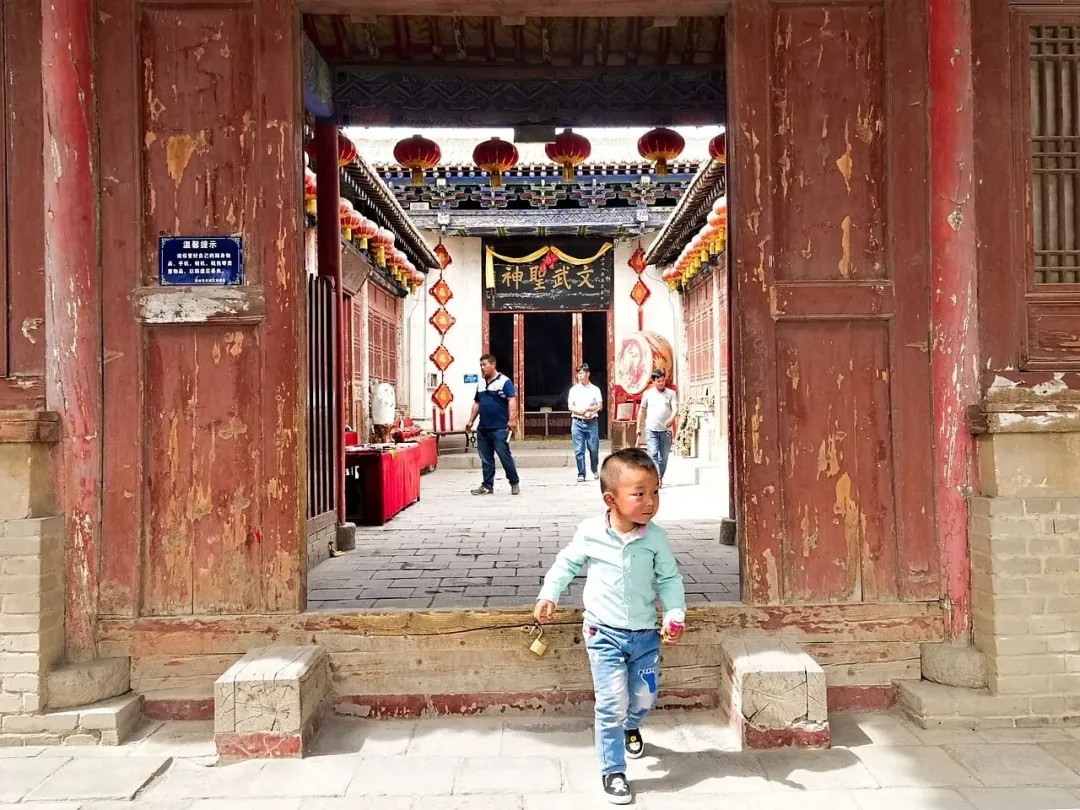
Jiayuguan Fort is a masterpiece of Ming military engineering — built at the narrowest point of the Hexi Corridor, where the Qilian Mountains and the Black Mountains pinch the Silk Road to just 15 km wide. The fort controlled all traffic between China and Central Asia for 500 years. Its walls are 11m high, built of rammed earth faced with brick. The inner city has a well (the only water source for 50 km), temples, and the garrison commander's office. The western gate tower offers a view of endless Gobi Desert — the psychological impact of "beyond the pass" is immediate.
The Overhanging Wall, 8 km north of the fort, is a different experience — a raw section of Ming Wall climbing a 45° ridge. At the top, you can see the Wall snaking down the ridge into the desert on one side and the Qilian Mountains on the other. It's a fraction as crowded as Badaling and far more atmospheric.
I stood on the western gate tower at sunset, looking out over the Gobi. A group of Chinese tourists were reciting a Tang dynasty poem by Wang Zhihuan: "Beyond the Pass, why complain the willows won't grow? The spring wind never crosses Yumen Pass." The fort felt exactly like that — the end of one world and the beginning of another.
How to get there
HSR to Jiayuguan South from Lanzhou (4.5h, ¥250) or Xi'an (6h, ¥350). Bus 4 from Jiayuguan railway station to the fort: 30 min, ¥2. Taxi/DiDi: 15 min, ¥15-20. The Overhanging Wall is 8 km north — DiDi (20 min, ¥30) or bus 2 from the city center. The fort, Overhanging Wall, and museum are covered by a single ticket.
Best photo spots
- Western gate tower at sunset — the gate framing the Gobi Desert beyond
- Overhanging Wall from the base — the Wall climbing a near-vertical ridge
- Fortress walls with Qilian Mountains snow caps in the background
- Inner city gate with "Jiayu Pass" calligraphy — the definitive "I was here" shot
Tips
- Visit the fort in the afternoon and stay for sunset at the western gate — the light is best and crowds thin out after 16:00
- The Overhanging Wall involves steep stairs — wear sturdy shoes
- Combine Jiayuguan with Dunhuang (4.5h HSR) and Zhangye (1.5h HSR) for a Silk Road trilogy
- The Great Wall Museum (included in ticket) is excellent — visit it first for historical context
- Wind is constant — bring a jacket even in summer (the Gobi wind can be biting)
Scams to avoid
- "Camel ride to a secret Wall section" offered outside the fort — the ride goes 200m in a circle behind a sand dune, nowhere near any actual Wall. The Overhanging Wall is the only accessible Wall section near Jiayuguan.
Frequently asked questions
Is Jiayuguan the end of the Great Wall?
It was the western terminus of the Ming dynasty Great Wall (1368-1644). Earlier Han dynasty walls extended further west (remnants exist near Dunhuang and Lop Nur). The Ming Wall effectively ended at Jiayuguan — beyond it was the Gobi Desert and non-Han territories.
How does Jiayuguan compare to Badaling?
Very different. Badaling is a restored Wall section near Beijing — crowded, polished, easy to reach. Jiayuguan is a desert fortress + wild Wall — fewer crowds, more atmosphere, more remote. The Overhanging Wall is steep and unrestored. Jiayuguan is about the Silk Road frontier experience; Badaling is about the Wall as monument.
How do I get to Jiayuguan?
HSR to Jiayuguan South from Lanzhou (4.5h, ¥250) or Xi'an (6h, ¥350). Jiayuguan also has an airport with flights from Lanzhou (1.5h, ¥400+) and Xi'an (2h, ¥600+). Most visitors include Jiayuguan in a Silk Road itinerary: Lanzhou → Zhangye → Jiayuguan → Dunhuang.
How much time do I need?
Half-day (4-5h) for the fort, Overhanging Wall, and museum. One full day if you want to explore at a leisurely pace or add the Wei-Jin Art Gallery (ancient tomb murals, 20 min away). Jiayuguan is typically a 1-night stop on a Silk Road itinerary.
What is the Overhanging Wall?
A 750m section of Ming Great Wall that climbs a 45° ridge 8 km north of Jiayuguan Fort. It is named for how it appears to hang from the mountainside. The climb is steep (about 400 steps) but the view from the top — the Wall descending into the Gobi — is worth it. Included in the ¥120 Jiayuguan ticket.
Can I visit Jiayuguan in winter?
Yes — the fort is open year-round and winter (November-February) has zero crowds. However, temperatures drop to -15°C and the Gobi wind is brutal. The Overhanging Wall may close in icy conditions. The fort in snow, with the Qilian Mountains behind, is impressive if you can handle the cold.
Read next
Other things to do in Jiayuguan
Overhanging Great Wall
A roughly 750-meter Ming wall section climbing a 150-meter black-stone ridge at up to 45 degrees above Jiayu Pass — about 400 steps, 1–1.5 hours.
Wei-Jin Mural Tombs
The Gobi 'underground art gallery' east of Jiayuguan: descend into a 1,700-year-old Wei-Jin tomb painted wall-to-wall with murals of feasts, farming and camel caravans.