This page is archived and no longer updated — see the current guide: See the current guide
Wei-Jin Mural Tombs魏晋壁画墓
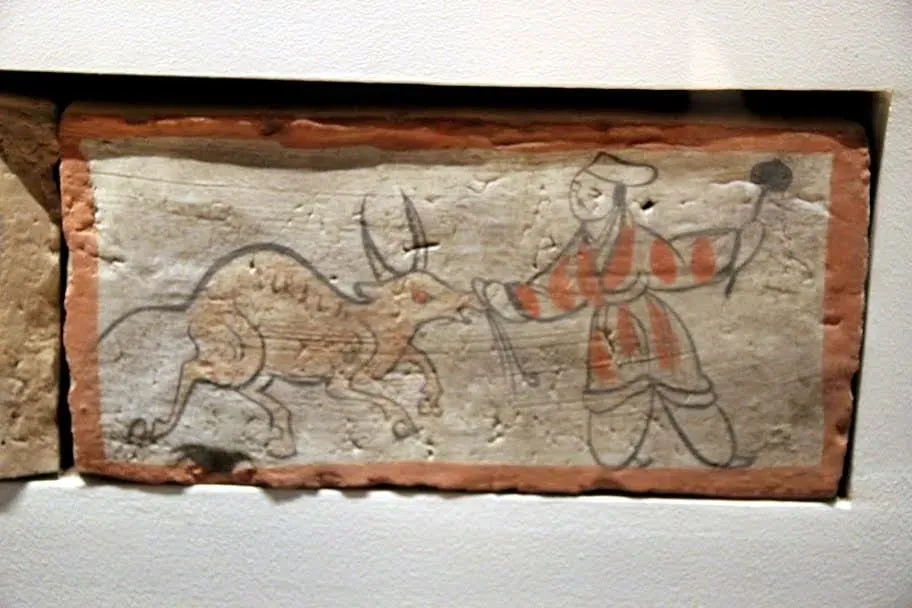
The Wei-Jin mural tombs in the Gobi east of Jiayuguan are the 'underground art gallery' of the Silk Road — over 1,400 tombs from 220-419 CE, some open for small guided groups who descend to see vivid brick murals of farming, feasting, cooking and camel caravans.
Jiayuguan · Visitor Guide2026-10-19
Quick Answer
Is Wei-Jin Mural Tombs worth visiting?
The Gobi 'underground art gallery' east of Jiayuguan: descend into a 1,700-year-old Wei-Jin tomb painted wall-to-wall with murals of feasts, farming and camel caravans.
Quick facts
| Ticket | ¥100 (limited daily entries, guide included) |
|---|---|
| Hours | 08:30-18:00 (Apr-Oct) |
| Recommended duration | 1 hour |
| Best time to visit | Apr-Oct |
| How to get there | Taxi from Jiayuguan, 20 min into the Gobi |
| English signage | basic (guide essential) |
| Wheelchair accessible | No |
What to expect
More than 1,400 tombs from the Wei-Jin period (220-419 CE) dot the Gobi gravel east of Jiayuguan. One or two are opened for visitors: you descend a sloping passage into a brick-chambered tomb whose walls are lined with vividly painted image bricks — banquets, cooking stoves, plowing, music and caravan scenes — most in startling pigment.
A guide with a lamp is essential and included in the ticket; the site sees very few visitors, and photography inside is restricted to preserve the murals.
How to get there
No public transport — take a taxi from Jiayuguan (about 20 minutes east into the Gobi); agree on a waiting fare.
Best photo spots
- The tomb mural walls by lamplight
- The Gobi gravel plain panorama at the tomb field
Tips
- Bring warm layers — the tomb interior is cool even in summer
- Photography is restricted inside the tomb; check current rules on site
Frequently asked questions
Why is entry limited?
Murals degrade with humidity and light, so visits are guided, low-volume and photography-restricted to protect the 1,700-year-old pigments.
Read next
Other things to do in Jiayuguan
Jiayuguan Fort (Jiayu Pass)
The western end of the Ming Great Wall — "The First and Greatest Pass Under Heaven." Overhanging Wall + fort museum. ¥120. Half-day. Combine with Dunhuang.
Overhanging Great Wall
A roughly 750-meter Ming wall section climbing a 150-meter black-stone ridge at up to 45 degrees above Jiayu Pass — about 400 steps, 1–1.5 hours.