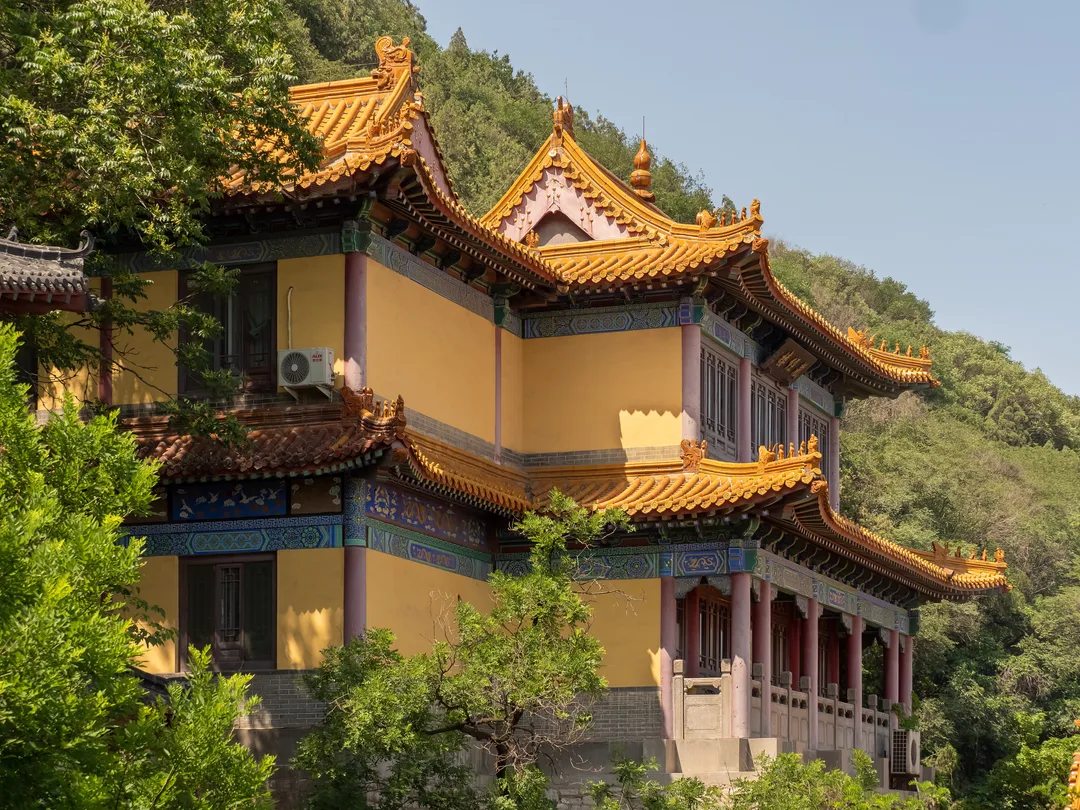
Thousand Buddha Mountain千佛山
Thousand Buddha Mountain is a 288-meter hill in southern Jinan, named for the trove of Tang Dynasty Buddha statues carved into its western cliffs. It anchors Jinan's "Three Famous Sceneries" alongside Baotu Spring and Daming Lake, and pairs Buddhist heritage with city-wide panoramas from the summit. Most foreign visitors pair it with a Baotu Spring stop on the same day, since the two are roughly 3 km apart.
Jinan · Visitor Guide2026-10-18
Quick Answer
Is Thousand Buddha Mountain worth visiting?
Climb 288 meters to see more than 130 Tang-era stone Buddhas carved into the cliffs; budget 2.5 hours including the cable car and Xingguang Temple.
Quick facts
| Ticket | 30 CNY (verify, as of 2026) for the main gate; cable car 20 CNY one-way / 30 CNY round-trip (verify). Students with ID often half-price. Free entry for children under 1.2 m and seniors over 60 (verify at gate). |
|---|---|
| Hours | Gate 06:30–18:00 in summer, 07:00–17:30 in winter (verify, as of 2026); last ticket sold 30 min before close. Cable car runs the same window. The temple complex and main halls stay open slightly longer than the hiking trails. |
| Recommended duration | 2–3 hours is realistic: 30 min to climb the stone steps, 45 min at the summit and Xingguang Temple, 30 min down, plus 30–45 min for the cliff Buddhas, Lishan Pavilion, and a tea break. |
| Best time to visit | Late September to early November, when Jinan's summer humidity breaks and the ginkgo trees at the lower gates turn yellow. Avoid the Lantern Festival (15th day of Lunar New Year) unless you specifically want crowds — the mountain gets 80,000 visitors that day alone (verify). |
| How to get there | Metro Line 2 to Qianfoshan Station (千佛山站), Exit C — the south gate is a 3-minute walk. From Jinan Railway Station, take Bus K51 or BRT-3 to Qianfoshan Station (verify bus numbers, as of 2026). A DiDi from Baotu Spring runs CNY 12–18 and takes about 12 minutes depending on traffic. Taxi from Yaoqiang Airport is roughly CNY 90–110 and 50 minutes. |
| English signage | Partial |
| Wheelchair accessible | No |
| Elevation | 288 meters (945 ft) above sea level |
| Area | Approximately 166 hectares (410 acres) |
| Founded | Buddhist sites date to the Sui Dynasty (581–618 CE); renamed "Thousand Buddha Mountain" in the Qing Dynasty (1748) |
| Buddha statues | Over 130 carved stone Buddhas from the Tang Dynasty (618–907 CE) on the western cliffs |
| UNESCO status | Not a UNESCO site; part of the national AAAA rating (verify current rating as of 2026) |
| One of Jinan's Three Famous Sceneries | Alongside Baotu Spring and Daming Lake |
What to expect
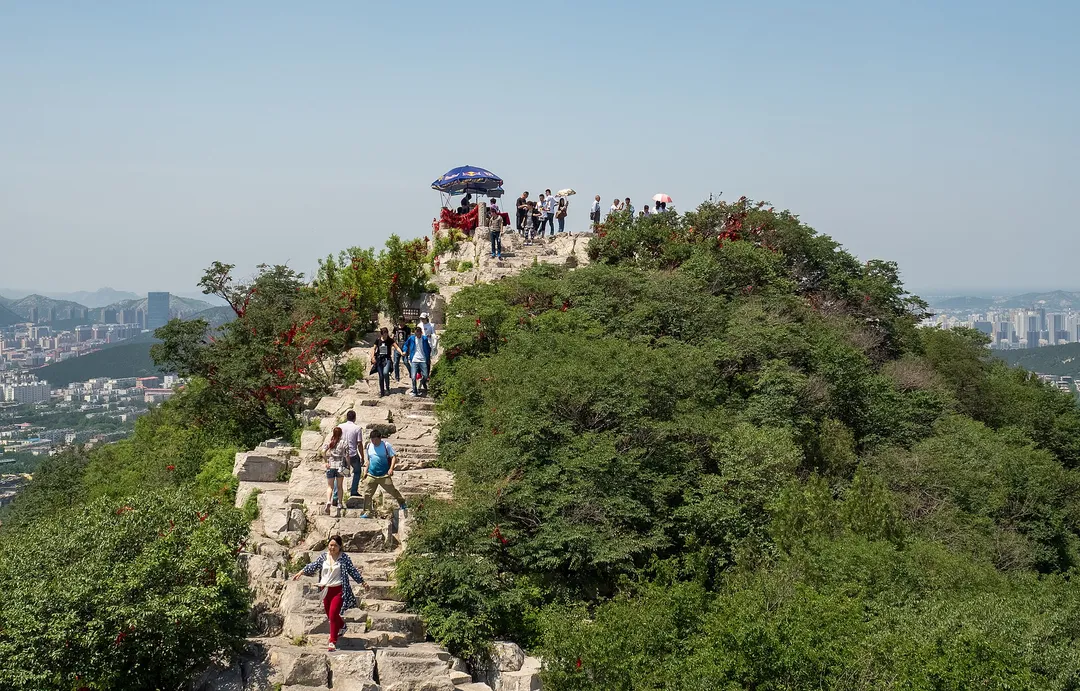
Expect a manageable hill, not a serious mountain — the paved north route is roughly 666 steps with regular rest pavilions, and the cable car reaches the summit in under 5 minutes for those who'd rather skip the climb. The western cliff face is the highlight: a 30-meter stretch of niches holding more than 130 Tang-era Buddhas, some still showing traces of original pigment. Xingguang Temple (兴国禅寺), the functioning monastery near the summit, dates to the Sui Dynasty and still holds morning chanting at 04:30 in summer.
Thousand Buddha Mountain sits at the southern end of Jinan's central spring-water belt. The Sui-era name was "Lishan" (历山), a reference to the legendary Emperor Shun who supposedly farmed here. Buddhist carving began in earnest under Emperor Taizong of Tang, whose consort is credited with commissioning the cliff niches in the early 7th century. The mountain was renamed after the Qing governor in 1748 CE counted the Buddhas and found far more than a thousand — a typical Chinese naming flourish.
Weekday mornings are quiet, with maybe 100 visitors climbing at sunrise. Weekends, Chinese holidays, and especially the 9th day of the 9th lunar month (Double Ninth Festival, when locals climb for luck) get crowded. There is no need for a guide, but a basic phrasebook helps at the tea stalls around the upper pavilion where staff rarely speak English. The cable car closes in high winds — check the day's weather before committing to a ticket.
How to get there
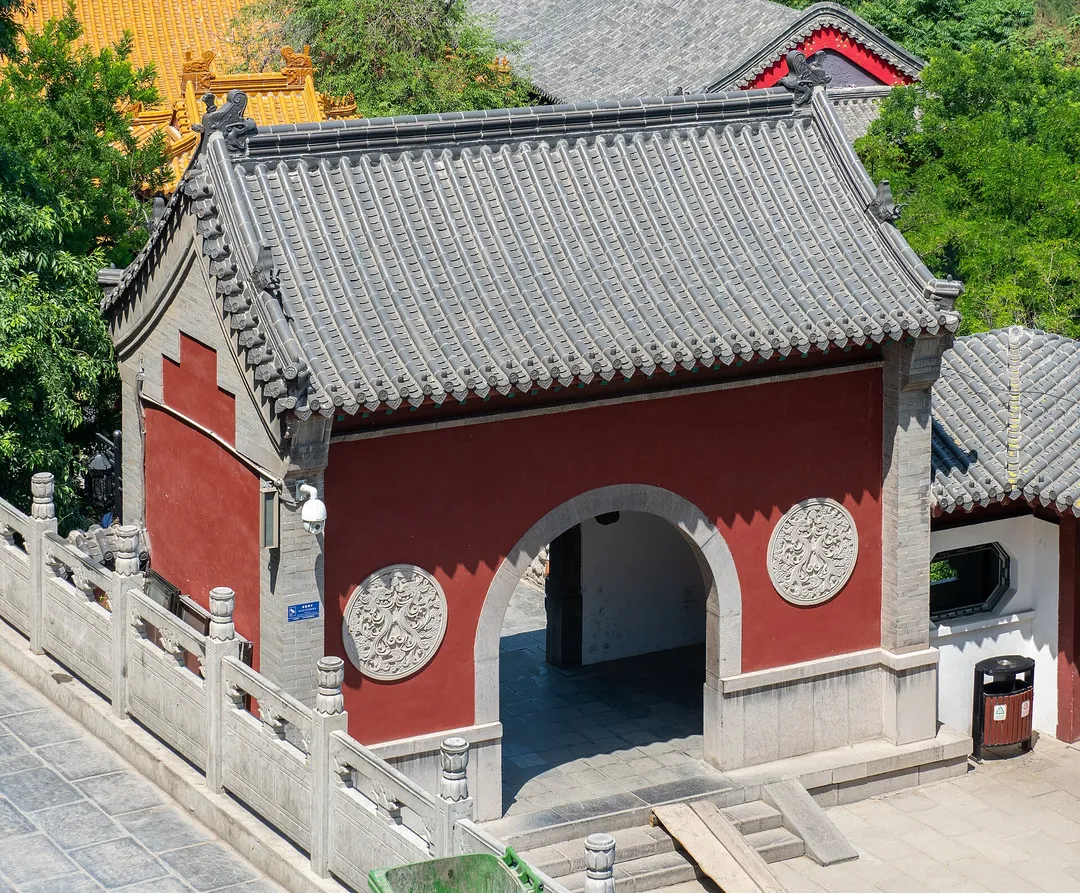
From Jinan Railway Station (济南站), the simplest route is Metro Line 2 southbound to Qianfoshan Station (千佛山站), Exit C — the south gate is a 3-minute walk. Allow about 15 minutes total including platform change. From Jinan West Railway Station (济南西站), take Metro Line 1 to王府庄 transfer, then Line 2 — total 35–45 minutes. By bus, K51 and BRT-3 (verify current route numbers) stop at the north gate; from Baotu Spring the bus ride is 3 stops. DiDi from Baotu Spring typically costs CNY 12–18 and takes about 12 minutes outside peak hours. From Yaoqiang International Airport, a DiDi is CNY 90–110 and 45–60 minutes depending on traffic. Taxi drivers know it simply as "Qianfoshan" (千佛山) — every local driver can take you there. The south gate has the shortest walk to the cable car; the north gate has more stairs but a more traditional entrance through the older archway.
Best photo spots
- The Tang Buddha cliff niches along the western slope — best light between 09:00 and 11:00 when the sun illuminates the carved faces directly.
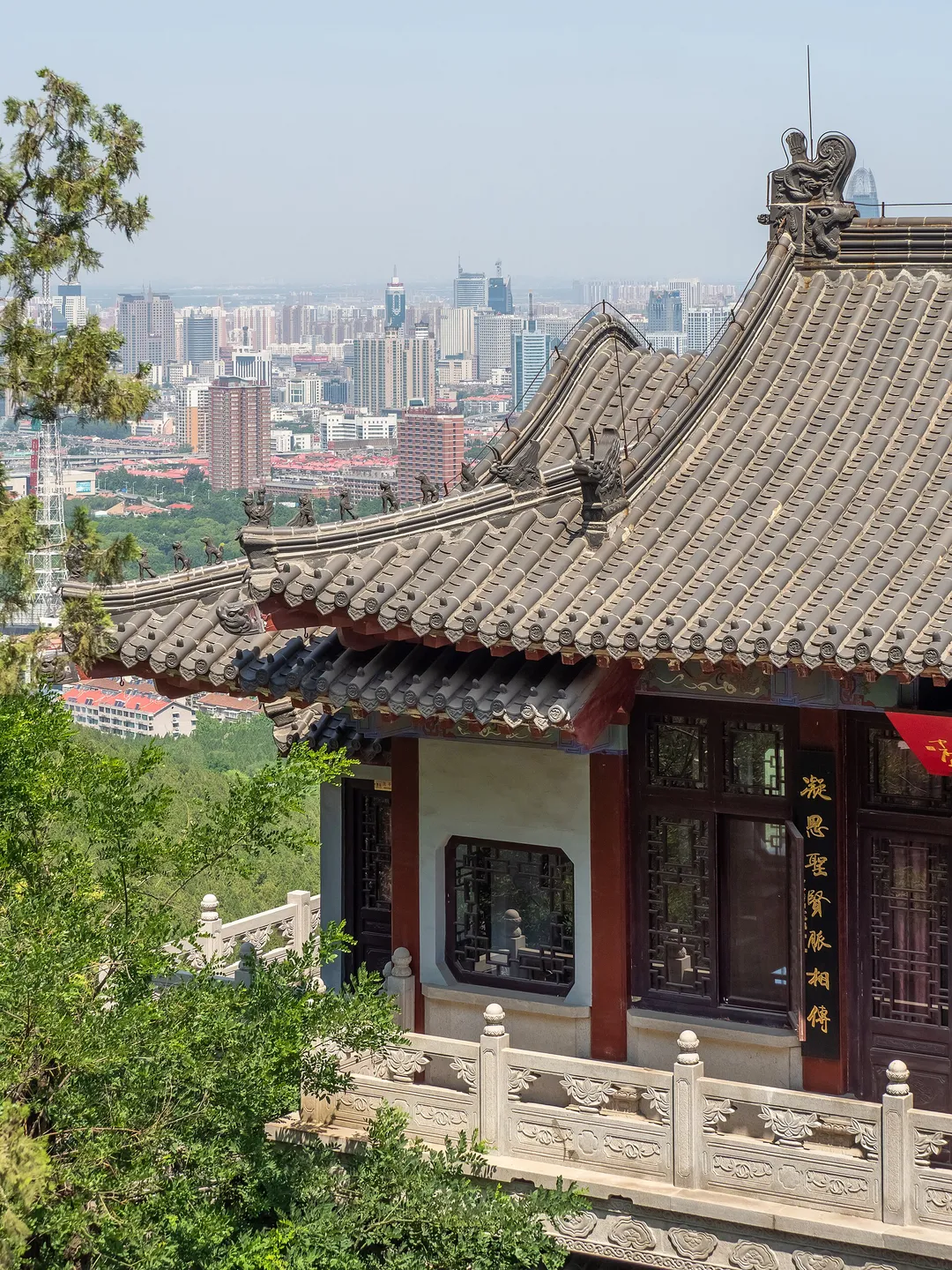
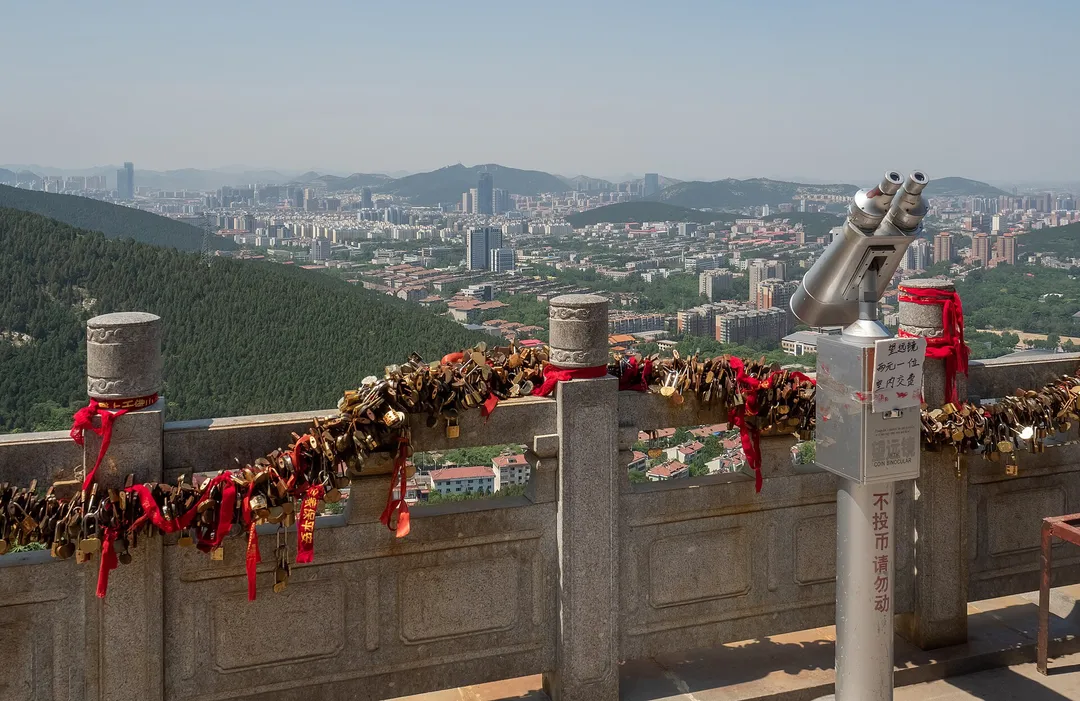
- Lishan Pavilion (历山亭) at the summit, framed by the Jinan skyline with Daming Lake visible in the distance on clear days.
- The red gate of Xingguang Temple at the upper platform, especially with the ginkgo trees in late October.
- The long stone staircase from the north gate, shot from the second landing looking up — gives a sense of the climb without showing the surrounding tourists.
Tips
- Buy a combined ticket at the south gate — most windows sell the gate, cable car, and Xingguang Temple incense pass as a bundle that's CNY 10 cheaper than buying separately.
- Skip the cable car on a clear autumn day — the stairs take 30 minutes and the views change every 50 meters, which the cable car skips.
- Bring water; the tea stalls mid-mountain charge 2–3x convenience-store prices and the lower-gate water sellers vanish after 11:00.
- Visit early (07:00–09:00) on any day to see the elderly residents doing tai chi at the lower pavilion — a genuine slice of Jinan retirement culture you won't see at Baotu Spring.
- If you're there on the 9th day of the 9th lunar month (Double Ninth Festival), expect cable-car queues over 90 minutes and skip the mountain entirely unless you're specifically there for the festival.
Scams to avoid
- Self-proclaimed "guides" at the south gate offering English tours are usually unlicensed and will steer you into a tea-house commission stop; politely decline and use the official free map at the ticket window.
- "Free sample" stalls near the north gate pushing Shandong herbal medicine — the tea tastes fine but is sold at 5–10x market price; ignore anyone who hands you a cup.
- Photographers offering to take your photo at Lishan Pavilion charge CNY 20–50 for a print and the photos are often lower-quality than a phone shot in good light.
Frequently asked questions
How much does Thousand Buddha Mountain cost in 2026?
CNY 30 for the standard gate ticket (verify at gate, as of 2026). Cable car is CNY 20 one-way or CNY 30 round-trip. Children under 1.2 m and seniors over 60 enter free.
What are the opening hours of Thousand Buddha Mountain?
Summer hours are 06:30–18:00 and winter hours are roughly 07:00–17:30, with the last ticket sold 30 minutes before closing (verify seasonal changes at the gate).
Which metro station is closest to Thousand Buddha Mountain?
Qianfoshan Station (千佛山站) on Metro Line 2, Exit C — about 3 minutes on foot to the south gate.
How long does it take to climb Thousand Buddha Mountain?
The north route is roughly 666 steps and takes 30–45 minutes at a normal pace; allow 2–3 hours including the temple, summit, and down.
How many Buddha statues are at Thousand Buddha Mountain?
More than 130 carved stone Buddhas survive on the western cliff face, mostly dating to the Tang Dynasty (618–907 CE).
Is Thousand Buddha Mountain a UNESCO World Heritage Site?
No. It is a national AAAA-rated site (verify rating) but not on the UNESCO World Heritage list as of 2026.
Is Thousand Buddha Mountain wheelchair accessible?
Not really — the main routes use stone steps with no ramp alternative; the cable car has stairs at both ends and the summit area is uneven flagstone.
What is the best time of year to visit Thousand Buddha Mountain?
Late September to early November, when temperatures drop to 15–22°C and the lower-gate ginkgos turn yellow. Avoid the 9th day of the 9th lunar month unless you specifically want the festival crowds.
Can you see Thousand Buddha Mountain and Baotu Spring in one day?
Yes — they're about 3 km apart and a 12-minute DiDi ride. Start at Baotu Spring by 08:00 and finish at Qianfoshan by 13:00.
Why is it called Thousand Buddha Mountain if there are only 130 statues?
The Qing-era governor renamed it in 1748 after counting the cliff Buddhas and finding many more than expected; "thousand" is the classical Chinese way of saying "many.
Read next
Other things to do in Jinan
Baotu Spring
The signature karst spring of Jinan erupts up to 240,000 cubic meters a day at the center of a compact park of pavilions and springs. Allow 1-2 hours; combine with nearby Daming Lake.
Daming Lake
Jinan's 46-hectare downtown lake, free to enter and walkable in 90 minutes, sits inside the old city wall next to Baotu Spring and is most photogenic in lotus season (July–August).
Daming Lake
Jinan's spring-fed lake at the north end of the classic spring walk: lotus ponds, willow causeways, pavilions and lake views of the old city — free, open late, 1 km from Baotu Spring.
Shandong Museum
Jinan's provincial museum holds 40,000+ artifacts including a 2,500-year-old bronze shell-shaped cup and a 9-meter dinosaur; plan 2-3 hours and it's free with ID.
Museums in Jinan
Shandong Museum
Confucius-era artifacts, Shang and Zhou Dynasty bronzes, and the Dawenkou Neolithic culture — Shandong's provincial powerhouse. Free. A massive 2010 building east of Jinan's center.
Shandong Provincial Museum
The museum of Confucius's home province — strong in Shandong's Dawenkou Neolithic cultures, Western Zhou bronze inscriptions, and Han Dynasty treasures. Free with passport; 2.5–3.5 hours.