Xining · history museum
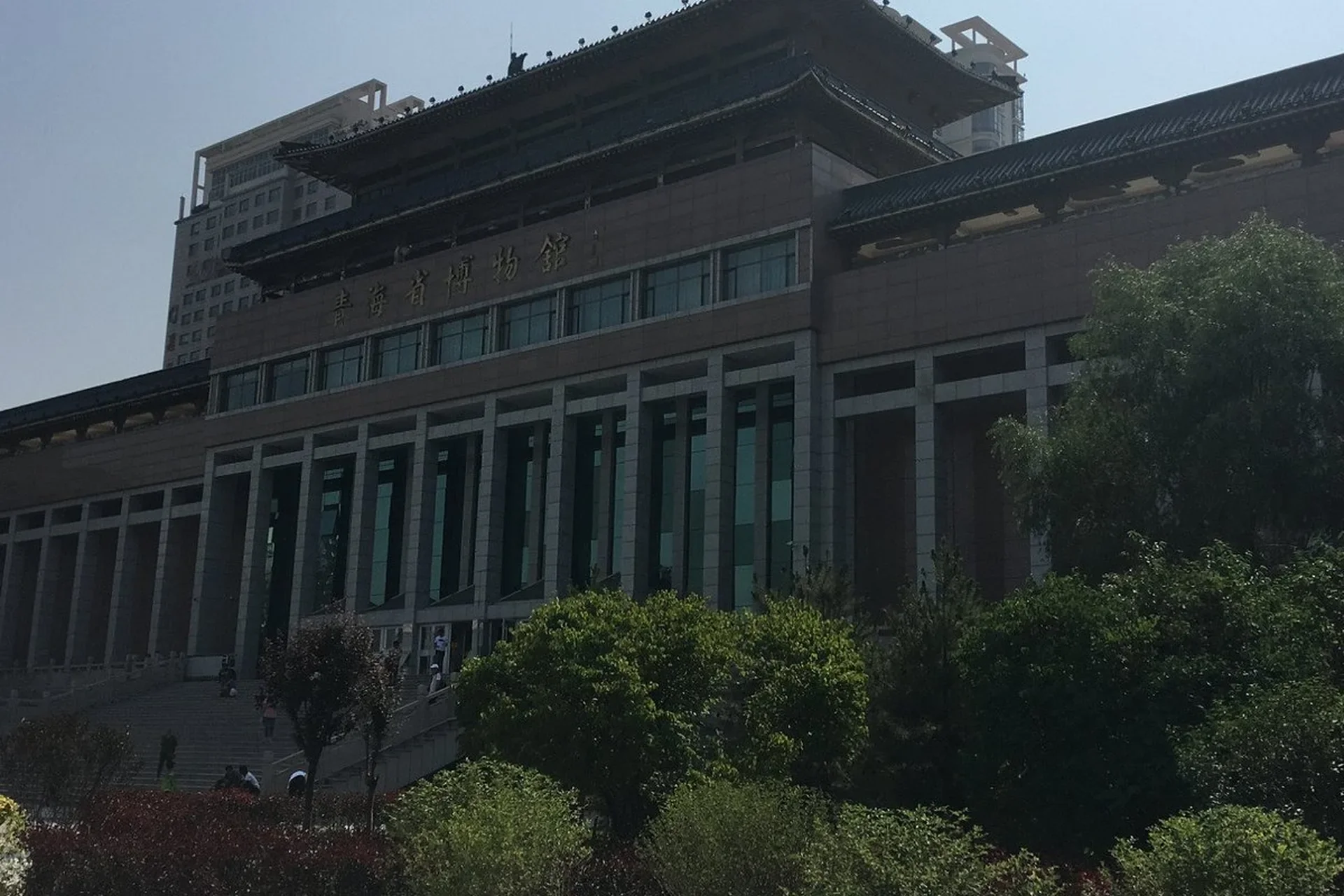
Qinghai Provincial Museum (青海省博物馆, Qīnghǎi Shěng Bówùguǎn)
"\"The Qinghai Provincial Museum (青海省博物馆) is located in Xining, the capital of China's largest province by area, situated at 2,200m elevation on the northeastern Tibetan Plateau. Qinghai is the geographic headwaters of both the Yangtze and Yellow Rivers and has been the contested frontier between Chinese, Tibetan, Mongol, and Turkic peoples for 3,000 years. The museum's four collection areas are: (1) the Tuyuhun (吐谷浑) Kingdom culture — an ancient kingdom on the plateau with Tibetan and Central Asian connections; (2) Sui-Tang Dynasty Silk Road archaeology — objects from the \\\"Tea-Horse Road\\\" (茶马古道) that passed through Qinghai; (3) Tibetan Buddhist art — thangka, statues, and ritual objects from Amdo Tibet; (4) prehistoric and geological archaeology — the ancient Jiangrish culture and Qinghai's unique geological specimens.\".".
Last updated:
Quick Answer
Is Qinghai Provincial Museum worth visiting?
"China's plateau museum at 2,200m — documenting the Tibetan plateau frontier cultures, the ancient Qiang and吐谷浑 (Tuyuhun) kingdoms, the Sui-Tang Silk Road across the Qinghai-Tibet plateau,.".
Quick facts
| Category | history |
|---|---|
| Ticket | Free. Passport required. Walk-in from the main gate. |
| Hours | 9:00-17:00 (last entry 16:00). Closed Mondays. |
| Recommended duration | 1.5-2.5 hours. |
| Best time to visit | May through October. Xining is cold year-round (average 8°C annual) with mild summers (15-25°C, June-August) and cold winters (-15°C to 5°C, November-March). The best season for visiting Qinghai is June-September when the plateau grasslands are green and the weather is mild. |
| How to get there | Bus routes 2, 15, 22, 25, 31, 37, 82, 85, 86, 108 to Qinghai Museum stop (博物馆站). From Xining Railway Station by DiDi: ¥15-25. From Xining Caojiabao Airport: ¥50-70 by airport bus. |
| English signage | partial |
Why visit
Qinghai is the least-visited major province by international tourists, yet it sits at the intersection of Tibetan, Central Asian, and Chinese civilizations. The museum provides essential context for understanding the Qinghai-Tibet Plateau before or after visiting the famous Kumbum Monastery (塔尔寺) or traveling into Tibet itself.
Collection highlights
- Tuyuhun Kingdom artifacts — bronze objects, jewelry, and daily objects from the Tuyuhun (吐谷浑) Kingdom that ruled the plateau from the 3rd to the 7th century CE
- Tea-Horse Road archaeology — objects documenting the ancient "Tea-Horse Road" (茶马古道) trade route between Sichuan/Yunnan and Tibet that passed through Qinghai
- Tibetan Buddhist thangka collection — thangka (scroll paintings) from the Gelug school of Tibetan Buddhism practiced in Amdo Qinghai
- Qinghai-Tibet Railway documentation — objects and photographs documenting the construction of the world's highest railway (Qinghai-Tibet Railway, reaching 5,072m at passes)
- Sui-Tang period Silk Road objects — silk, bronze mirrors, and Central Asian trade goods from the Sui and Tang Dynasty period when Qinghai was a major Silk Road corridor
- Plateau ethnic minority cultural objects — costumes and daily objects from the Tibetan, Mongol, and Tu (土族) peoples of Qinghai
Tips
- Combine with the Kumbum Monastery (塔尔寺, Ta'er Monastery) — one of the six great Gelug monasteries of Tibetan Buddhism, 30 minutes by bus from Xining
- Xining is the gateway to the Qinghai-Tibet Railway (青藏铁路) — the world's highest railway climbing from Xining to Lhasa (2,400km, 24-36 hours), book months in advance for the Tibet railway tickets
- The museum is near Xining's People's Square (人民公园) and the former city wall area
- Qinghai's best season is June-September — the plateau is green and the weather is mild (15-25°C)
- The high elevation (2,200m in Xining, up to 5,000m on the Qinghai-Tibet Railway) requires altitude acclimatization — spend 1-2 days in Xining before ascending
- The museum is small — 1.5-2 hours is sufficient
Frequently asked questions
What is the Tea-Horse Road?
The Tea-Horse Road (茶马古道) was an ancient trade network connecting Sichuan, Yunnan, and Qinghai with Tibet and mainland Southeast Asia, primarily for the exchange of Tibetan horses for Chinese tea. It operated from the 7th century through the 20th century and passed through Qinghai, linking the Silk Road to the plateau. It is distinct from but related to the Silk Road.
What is the Tuyuhun Kingdom?
The Tuyuhun Kingdom (吐谷浑) was a kingdom on the northeastern Tibetan Plateau from the 3rd to the 7th century CE, ruled by a royal clan of Tibetan origin. At its height it controlled territory covering much of modern Qinghai and parts of Gansu and Tibet. It was an important intermediary in trade between China, Central Asia, and Tibet. It was conquered by the Tang Dynasty in 663 CE.
How does this museum compare to the Kumbum Monastery?
Complementary. The Qinghai Provincial Museum shows the archaeology and history of Qinghai province across all periods. The Kumbum Monastery (塔尔寺) is an active Tibetan Buddhist monastery 30 minutes from Xining — one of the most important Gelug school monasteries. Both should be visited together for a complete Qinghai cultural experience.
Does Qinghai Provincial Museum have English signage?
Partial — the Tuyuhun and Silk Road sections have English labels. The Tibetan Buddhist section has some English. No English audio guide as of 2026.
Is Xining a good base for the Qinghai-Tibet Railway?
Excellent. Xining is the starting point of the Qinghai-Tibet Railway (青藏铁路), the world's highest railway. Trains depart daily for Lhasa (24-36 hours depending on stops). Book Tibet train tickets months in advance (January-June and September-November are peak seasons). Spend 1-2 days in Xining for altitude acclimatization and to visit the museum and Kumbum Monastery before ascending.
Read next
Other things to do in Xining
Dongguan Mosque
A free-entry mosque founded in 1380 on Xining's Dongguan Street, whose prayer hall and courtyards fill with up to 30,000 worshippers for Friday jumu'ah — Chinese-Islamic green dome, Arabic calli…
Kumbum Monastery
"One of the six great Gelug (Yellow Hat) monasteries of Tibetan Buddhism. Birthplace of Tsongkhapa. Famous butter sculptures. 14th century. ¥80. Half-day from Xining.".
Kumbum Monastery
Birthplace of Tsongkhapa and one of the six great Gelug monasteries of Tibetan Buddhism, 26 km southwest of Xining.…
Mount Yunji
mount-yunji in Beijing: 西宁近郊天然氧吧,海拔约2400米,森林覆盖率70%以上。免费开放,全天。公交3/4/7路至北山市场站步行15分钟。登山步道2-3小时登顶。
Qinghai Lake
qinghai-lake in Beijing: 中国最大咸水湖,海拔3260米,湖畔油菜花海绝美,生态圣地。
Qinghai Lake
China's largest lake — a ~4,500 km² saline expanse at 3,200 m on the northeast Tibetan Plateau, 150 km from Xining (a 2.5-hour drive).…
Qinghai Provincial Museum
xining-museum in Beijing: 青海最大综合性博物馆,馆藏文物10万余件,展示青海多元历史文化。
Yushu Grassland
yushu-grassland in Beijing: 三江源核心区,平均海拔4000米以上,长江、黄河、澜沧江发源地。免费进入(景点另付费)。7月赛马节最热闹。建议3-5天。玉树巴塘机场或西宁乘长途客车约12小时。