

Guyuan at a Glance
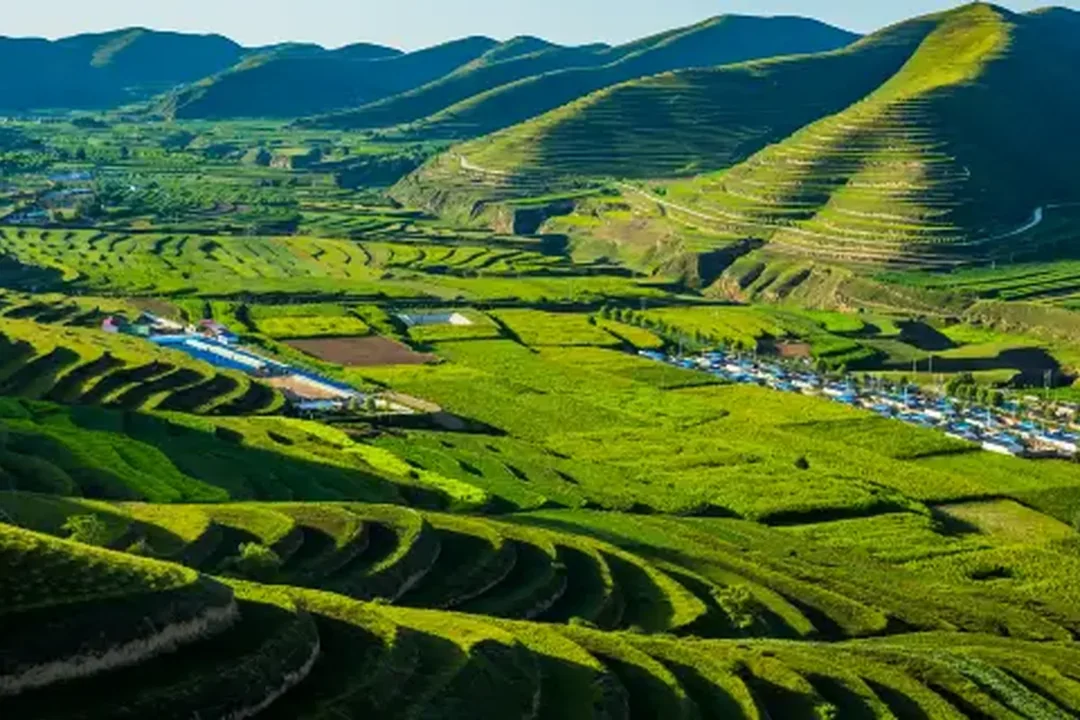
Guyuan is a high, cool prefecture in the south of Ningxia, sitting at about 1,750 m on the loess plateau where the old Silk Road's northern route crossed out of the Yellow River valley. It is a 2-3 day destination for travellers who like their China archeological rather than urban: a cliff of more than 130 Buddhist caves at Xumishan, begun in the 5th century and protected nationally since 1982; the spruce forests of the Liupan range, whose main peak tops 2,900 m; a city museum with a 6th-century gilt silver ewer dug out of a royal tomb in 1983; and remnants of the Qin Great Wall of the 3rd century BC lying at the city's edge. Budget a mid-range 500-1000 CNY per person per day including a 300-600 CNY hotel; a backpacker holds near 40.
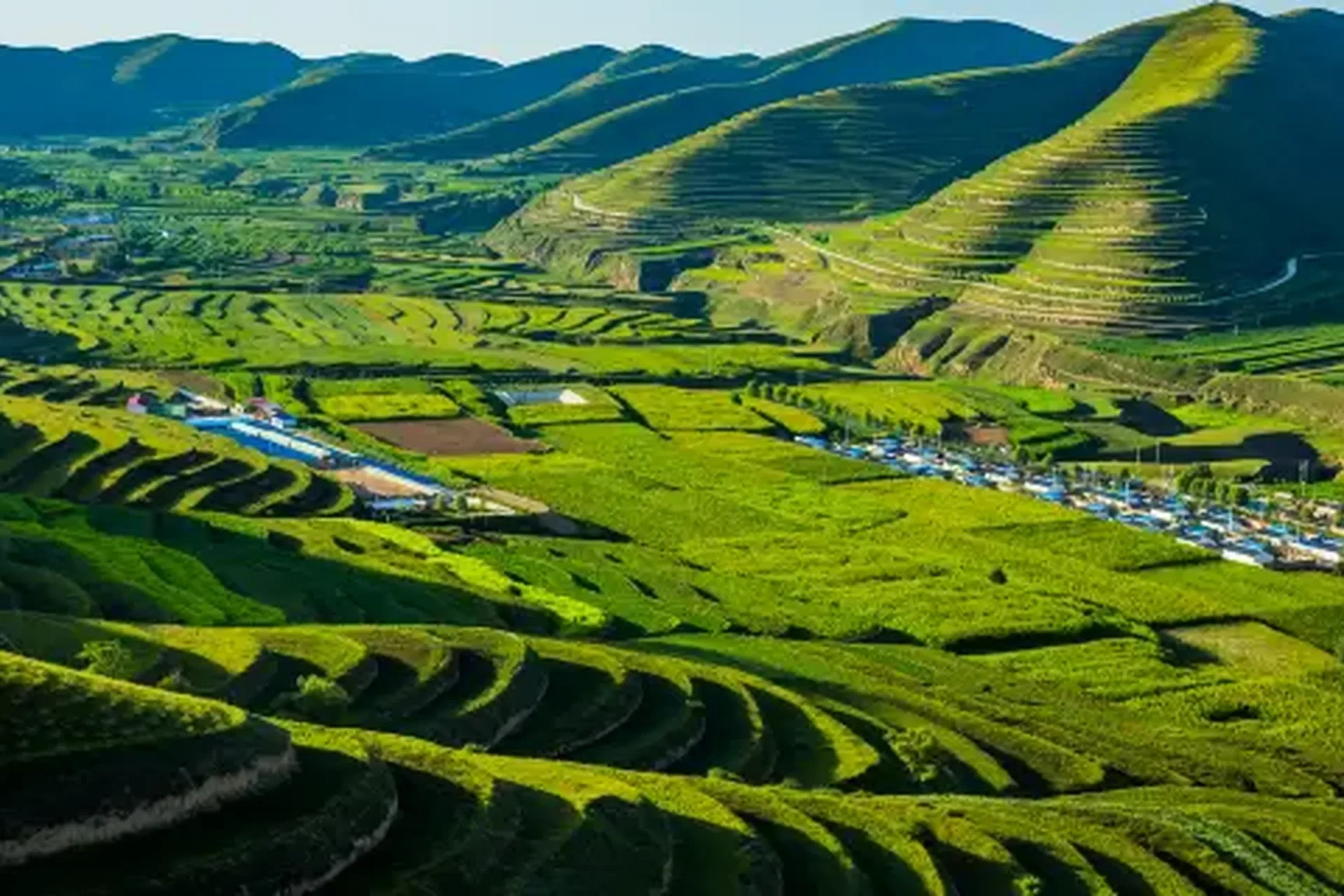
Come between May and September — the best window our trip-days data gives — and you get green terraces instead of the bare winter loess.
Why Guyuan
Guyuan is the opposite kind of Ningxia to Yinchuan. The provincial capital sells the Yellow River, wineries and Hui-quarter food two hours to the north; Guyuan, Yinchuan's quiet southern sibling, sells altitude: cool nights, terraced hillsides, and one of the densest clusters of early Buddhist cave art between Dunhuang and the coast. The Xumishan Grottoes alone justify the detour for anyone working down the Silk Road corridor, and our Ningxia guide shows where they fit in the province.
Three honest trade-offs shape the trip. First, distances: the headline sights spread across a prefecture bigger than most metro areas, with Xumishan about 55 km northwest and the Liupan forests roughly 1.5 hours south, so you plan days around single destinations. Second, English is scarce and package tourism thinner still — drivers, ticket clerks and hotel desks work in Chinese, so screenshot what you need. Third, this is not a food-hunting city on the scale of Lanzhou or Zhongwei; it is a base where the lamb is honest, the noodles are honest, and the sights carry the trip.
What you get in exchange is space. Even in the May-to-September window you will often share a cliff face with a handful of other visitors.
Xumishan Grottoes: the Silk Road Cliff
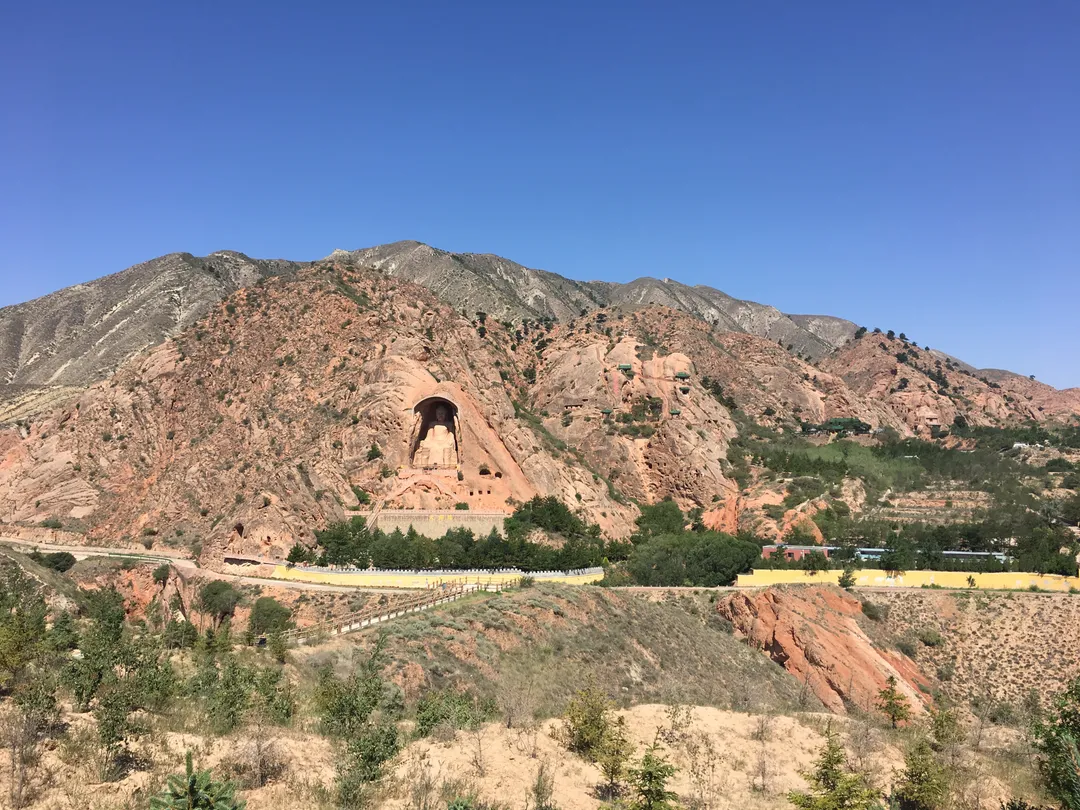
The Xumishan Grottoes (须弥山石窟) sit about 55 km northwest of the city, at the edge of the loess where a sandstone cliff faces the old northern route. Monks began cutting caves here in the 5th century, in the Northern Wei dynasty, and work continued through the Sui and Tang; the cliff now holds more than 130 numbered caves. The signature sight is the giant seated Buddha of the Tang dynasty, about 20.6 m tall, carved directly into the cliff face and visible from across the valley — the composition that every photo of the site is built around. The grottoes were listed for national protection in 1982, and the site museum traces the carvings' place on the Silk Road.
Give the visit half a day: the lower caves cluster near the entrance, a footpath climbs past the big Buddha to the upper Tang caves, and the shrine halls are visited as fact, not worship. There is no frequent public bus — the practical way is a hired car or driver for the morning, arranged through your hotel.
Liupanshan: the Forest Day
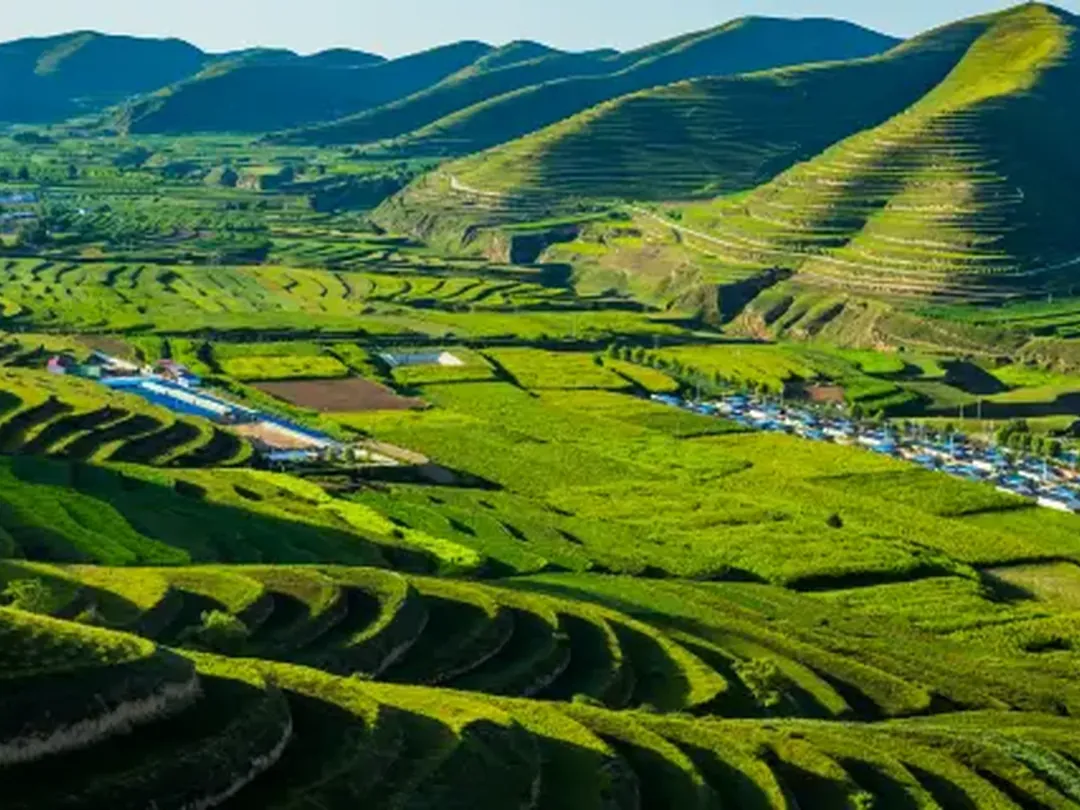
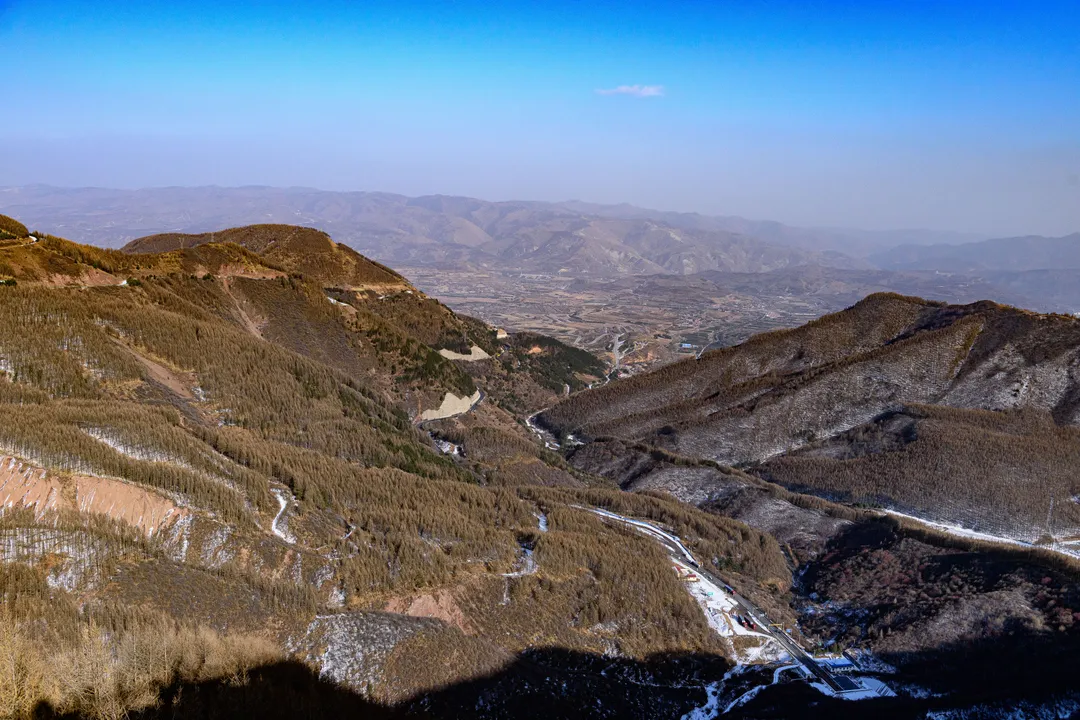
South of the terraces in the photo above, the land climbs into the Liupan range, and roughly 1.5 hours by road brings you into the forests of Jingyuan County. The range's main peak tops 2,900 m, and the valleys hold spruce shade, cold streams and walked-out gullies where the summer heat never quite arrives — this is why Ningxia's own tour posters call the area its summer shelter. At Liangdian Gorge, tradition holds that Genghis Khan summered here; guides tell it plainly as tradition, and the gorge trail is worth the walk either way.
The day works as a single loop: drive in, walk a gorge or the forest paths near the pass, eat lamb in Jingyuan town, and be back before dark. Bring a layer — at this altitude the forest day runs 5-8°C cooler than the city.
The Museum and the Silver Ewer
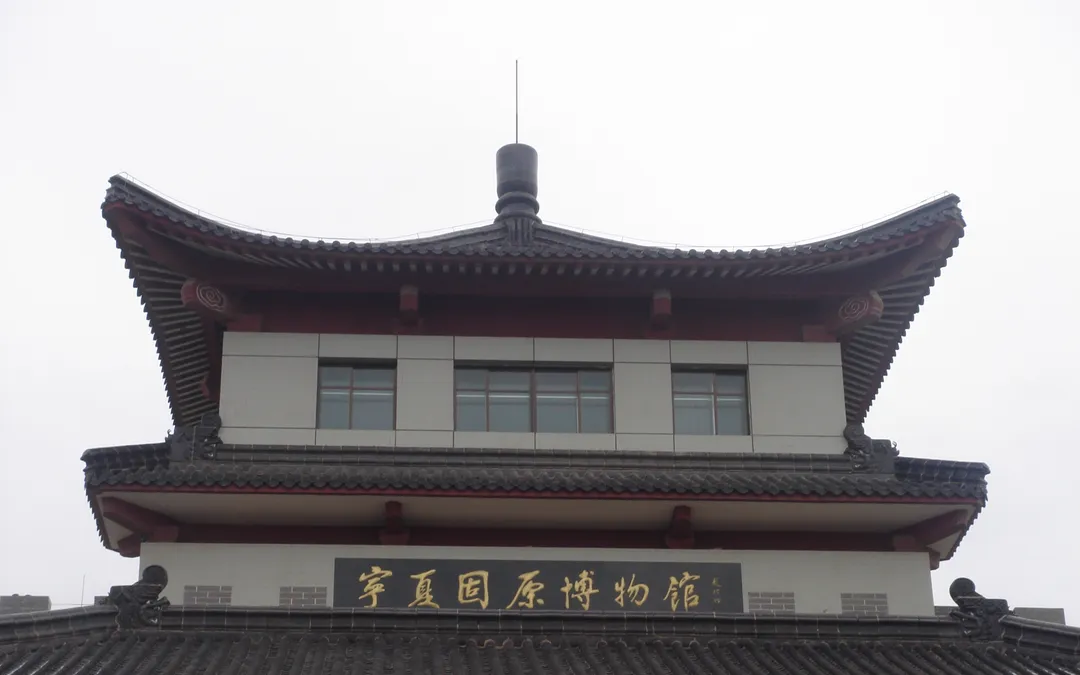
The Guyuan Museum (固原博物馆) is the reason not to treat this city as a pure transit stop. Its star piece is a gilt silver ewer with figured decoration, dug from the 6th-century Northern Zhou tomb of the general Li Xian in 1983 — a Persian-styled vessel on a Chinese general's sarcophagus, and the clearest single object argument for this stretch of the Silk Road. Around it sit tomb murals, Eastern Han pottery, and coins that trace the caravan trade. The museum is compact; an hour covers it, and captions are bilingual in part.
After the museum, walk what remains of the old city's edge: remnants of the Qin Great Wall of the 3rd century BC run along the city's northern fringe, an earthen line easy to miss until you know what it is. Our 3-day Guyuan trip builder sequences the museum, the walls and the lamb lunch on the final day.
Beyond the City: Huoshizhai, Laolongtan and Yanzhi Gorge
A fourth day opens up the prefecture's odder geology. Huoshizhai (火石寨), in Xiji County to the northwest, is a national geopark of red sandstone pillars and flat-topped crags rising straight out of the loess — Danxia landform in an unexpected colour context, with paths climbing onto the mesa tops. In Jingyuan County, Laolongtan (老龙潭) is a stepped series of deep green pools counted as the source of the Jing River, and the neighbouring Yanzhi Gorge runs red-cliff trails beside the water. Both pair naturally with the Liupan forest day.
For a longer loop, our 5-day and 7-day plans fold these in with the grottoes and the museum.
A Two-Day Plan (and a Third)
- Day 1 — arrive and orient. Museum for the silver ewer, then the Qin wall line and the old town for lamb. Book a morning driver for Day 2.
- Day 2 — the grottoes. Xumishan early, lower caves first, then the climb past the 20.6 m Buddha. Back mid-afternoon; evening on the museum quarter if you skipped it.
- Day 3 — the mountain. Liupanshan forest loop with Laolongtan or Yanzhi Gorge, or Huoshizhai if red rock beats green shade for you.
Getting There: Rail, Road and Air
Guyuan sits on the Baoji-Zhongwei rail line; trains are slow but serve the city directly, and most travellers reach it by road from Yinchuan or Lanzhou. A small airport near the city sees thin service — check current schedules rather than assuming flights.
| Route | Mode | Notes |
|---|---|---|
| Yinchuan → Guyuan | road | expressway north to south across the province |
| Lanzhou → Guyuan | road / rail | overland link from the Yellow River |
| Guyuan → Xumishan Grottoes | hired car or driver | about 55 km NW, half a day |
| Guyuan → Jingyuan County (Liupanshan) | hired car or driver | about 1.5 h south |
| Guyuan → Huoshizhai (Xiji County) | hired car or driver | NW direction, half a day |
| City museum / Qin wall | taxi or on foot | in-town distances are short |
Distances inside the city are short enough that taxis cost pocket change; the day trips are where transport money goes.
Where to Stay
Stay in the city centre within a short taxi of the museum: mid-range hotels run about 300-600 CNY a night, business chains sit near the bus station for early departures, and the budget end starts around hostel-floor prices near 40. There is no resort strip; comfort here means a hot shower, reliable heating in the cold months and a driver your hotel can call. Book ahead only for the early-May and early-October holiday weeks.
What to Eat in Guyuan
Ningxia is a Hui autonomous region, and Guyuan's table follows halal tradition: the signature is hand-pulled lamb (手抓羊肉), boiled plain and eaten with salt and raw garlic, from a meat culture that treats lamb as the default rather than an occasion. Around it: beef noodle bowls, baked flatbreads, stir-fried mountain greens in season, and the north's usual dumplings. The trip-days data writes a lamb lunch into the final day of every itinerary, and it is the right call — order by the jin at a local restaurant and watch the room fill with families.
Mid-range eating runs 100-200 CNY a day for two solid meals; street breakfasts and noodle shops pull a backpacker day down near the floor.
What a Day Costs
| Item | Price | Notes |
|---|---|---|
| Mid-range hotel | 300-600 CNY/night | city centre, near the museum |
| Meals | 100-200 CNY/day | lamb, noodles, flatbreads |
| Local transport | 30-60 CNY/day | taxis; day trips cost more |
| Attractions | 50-150 CNY/day | grottoes, geopark, forest days |
| Day-trip car and driver | by negotiation | Xumishan or Liupanshan day |
| Total, mid-range | 500-1000 CNY/day | per person |
The roster's estimate for the city matches: accommodation 300-600 CNY, food 100-200 CNY, transport 30-60 CNY, tickets 50-150 CNY. Entry fees at the major sights sit in the tens of yuan; the driver for the grottoes or the mountain is the line item that moves the day.
When to Go
May to September is the working answer: the terraces are green, the forest days are cool, and the grottoes see their best light in morning sun. Late spring can still be windy; September brings clear air and harvest colour. Winter is long, grey and properly cold at this altitude, with shortened hours at rural sights. Avoid the national holiday weeks of early May and early October, when the grottoes' small car park overflows.
Practical Tips
- Payment: link an international card to Alipay or WeChat Pay before arrival, and carry 50-100 CNY in cash for rural ticket windows and small lamb restaurants.
- eSIM: a tourist data eSIM (about 5-30 USD) avoids the phone-shop queue; install a VPN before you fly, since Google, WhatsApp and Instagram are blocked on the mainland.
- Altitude: the city sits near 1,750 m and the mountain days go higher — pack a layer, drink water, and let the first day stay gentle.
- Language: screenshot hotel names and the characters 须弥山石窟 and 固原博物馆; English service is rare.
- Emergencies: police 110, ambulance 120, fire 119, national tourist hotline 12301.
Frequently Asked Questions
How many days do I need in Guyuan?
Two days cover the museum, the Qin wall and the Xumishan Grottoes. The third day is where Guyuan earns the trip — the Liupan forest loop or Huoshizhai — and a fourth opens Laolongtan and Yanzhi Gorge. One rushed day forces a choice between grottoes and museum; do not plan it that way.
How do I get to the Xumishan Grottoes?
They lie about 55 km northwest of the city. There is no frequent public bus worth building a day around, so hire a car and driver for the morning through your hotel — the standard arrangement, priced by negotiation. Go early: the big Buddha faces east and photographs best before midday.
Is Guyuan better than Yinchuan for a Ningxia trip?
They are different trips. Yinchuan gives you the Yellow River, western Xia ruins and wine country; Guyuan gives grottoes, forest and altitude. With a week, do both — the road between them crosses the whole province — and our Ningxia guide shows the split.
What should I eat in Guyuan?
Hand-pulled lamb first: boiled plain, dipped in salt, eaten with raw garlic, ordered by weight. Beef noodles and baked flatbread carry the cheaper meals, and mountain greens appear in season. The default is halal; pork dishes are not the local normal.
Does the altitude matter?
The city sits at about 1,750 m and the Liupan climbs top 2,900 m. Most visitors feel nothing worse than dry air and a cooler night, but take the first day easy, drink more water than usual and pack a warm layer for the forest day.
When is the best time to visit Guyuan?
May to September. The terraces are at their greenest, the forests cool, and every sight on this page runs full hours. Early May and early October are the holiday crunches; winter is workable but grey, cold and short on daylight.
Do I need cash in Guyuan?
Mostly no — Alipay with an international card covers hotels, taxis and most restaurants — but keep 50-100 CNY in notes for rural ticket windows and the smaller lamb houses. The 12301 tourist hotline answers in Chinese; your hotel front desk is the practical fallback for anything complicated.
Useful Phrases
| Chinese | Pinyin | Meaning |
|---|---|---|
| 你好 | nǐhǎo | hello |
| 谢谢 | xièxie | thank you |
| 多少钱 | duōshǎo qián | how much |
| 固原 | Gùyuán | Guyuan |
| 须弥山石窟 | Xūmíshān Shíkū | Xumishan Grottoes |
| 六盘山 | Liùpánshān | Liupan Mountains |
| 手抓羊肉 | shǒuzhuā yángròu | hand-pulled lamb |
| 火石寨 | Huǒshízhài | Huoshizhai geopark |
| 老龙潭 | Lǎolóngtán | Laolongtan pools |
Final Notes
Every figure above — the 1,750 m city altitude, Xumishan's 55 km and 130-plus caves and its 20.6 m Tang Buddha under 1982 protection, the 2,900 m Liupan crest and the 1.5-hour forest road, the Li Xian ewer dug in 1983 from a 6th-century tomb, the Qin wall of the 3rd century BC — was checked in October 2026 against our trip-days data for the city and the province pages it feeds. Prices move; reconfirm within a fortnight of travel.
- Source: China National Tourism Administration — policy and seasonal notices.
- Source: Trip.com — live train and hotel listings for cross-checks.
Last verified 2026-10-14.