Handan at a Glance
Give Handan two days, three if you add the caves. This southern Hebei city was the capital of the Zhao state from 386 BC and held that seat for 158 years, and the region still carries the load: Congtai Park's terrace is tied to King Wuling of Zhao (r. 325-299 BC), whose 307 BC cavalry reform put the city on the map; the wetland-ringed walls of Guangfu Ancient City, 25 km northeast, produced the two great taiji lineages; and the rouge-red cliffs at Xiangtangshan, 35 km southwest, hold Buddhist caves cut in the Northern Qi years of 550-577. In town, the city museum fills the gaps with Zhao bronzes and Cizhou kiln wares. China knows Handan for a quirkier reason too — a long list of its idioms is set here — and the old quarter keeps the bridge and the lane to prove it. This guide covers the practical version: what to see in two or three days, how to move between the sights, what a day costs, and where the taiji pilgrimage actually goes.
Why Handan
Handan sits on the north-south trunk line an hour or so south of Shijiazhuang, and most trains roll through without a pause — which is exactly the argument for stopping. The city has no big-ticket skyline; what it has is chronology. The Zhao capital's palace-city ruins still stand west of town; the idiom places — the 1617 stone bridge of the "learn-to-walk" story, the lane where minister Lin Xiangru made way for General Lian Po — sit in the working old quarter; and the taiji courtyards at Guangfu are lived-in shrines to Yang Luchan (1799-1872) and Wu Yuxiang (1812-1880), the founders of the Yang and Wu styles practised worldwide. Sights are clustered in the central area, walkable or a short bus or taxi ride apart, and the two big excursions — Guangfu and Xiangtangshan — each fill half a day.
The honest trade-offs: museums close Mondays and labelling is Chinese-first; summer on the Hebei plain is hot and winter is grey; and the city rewards travellers who like their history dense rather than their views tall. For the wider arc — Anyang's Shang ruins an hour or so south, Luoyang beyond — Handan slots into a Yellow River loop; see our Anyang guide and the Hebei guide.
Congtai Park and the City Museum
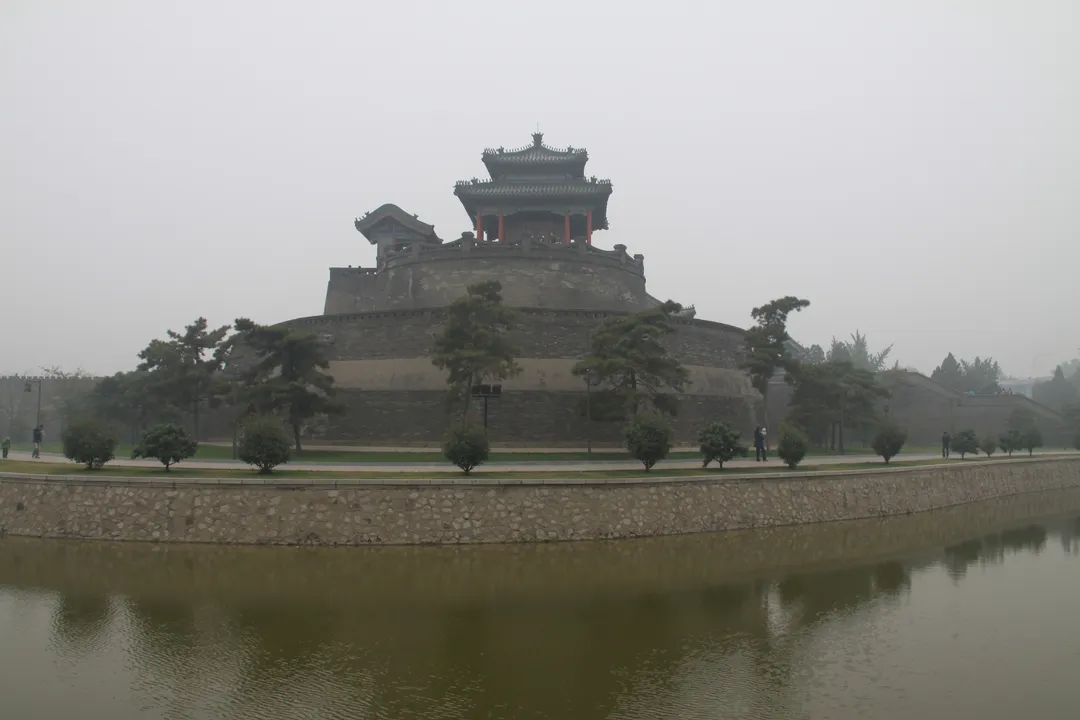
Start where the city starts: Congtai Park, the terrace platform tied to King Wuling of Zhao, the ruler whose 307 BC reform — cavalry in trousers instead of chariots — made Zhao a military power and Handan its capital from 386 BC. The terrace itself is a rebuild of a rebuild, but the park around it works as the city's front garden, with lotus ponds, pines and pensioners rehearsing exactly the martial arts their city invented. An unhurried loop takes about an hour, and the entry is priced like a park, not a monument.
The Handan city museum, a short ride away, is the primer for everything else: Zhao-state bronzes, and the wares of the Cizhou kilns — the bold, painted stoneware that supplied north China for centuries — laid out in an afternoon's worth of halls. Hours run on the standard museum pattern; arrive by early afternoon and you will have time for both floors. Between the two, the Zhao story reads clearly: a Warring States capital, then a kiln economy, then the taiji century.
Guangfu Ancient City: Where Taiji Began
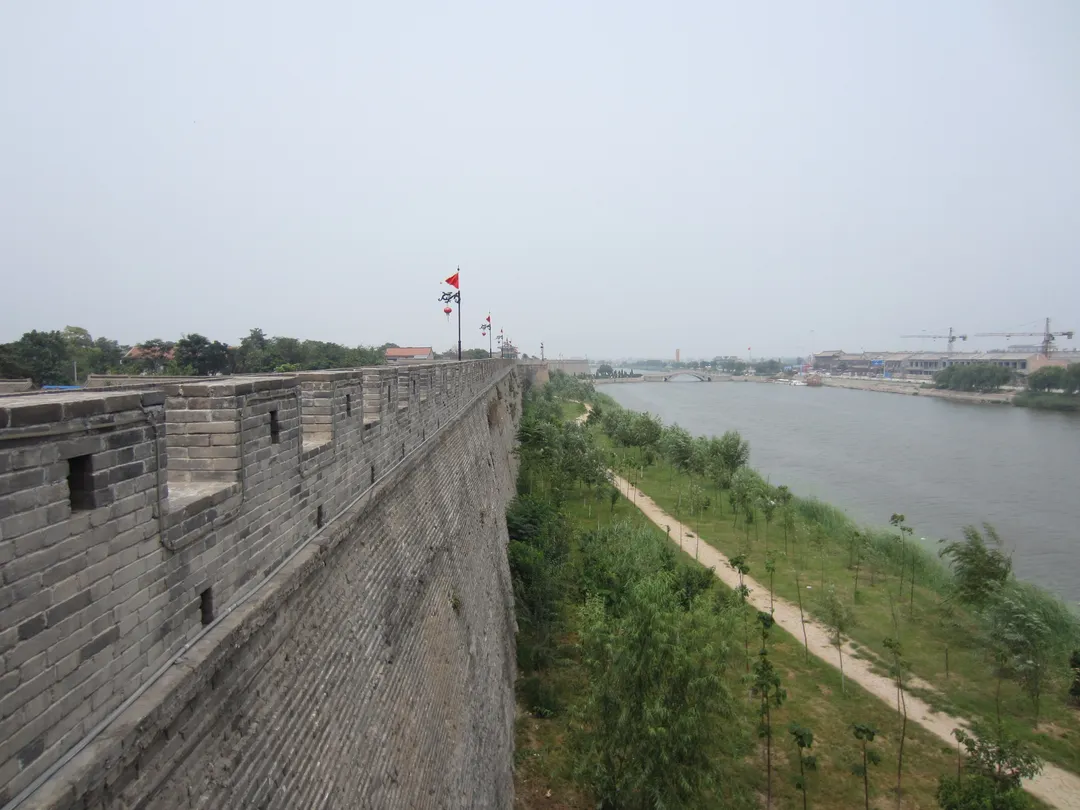
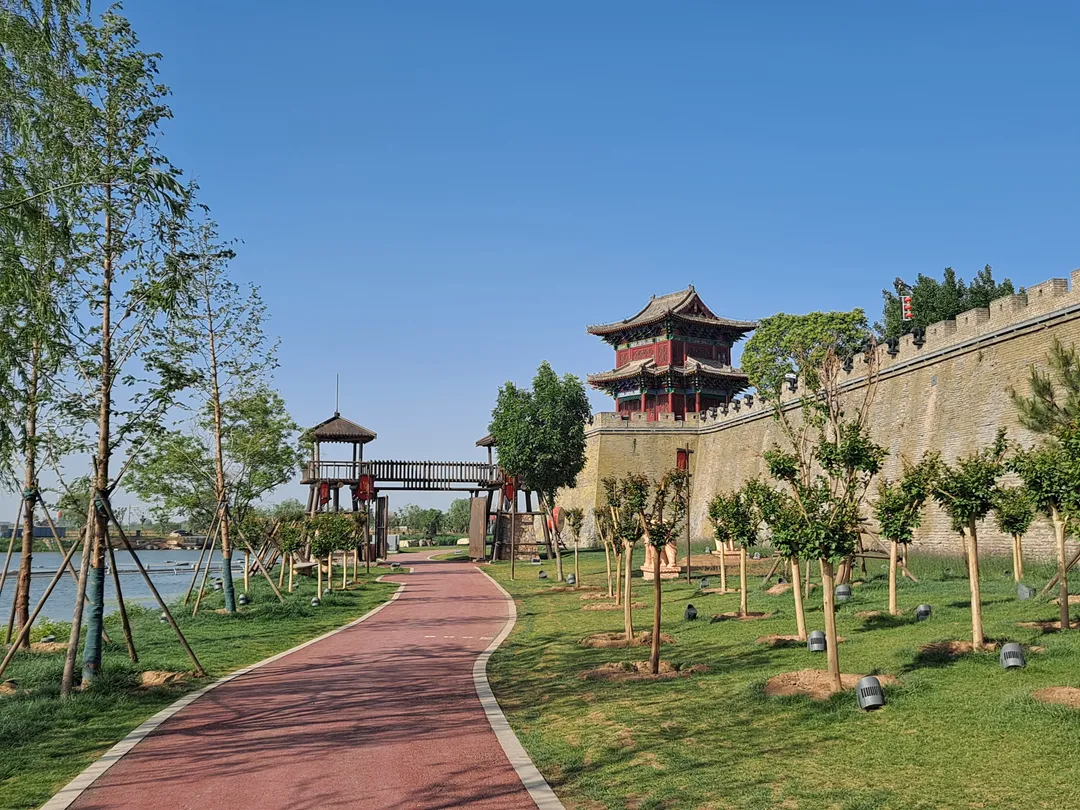
A full day, about 25 km northeast, Guangfu is the sight that justifies the trip: 4.5 km of Ming walls standing in a wetland moat, a working town inside, and the courtyards of Yang Luchan (1799-1872) and Wu Yuxiang (1812-1880) — the men who turned local boxing into the two Handan taiji styles that now circle the globe. The walls are walkable, the moat is crossed by gate bridges, and the town's lanes stay pleasantly unpolished.
The taiji courtyards are the reason practitioners make pilgrimages here: small, quiet compounds where the forms were written down. Walk the walls first while the light is low, then drop into the courtyards, then take the moat path — the reeds and water birds give the fortress a softness the brick doesn't promise. Plan five to six hours door to door from central Handan including the ride; buses and DiDi both run the route, and a round trip by taxi with waiting time stays within a modest budget.
Xiangtangshan and the Cizhou Kilns
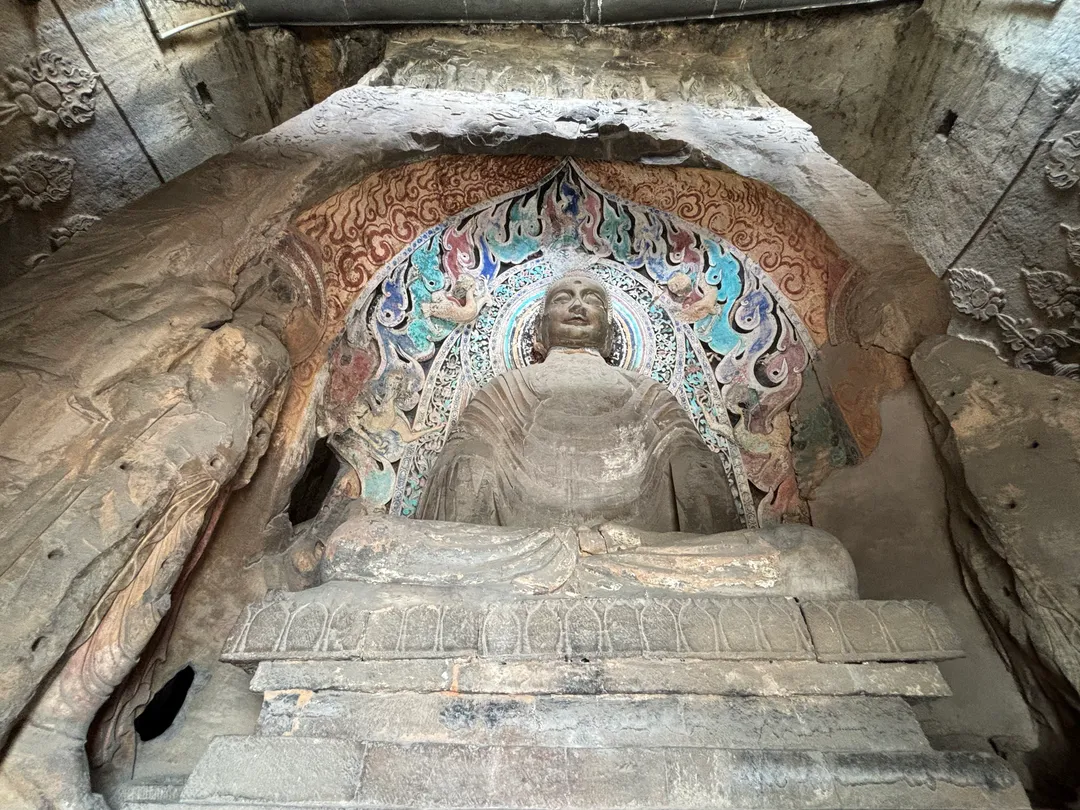
Southwest in the Fengfeng basin, about 35 km out, the Xiangtangshan grottoes hold the Buddhist caves of the Northern Qi dynasty (550-577), buddhas cut straight into rouge-red cliffs — among the earliest major cave projects in the north, and surprisingly quiet for their rank. The carving is fragmentary; what survives shows the transitional style that paved the way for the great Tang work elsewhere. Allow half a day.
The same basin hosts Pengcheng, the old Cizhou kiln yard, where the painted stoneware you saw in the city museum was actually fired — kiln sites and workshops dot the town, and the pairing of caves and kilns makes one honest day trip. Back in town by late afternoon for the train from Handan East if you are moving on; otherwise save the caves for day three.
Idioms, Bridges and Lanes
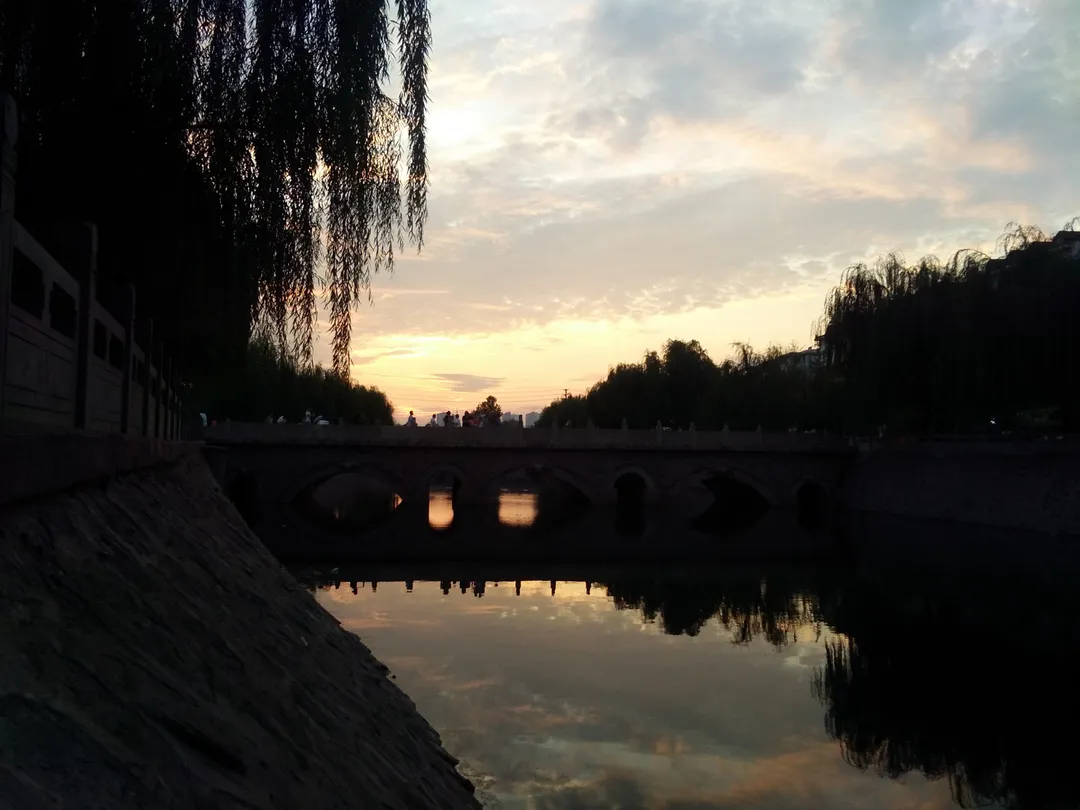
Handan is the set of more Chinese idioms than perhaps any other city — the "learn to walk in Handan" story (a man who tried to copy a local's walk and forgot his own) has its own monument: Xuebu Bridge, a stone bridge of 1617 spanning the old river channel. A short walk away, Huiche Lane marks the narrow passage where minister Lin Xiangru made way for General Lian Po — the courtesy that became the idiom for yielding to a rival for the greater good. Neither takes more than a few minutes; both make the Zhao story physical. Fold them into a morning walk that starts at Congtai and ends with noodles in the old quarter, and you will have covered two thousand years without leaving the city center.
A Three-Day Plan (and a Fifth)
- Day 1 — the Zhao core. Congtai Park in the morning, the city museum after lunch, then the idiom sites: Xuebu Bridge and Huiche Lane on foot, dinner in the old quarter.
- Day 2 — Guangfu. Leave by 09:00 for the walls, the moat path and the taiji courtyards of Yang Luchan and Wu Yuxiang; back in town by late afternoon. The 3-day Handan itinerary runs this hour by hour.
- Day 3 — the Fengfeng pair. Xiangtangshan caves in the morning, Pengcheng's kiln yards after; evening train from Handan East if you are moving on.
- Days 4-5, if you have them. Add the Zhao King City ruins west of town and a long day west to Shexian for Wahuang Palace, about 90 km out — the four-storey pavilion, about 23 m high, is tied back to the cliff with iron chains above Northern Qi carvings. The 5-day version folds both in.
Getting There and Around
Handan East station is the high-speed stop on the north-south trunk, and the city sits an easy rail ride from Shijiazhuang to the north and Anyang to the south. Within the city, taxis and DiDi are cheap and honest; the central sights cluster close enough to walk. The two excursions — Guangfu 25 km northeast, Xiangtangshan and Pengcheng 35 km southwest — run by bus or by DiDi with waiting time; Wahuang Palace, at about 90 km, is a long day by hired car.
| Route | Time | Typical cost |
|---|---|---|
| City center → Congtai Park / museum (taxi) | 10-15 min | short local fare |
| City center → Guangfu Ancient City (DiDi) | 40-50 min | modest day-trip fare |
| City center → Xiangtangshan (DiDi/car) | about 1 h | half-day hire is comfortable |
| City center → Wahuang Palace, Shexian (hired car) | 1.5-2 h | day hire; about 90 km each way |
| Handan East → next city (HSR) | 30-60 min | short-haul fare on the trunk |
There is no metro here and no reason to rent a car unless Wahuang Palace is on your list. Keep every destination written in Chinese — drivers rarely read English.
Where to Stay
Stay in the city center, between Congtai Park and the station: mid-range Chinese chains inside the roster's 300-600 CNY nightly band — county pricing often comes in under it — put you ten minutes from every in-town sight and forty from Guangfu. There is no international hotel scene to speak of; business chains are the reliable tier. April-May and September-October are the comfortable seasons and the busiest, so book a week ahead; the national holiday weeks of early May and early October are the only windows that genuinely jam.
What to Eat in Handan
Handan eats like southern Hebei: wheat noodles pulled to order, braised and stewed dishes in the north-cooked style, and sesame flatbreads off the morning griddles. Daming County's braised chicken has a following across the province, and the kiln town of Pengcheng does honest street food for the cave-and-kiln day. Eat where the queues are local — the old quarter around the idiom sites is a dependable dinner zone — and carry 50-100 CNY in small notes for the older stalls; Alipay and WeChat Pay linked to an international card cover nearly everything else.
What a Day Costs
| Item | Price | Notes |
|---|---|---|
| Attraction tickets | 50-150/day | roster band; Congtai is priced like a park |
| Mid-range hotel | 300-600 CNY/night | roster band; central chains often lower |
| Meals | 100-200/day | noodle lunches, braised dinners |
| Local transport | 30-60/day | taxis and DiDi; excursions billed extra |
| Guangfu or Xiangtangshan day trip | modest fare + entry | DiDi with waiting time |
The roster's all-in frame is 500-1,000 CNY per person per day at mid-range — accommodation 300-600 CNY, food 100-200 CNY, local transport 30-60 CNY, attractions 50-150 CNY. Handan tends to land at the lower half of that frame: tickets are modest, and the two excursions split the same daily budget rather than adding to it.
When to Go
April-May and September-October are the working windows: the plain is mild, the walls of Guangfu are walkable without baking, and the caves keep a steady temperature. Summer (June-August) runs hot and bright on the plain — start early, siesta midday; winter is grey and bare but cheapest. Avoid the national holidays (early February, early May, early October): Guangfu's walls and the museum both absorb domestic crowds first.
Practical Tips
- Payment: link an international card to Alipay or WeChat Pay before arrival; keep 50-100 CNY in small notes for older stalls.
- eSIM: a tourist data eSIM (about 5-30 USD) avoids the phone-shop passport queue; install a VPN before you fly, since Google, WhatsApp and Instagram are blocked on the mainland.
- Museums close Mondays and label in Chinese first: read up before you go, or hire a guide at the door.
- The taiji courtyards at Guangfu sometimes host practice sessions — ask politely rather than walking in; a short lesson can usually be arranged for a small fee.
- English is thin. Screenshot every address in Chinese and learn the three phrases in the table below.
- Emergencies: police 110, ambulance 120, fire 119, national tourist hotline 12301.
Frequently Asked Questions
How many days do I need in Handan?
Two days cover the Zhao core and Guangfu. The third day buys the Fengfeng pair — Xiangtangshan caves and the Pengcheng kilns. Add a fourth or fifth for the Zhao King City ruins and Wahuang Palace in Shexian, about 90 km west. One day is possible only if you skip the excursions and hold to Congtai, the museum and the idiom sites.
Is Handan worth visiting for taiji practitioners?
It is the pilgrimage: Guangfu Ancient City holds the courtyards of Yang Luchan (1799-1872) and Wu Yuxiang (1812-1880), the founders of the Yang and Wu styles. Walk the 4.5 km of Ming walls, cross the moat bridges, and spend the quiet hour in the courtyards where both forms were codified. Practice sessions happen; ask at the courtyards politely and a short lesson can usually be arranged.
How do I get to Guangfu Ancient City from Handan?
It sits about 25 km northeast of the city center. A DiDi or taxi takes 40-50 minutes; a round trip with waiting time stays within a modest budget, and buses also run the route. Go early — the walls and the taiji courtyards are best before the midday light, and the moat path is at its calm in the morning.
Are the Xiangtangshan caves worth it if I have seen Longmen or Yungang?
Different register, and worth the half day if caves interest you at all: Northern Qi work (550-577) is earlier than the great Tang ensembles, the rouge-red cliff setting is unusual, and the site sees a fraction of the crowds of the famous three. Pair it with Pengcheng's kiln yards in the same basin and the day justifies itself.
What is the "idiom city" thing about?
A remarkable share of Chinese idioms is set in Handan from its Zhao-capital years — the most famous being "learn to walk in Handan", about a man who copied a local's gait and forgot his own. Xuebu Bridge (1617) and Huiche Lane, where Lin Xiangru yielded to General Lian Po, mark the stories, and both sit in the city center within a short walk of Congtai Park.
Do I need cash in Handan?
Mostly no — Alipay or WeChat Pay linked to an international card works at hotels, restaurants and ticket windows. Keep 50-100 CNY in small notes anyway for older stalls and rural drivers on the Guangfu or Shexian days.
Useful Phrases
| Chinese | Pinyin | Meaning |
|---|---|---|
| 你好 | nǐhǎo | hello |
| 谢谢 | xièxie | thank you |
| 多少钱 | duōshǎo qián | how much |
| 邯郸 | Hándān | Handan |
| 丛台公园 | Cóngtái Gōngyuán | Congtai Park |
| 广府古城 | Guǎngfǔ Gǔchéng | Guangfu Ancient City |
| 响堂山 | Xiǎngtángshān | Xiangtangshan caves |
| 太极 | tàijí | taiji |
| 娲皇宫 | Wāhuáng Gōng | Wahuang Palace |
Final Notes
Every figure above — the 386 BC capital and its 158 years, King Wuling's 307 BC reform, Guangfu's 4.5 km of Ming walls 25 km out and the taiji founders' 1799-1872 and 1812-1880 courtyards, the Northern Qi caves of 550-577 some 35 km southwest, Wahuang's 23 m pavilion 90 km west, the 1617 idiom bridge, and the 300-600 CNY nightly band — was checked in October 2026 against our city roster data and the Handan trip itineraries. Prices move; reconfirm within a fortnight of travel. Give Handan two real days and it pays you back in chronology: a terrace with a Warring States story, wetland walls with taiji inside them, buddhas in a red cliff — and a bridge where a man forgot how to walk.
- Source: China National Tourism Administration — policy and seasonal notices.
- Source: Hebei Provincial Government — prefecture and site notices.
- Source: Trip.com — live hotel and rail listings for cross-checks.
Last verified 2026-10-14.