Anyang at a Glance
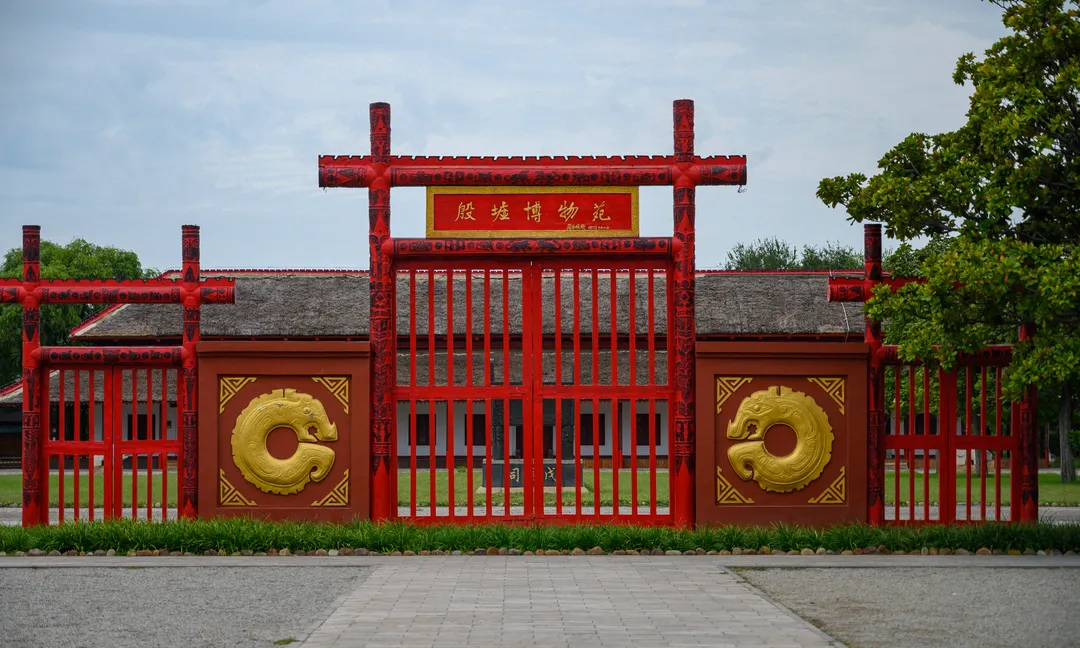
Two days is the right dose for Anyang. Day 1 belongs to Yinxu, the UNESCO-listed capital of the late Shang dynasty (1300-1046 BC) where oracle bone inscriptions — the earliest known Chinese writing — were identified in 1899, plus the free National Museum of Chinese Writing and the renovated Cangxiang Street lanes after dark. Day 2 splits in two: an hour northwest to Linzhou for the Red Flag Canal, cut into the Taihang cliffs in the 1960s, or a city day for Yuan Shikai's tomb and the top-heavy Wenfeng Pagoda. Come in April-May or September-October; mid-range costs run about 500-1000 CNY per person per day, and the single biggest ticket is roughly CNY 120 for the full Yinxu combo.
This guide is for travelers deciding whether Anyang deserves its own stop in northern Henan — and how to chain the Shang ruins, the museums and the Linzhou cliffs without a car. Every figure below was cross-checked against our trip-day data for Anyang and current price listings in October 2026.
Why Anyang
Anyang is a prefecture-level city of about 5.4 million people at Henan's northern tip, on the plain where Henan, Hebei and Shanxi meet. It counts among China's eight great ancient capitals, and its claim is the oldest of them all: as Yin, it was the last capital of the Shang dynasty, occupied for 255 years until 1046 BC. That makes it the first Chinese archaeological site confirmed by both written records and excavation — the place where China's prehistory ends and its history begins.
The discovery that put it on the world map happened in 1899, when a Qing-dynasty scholar traced strange inscriptions on apothecary "dragon bones" back to this ground. The carved tortoise shells and ox scapulae turned out to be royal divination records, and more than 150,000 inscribed fragments have been unearthed here since. Nothing else in the region competes with that story; the honest framing is that Anyang is a working modern city built around a world-class archaeological site, not a preserved old town. English signage thins out fast outside the main ticket halls, travelers are rarer here than in Luoyang or Zhengzhou, and a translation app earns its space on your phone. What you trade in convenience, you get back in uncrowded access to genuinely first-rank sights.
Yinxu: the Shang Capital Where Chinese Writing Began
Yinxu, inscribed by UNESCO in 2006, spreads across both banks of the Huan River about 2 km from downtown. The visit has three parts — the palace-temple area with its excavated foundations, the royal tombs across the river, and the new Yinxu Museum that opened in February 2024 — and a thorough pass through all three takes 4-5 hours. Gates open at 08:00 and close at 17:00 in winter (17:30 in summer).
Pricing has a new shape since the museum opened: current listings price the palace-temple site at about CNY 50 and the new museum at about CNY 80, with a combined ticket at around CNY 120. Older guides still quote a single CNY 70-90 all-in ticket — that structure is out of date, so reconfirm on the official Yinxu Museum WeChat account, which also handles the real-name reservations the museum asks for. A shuttle bus links the palace-temple area with the royal tombs.
The oracle bone pits
Inside the palace-temple area, the sequence runs from rammed-earth palace platforms — the actual floors where Shang kings held court 3,300 years ago — to the pits where diviners threw used shells. The divination itself is easy to reconstruct: a question was put to the ancestors, a bone was heated until it cracked, the crack was read as the answer, and question, answer and sometimes the outcome were carved onto the bone. The roughly 5,000 distinct characters identified at the site (about 2,000 of them deciphered) are small and shallow, so bring your phone camera zoom or binoculars. Royal chariot burials, with horse skeletons preserved in place, round out the circuit.
Fu Hao's tomb
The single most striking find at Yinxu is also the most human. Fu Hao, consort of King Wu Ding (r. 1250-1192 BC), was also a military commander who led 13,000 troops — the largest Shang army on record. Her tomb, discovered intact in 1976, remains the only unlooted Shang royal burial ever found, and its 1,900-plus objects — 468 bronzes, 755 jades, weapons, ivories — are displayed in the layout they were buried in.
The new Yinxu Museum
The February 2024 building changed the site more than anything since the excavations began: climate-controlled galleries, good English signage, and oracle bones shown with magnified digital annotations that make the inscriptions legible for the first time. The sensible order is museum first for context, then the palace-temple area and the royal tombs — the ruins read very differently once you know what the pieces looked like whole.
The National Museum of Chinese Writing
A 15-minute hop from the ruins, Anyang's second museum is the natural sequel: the National Museum of Chinese Writing, the country's national museum devoted to Chinese characters, opened in 2009. Admission is free, galleries run from the oracle bones through seal script, woodblock printing and the modern type on your screen, and the English panels are good enough to read unaided. It is closed Mondays, like most Chinese museums, and two hours is enough. Do it after Yinxu, not before — the displays answer exactly the questions the ruins raise.
Linzhou: the Red Flag Canal and the Taihang Grand Canyon
An hour northwest by road, the prefecture ends at the Taihang escarpment, and the county-level city of Linzhou clings to its base. Here in the 1960s, Linzhou households cut a canal into the cliff face by hand to end a water shortage — construction started in 1960, the main channel alone runs some 70 km pinned to the rock, and the full network of branches adds up to roughly 1,500 km. The visit runs memorial hall first, at the canal head, then the celebrated Youth Cave section, a tunnel dug by about 300 young builders, now walked on a ledge above water that still flows. It is part engineering, part memorial, and entirely local history — no other sight in Henan explains so quickly why this province moves mountains.
The same outing can add the Taihang Grand Canyon south of Linzhou town: Peach Blossom Valley stacks streams, pools and stairways through a narrow gorge, and the walkways at Wangxiang Rock are pinned to the cliff face a long way above the valley floor. The canyon deserves a full day of its own; squeezing it into a canal afternoon means seeing neither properly. Intercity buses run from Anyang to Linzhou, but a hired car or driver is the sane way to combine canal and canyon.
Yuanlin, Wenfeng Pagoda and the Old-City Lanes
The city-day shortlist. Yuanlin is the tomb of Yuan Shikai — the general who took the presidency after the 1911 revolution and died in 1916, six months into a brief imperial restoration — built 1916-1918 in an unusual double style: Ming-model halls and stone figures on the way in, a Western-modeled tomb chamber at the end of the axis. Wenfeng Pagoda, on the Tianning Temple grounds, is a Five-Dynasties structure of the 10th century with a one-in-a-thousand silhouette: it is wider at the top than at the base, straining upward like a chalice. Between the two, the renovated lanes of Cangxiang Street hold the evening — snack stalls, old courtyard fronts, and the city's most photogenic hour.
Tangyin: Youli City and the Yue Fei Temple
Under an hour south, the county of Tangyin adds two stops that round out the story of early China. Youli City is where King Wen of Zhou, held prisoner by the Shang late in the 11th century BC, is traditionally said to have worked out the 64 hexagrams — the groundwork of the I Ching. Yue Fei, the Song-dynasty general who fought to recover the north, was born in Tangyin, and his Ming-era temple keeps steles carved with the ode Man Jiang Hong attributed to him. The two sites pair easily in a half-day loop from Anyang.
A Two-Day Plan
- Day 1 — Yinxu and the writing story. Museum at 08:00 opening (the real-name reservation saves the queue), then the palace-temple area and Fu Hao's tomb while the morning is cool; shuttle to the royal tombs if you have the legs. Afternoon at the National Museum of Chinese Writing; evening walk through Cangxiang Street.
- Day 2 — cliff or city. Option A: full-day Linzhou loop — memorial hall at the canal head by mid-morning, Youth Cave after the tour coaches pass, back to Anyang for dinner. Option B: Yuanlin and Wenfeng Pagoda in the morning, Tangyin's Youli City and Yue Fei Temple after lunch, home by evening HSR if you are pushing on.
With a third day, do both Day-2 halves — canal first if the forecast is clear, since the cliff walk is the weather-dependent half. The same stops stretch naturally into the 3-day Anyang itinerary, and the 5-day and 7-day versions add a second Linzhou day and the southern loop. For the province-wide frame, see the Henan guide — Luoyang, Zhengzhou and Kaifeng all sit within a couple of hours by rail.
Food: Bianfencai and Daokou Roast Chicken
Start where locals start: a breakfast bowl of bianfencai, Anyang's signature dish — flat sweet-potato noodles simmered in broth with tofu, blood curd and greens, ordered with a wedge of griddle bread. A generous bowl runs 5-10 CNY, and the line at a good stall moves fast. The city's most famous export is Daokou roast chicken from Daokou town in Hua County, a county under Anyang's administration — brined, bathed in spices and cooked until the meat slides off the bone, a craft that reaches back to the Qing dynasty. Buy it at roast-meat counters by the whole bird. Around them sit the rest of northern Henan's table: pizha, a fried starch-noodle cake that appears at banquets and street stalls alike, and wheat-noodle bowls in the Henan style, 15-25 CNY a serving. A sit-down dinner for two runs 60-100 CNY. Alipay and WeChat Pay work nearly everywhere; keep CNY 50-100 in small notes for market stalls.
Getting There and Around
Anyang East station sits on the Beijing-Guangzhou high-speed line, opened with the line's Beijing-Zhengzhou section in late 2012; the conventional Anyang station downtown keeps the slower stopping trains. Long-haul flyers usually arrive via Zhengzhou Xinzheng airport (CGO) and continue by HSR.
| Route | Typical time | Notes |
|---|---|---|
| Zhengzhou East → Anyang East | HSR, 40-45 min | CNY 55-80 second class; 20-plus trains daily |
| Beijing West → Anyang East | HSR, about 2.5 h | same north-south trunk line |
| Xi'an North → Anyang East | HSR, about 2 h | direct services via Zhengzhou |
| Anyang East → Yinxu | 10-20 min taxi | taxi CNY 15-30; bus 1 or 18, about 30 min, CNY 2 |
| Anyang → Linzhou (Red Flag Canal) | about 1 h by road | intercity bus or hired car; on-site shuttle at the scenic area |
| Anyang → Tangyin | under 1 h by road | frequent trains and buses; short taxi between sites |
There is no metro: buses, taxis and the Didi app cover everything a visitor needs, with in-town rides at 10-20 CNY. Fares are second-class listings and move with demand — reconfirm close to travel.
Where to Stay
Base in the city center, in the block between the old city and Wenfeng Pagoda: it puts Cangxiang Street in walking distance, keeps taxi runs to Yinxu short, and costs less than comparable Henan cities — budget beds around 100-150 CNY, solid mid-range chains 300-600 CNY. Hotels nearer Anyang East suit travelers bending straight through by rail, at the cost of a longer hop to the sights. Book one to two weeks ahead for the holiday weeks of early May and early October; walk in otherwise.
When to Go
First choice is April-May — plains in bloom, temperatures in the low twenties, the Taihang cliffs still carrying spring water. Second is September-October, the driest light of the year. Winter is dry and sharp, with January highs around freezing; the museums are all indoors, but the canal cliff walk turns icy. July-August is hot with the year's rain. Whatever the season, skip the national holiday weeks of early February, early May and early October — the Yinxu reservation system fills and the Linzhou road clogs.
Decision Support
Map
Orient on one line and two spurs. The HSR trunk runs north-south through Anyang East; downtown sits west of the station. From the center, one spur runs northwest about 2 km to Yinxu across the Huan River, the other runs an hour northwest to Linzhou; Tangyin hangs an hour south. Amap (Gaode) handles local routing best — download it offline before the Linzhou run.
Cost breakdown
| Per person, per day, 2026 | Backpacker | Mid-range | Comfort |
|---|---|---|---|
| Accommodation | 100-150 CNY | 300-600 CNY | 700+ CNY |
| Food | 50-80 CNY | 100-200 CNY | 250+ CNY |
| Local transport | 20-30 CNY | 30-60 CNY | 100+ CNY (hired car) |
| Attractions | 0-80 CNY | 80-180 CNY | 200+ CNY |
| Daily total | about 170-340 CNY | about 500-1000 CNY | 1200+ CNY |
The Yinxu day resets the math: about CNY 50 for the site, CNY 80 for the museum or CNY 120 combined, and almost nothing for the following city day. The mid-range line above matches the roster benchmark of roughly 100 units per standard day, tickets excluded.
When to go
One answer: the second half of April — spring water in the canyon, plains in bloom, and no holiday pressure at the Yinxu reservation desk. The roster's "most pleasant" answer, spring (April-May) and autumn (September-October), holds for both spurs; just keep clear of the first weeks of May and October.
Practical
Five calls carry the trip. One: book the Yinxu Museum's real-name reservation before you travel and go museum-first. Two: buy the combined ticket if you plan both the site and the museum — it wins at any pace. Three: carry CNY 100-200 in small notes for bianfencai stalls and market counters. Four: install a translation app; English signage thins within a step of the ticket halls. Five: if rain wins, swap the Linzhou day with the city day — the museums are weather-proof and the cliff walk is not.
Frequently Asked Questions
How many days does Anyang need?
Two full days cover the essential frame — Yinxu, the writing museum and one of the two Day-2 options. A third day lets you do both Day-2 options; beyond that, most travelers move on to Luoyang or Kaifeng.
Is Yinxu worth visiting after the National Museum in Beijing?
Yes. Beijing displays selected oracle bones; Yinxu is where they were dug up. The palace platforms, the divination pits and Fu Hao's tomb in its burial layout give you the context a vitrine cannot, and the 2024 museum closes the interpretation gap.
Do I need to book Yinxu tickets in advance?
The new museum runs on real-name reservations through its official WeChat account, and holiday-week slots go early. Walk-up visits are easier on weekdays; the palace-temple site ticket is the fallback if museum slots are gone.
How do I get to the Red Flag Canal without a car?
An intercity bus from Anyang to Linzhou takes about an hour, then a short taxi to the memorial hall and Youth Cave. With the Taihang Grand Canyon added on, a hired car or driver is the practical choice.
What exactly is bianfencai?
A breakfast dish: flat sweet-potato starch noodles simmered in bone broth with tofu, blood curd and seasonal greens, eaten with griddle bread. It is Anyang's morning ritual — single-digit-yuan, filling and found in dedicated shops across the old city.
Is Anyang in Hebei or Henan?
Henan — firmly. Anyang is Henan's northernmost prefecture-level city, bordering Hebei (Handan) and Shanxi, but it belongs to Henan, and Daokou roast chicken comes from Hua County under Anyang's administration, not from anywhere in Hebei.
Useful Phrases
| Chinese | Pinyin | Meaning |
|---|---|---|
| 安阳 | Ānyáng | Anyang, the city |
| 殷墟 | Yīnxū | Yinxu, the Ruins of Yin |
| 甲骨文 | jiǎgǔwén | oracle bone script |
| 红旗渠 | Hóngqíqú | Red Flag Canal |
| 文峰塔 | Wénfēng tǎ | Wenfeng Pagoda |
| 扁粉菜 | biǎnfěncài | bianfencai, the flat-noodle breakfast bowl |
| 道口烧鸡 | Dàokǒu shāojī | Daokou roast chicken |
| 多少钱 | duōshǎo qián | how much |
| 谢谢 | xièxie | thank you |
Emergency Contacts
- Police: 110
- Ambulance: 120
- Fire: 119
- Tourist hotline: 12301
Sources and Verification
Ticket structure and figures for Yinxu were checked in October 2026 against current listings (site about CNY 50, museum about CNY 80, combined about CNY 120; pre-2024 records quoting CNY 70-90 all-in are outdated) — reconfirm on the official Yinxu Museum channels within a fortnight of travel. Shang chronology, the oracle-bone corpus and the Fu Hao tomb figures follow our UNESCO record for Yinxu; rail times follow Beijing-Guangzhou HSR timetables and our trip-day data for Anyang; canal construction figures follow published project histories. Prices move with the seasons.
Two real days give Anyang all the time it needs: a Shang capital at opening hour, the characters that grew out of its divination bones, a canal pinned to a cliff by people who needed water, and a chicken that needs no argument. Last verified 2026-10-12.