Hanzhong at a Glance
Hanzhong is a basin city of about 3 million people in southwest Shaanxi, sitting between the Qinling and Daba mountains on the Han River — the river that gave the Han dynasty, and China's majority ethnicity, their name. It is a 2-3 day trip built on founding stories: Guhantai, the terrace where Liu Bang based himself after being enfeoffed King of Han in 206 BC; the Mianxian shrines of Zhuge Liang, raised by imperial decree in 263, with his tomb of 234 under the pines of Dingjun Mountain; and the Shimen plank road threading the Bao river gorge, where an Eastern Han tunnel cut around AD 63 is often called the world's earliest traffic tunnel. A mid-range day runs 500-1000 CNY per person including a 300-600 CNY hotel; a backpacker holds near 40.
Come in March-April for the basin's rapeseed bloom or in September-October for clear walking weather — that is the window our trip-days data marks.
Why Hanzhong
Hanzhong is where Chinese history keeps flipping between textbook and landscape. The city's own name is the origin point: Liu Bang took the title King of Han here in 206 BC, and the dynasty he founded — plus the character most Chinese still use for themselves — traces to this valley. Centuries later the strategist Zhuge Liang made the mountains west of the city his northern base, and the Three Kingdoms stories tourists know from opera and games are local geography here: Dingjun Mountain, the Bao gorge, the plank roads.
The modern case for the trip is access. High-speed rail puts Xi'an about 70 minutes north through the Qinling base tunnels and Chengdu about 2 hours south, and the city sits conveniently for Baoji and the Shaanxi loop — a Han-river and Three Kingdoms circuit that no single big city serves. The honest trade-offs: the sights spread from the city centre out to Mianxian (about 40 km west) and Yangxian (about 50 km east), English signage is thin, and the urban riverfront, though pleasant, is a modern build. What you get is Three Kingdoms geography you can actually stand on, at prices well below Xi'an's.
Guhantai: Where the Han Dynasty Began
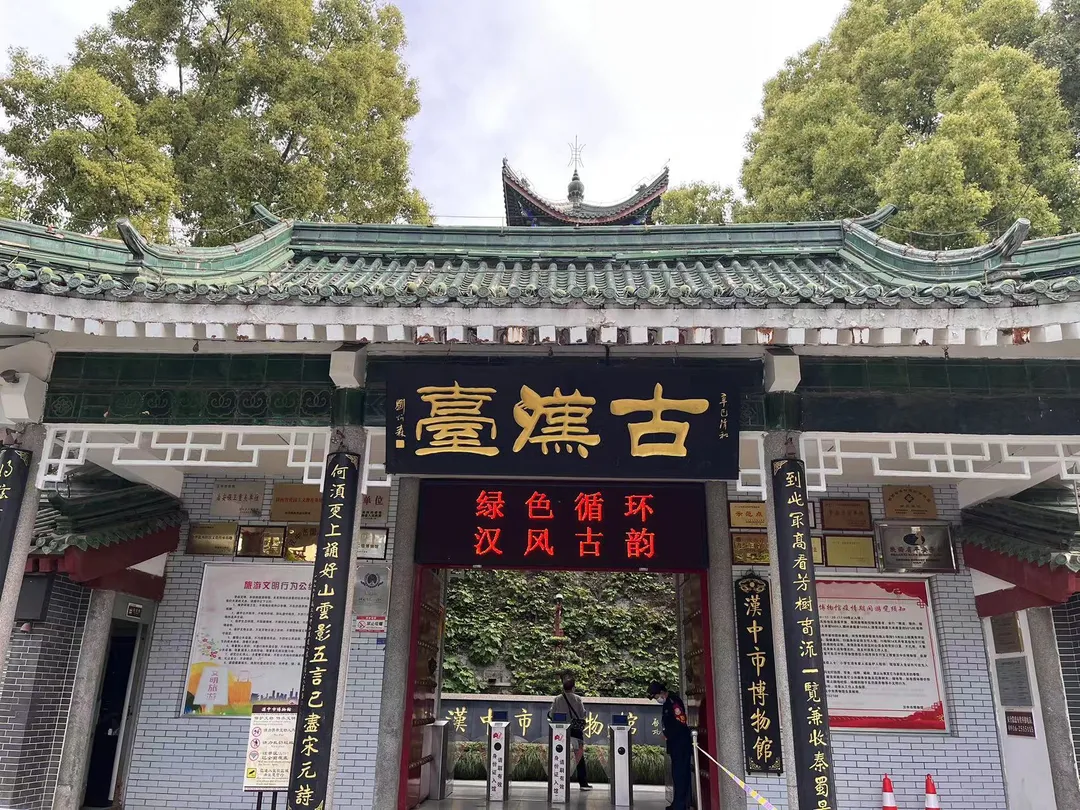
Guhantai (古汉台) is the raised terrace where Liu Bang organized his court after taking the title King of Han in 206 BC, and the city museum now fills the pavilions on top of it. Its decisive holding is the Shimen Thirteen (石门十三品): stone-carved calligraphy works pried from the cliffs of the Bao gorge and moved here for safety in the early 1970s, when the Shimen reservoir drowned the original cliffs. Among them is the Shimen Song (石门颂) of AD 148, one of the most admired works of Han-dynasty clerical script — calligraphers still copy it the way painters copy old masters.
Give the museum 1.5-2 hours; captions are partly bilingual, and the terrace itself, with its timber pavilions, explains why later dynasties kept restoring the site. It sits centrally, an easy first morning before the day trips.
Mianxian: the Shrine and Tomb of Zhuge Liang
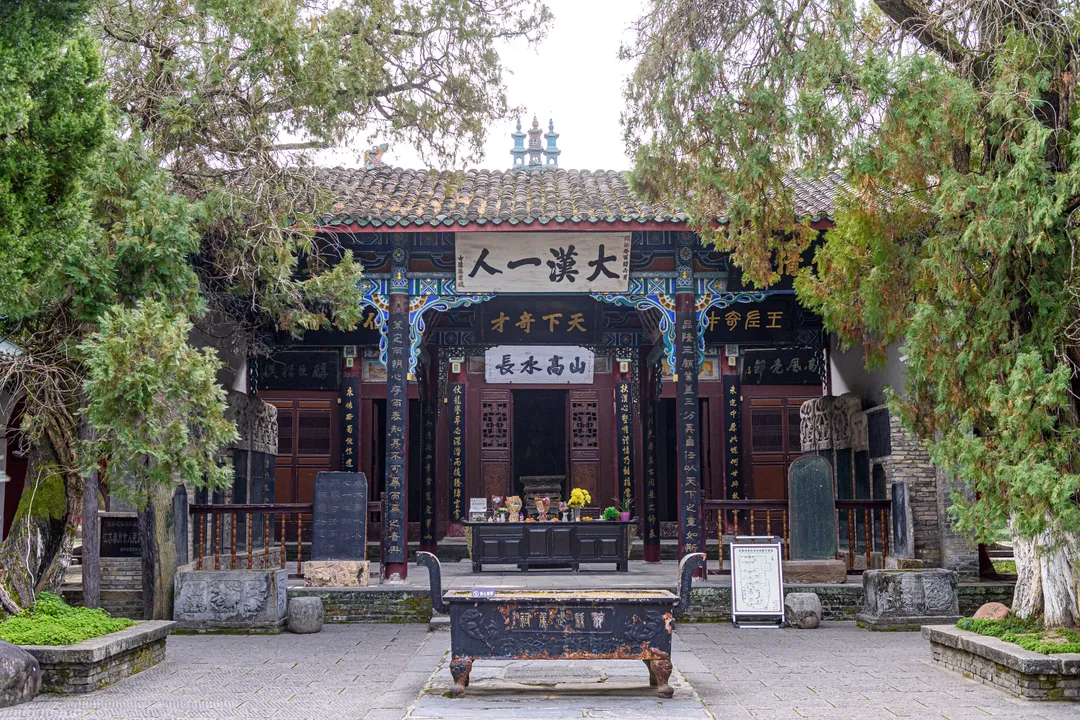
About 40 km west, Mianxian holds the two poles of the Zhuge Liang pilgrimage. The Wuhou Shrine at Mianxian was raised by imperial decree in 263 — the earliest state-sanctioned temple to the chancellor, earlier than the more famous one in Chengdu, which grew from a later merger with the memorial temple of Liu Bei, founder of Shu Han. Forty kilometres changes the crowd: Mianxian's courtyard sees school groups and devotees, not tour-bus battalions.
A short ride further, under the pines of Dingjun Mountain, lies Zhuge Liang's tomb (181-234), the burial he asked for himself — plain, on the mountain where he staged his northern campaigns. The pine cover, the tomb mound and the small side halls make a quiet 1-1.5-hour visit. Together with the shrine, the Mianxian half-day is the emotional centre of any Hanzhong trip.
The Shimen Plank Road and the World's Earliest Traffic Tunnel
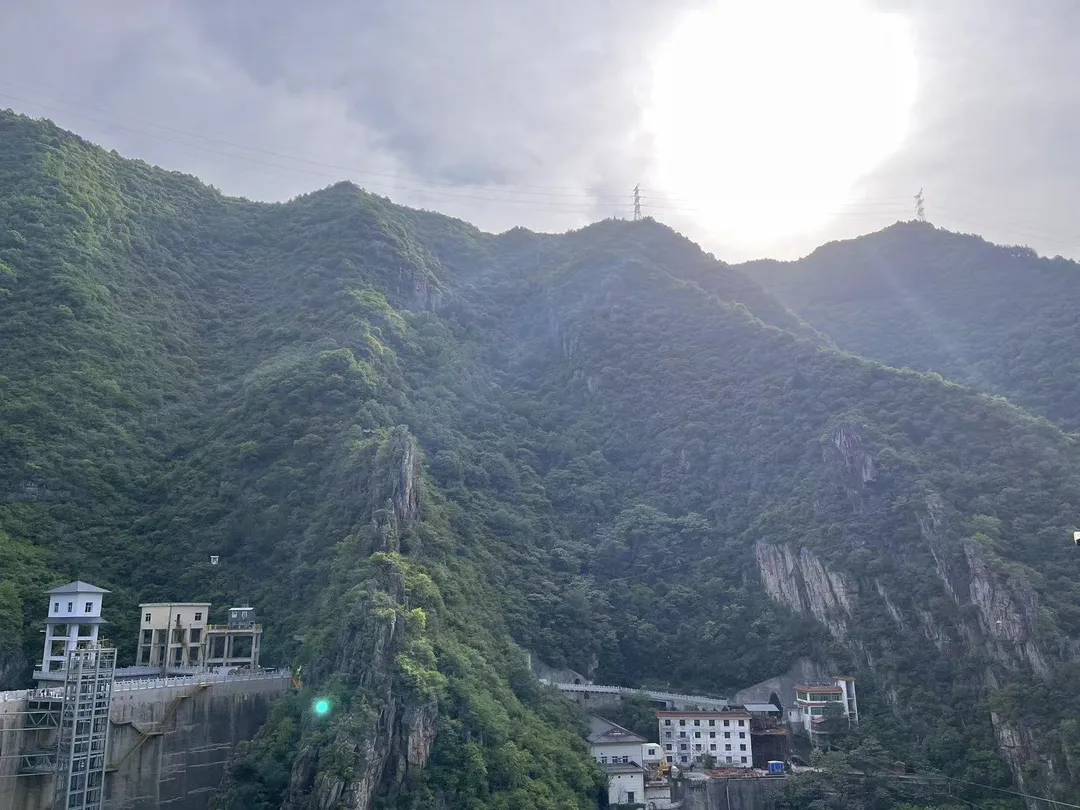
The Shimen plank road (石门栈道) threads the Bao river gorge southeast of the city — the corridor through the Qinling that linked the Guanzhong heartland to this basin. The walkway along the cliff is a rebuild, running below the Shimen reservoir whose waters in the early 1970s covered the original road and its cliff inscriptions; what the reservoir took, the Guhantai museum now keeps. The engineering story survives in situ: an Eastern Han tunnel cut through the rock around AD 63, often called the world's earliest traffic tunnel, its band still visible in the gorge's story boards.
Today it is a half-day of walking gorge paths and rebuilt trestle walkways with the reservoir's green water below — go on a weekday morning, bring walking shoes, and treat the history boards as the actual exhibit.
The Riverfront and Tianhan Wetland Park
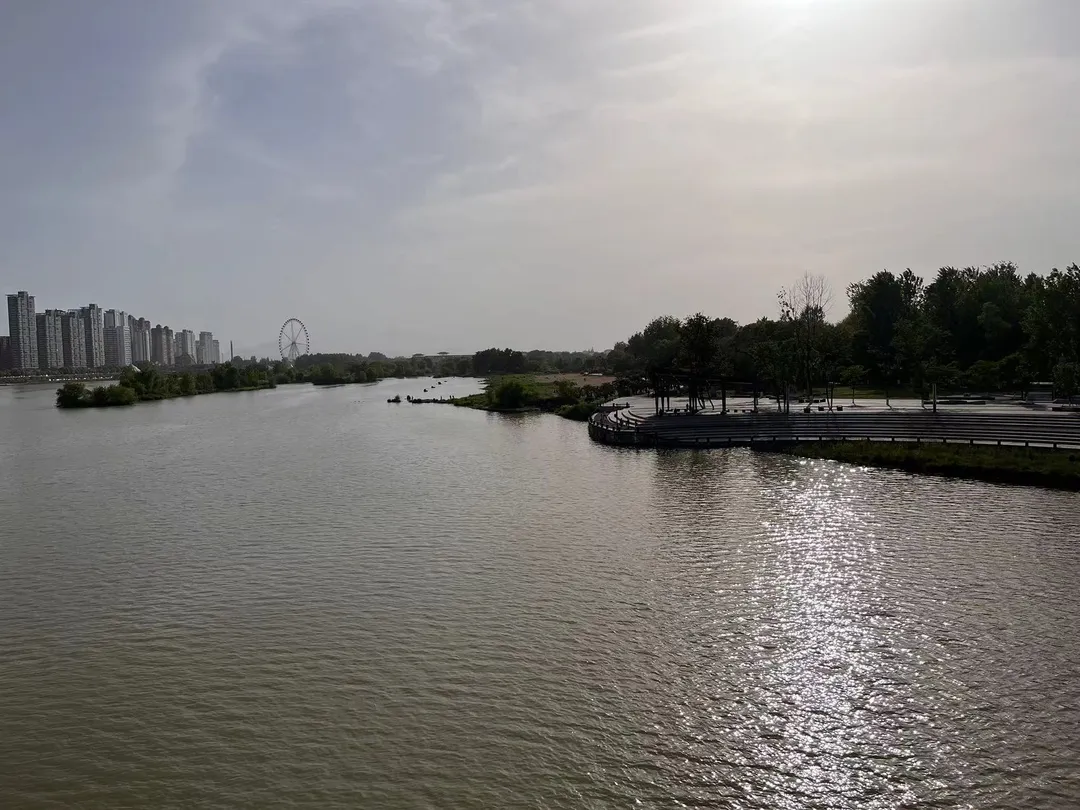
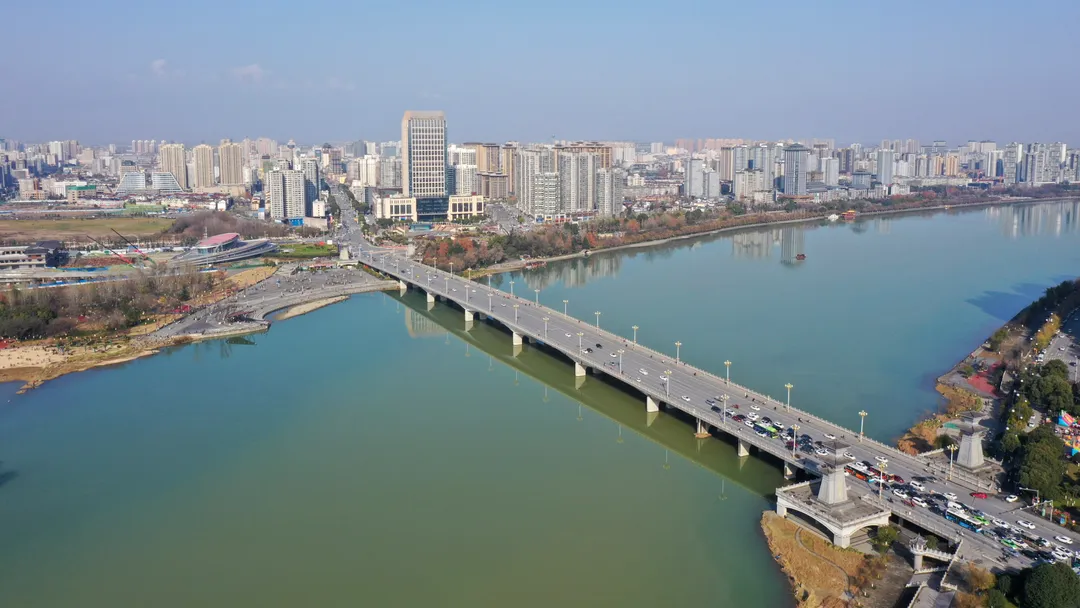
The Han river gives the city its evening. Tianhan Wetland Park (天汉湿地公园) lays boardwalks through reed beds along the urban riverbank, and on clear days the water goes mirror-still under the bridges of the photo above. It is a free, easy hour or two — joggers at dawn, families and dancing troupes at dusk — and it pairs naturally with a first-night walk. The wetland also carries the basin's ecological comeback story: the same river system east of the city is where the crested ibis survived.
Baijiang Altar: the General-Making Ceremony
Inside the modern city, the Baijiang Altar (拜将坛) marks where Liu Bang staged the ceremony making Han Xin his general in 206 BC — the promotion that started the chain ending in the founding of the Han. Two earthen platforms, stele, and a small exhibit tell the story; the altar stands in a quiet park quarter that makes a 30-40 minute stop between Guhantai and dinner. For anyone who wondered why "Han" means both a dynasty and an ethnicity, this stop completes the argument the museum starts.
Beyond the City: Ibises, Paper and Mountain Loops
Two excursions justify a third day. East about 50 km, Yangxian county is where seven wild crested ibises — a bird believed nearly extinct — turned up in 1981, and the protected wetlands there now anchor a recovery population you can sometimes see on guided visits. At Longting in the same county stands the tomb-and-shrine of Cai Lun, the eunuch who presented improved paper to the court in 105 and died in 121; the paper-making workshops put the process in your hands.
Longer loops go south into the Micang hills' Liping forest park, or west to Qingmuchuan's Huilongchang old street on the Shaanxi-Sichuan-Gansu corner — our 5-day and 7-day plans fold them in.
A Two-Day Plan (and a Third)
- Day 1 — the founding quarter. Guhantai and the Shimen Thirteen in the morning, Baijiang Altar after lunch, then Tianhan wetland boardwalks for sunset. Dinner near the old quarter.
- Day 2 — Mianxian. Drive west about 40 km: Wuhou Shrine first, then Dingjun Mountain and the tomb. Back by late afternoon; evening on the riverfront.
- Day 3 — the gorge and the east. Shimen plank road in the morning, or push east to Yangxian for the ibises and Cai Lun's tomb if birds and paper beat cliffs.
Our 3-day Hanzhong trip builder lays this out hour by hour.
Getting There: HSR and Roads
Hanzhong sits on the Xi'an-Chengdu high-speed corridor. The trains punch through the Qinling in long base tunnels — the ride from Xi'an is about 70 minutes, from Chengdu about 2 hours — and the station sits close enough to town for a short taxi. Within the basin, drivers cover Mianxian, the gorge and Yangxian as half-day hires.
| Route | Time | Notes |
|---|---|---|
| Xi'an → Hanzhong (HSR) | about 70 min | through the Qinling base tunnels |
| Chengdu → Hanzhong (HSR) | about 2 h | the southbound corridor |
| Hanzhong → Mianxian (shrine + tomb) | about 40 km west | half-day hire or bus |
| Hanzhong → Shimen plank road | short ride SE | half-day of gorge walking |
| Hanzhong → Yangxian (ibises, Cai Lun) | about 50 km east | full or half day |
| Guhantai / Baijiang Altar | in town | taxi or a long walk |
Keep the Chinese characters of your destinations on your phone — drivers rarely read English.
Where to Stay
Stay in the centre between Guhantai and the riverfront: mid-range hotels run about 300-600 CNY a night, you can walk to dinner and the wetland, and morning departures to Mianxian or the station stay short. Business chains cluster near the HSR station for late arrivals; boutique rooms in restored buildings are few. Book ahead for the March-April rapeseed weekends, when tour groups sweep the basin.
What to Eat in Hanzhong
The basin eats rice where the rest of Shaanxi eats wheat. The breakfast anchor is remianpi — hot rice-paste noodles dressed with chilli oil, vinegar and minced garlic — sold from shops that start the queue before 08:00 and run out by mid-afternoon. Around it: caidoufu, the sour vegetable-fermented tofu soup that locals argue about by county; walnut-studded flatbread from street ovens; river fish from the Han; and the mushroom and mountain-vegetable dishes that come down from the Daba slopes. Hotpot culture presses up from Sichuan, and the night markets pour it honestly.
Mid-range eating runs 100-200 CNY a day; a remianpi breakfast and a noodle lunch keep a backpacker day near the floor.
What a Day Costs
| Item | Price | Notes |
|---|---|---|
| Mid-range hotel | 300-600 CNY/night | centre, between Guhantai and river |
| Meals | 100-200 CNY/day | remianpi mornings, hotpot nights |
| Local transport | 30-60 CNY/day | taxis; day trips extra |
| Attractions | 50-150 CNY/day | shrines, gorge, museum |
| Half-day hire to Mianxian | by negotiation | shrine plus tomb |
| Total, mid-range | 500-1000 CNY/day | per person |
The roster's estimate matches: accommodation 300-600 CNY, food 100-200 CNY, transport 30-60 CNY, tickets 50-150 CNY. Shrine and gorge entry fees sit in the tens of yuan; the driver for Mianxian or Yangxian is the line that moves the day.
When to Go
March-April turns the basin yellow with rapeseed and is the local high season — book rooms ahead. September-October is the walking window: dry, clear and cool on the gorges. Summer is hot and humid in the basin; winter is grey and short on daylight, though museum season suits it. Avoid the national holiday weeks of early May and early October, when Mianxian's courtyards and the gorge path carry tour-group capacity crowds.
Practical Tips
- Payment: link an international card to Alipay or WeChat Pay before arrival, and keep 50-100 CNY in small notes for gate-side vendors.
- eSIM: a tourist data eSIM (about 5-30 USD) avoids the phone-shop passport queue; install a VPN before you fly, since Google, WhatsApp and Instagram are blocked on the mainland.
- Drivers: the Mianxian and Yangxian days work best as half-day hires arranged through your hotel — agree the price before setting out.
- Language: screenshot 古汉台, 武侯祠 and 石门栈道; English service is rare outside the museum.
- Emergencies: police 110, ambulance 120, fire 119, national tourist hotline 12301.
Frequently Asked Questions
How many days do I need in Hanzhong?
Two full days cover the founding quarter and Mianxian. The third day is a genuine choice: the Shimen gorge walk, or the trip east to Yangxian for the crested ibises and Cai Lun's tomb. A single day holds Guhantai plus one of the two excursions, and it will feel rushed.
How do I get from Xi'an to Hanzhong?
High-speed trains run about 70 minutes through the Qinling base tunnels, with departures through the day. The same corridor runs about 2 hours southbound from Chengdu. Buy in the app or at the station with a passport.
Is the Mianxian Wuhou Shrine worth it when Chengdu's is more famous?
For history, yes — the Mianxian shrine was raised by imperial decree in 263 and is the earliest of its kind, and the tomb at Dingjun Mountain is Zhuge Liang's own choice of resting place. For atmosphere, Mianxian also wins: school groups and devotees instead of tour-bus lines.
Can I visit the original Shimen tunnel?
No — the early-1970s reservoir covered the original cliffs and tunnel. What you visit is the rebuilt plank road and walkways in the gorge below the dam, with the story boards; the original inscriptions, including the Shimen Song of AD 148, are preserved at Guhantai's museum.
What is the food like compared with Xi'an or Chengdu?
Rice-led where Xi'an is wheat-led, milder than Chengdu but no stranger to chilli oil. The signature is remianpi — hot rice-paste noodles for breakfast — plus fermented vegetable tofu soup and walnut flatbread. Sichuan-style hotpot fills the evenings.
When is the rapeseed season?
The basin's bloom runs through March and April, peaking around late March. It is the prettiest and busiest window — hotel prices and tour groups both rise — so book early or accept the crowds as part of the yellow.
Do I need cash in Hanzhong?
Mostly no: Alipay or WeChat Pay with an international card covers hotels, trains and restaurants. Keep 50-100 CNY in small notes for gate-side stalls and rural stops on the Mianxian or Yangxian days; the 12301 hotline answers in Chinese if anything needs escalation.
Useful Phrases
| Chinese | Pinyin | Meaning |
|---|---|---|
| 你好 | nǐhǎo | hello |
| 谢谢 | xièxie | thank you |
| 多少钱 | duōshǎo qián | how much |
| 汉中 | Hànzhōng | Hanzhong |
| 古汉台 | Gǔhàntái | Guhantai terrace |
| 武侯祠 | Wǔhóucí | Wuhou Shrine |
| 石门栈道 | Shímén zhàndào | Shimen plank road |
| 热面皮 | rèmiànpí | hot rice-paste noodles |
| 拜将坛 | bàijiàngtán | Baijiang Altar |
Final Notes
Every figure above — Guhantai's 206 BC founding role, the Shimen Thirteen moved in the early 1970s with the Shimen Song of AD 148, the Mianxian decree of 263 and the tomb of 234, the AD 63 tunnel, the 40 km and 50 km excursion radii, the seven ibises of 1981, Cai Lun's 105 and 121, and the 70-minute and 2-hour HSR corridors — was checked in October 2026 against our trip-days data for the city and the provincial pages it feeds. Prices move; reconfirm within a fortnight of travel.
- Source: China National Tourism Administration — policy and seasonal notices.
- Source: Trip.com — live train and hotel listings for cross-checks.
Last verified 2026-10-14.