
Honghe at a Glance
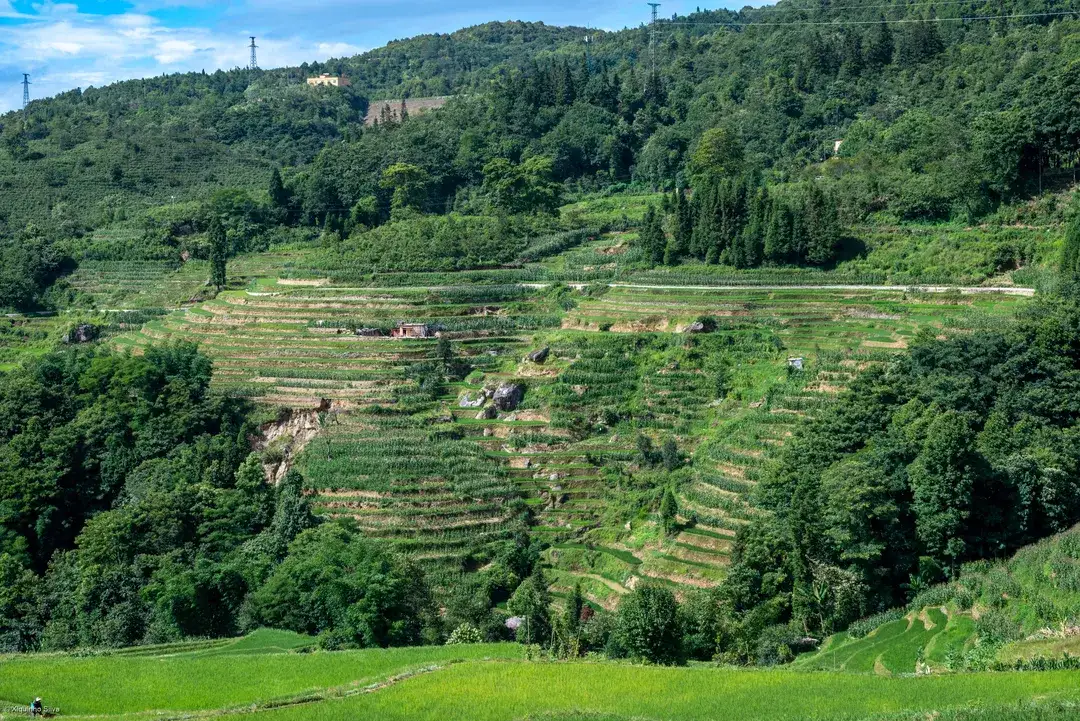
Honghe is the prefecture in southern Yunnan that runs from the rail town of Mengzi to the UNESCO rice terraces of Yuanyang, and a 2-3 day visit follows its two headline threads. The first is railway history: 10 km north of Mengzi, Bisezhai station opened in 1909 on the French-built metre-gauge line finished in 1910 — the Yunnan-Vietnam railway that re-plugged the province to the world — and its yellow station buildings still stand on the still-running line. The second is Jianshui, the old Confucian garrison town: a tower from 1389, a Confucius temple founded in 1285 that spreads over about 7.6 hectares, a merchant family compound of some 20,000 sq m, and a 13-km heritage train that crosses the 17-arch Shuanglong Bridge on its way to the village of Tuanshan. With a fifth day, the Yuanyang Hani terraces — inscribed by UNESCO in 2013 — add sunset at Bada and sunrise at Duoyishu.
This guide gives you the order to see things in, the trains that get you there, and the costs: a mid-range day runs 500-1000 CNY per person including a 300-600 CNY hotel, and a backpacker can hold the line at 40.
Why Honghe
Honghe's argument is that it keeps two different Yunnans in one prefecture. The valley floor is the Yunnan of engines and trade: Mengzi's lakeside pavilions where the crossing-the-bridge noodle story is set, Bisezhai's colonial-era platforms, Jianshui's scholars' lanes. The mountains above are the Yunnan of fields cut into slopes by Hani farmers over centuries, stacked so high above the valley fog that photographers book the viewing platforms a season ahead.
The rail web frames it: fast trains reach Mengzi from Kunming in under 2 hours — the provincial capital's version is in our Kunming guide — and roads link the towns inside the prefecture. The honest trade-offs: this is a region, not a city, so you change bases (Mengzi for a night, Jianshui for a night or two); English signage is thin; and the terraces reward timing — winter flooding and autumn gold are the photogenic seasons, summer is green but hazy.
Mengzi and Bisezhai Station
Start in Mengzi, the prefecture seat. Nanhu lake in the town centre is where the crossing-the-bridge rice-noodle legend is set — a scholar's wife kept his lunch hot under a layer of oil, and the dish that resulted now defines Yunnan cooking. The lakeside pavilions make an easy first hour.
Then the reason rail pilgrims come: Bisezhai (碧色寨), 10 km north. The station opened in 1909 as the line's junction, a French-built yellow complex of station house, clock and platforms on the metre-gauge railway finished in 1910; the tracks still carry traffic, and the station has kept its face. It is small — an hour is generous — and it photographs best in late afternoon, when the light goes the colour of the buildings.
Jianshui Old Town
Fast rail or road puts you in Jianshui, the old Confucian seat of the prefecture, and its lanes hold more declared heritage than most Yunnan cities combined. Chaoyang Tower (朝阳楼), raised in 1389, is the east gate turned city emblem — a gatehouse older, by its own proud signage, than the Tiananmen it resembles. Behind it, the Confucius temple of 1285 spreads across about 7.6 hectares of pools, gates and halls, second in scale in the province only to the shrine at Qufu in ambition. The Zhu Family Garden packs some 20,000 sq m of Qing-era rooms, courtyards and a small theatre into one merchant compound.
Give the old town a day: the tower at opening, the temple through the morning, the Zhu garden after lunch, the tofu streets — Jianshui grills its famous tofu over charcoal at street stalls — in the evening.
The Heritage Train and Tuanshan
The third day belongs to the little train. From Lin'an station, the 13-km heritage line rattles past orchards to the twin-arched highlight: Shuanglong Bridge, the "two dragon" bridge with 17 arches running about 148 m across the river junction, begun in the Qianlong era and finished generations later. The train ends at Tuanshan (团山), a Zhang-clan village whose Qing houses — carved screens, ancestor halls, courtyard lanes — survived because the village simply stayed put.
Walk the village in an hour or two, eat in the village kitchens, and take the last train back or a car to town. With a fifth day, trade the valley for the mountains: the Yuanyang terraces need an overnight for the sunset-sunrise pair — Bada in the evening, Duoyishu at dawn — and the Azheke mushroom houses sit between them.
Day Trips: Kunming and the Yunnan Grid
- Kunming. Fast trains run from Mengzi in under 2 hours; the capital's stone forest and lakefront pair well — see the Kunming guide.
- Yuanyang terraces. The 2013 UNESCO inscription is the prefecture's mountain headline; best with an overnight in the terrace villages.
- Gejiu and the tin country. South of Mengzi, the old tin-mining lake town makes a half-day by road.
The province-wide frame is in our Yunnan guide.
A Two-Day Plan (and a Third)
- Day 1 — Mengzi and the junction. Nanhu lake in the morning, Bisezhai station in the late-afternoon light, crossing-the-bridge noodles for dinner, night in Mengzi.
- Day 2 — Jianshui. Morning transfer, Chaoyang Tower, the Confucius temple of 1285, the Zhu Family Garden, grilled tofu streets at night.
- Day 3 — the little train. The 13-km heritage run from Lin'an station, Shuanglong Bridge's 17 arches, Tuanshan village, evening train onward.
Our 3-day Honghe trip builder lays this out hour by hour, and the 5-day and 7-day versions fold in the Yuanyang terraces and the Azheke mushroom houses.
Getting There: Rail, Road and Local Transport
Mengzi North is the high-speed stop on the line from Kunming; Jianshui has its own fast-rail station (Lin'an keeps the heritage trains). Inside the prefecture you change bases by road — buses and DiDi cover the Bisezhai and Tuanshan legs.
| Route | Time | Typical cost |
|---|---|---|
| Kunming → Mengzi North (HSR) | under 2 h | corridor fare |
| Mengzi → Bisezhai (road) | about 30 min | taxi or chartered car |
| Mengzi → Jianshui (fast rail / road) | about 1 h | short-corridor fare |
| Lin'an → Tuanshan (heritage train) | 13 km line | gate ticket |
| Taxi across Jianshui old town | 10 min | short fare |
Keep the Chinese name of your destination written down — drivers rarely read English.
Where to Stay
One night in Mengzi near Nanhu lake, then one or two in Jianshui's old town: mid-range hotels in this band run about 300-600 CNY a night, and the old town's courtyard guesthouses trade some plumbing for atmosphere. For the terraces, sleep in the terrace villages themselves — guesthouses built into the mushroom houses — because both shows happen at the edges of the day. Book ahead for the winter photography season and the national holidays of early May and early October.
What to Eat in Honghe
The prefecture eats well. Mengzi owns the crossing-the-bridge rice noodles — the assembled-at-the-table bowl with broth, raw slices and rice noodles — and Jianshui answers with its charcoal-grilled tofu, rolled and dipped, plus steam-pot chicken and the market's fresh cheeses. The terrace villages cook Hani-style: rice from the fields, river fish, preserved greens.
Mobile payment works nearly everywhere — Alipay with an international card covers restaurants and stalls — but carry 50-100 CNY in small notes for the village kitchens and the oldest stalls.
What a Day Costs
| Item | Price | Notes |
|---|---|---|
| Mid-range hotel | 300-600 CNY/night | Mengzi or Jianshui old town |
| Meals | 100-200 CNY/day | noodle bowls to tofu streets |
| Local transport | 30-60 CNY/day | taxis between towns |
| Attractions | 50-150 CNY/day | temple, garden and train tickets |
Match this against our roster's estimate for the city: accommodation 300-600 CNY, food 100-200 CNY, transport 30-60 CNY and tickets 50-150 CNY, for a mid-range total of 500-1000 CNY per person per day. A backpacker day on buses and noodle bowls lands near 40; the luxury ceiling is about 300 and mostly buys the terrace-view room at Duoyishu.
When to Go
March-May and September-November are the comfort windows in the valley. The mountains have their own calendar: the Yuanyang terraces photograph best in the winter flooding season, November into spring, when the water mirrors the sky at sunrise, and again at autumn gold. Summer is green and hazy in the valley and misty on the ridges. Avoid the national holiday weeks of early May and early October — the Bisezhai platforms and the little train both queue.
Practical Tips
- Payment: link an international card to Alipay or WeChat Pay before arrival, and keep 50-100 CNY in small notes for village kitchens.
- eSIM: a tourist data eSIM (about 5-30 USD) avoids the phone-shop passport queue; install a VPN before you fly, since Google, WhatsApp and Instagram are blocked on the mainland.
- You will change bases at least once — pack for transfers, and keep luggage small for the heritage train.
- The terraces' viewing platforms are cold before dawn at any season; bring a layer.
- Emergencies: police 110, ambulance 120, fire 119, national tourist hotline 12301.
Frequently Asked Questions
How many days do I need in Honghe prefecture?
Two full days cover the valley core: Mengzi plus Bisezhai on one, Jianshui's old town on the other. The third day buys the heritage train and Tuanshan. The Yuanyang terraces deserve their own overnight — a fifth day total is the comfortable shape for the sunrise-sunset pair.
How do I get from Kunming to Honghe?
Fast trains run Kunming → Mengzi North in under 2 hours, with Jianshui on the same corridor. Buy on the 12306 app or at the station with a passport; inside the prefecture, road transport fills the gaps between towns.
Is Bisezhai station worth the detour?
For anyone who likes railways, unconditionally: a 1909 French-built junction station on a metre-gauge line still carrying traffic, kept almost as it was. An hour is enough, and late-afternoon light is the right time. Pair it with Nanhu lake in Mengzi for a full day one.
What is there to do in Jianshui?
The 1389 Chaoyang Tower, the 1285 Confucius temple across about 7.6 hectares, the 20,000-sq-m Zhu Family Garden, the tofu streets, and the 13-km heritage train to the 17-arch Shuanglong Bridge and Tuanshan village. One day is tight but works; two is comfortable.
When should I see the Yuanyang terraces?
The flooding season, roughly November into spring, is the photogenic one — water-filled paddies mirror the sky at Duoyishu's sunrise and Bada's sunset. Autumn gold is the second choice. You need an overnight in the terrace villages; day trips from the valley fight the light.
Do I need cash in Honghe?
Mostly no: Alipay or WeChat Pay linked to an international card covers restaurants, taxis and most stalls. Keep 50-100 CNY in small notes — village kitchens and the oldest stalls still prefer cash, and small notes solve it instantly.
What should I eat in Honghe?
Crossing-the-bridge rice noodles in Mengzi where the dish was invented, Jianshui's charcoal-grilled tofu, steam-pot chicken, and Hani-style rice and river fish up in the terrace villages. Eat where the local queue is — the night markets of Jianshui old town are the reliable evening answer.
Useful Phrases
| Chinese | Pinyin | Meaning |
|---|---|---|
| 你好 | nǐhǎo | hello |
| 谢谢 | xièxie | thank you |
| 多少钱 | duōshǎo qián | how much |
| 红河 | Hónghé | Honghe |
| 碧色寨 | Bìsèzhài | Bisezhai station |
| 建水 | Jiànshuǐ | Jianshui |
| 朝阳楼 | Cháoyáng Lóu | Chaoyang Tower |
| 双龙桥 | Shuānglóng Qiáo | Shuanglong Bridge |
Final Notes
Every figure above — the 1909 station and 1910 line, the 10 km from Mengzi, Jianshui's 1389 tower and 1285 temple across 7.6 hectares, the Zhu garden's 20,000 sq m, the 13-km heritage line, the 17 arches and 148 m of Shuanglong Bridge and the 2013 UNESCO inscription — was checked in October 2026 against our trip-days data for the prefecture and cross-referenced with our published itineraries. Prices move; reconfirm within a fortnight of travel.
- Source: China National Tourism Administration — policy and seasonal notices.
- Source: UNESCO World Heritage Centre — Cultural Landscape of Honghe Hani Rice Terraces, 2013.
- Source: Trip.com — live train and hotel listings for cross-checks.
Last verified 2026-10-16.