
Jincheng at a Glance
Jincheng (晋城) is Shanxi's southeastern corner, a prefecture tucked into the Taihang mountains where the province drops toward the Yellow River plain. What the county travel notices call 太行古堡 — the "ancient fortresses of the Taihang" — is the reason to come: a scatter of walled compounds built in the bandit-worried decades of the late Ming, when entire villages stacked themselves behind stone walls and watch towers. The flagship is Huangcheng Xiangfu, the minister's compound at Yangcheng that grew around Chen Tingjing (1638-1712), chief editor of the 1716 Kangxi Dictionary and its 47,000-odd entries; the daytime drama is Wangmangling, where the ridgelines run above 1,600 metres and the village of Xiyagou spent 30 years — 1962 to 1991 — cutting a 7.5-km windowed road through the cliff. Two to three days cover the compound, the ridge and the city's Yuan-era temples.
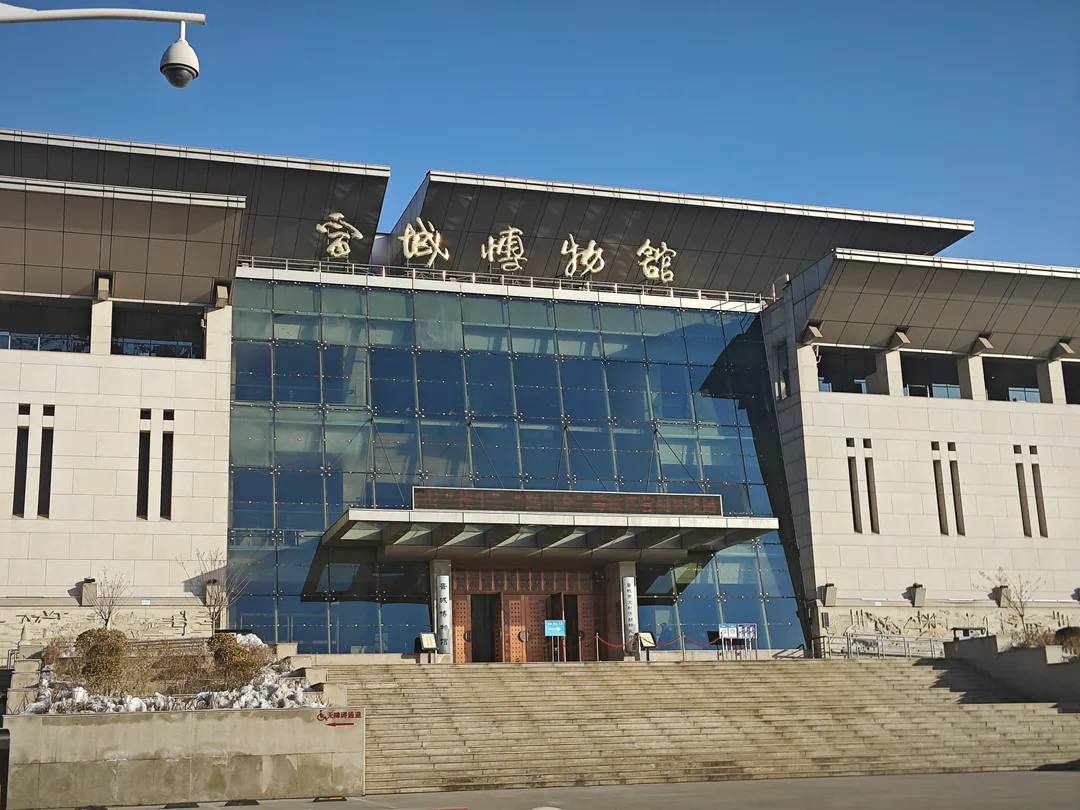
A mid-range day runs 500-1000 CNY per person — accommodation 300-600 CNY, food 100-200 CNY, transport 30-60 CNY, tickets 50-150 CNY. April-May and September-October are the working windows; the museum in the photo above is the easy city-day anchor either way.
Why Jincheng
Jincheng's argument is concentration. The Shanxi countryside holds some of China's densest rural architecture — courtyard manors, temple stages, walled villages — and the Taihang section around Jincheng packs the fortress generation of it into an area you can drive across in under two hours. These are not restored stage sets; most of the compounds still hold resident families behind their walls, and the temple courtyards double as village squares.
The second argument is altitude. The Taihang ridges above 1,600 metres give the prefecture real mountain air, cloud seas below the paths in season, and the stone terraces that spill down the flanks in steps. The human story matches the geology: Xiyagou's cliff road is a 30-year village project cut by hand through rock, and it still carries traffic.
The honest trade-offs: the headline sights spread across hill roads that crawl with holiday traffic, English signage is nearly absent, and the city itself is a modern coal-and-steel town whose best asset is the museum. This is a trip organised around two or three day-loops out of the city, not a walkable sight line.
The Museum and the City Day
Start at the Jincheng Museum (晋城博物馆), the building in the photo above — glass and stone under gold characters, a short ride from the station. Its halls walk through the fortress generation: why the villages walled themselves in the 1630s, what the watch towers were for, and the wooden temple architecture the prefecture holds in unusual quantity — Jincheng's countryside keeps some of the oldest timber structures in the province. An hour and a half sets up everything you will drive past for the rest of the trip.
Pair it with the Fucheng Yuhuang temple (府城玉皇庙) on the city's eastern edge. Its side hall keeps 28 clay statues of the lunar mansions — the twenty-eight constellations of Chinese astronomy personified in Yuan-dynasty work (1271-1368), each figure with its own animal and temperament. It is one of the strangest and best sculptural ensembles in northern China, and most visitors have the hall to themselves.
Huangcheng Xiangfu: the Minister's Walled City
Huangcheng Xiangfu (皇城相府), at Beiliu in Yangcheng county, is the fortress showpiece. The compound grew around Chen Tingjing — a local boy who rose to be the Kangxi emperor's teacher and the chief editor of the 1716 Kangxi Dictionary, the 47,000-entry dictionary that standardised the written language. The inner walls went up in the 1630s, when banditry made fortification the price of staying rich, and the seven-storey Heshan tower at the core was built as a family keep: storage, water and a fighting platform behind walls a family could actually hold.
Give it a half day. The compound splits into the minister's courtyards and the walled inner city on the hill, and the walls connect by walkways with the valley below. Come early or late in the day — the coach circuit lands mid-morning. Guoyu (郭峪), another walled village in the same bandit-worried decades, sits minutes away on foot and makes the quieter second half of the loop; Xiangyu fortress extends the theme if you are collecting.
Wangmangling and the Cliff Road
Day two goes up. Wangmangling (王莽岭), in Lingchuan county, is where the Taihang ridgelines run above 1,600 metres — a broken skyline of stone walls with cloud seas below the paths in season and terraces spilling down the flanks. Buses and cable ways handle the height, and the walking is on the top rather than the climb; give the loop half a day, more if the clouds are performing.
Below the ridge, Xiyagou (锡崖沟) tells the human version of the same landscape. The village spent 30 years — from 1962 to 1991 — cutting a 7.5-km road through the cliff, punched by hand with windows looking out of the rock face, because no road in meant no market for anything the valley grew. It is now a driveable, humbling piece of engineering; the lower village lanes and the riverbed make the second half of the day.
Temples, Iron Flowers and the Evening
Back in the city, the evening option is Situ Town (司徒小镇), a food-and-performance park whose nightly molten-iron show — workers flinging charged iron against a cold wall so it bursts into sparks — is the best-attended thing in the prefecture after dark. It is staged and lively rather than ancient, and it fills the one gap the day loops leave: something to do at night. The HSR from Jincheng East station closes the trip — the city sits 1.5-2 hours from Zhengzhou and Luoyang by train, which is why most visitors pair it with Luoyang or Xian rather than the Shanxi interior.
A Three-Day Plan (and a Week)
- Day 1 — the city and the museum. Jincheng Museum in the morning to load the fortress story, Fucheng Yuhuang temple after lunch for the 28 constellations, evening at Situ Town for the iron-flower show.
- Day 2 — the minister's compound. Out early to Huangcheng Xiangfu (about 1.5 hours by car), the walled inner city and Heshan tower, Guoyu village after lunch, back by evening.
- Day 3 — the ridge and the road. Wangmangling's 1,600-metre paths in the morning, Xiyagou's 7.5-km cliff road and village in the afternoon, evening train or car onward.
Our 3-day Jincheng trip builder lays this out hour by hour; the 5-day and 7-day versions add the Qinglian temple's Tang-era halls and the fortress circuit — the province-wide frame is in our Shanxi guide, and Pingyao or Datong extend it north.
Getting There and Around
Jincheng East is the HSR station; the sight loops are car days, so budget a driven car or fold into tours from the city.
| Route | Time | Notes |
|---|---|---|
| Jincheng ↔ Zhengzhou / Luoyang (HSR) | 1.5-2 h | the practical rail gateways |
| City → Huangcheng Xiangfu (Yangcheng) | about 1.5 h by car | coach circuit lands mid-morning |
| Huangcheng → Guoyu village | minutes on foot | same bandit-era wall band |
| City → Wangmangling (Lingchuan) | about 1.5-2 h by car | mountain road; allow the climb |
| Wangmangling → Xiyagou | about 40 min-1 h | the cliff road is the approach |
| Museum ↔ Fucheng Yuhuang temple (taxi) | about 15-20 min | ¥20-30 |
Write destinations in Chinese — 皇城相府, 王莽岭, 锡崖沟 — and check holiday traffic before committing to the mountain runs; the Taihang roads are single-carriage in the valleys.
Where to Stay
Stay near the station and the museum quarter: mid-range rooms run about 300-600 CNY a night, the evening food streets are in range, and both day-loops start from the same roads. One night up at Wangmangling or Xiyagou buys the quiet hours on the ridge after the coaches leave — guesthouses are simple and seasonal. Book two weeks ahead for the early-May and early-October holiday weeks, when the fortress circuit doubles in price.
What to Eat
Shanxi cooking runs on grain and vinegar: knife-cut noodles (daoxiao mian) in mutton or tomato broths, sorghum dishes, dumplings folded thick, and the local vinegar that seasons all of it. The mountain counties add cornbread and potato stews to the farmhouse table, and Situ Town's food lanes condense the street version — grilled and skewered and fried — into one evening circuit.
Eat where the queues are local, pay by Alipay or WeChat Pay linked to an international card, and carry 50-100 CNY in small notes for the village stalls that do not scan.
What a Day Costs
| Item | Price | Notes |
|---|---|---|
| Jincheng Museum | free with passport | closed Mondays |
| Fucheng Yuhuang temple | within the 50-150 CNY ticket band | side hall of 28 statues |
| Huangcheng Xiangfu | within the 50-150 CNY ticket band | the trip's big ticket |
| Wangmangling + Xiyagou | within the 50-150 CNY ticket band | bus and cable ways extra |
| Mid-range hotel | 300-600 CNY/night | station quarter |
| Meals | 100-200 CNY/day | knife-cut noodles to fortress-area farmhouse tables |
| Local transport | 30-60 CNY/day city | day-loops are driven-car days |
The mid-range total of 500-1000 CNY per person per day matches our roster's estimate for the city. A backpacker day on buses and noodle shops holds near 40 CNY in town, but the two mountain-and-fortress days are where the budget actually goes.
When to Go
April-May and September-October: the mountain air is clear, the terraces are green or gold, and the ridgeline paths sit below the summer thunderstorm schedule and above the winter ice. July-August works but brings cloud-sea luck and holiday crowds together. Winter is cold and honest — the compounds are quiet, the cliff road stays open, and hotel prices soften. Avoid the national holiday weeks of early May and early October unless queues are the goal.
Practical Tips
- Payment: link an international card to Alipay or WeChat Pay before arrival; keep 50-100 CNY in small notes for village stalls and temple ticket windows.
- eSIM: a tourist data eSIM (about 5-30 USD) avoids the phone-shop passport queue; install a VPN before you fly, since Google, WhatsApp and Instagram are blocked on the mainland.
- Tickets: Huangcheng Xiangfu and Wangmangling sell timed entries on peak days — book online the night before, and start the fortress day before the coaches.
- Mountain sense: the Taihang roads climb in single-carriage valleys; motion-sickness tablets and a patient driver both earn their keep.
- Emergencies: police 110, ambulance 120, fire 119, national tourist hotline 12301.
Frequently Asked Questions
How many days do I need in Jincheng?
Two is the compressed minimum — the minister's compound day and the ridge day — but the compound deserves a full half day and the ridge another, so three days is the honest shape: city and museum, Huangcheng Xiangfu with Guoyu, then Wangmangling with Xiyagou.
What is Huangcheng Xiangfu?
The walled compound of Chen Tingjing (1638-1712), the local scholar who became the Kangxi emperor's teacher and chief editor of the 1716 Kangxi Dictionary — 47,000-odd entries that standardised written Chinese. Inner walls rose in the 1630s against banditry, with the seven-storey Heshan tower as the family keep. It is the flagship of the Taihang fortress circuit.
Is the Wangmangling ridge hard to walk?
No — the paths run along the top of the 1,600-metre ridgeline, and buses and cable ways absorb the climb. The walking is on stone paths with terraces below; the effort is the drive up the mountain valleys, not the legs.
What is the story of the Xiyagou cliff road?
The village cut it by hand over 30 years, from 1962 to 1991 — a 7.5-km road punched through the cliff with windows opening out of the rock face, because without a road the valley had no market. It is driveable today and is the approach to Xiyagou from the ridge side.
Can I visit Jincheng from Luoyang or Zhengzhou?
Yes — the HSR from Jincheng East runs 1.5-2 hours to Luoyang and Zhengzhou, which makes Jincheng a two-day extension: fortress day, ridge day, evening train out. Most Henan-based trips do exactly that; the Shanxi frame is in our Shanxi guide.
Is Situ Town worth an evening?
If you are in town anyway, yes: the molten-iron show is loud, crowded and genuinely exciting, and the food lanes solve dinner at the same time. It is a staged evening park, not a heritage site — go for the sparks and the snacks, not for history.
Do I need cash in Jincheng?
Mostly no: Alipay or WeChat Pay linked to an international card covers museums, compounds and restaurants. Keep 50-100 CNY in small notes for village stalls on the mountain loops.
Useful Phrases
| Chinese | Pinyin | Meaning |
|---|---|---|
| 你好 | nǐhǎo | hello |
| 谢谢 | xièxie | thank you |
| 多少钱 | duōshǎo qián | how much |
| 晋城 | Jìnchéng | Jincheng |
| 皇城相府 | Huángchéng Xiāngfǔ | Huangcheng Xiangfu |
| 王莽岭 | Wángmǎng Lǐng | Wangmangling |
| 锡崖沟 | Xīyágōu | Xiyagou |
| 玉皇庙 | Yùhuáng Miào | Jade Emperor temple |
| 刀削面 | dāoxiāo miàn | knife-cut noodles |
Final Notes
Every figure above — Chen Tingjing's 1638-1712, the 1716 dictionary and its 47,000-odd entries, the 1630s walls, the 1,600-metre ridgelines, Xiyagou's 30-year, 7.5-km road, the 28 Yuan-dynasty constellations of 1271-1368 — was checked in October 2026 against our trip-days data for the prefecture. Prices move; reconfirm within a fortnight of travel.
- Source: China National Tourism Administration — policy and seasonal notices.
- Source: Trip.com — live train and hotel listings for cross-checks.
Last verified 2026-10-16.