Hefei · history museum
Anhui Museum (安徽博物院, Ānhuī Bówùyuàn)
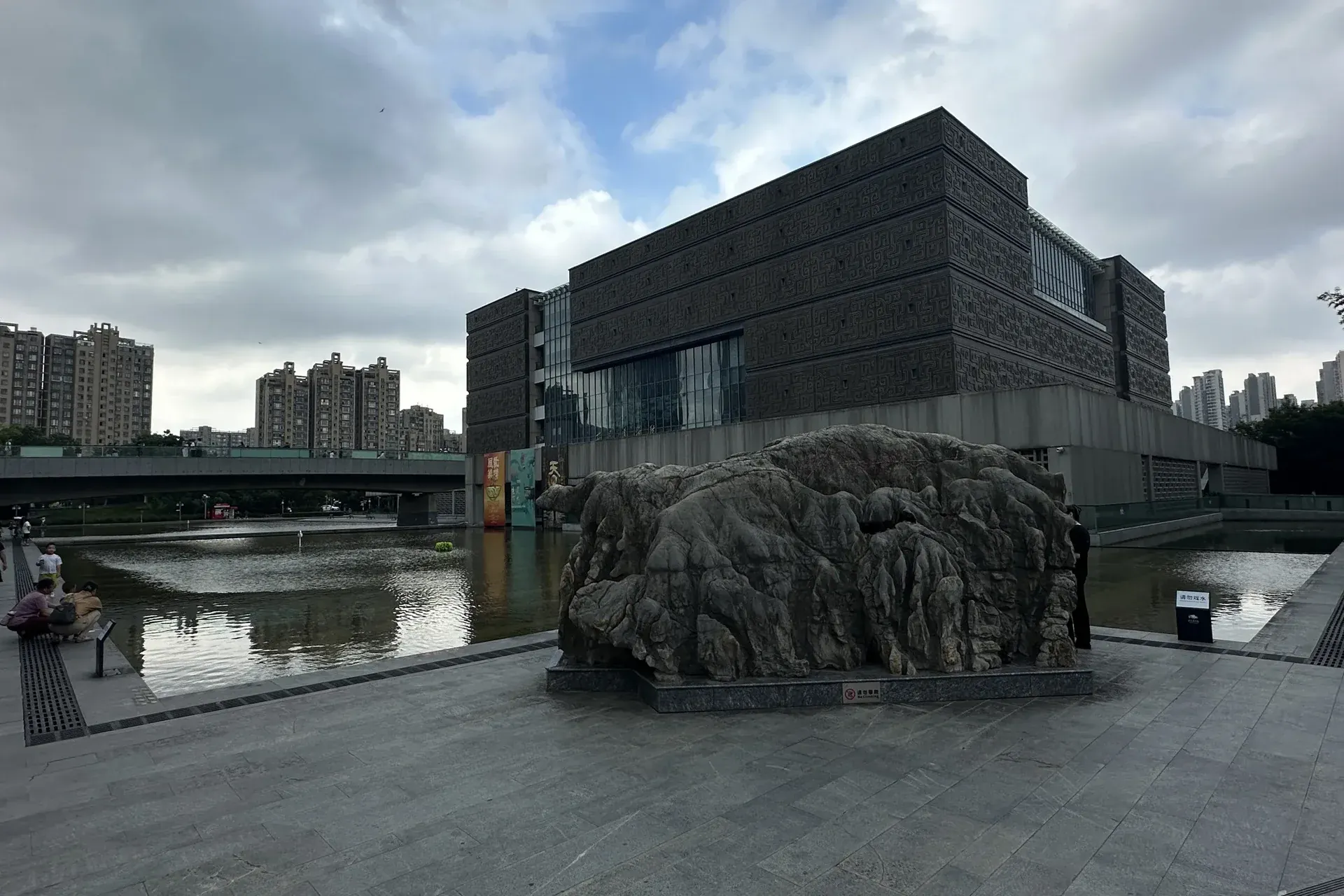
"\"The Anhui Museum (Anhui Provincial Museum) relocated in 2011 to a new building in Hefei's New Municipal Cultural District, designed to evoke the shape of the Four Treasures of the Study (文房四宝): brush, ink stick, ink stone, and paper — all traditional Huizhou specialties. The collection of 220,000 objects is strongest in three areas: Shang and Zhou Dynasty bronzes from Anhui's many ancient states (especially the state of Chu), Huizhou (徽州) art from the Ming and Qing dynasties, and the Anhui School of painting (新安画派) from the 17th-18th centuries. The Huizhou section is particularly valuable — it preserves architectural elements (carved wooden beams, brick relief panels, stone gateways) salvaged from dismantled Huizhou villages, along with the region's famous ink stones, calligraphy, and merchant-ledger records that document China's most sophisticated pre-modern merchant culture.\".".
Last updated:
Quick Answer
Is Anhui Museum worth visiting?
"Huizhou art and architecture, Shang-Zhou bronze, and the Anhui School of painting — a strong provincial museum in Hefei's 2011 landmark building. Free.".
Quick facts
| Category | history |
|---|---|
| Ticket | Free. Passport required. Reserve via the Anhui Museum WeChat mini-program. Walk-ins accommodated on weekdays. |
| Hours | 9:00-17:00 (last entry 16:00). Closed Mondays. |
| Recommended duration | 2.5-3 hours. |
| Best time to visit | Tuesday-Thursday mornings. Hefei's best weather is March-May and October-November. Summers (June-September) are hot (35°C+) and humid. The museum is fully air-conditioned. |
| How to get there | Metro Line 3 to Anhui Museum (安徽博物院), Exit A. Walk north 3 minutes on Huaining Road. Or bus routes 13, 20, 41, 43, 128, 129, 162, 166, 502, 901 to Anhui Museum stop. DiDi from central Hefei costs ¥15-25. Hefei is 2 hours from Nanjing by high-speed train, 3.5 hours from Shanghai. |
| English signage | partial |
Why visit
The Huizhou architectural carvings — intricate wooden panels depicting entire narrative scenes from Chinese opera and folklore — are worth the visit alone. They preserve physical fragments of a vernacular architecture that is disappearing from rural Anhui. The Shang-Zhou bronze collection is also strong, with inscribed vessels from the Chu state that document the political geography of pre-imperial southern China.
Collection highlights
- Huizhou architectural carvings — Ming and Qing Dynasty wood, brick, and stone carvings salvaged from dismantled Huizhou village houses. Wooden panels show complete narrative cycles from operas like "The Peony Pavilion" (牡丹亭)
- Chu State bronze ding inscribed with 120+ characters — a Warring States ritual vessel from Shou County, recording a Chu king's land grant to a loyal minister
- Anhui School landscape paintings — hanging scrolls by Jian Jiang (渐江), Zha Shibiao (查士标), and other 17th century Xin'an masters known for austere pine-and-rock compositions
- She ink stones (歙砚) — the finest Chinese ink stones, carved from She County slate with natural gold-star or eyebrow (眉纹) inclusions, from Song through Qing dynasties
- Huizhou merchant account books — Ming-Qing ledgers in meticulous small-regular script, documenting the vast trade networks of Huizhou merchants who dominated Chinese commerce for 400 years
- Shang Dynasty bronze fangyi from the state of Hu — a square wine vessel (fangyi) with taotie mask decoration and a 10-character interior inscription, excavated in Funan, Anhui
Tips
- The Huizhou architectural carving gallery is on the 3rd floor — start there for the most distinctive Anhui content before moving to the bronzes
- The museum has two locations — this entry refers to the New Museum (新馆) in the Municipal Cultural District. The Old Museum (老馆) on Anqing Road has a smaller collection focused on revolutionary history
- I visited in April 2026 and was surprised by the quality of the Huizhou carvings — the wood panels showing "The Peony Pavilion" scenes are so detailed you can identify individual characters from their costumes and gestures
- Hefei is not a major tourist city but the museum is a strong reason to stop — it provides context for visiting the Huizhou villages (Xidi, Hongcun, 3 hours south by bus)
- The museum shop sells replica She ink stones (¥120-800) and Huizhou ink sticks (徽墨, ¥30-200) — both are authentic local products, not tourist kitsch
- Combine with the Bao Gong (Judge Bao) Memorial Temple in Hefei's old city center for a half-day of Hefei culture
Frequently asked questions
What is Huizhou culture?
Huizhou (徽州) is a historical region in southern Anhui (centered on modern Huangshan City) known for three things: (1) Huizhou merchants (徽商), who dominated Chinese commerce from the Song through Qing dynasties with trade networks spanning the empire, (2) distinctive black-tile white-wall architecture with elaborate wood, brick, and stone carvings, and (3) the "Four Treasures of the Study" — Huizhou produces China's finest ink sticks (徽墨), ink stones (歙砚), paper (宣纸 from nearby Jing County), and calligraphy brushes. The Anhui Museum's Huizhou gallery brings all four together.
Where is the Anhui Museum?
The Anhui Museum (New Museum) is at 268 Huaining Road, Shushan District, Hefei (合肥市蜀山区怀宁路268号). It is in Hefei, the provincial capital — not near the famous Huangshan mountains or Huizhou villages. Hefei is served by high-speed rail from Nanjing (1 hour), Shanghai (3 hours), and Beijing (4 hours).
What is the Anhui School of painting?
The Anhui School (新安画派, Xīn'ān Huàpài, literally "Xin'an Painting School") was a group of 17th-18th century painters from Anhui who reacted against the decorative academic style of the Qing court with austere, monochrome landscapes of the Huangshan mountains. Led by Jian Jiang (渐江, 1610-1664), they used dry brushwork, geometric rock forms, and sparse compositions to convey spiritual solitude. Many were Ming loyalists who retreated to the mountains after the Manchu conquest. The Anhui Museum holds the largest collection of Xin'an School works anywhere.
Is the Anhui Museum worth visiting if I am not going to Huangshan?
Yes, if you are passing through Hefei by high-speed train or have an interest in Chinese bronze inscriptions or merchant culture. The museum is strong enough to justify a 3-hour stop. If you are visiting the Huizhou villages (Hongcun, Xidi) or Huangshan mountain, visit the Anhui Museum first in Hefei — it provides deep cultural context that will make the villages more meaningful.
Does the Anhui Museum have English signage?
Partial — the bronze and Huizhou architectural carving galleries have English labels for major objects. The painting, calligraphy, and ink stone galleries are mostly Chinese-only. The audio guide via the WeChat mini-program is Chinese-only. Bring a translation app.
How do I get to the Anhui Museum from Hefei South Station?
Take Metro Line 1 to Hefei Railway Station, transfer to Line 3, exit at Anhui Museum station (安徽博物院站), Exit A. Total travel time about 40 minutes. DiDi from Hefei South Station is about 25 minutes (¥30-40).
Read next
Other things to do in Hefei
798 Art District
"\" Contemporary art in a former East German-designed electronics factory. 200+ galleries, UCCA ¥100. Half day (3–5 hours). Open 24/7, galleries 10:00–18:00. Free district entry.\".".
Badaling Great Wall
badaling-great-wall in Beijing: 最经典长城段落,距北京约60公里,海拔约1000米。门票淡季40元旺季45元,缆车另付120元。建议2-4小时,避开节假日。
Old Summer Palace (Yuanmingyuan)
The ruins of the 18th-century imperial garden destroyed by Anglo-French troops in 1860 — haunting stone arches, reconstructed marble bridges, and a museum of recovered artifacts. 2–3 hours. ¥10.
The Forbidden City
"The world's largest ancient palatial complex — 980 surviving buildings across 72 hectares. 3-4 hours minimum. Book tickets 7 days in advance.".
Great Wall at Mutianyu
"The best-preserved Great Wall section, 70 km from central Beijing. Cable car + toboggan slide. 3-4 hours including travel.".
Gubeikou Great Wall
"Wild, unrestored Ming Wall section 2.5h from Beijing. Crumbling watchtowers, no crowds, camping allowed. ¥45. Best for hikers and photographers wanting the real Wall.".
Yonghe Temple (Lama Temple)
lama-temple in Beijing: ""北京最大藏传佛教寺庙,活佛府邸,法轮殿五百罗汉山".".. 2026 verified.
Nanluoguxiang (South Luogu Alley)
nanluoguxiang in Beijing: "老北京胡同名片,800年历史,文创小店美食一条街.".
National Day 70th Anniversary Exhibition
national-day-flagship in Beijing: "展现新中国成立70周年发展成就,天安门广场西侧,需预约.".
National Museum of China
national-museum in Beijing: "世界上最大博物馆,48个展厅,代表中华五千年文明.".
Old Summer Palace Ruins Park
old-summer-palace in Beijing: "万园之园废墟,1860年英法联军焚毁,遗址警示后人.".
Shichahai (Ten Grounds Lakes)
shichahai in Beijing: "老北京胡同酒吧区,后海夜色,老炮儿拍摄地.".. 2026 verified.
Tiananmen Square
tiananmen-square in Beijing: 世界上最大的城市广场,面积44万平方米,1959年建成。免费开放,全天。人民英雄纪念碑高37.94米。升降旗仪式必看(每天日出前30分钟)。地铁1号线天安门东站或天安门西站。
Museums in Hefei
798 Art District (798 Art Zone)
"Beijing's converted 1950s East German factory complex now packs roughly 200 galleries, cafes, and design shops into about 600,000 sqm of Bauhaus industrial space — a full day of wandering,.".
Beijing Ancient Architecture Museum
Chinese architectural history from Neolithic to Qing, housed inside the 15th-century Temple of Agriculture (先农坛). ¥15. The Hall of Jupiter ceiling alone is worth the trip.
Beijing Auto Museum
"China's automobile history from Chairman Mao's limousine to modern EVs, in a striking turbine-shaped building in southwest Beijing. Rare Hongqi and Shanghai sedans. ¥30.".
Beijing Capital Museum
"Beijing's city-level museum in its landmark new building — the definitive collection of Beijing's imperial, folk, and modern urban culture,.".. 2026 verified.
Beijing Planetarium
"China's largest planetarium with two buildings, a 3D space theater, and a 200mm refractor telescope open to the public. ¥45. Excellent for families and space enthusiasts.".
Beijing Police Museum
Police history, forensics, and criminal investigation through the ages. Free. Passport required. Allow 1.5–2 hours. One of Beijing's most unusual specialty museums.
Capital Museum
"\"Beijing's city museum: 3,000 years of the capital's history with world-class galleries of ancient bronzes, Buddhist art, and Beijing folk culture. Free.\".".
China Customs Museum
"Seized smuggled goods — ivory, endangered animal parts, counterfeit luxury items — and the 2,000-year history of Chinese customs. Free. One of Beijing's strangest museums.".
China Railway Museum
"Stand inside Mao Zedong's personal train carriage, then walk among dozens of steam locomotives in a vast roundhouse — all for ¥20.".
Military Museum of the Chinese People's Revolution
"Beijing's massive free military museum — tanks, missiles, and Korean War exhibits told through a Chinese perspective, housed in a Stalinist architectural landmark. Allow 3–4 hours.".
Museum of Chinese Gardens
"All Chinese garden styles in one place — from Suzhou scholar gardens to Lingnan tropical courtyards — in a museum with real outdoor gardens and indoor exhibitions. ¥20.".
National Art Museum of China
"China's flagship state-run art museum with 100,000+ modern Chinese paintings, calligraphy, and folk art; 1.5-3 hours is enough to see the highlights during a single sit-and-skim visit.".
National Museum of China
"China's premier national museum on Tiananmen Square — 1.2 million artifacts spanning 3 million years of Chinese history,.".
Palace Museum (Forbidden City)
"The imperial palace of Ming and Qing Dynasty emperors for 500 years — 180-acre palace complex with 980 buildings and the definitive collection of imperial Chinese art, furniture,.".
Red Gate Gallery
"China's first privately-run contemporary art gallery, operating since 1991 in a Ming-dynasty watchtower,.".
Today Art Museum
"Contemporary Chinese art in a converted boiler factory. ¥20. One of Beijing's first private contemporary art museums. Experimental and unpredictable.".
UCCA Center for Contemporary Art
"The anchor museum of Beijing's 798 Art District. World-class contemporary exhibitions. ¥100. The most internationally recognized contemporary art museum in China.".