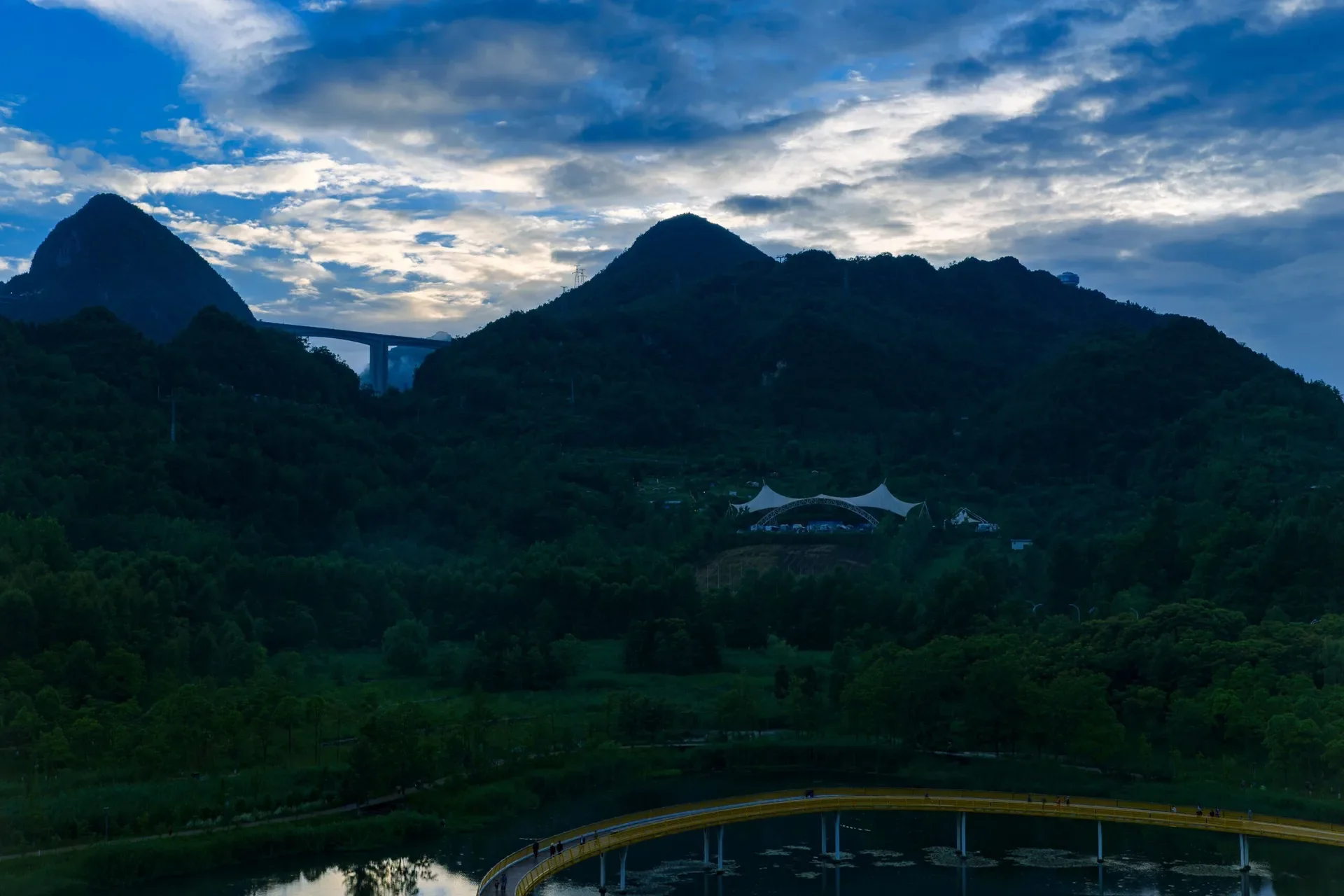

Liupanshui at a Glance

Liupanshui earned its nickname honestly. In 2005 China's meteorological authorities named it the Cool City (中国凉都): a high basin at about 1,800 metres in western Guizhou where midsummer averages around 19.7 degrees while the rest of the country melts, and a city built in the 1960s Third-Front campaign out of three mining counties. Give it two days, three in autumn: day one covers the Minghu wetland's rainbow boardwalk (about 1.1 km of yellow walkway over the water) and the Third-Front museum that explains how the city exists; day two runs two hours south into Panzhou for the Wumeng grassland, a high pasture along the ridgeline under the 2,857-metre Niupengliangzi high point; day three, from mid-October, goes to Tuole ginkgo village, where more than a thousand trees — many over 300 years old — turn the courtyards gold.
The numbers: a mid-range day runs 500-1000 CNY per person including a 300-600 CNY hotel, Panzhou sits on the Shanghai–Kunming high-speed line (since 2016), and the ginkgo window is mid-October to November.
Why Liupanshui
Liupanshui is Guizhou's counter-season play. When Guiyang and the karst south are humid at 30 degrees, this basin stays in cardigan weather — which is why domestic tourists fill it in July and August and why foreign travellers, who mostly blow through on the way to the rest of the province, find it quietly uncrowded in September. The city itself is a coal-and-steel conurbation strung along a valley — six branches of two rivers gave it the name Liupanshui (six / Pan county / water) — with more honest local food per square metre than its looks suggest.
The trade-offs: this is a working city with an industrial-heritage museum rather than a postcard old town (though see the night-snack street below), English signage is thin, and the headline sights all require road time. What you get is cool air, highland scenery — rivers the colour of the one below — and a cuisine that belongs to this altitude.
Minghu Wetland and the Third-Front Museum
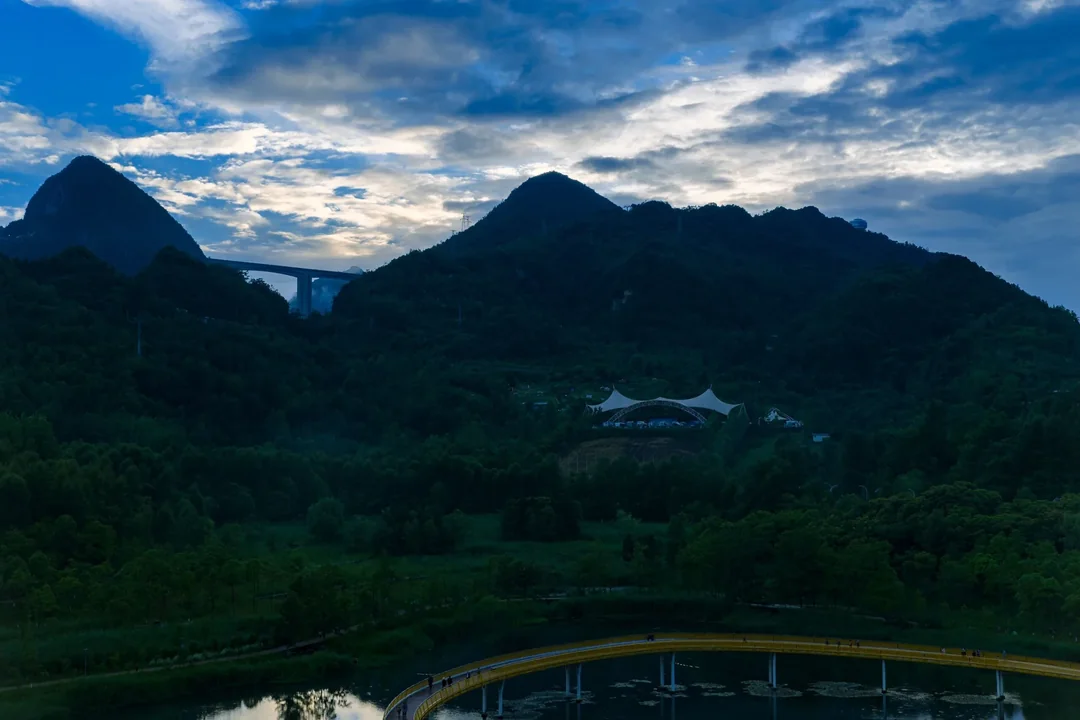
Start at Minghu (明湖湿地), the wetland park on the city's west side: the rainbow walkway — about 1.1 km of gently curving yellow boardwalk over the pond — is the city's signature frame, best early or at dusk as above. It is free, flat, and popular with every retired resident in the basin.
Then the museum that explains the city. The Guizhou Third-Front Construction Museum records the 1960s campaign that moved defence industry into inland mountains and welded six towns of three counties — Liuzhi, Panxian, Shuicheng — into one mining city. Coal, steel, railway bridges, the photographs of whole factories carried over mountain roads: an hour here turns the surrounding streets from generic to legible. Entry is free with a passport; hours run mid-morning to late afternoon and it closes Mondays in most seasons.
The Wumeng Grassland
Two hours south into Panzhou, the land rises until the trees stop: the Wumeng grassland is a high pasture strung along a ridgeline, with wind turbines turning above horse herds and, in late spring, azalea fields under the province-ranked 2,857-metre Niupengliangzi summit. The light is the attraction — on a clear day the view runs ridge after ridge into Yunnan. Carry a warm layer even in July, when the city below swelters near 30 degrees and the grassland sits 10 degrees cooler; and mind the weather, because fog can close the view for hours.
A day trip from the city works; an overnight in Panzhou makes it slower and better, and positions you for Tuole the next morning.
Tuole Ginkgo Village
Tuole (妥乐), about 20 km from the Panzhou county seat, is a village grown under more than a thousand ancient ginkgo trees, many over 300 years old. From mid-October into November the canopy turns gold and the leaves drift into every courtyard, roof gutter and doorstep; village stalls fry the kernels and pour tea under the yellow light. Come on a weekday if you can — the village is small and the weekend coach waves are heavy — and walk the stone lanes behind the temple, where the oldest trees stand.
The practical frame: Panzhou station sits on the Shanghai–Kunming high-speed line (opened through here in 2016), so Tuole can be the last stop of a westbound journey — ginkgo morning, then the train onward toward Kunming.
Old Streets and Night Food
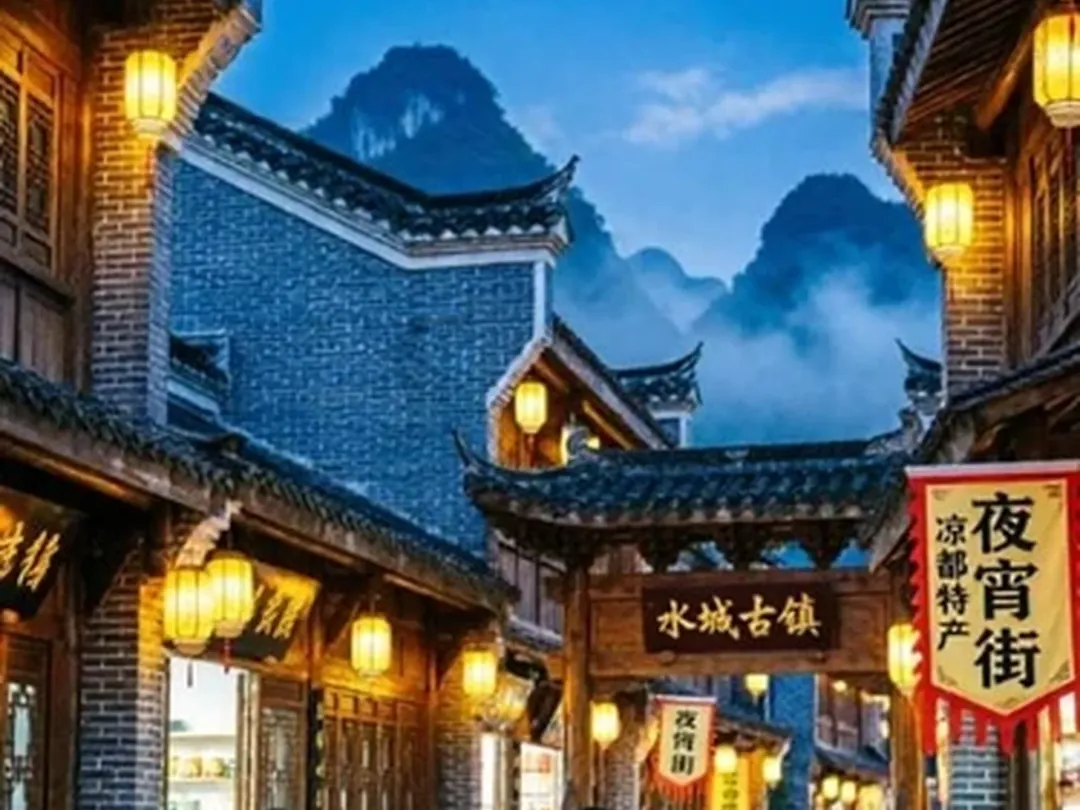
Shuicheng Ancient Town (水城古镇) is the rebuilt quarter beside the river in the city centre — grey brick, lanterns, and above all the night-snack street in the photo above, where the city's famous mutton institutions set out their pots. Go hungry after 19:00.
What to Eat in Liupanshui
The kitchen is highland Sichuan-Guizhou with a mutton axis:
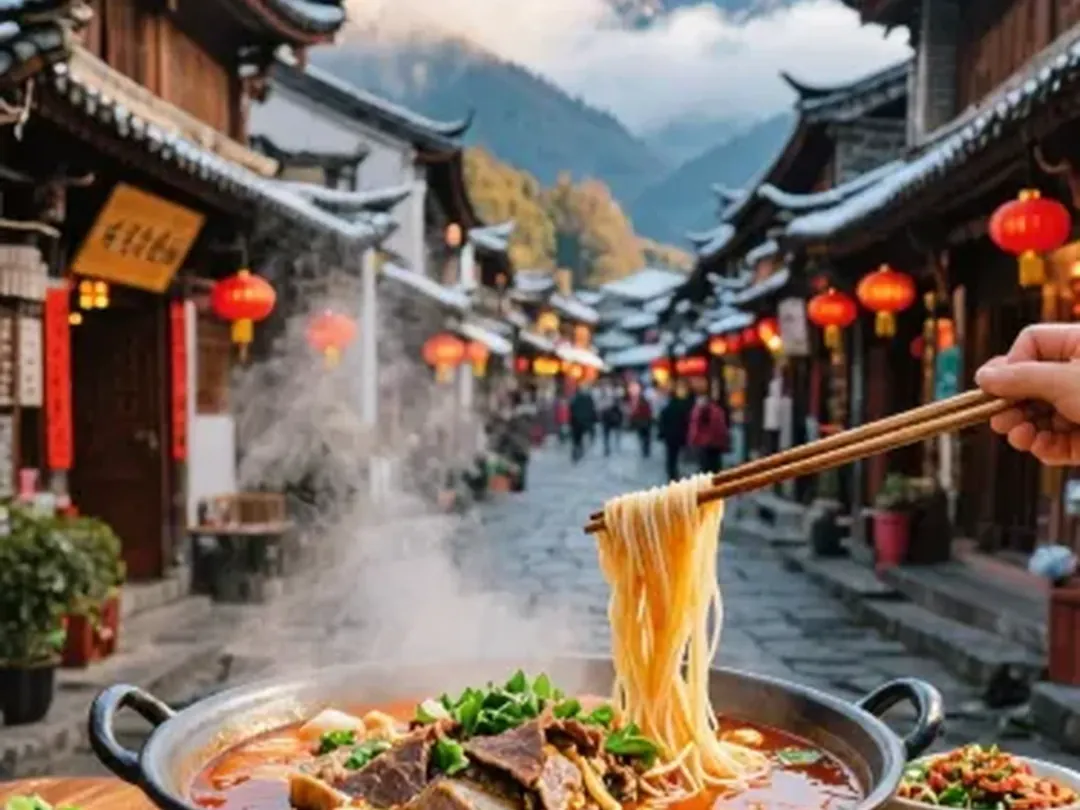
- Shuicheng mutton powder (水城羊肉粉) — rice noodles in mutton broth with fermented chili; the city's breakfast identity, 10-20 CNY a bowl.
- Shuicheng mutton hotpot — the winter version of the same broth, richer, per-pot pricing.
- Tuole ginkgo kernels — roasted, in season only.
- Panxian huotui — Panzhou's cured ham, sliced thin with local liquor.
Count 60-120 CNY a day for eating well; the mutton powder is the cheapest good meal in western Guizhou.
A Two-Day Plan (and a Third)
- Day 1 — the city. Minghu boardwalk in the morning light, the Third-Front museum after lunch, Shuicheng Ancient Town's night-snack street from 19:00.
- Day 2 — the grassland. Leave by 08:00 for the Wumeng ridgeline; back through Panzhou for dinner, or stay the night.
- Day 3 — the ginkgos (autumn). Tuole village in the morning, then the HSR from Panzhou station toward Kunming.
The hour-by-hour versions live in our 3-day Liupanshui trip builder, and the 5-day and 7-day routes fold in the rest of Guizhou.
Getting There: HSR and Local Transport
The city sits on the Shanghai–Kunming HSR corridor: Liupanshui's stations connect toward Guiyang (about 1-1.5 hours) and toward Panzhou and Kunming to the west. Flights land at Liupanshui Yuezhao airport, north of the city, on thin schedules. Inside the prefecture, distances are road distances — the grassland is a two-hour drive — so taxis and hired cars carry the itinerary.
| Route | Time | Notes |
|---|---|---|
| Guiyang → Liupanshui (HSR) | about 1-1.5 h | Shanghai–Kunming corridor |
| Liupanshui → Wumeng grassland | about 2 h by car | into Panzhou, ridgeline road |
| Liupanshui → Panzhou station (HSR) | about 1 h by car | for Tuole and Kunming trains |
| Panzhou seat → Tuole village | about 20 km | ginkgo season traffic on weekends |
| City centre → Minghu wetland | 10-15 min by taxi | free park |
| City centre → Third-Front museum | 10 min by taxi | free entry, passport |
Keep the Chinese name of your destination written down — 六盘水 for the city, 妥乐 for the ginkgo village — as drivers rarely read English.
Where to Stay
Stay in the Zhongshan district around the People's Square side: mid-range hotels run 300-600 CNY a night, the food streets are walkable, and both the museum and the wetland park are short taxi hops. In July-August, the domestic cool-summer season fills the city — book ahead. Panzhou has solid hotels near its HSR station for the grassland-plus-ginkgo overnight.
What a Day Costs
| Item | Price | Notes |
|---|---|---|
| Minghu wetland park | free | boardwalk included |
| Third-Front museum | free | passport entry |
| Wumeng grassland | low seasonal fee | plus car hire or charter |
| Tuole ginkgo village | low seasonal fee | mid-Oct to Nov is peak |
| Mid-range hotel | 300-600 CNY/night | Zhongshan district |
| Meals | 100-200 CNY/day | mutton powder to hotpot |
| Local transport | 30-60 CNY/day | taxis; charters extra |
| Attractions | 50-150 CNY/day | one headliner a day |
Match this against our roster's estimate for the city — accommodation 300-600 CNY, food 100-200 CNY, transport 30-60 CNY and tickets 50-150 CNY — for a mid-range total of 500-1000 CNY per person per day. A backpacker day on hostels, buses and mutton powder lands near 40; the luxury ceiling is about 300.
When to Go
June-September is the cool season the city is named for — midsummer averages about 19.7 degrees. Mid-October to November adds the ginkgos at Tuole. Spring brings the azaleas on the Wumeng ridgeline. Winter is cold and grey in the basin. The avoid-list is standard Guizhou: the first week of October, when the whole country travels at once.
Practical Tips
- Payment: link an international card to Alipay or WeChat Pay before arrival; keep 50-100 CNY in small notes for the village stalls.
- eSIM: a tourist data eSIM (about 5-30 USD) avoids the phone-shop passport queue; install a VPN before you fly, since Google, WhatsApp and Instagram are blocked on the mainland.
- Layers: the basin sits at 1,800 metres and the grassland higher — a July day can run 30 degrees downtown and 10 on the ridge.
- Timing: the ginkgo season is short and weather-dependent; mid-October weekends are the heaviest, weekdays the calmest.
- Emergencies: police 110, ambulance 120, fire 119, national tourist hotline 12301.
Frequently Asked Questions
How many days do I need in Liupanshui?
Two cover the city: the wetland, the museum and the night food, plus the Wumeng grassland. The third is for Tuole ginkgo village — essential if you come between mid-October and November, optional otherwise.
Why is Liupanshui called the Cool City?
Altitude and latitude. The urban basin sits at about 1,800 metres in western Guizhou, and midsummer averages around 19.7 degrees — China's meteorological authority gave it the Cool City (中国凉都) title in 2005, and domestic summer tourism has followed ever since.
How do I get to the Wumeng grassland?
By road: about two hours from the city into Panzhou, up a ridgeline road with wind turbines at the top. There is no rail or bus link worth the detour, so take a taxi, a hired car or a driver for the day; carry a warm layer for the ridge.
When do the ginkgos at Tuole turn gold?
From mid-October into November, depending on the year's cold snap. The village holds more than a thousand trees, many over 300 years old. Weekends in late October draw coach crowds; weekdays are calm, and mornings give the best light under the canopy.
Is the Third-Front museum worth it?
If you want to understand the city, yes — it is the reason Liupanshui exists. The museum records the 1960s campaign that merged three counties into one mining city, and entry is free with a passport. Budget about an hour; it closes Mondays in most seasons.
What should I eat in Liupanshui?
Shuicheng mutton powder first — the city's signature rice noodles in mutton broth, 10-20 CNY a bowl — then mutton hotpot, Panzhou cured ham, and roasted ginkgo kernels in season. The night-snack street at Shuicheng Ancient Town concentrates the best pots.
Do I need cash in Liupanshui?
Mostly no: Alipay or WeChat Pay linked to an international card covers the city and the main sights. Keep 50-100 CNY in small notes for Tuole's village stalls, which are the farthest from a scanner in this guide's itinerary.
Useful Phrases
| Chinese | Pinyin | Meaning |
|---|---|---|
| 你好 | nǐhǎo | hello |
| 谢谢 | xièxie | thank you |
| 多少钱 | duōshǎo qián | how much |
| 六盘水 | Liùpánshuǐ | Liupanshui, the Cool City |
| 明湖湿地公园 | Mínghú Shīdì Gōngyuán | Minghu Wetland Park |
| 乌蒙大草原 | Wūméng Dàcǎoyuán | Wumeng grassland |
| 妥乐 | Tuǒlè | Tuole ginkgo village |
| 水城古镇 | Shuǐchéng Gǔzhèn | Shuicheng Ancient Town |
| 羊肉粉 | yángròu fěn | mutton rice noodles |
Final Notes
Every figure above — the 2005 Cool City title and the 19.7-degree midsummer average, the 1,800-metre basin, the 1.1-km rainbow boardwalk, the 1960s Third-Front merger of three counties, the 2,857-metre Niupengliangzi and the two-hour road to the grassland, Tuole's thousand-plus ginkgos of 300-plus years and the 2016 HSR through Panzhou — was checked in October 2026 against our Liupanshui trip-days data and the scenic areas' published listings. Prices move; reconfirm within a fortnight of travel. Come in July for the air, in late October for the gold.
- Source: China National Tourism Administration — policy and seasonal notices.
- Source: Trip.com — live train and hotel listings for cross-checks.
Last verified 2026-10-16.