nihaovisit

Datong · history museum

Datong Museum (大同市博物馆, Dàtóng Shì Bówùguǎn)

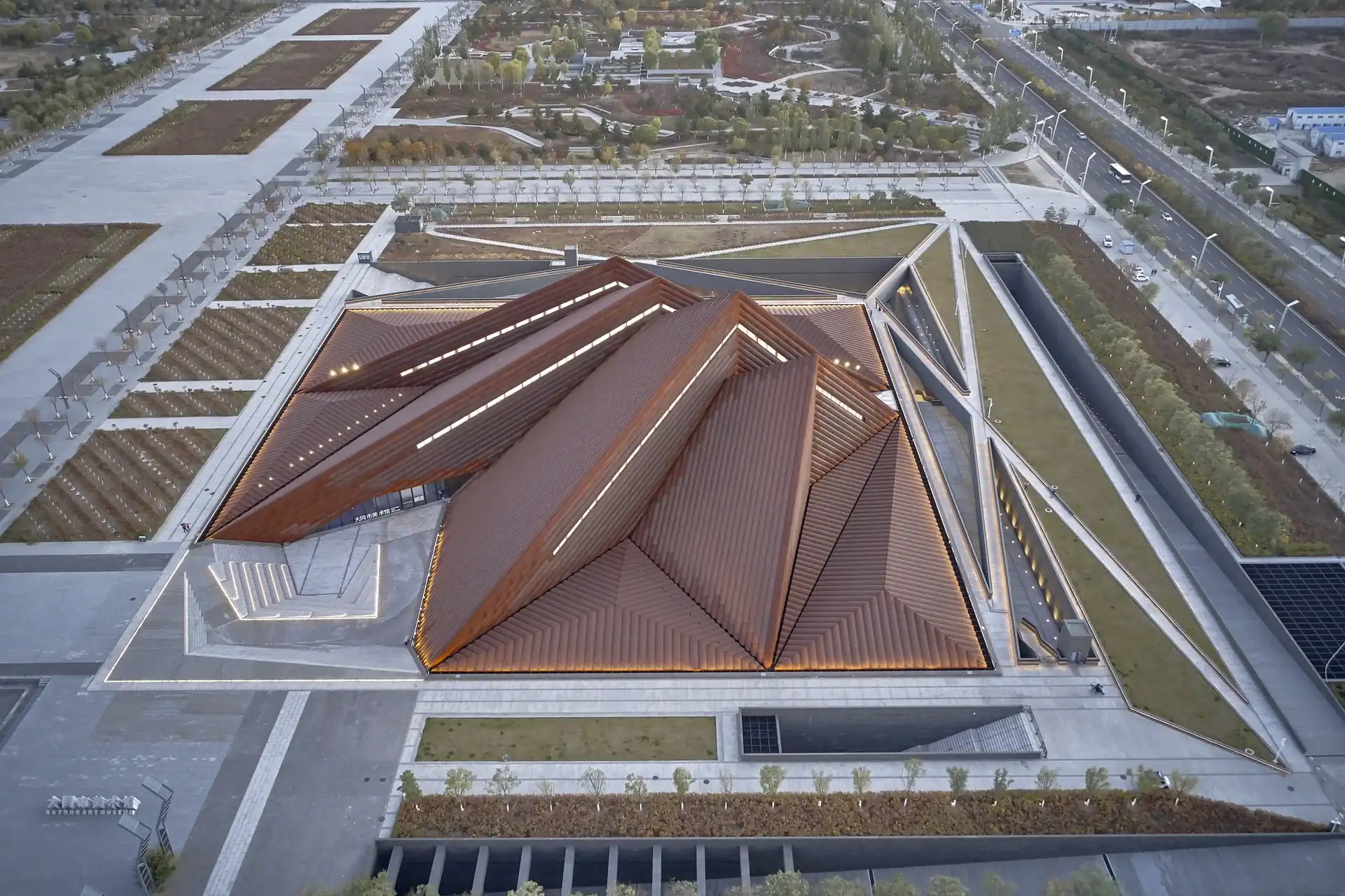
The Datong Museum opened in a striking 2014 building designed to echo the layered rock formations of the nearby Yungang Grottoes. Datong was the capital of the Northern Wei Dynasty (386-534 AD) under the Xianbei people, a period when it was called Pingcheng (平城) and was one of the largest cities in the world. The museum's collection focuses on three periods: the Northern Wei capital era (the Yungang period), the Liao Dynasty (907-1125, when Datong was the Western Capital), and the Jin-Yuan periods. The Northern Wei gallery is the strongest — it includes pottery tomb figures that show the Xianbei's nomadic origins, gilt bronze Buddhist sculptures in the Gandharan-influenced Northern Wei style (elongated bodies, smile, flame mandorla), and architectural fragments that provide context for the Yungang cave temples. The Liao-Jin section has superb Buddhist sculptures and glazed pottery from Datong's second period of prominence.

Last updated:

Datong Museum travel photo

Quick Answer

Is Datong Museum worth visiting?

Northern Wei Dynasty (386-534 AD) capital artifacts, Yungang Grotto context, and Liao-Jin Dynasty Buddhist relics — Datong's 2014 museum is the essential companion to the Yungang caves. Free.

Quick facts

Categoryhistory
TicketFree. Passport required. Reserve via the Datong Museum WeChat mini-program or scan QR code at the entrance. Walk-ins accommodated on weekdays.
Hours9:00-17:00 (last entry 16:00). Closed Mondays.
Recommended duration2-2.5 hours.
Best time to visitTuesday-Thursday mornings. Datong is best visited May-June and September-October — summers are warm but dry, winters are extremely cold (-15°C to -20°C). The museum is well-heated and serves as a good winter refuge between outdoor temple visits.
How to get thereBus routes 38, 60, 64, 70, 201, 604, 605 to Datong Museum (大同博物馆) stop. The museum is in the new development zone east of the old city. DiDi from central Datong costs ¥10-20. From Yungang Grottoes (16 km west of Datong), DiDi to the museum costs ¥30-40 (25 minutes).
English signagepartial

Why visit

This museum is the essential context provider for the Yungang Grottoes. The Northern Wei artifacts explain the Xianbei culture that carved the caves, the Buddhist iconography that fills them, and the cosmopolitan society (mixing Chinese, Xianbei, Central Asian, and Indian influences) that created them. Visiting the museum before Yungang transforms the cave experience from "impressive old statues" to an understandable cultural product.

Collection highlights

  • Northern Wei gilt bronze Buddha — a standing Buddha on a lotus pedestal with flame mandorla, Northern Wei Dynasty (5th century AD). The elongated body, gentle smile, and flowing robes show the transition from Gandharan to Chinese Buddhist style
  • Xianbei pottery tomb figures — molded earthenware figures of Xianbei horsemen, musicians, and attendants with distinctive pointed hats and boots, showing the nomadic culture of the Northern Wei rulers
  • Liao Dynasty glazed pottery Luohan (arhat) — a nearly life-size seated arhat figure with three-color (sancai) glaze, Liao Dynasty (10th-11th century). The individualized facial expression is remarkable
  • Jin Dynasty brick-carved tomb murals — scenes of daily life (food preparation, music performance, domestic interiors) transferred from Jin Dynasty tombs in the Datong area, with pigment still visible
  • Northern Wei architectural fragments — stone roof tiles, tile ends (瓦当) with Buddhist symbols, and column bases from the Northern Wei Pingcheng palace excavations, showing the scale of the lost capital city
  • Datong coal mine history gallery — Datong is China's "coal capital" and the museum includes a section on the city's modern industrial history, with mining equipment and photographs

Tips

  • Visit this museum BEFORE the Yungang Grottoes — the Northern Wei artifacts will give you the cultural context to understand what you are looking at in the caves
  • I visited in June 2026 and was grateful I did the museum first — I recognized Xianbei clothing styles in the cave donor figures and understood the Gandharan-to-Chinese stylistic transition visible across the Yungang caves
  • The museum is in Datong's new development zone, east of the old city wall — it is not walking distance from the old city. Use DiDi (¥10-15 from the Drum Tower area)
  • Combine with the Datong City Wall (大同城墙, restored Ming Dynasty wall, free to walk on) and the Huayan Temple (华严寺, Liao Dynasty temple with superb Buddha halls, ¥65) for a full day of Datong culture
  • The museum's coal mining gallery is a curious but informative detour — Datong's identity as China's coal capital is inseparable from its modern history
  • Datong's noodle culture is vibrant — after the museum, try Datong knife-cut noodles (刀削面) at Dongfang Xiaomian (东方削面) near the old city center

Frequently asked questions

What was the Northern Wei Dynasty?

The Northern Wei Dynasty (北魏, 386-534 AD) was founded by the Tuoba clan of the Xianbei people, a nomadic group from the Mongolian steppe who conquered northern China after the collapse of the Jin Dynasty. In 398 AD, they established their capital at Pingcheng (modern Datong), which grew to become one of the world's largest cities with an estimated population of over 1 million. The Northern Wei is most famous for two things: (1) the Yungang Grottoes, carved under imperial patronage from 460-525 AD, and (2) the sinification policies of Emperor Xiaowen (r. 471-499), who banned Xianbei language and clothing and moved the capital to Luoyang in 494. The Northern Wei was the most powerful state in East Asia during its peak and was instrumental in transmitting Buddhism from Central Asia to the rest of China.

Why should I visit the Datong Museum before Yungang Grottoes?

The museum provides the cultural, political, and artistic context that makes the Yungang Grottoes fully comprehensible. The Northern Wei gallery explains who the Xianbei were, why they carved the caves, and how the artistic style evolved. Without this context, the Yungang caves are beautiful but opaque. With it, you can trace the Gandharan-to-Chinese stylistic transition across the five phases of cave carving, recognize donor portraits of Xianbei nobles, and understand the political-religious purpose of the imperial caves (especially Caves 16-20, the Five Caves of Tan Yao). The museum is 25 minutes by car from Yungang — do the museum at 9:00-11:00 and the caves at 11:30-16:00.

What else is there to see in Datong?

Datong is a major destination for ancient Chinese architecture and Buddhist art: (1) Yungang Grottoes — one of China's three greatest Buddhist cave complexes (with Mogao and Longmen), 45 surviving caves with 51,000 statues, (2) Huayan Temple (华严寺) — Liao Dynasty temple with a 1,000-armed Guanyin and the largest wooden Buddha hall in China (Daxiong Baodian), (3) Shanhua Temple (善化寺) — Tang-Liao architecture with superb Buddha triads, (4) Hanging Temple (悬空寺, 65 km south) — a 1,500-year-old temple built into a cliff face, (5) Yingxian Wooden Pagoda (应县木塔, 75 km south) — the world's oldest and tallest wooden pagoda (1056 AD, 67 m). Two full days minimum.

Is the Datong Museum free?

Yes, free. Reserve via the museum WeChat mini-program or scan the QR code at the entrance with your passport. Walk-ins are accommodated on weekdays. The museum is rarely crowded — Datong receives far fewer visitors than it deserves.

What does the Datong Museum have that other museums do not?

The Northern Wei Dynasty capital artifacts — Xianbei pottery figures, Pingcheng palace architectural fragments, and 5th-century gilt bronze Buddhas in the transitional Gandharan-to-Chinese style. Datong was the Northern Wei capital and the museum is the primary repository of artifacts from that period. The Yungang Grottoes are the physical site; this museum is the contextual collection. No other museum in China has this specific Northern Wei focus.

How do I get to Datong?

Datong is served by high-speed rail (大同南站, Datong South Station) with connections from Beijing (2-2.5 hours), Taiyuan (2 hours), and Xi'an (3.5 hours by train with a Taiyuan transfer). Datong Yungang Airport has domestic flights from Beijing, Shanghai, and other major Chinese cities. The city is compact and DiDi is inexpensive (¥10-20 for most urban trips).

Read next

Sources