This page is archived and no longer updated — see the current guide: See the current guide
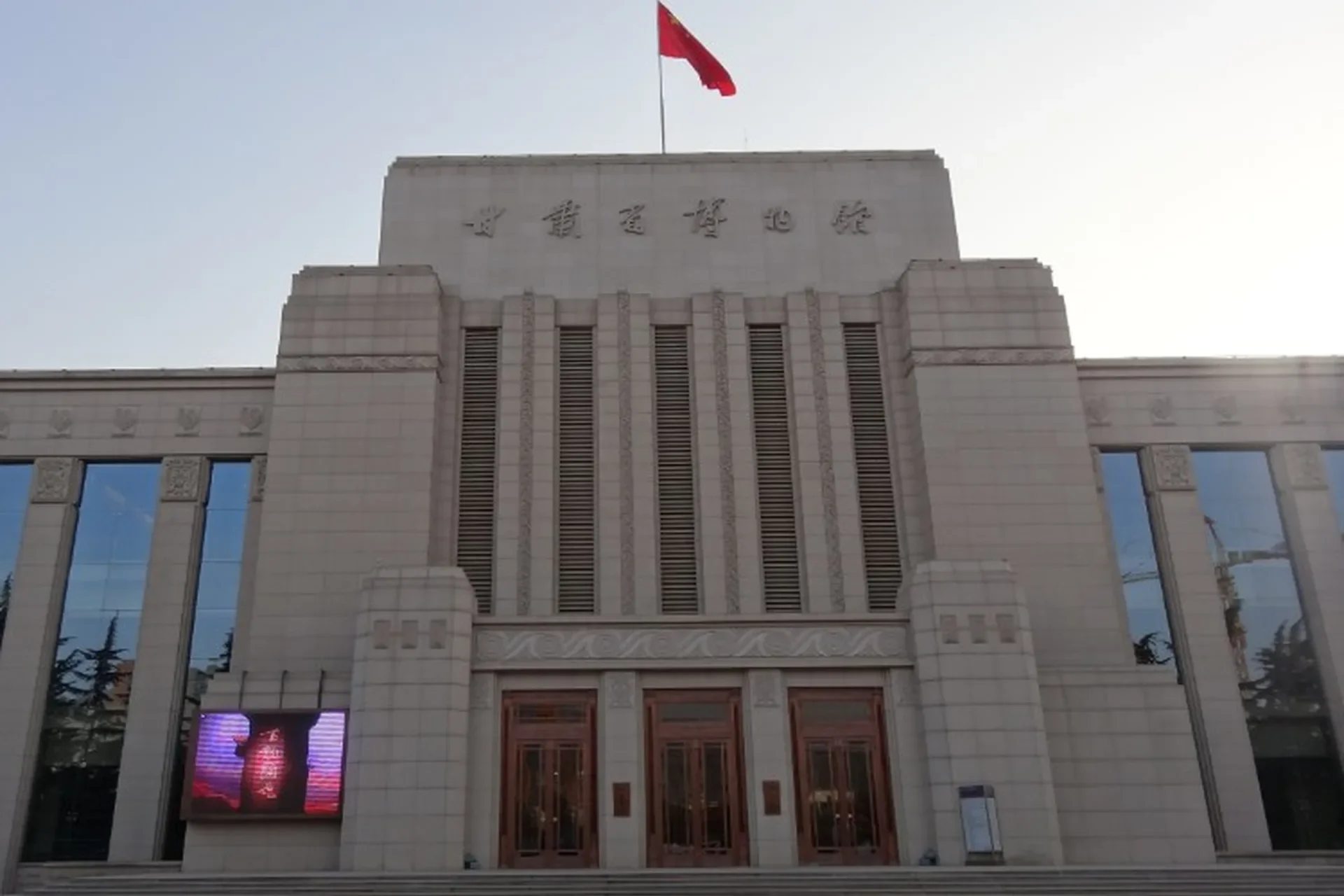
Gansu Provincial Museum
The Gansu Provincial Museum (甘肃省博物馆) in Lanzhou is China's most important museum for Silk Road (丝绸之路) archaeology and Central Asian cultural exchange. Gansu province forms the narrow Hexi Corridor (河西走廊) — the only passage from Central Asia to the Chinese heartland, and the corridor through which Buddhism entered China, the Silk Road trade ran, and nomadic empires projected power southward. The museum's core collections are: (1) Silk Road Buddhist art — including the famous "Flying Horse of Gansu" (马踏飞燕) bronze from the Han Dynasty military outpost at Wuwei; (2) prehistoric archaeology — the 5,000-year-old Majiayao and Qijia cultures of the upper Yellow River valley; (3) Western Regions trade objects — silk, lacquer, glass, and gold from Han through Tang Dynasty trade caravans; (4) the Maijishan Cave (麦积山石窟) Buddhist sculpture fragments.
Lanzhou · history museum2026-10-19
Quick Answer
Is Gansu Provincial Museum worth visiting?
Lanzhou's Silk Road museum and home of the Gansu Flying Horse — the definitive collection of Han-dynasty relics, silk-route artifacts and Buddhist art from the corridor. Free with ID; allow 2-3 hours.
Quick facts
| Category | history |
|---|---|
| Ticket | Free. Passport required. Walk-in from the south gate. |
| Hours | 9:00-17:00 (last entry 16:00). Closed Mondays. |
| Recommended duration | 2-3 hours. |
| Best time to visit | May through October. Lanzhou has a continental climate — hot summers (25-35°C, June-August) and cold winters (December-February, -10°C to 5°C). Spring (April-May) is pleasant. The best time to combine Lanzhou with the Silk Road cities of Dunhuang (2.5 hours by fast train) and Zhangye (2 hours by train) is June-September. |
| How to get there | Metro Line 1 to Gansu Provincial Museum Station (甘肃省博物馆站). Bus routes 1, 18, 31, 32, 50, 53, 58, 71, 77, 106, 131 to Gansu Museum stop. From Lanzhou Railway Station by DiDi: ¥15-20. From Lanzhou Zhongchuan Airport: ¥80-120 by airport bus + metro. |
| English signage | Partial |
Why visit
The "Flying Horse of Gansu" (马踏飞燕) is one of the most reproduced Chinese archaeological objects — the bronze horse stepping on a flying swallow captures the dynamism of Han Dynasty art and is the symbol of China's tourism. Beyond this famous piece, the Silk Road archaeological collection documents the extraordinary cultural exchange between China and Central Asia that shaped both civilizations.
Collection highlights
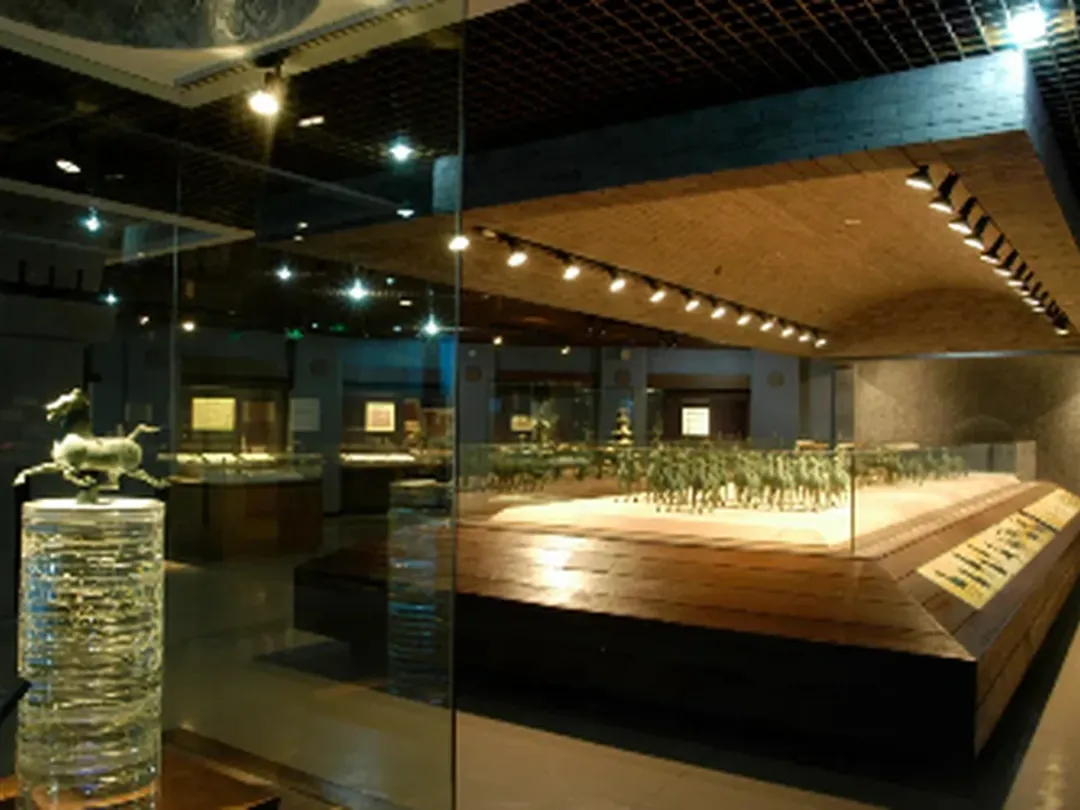
- "Flying Horse of Gansu" (马踏飞燕) — the famous Han Dynasty bronze of a horse stepping on a flying swallow, discovered at the Wuwei Han Dynasty military outpost and reproduced on Chinese tourism promotional materials nationwide
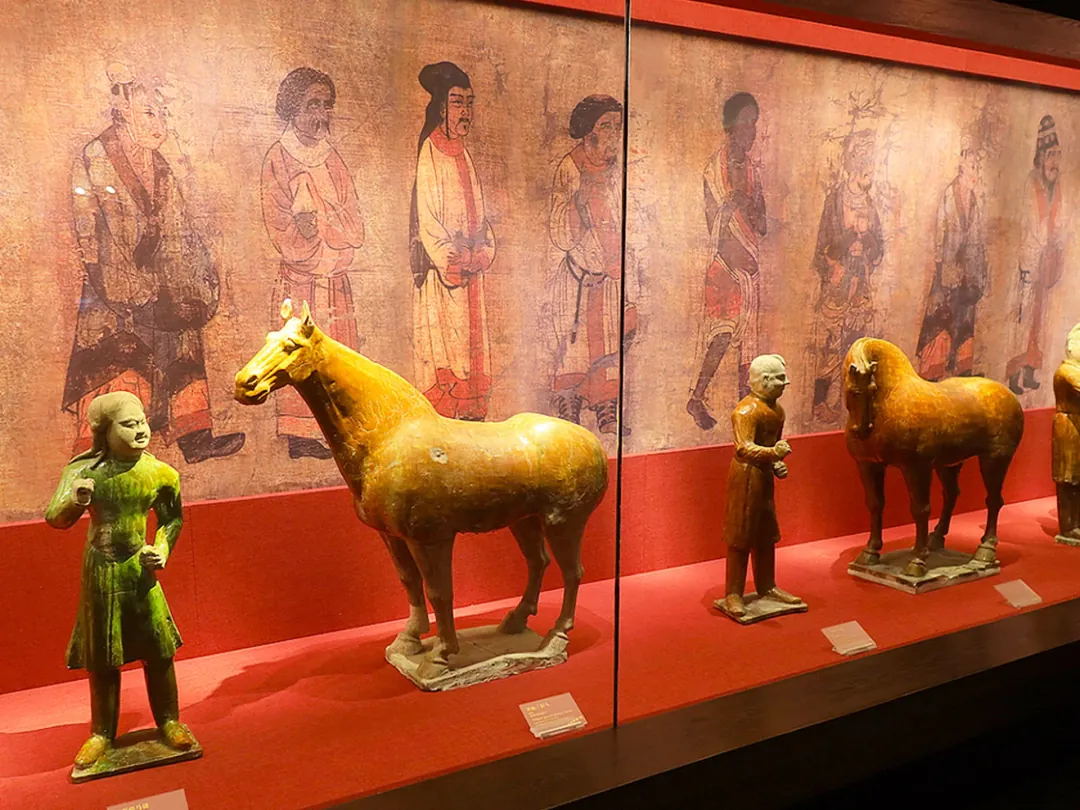
- Silk Road Buddhist silk fragments — extremely rare preserved silk textiles from Han and Tang Dynasty Silk Road trade, showing Chinese silk exported to Central Asia and beyond
- Western Regions gold and silver objects — gold and silver cups, plates, and ornaments from Han and Tang Dynasty trade with Central Asia, showing the material culture of the Silk Road
- Maijishan Cave Buddhist sculpture fragments — carved stone Buddhist figures from the 5th-8th century Maijishan Grottoes (麦积山石窟) near Tianshui, one of China's four great cave temple sites
- Majiayao Neolithic pottery — 5,000-year-old painted pottery from the Majiayao culture of the upper Yellow River valley, some of the most sophisticated Neolithic painted pottery in China
- Han Dynasty bronze crossbow mechanisms — sophisticated bronze mechanical devices from Han Dynasty military outposts along the Hexi Corridor
Tips
- The "Flying Horse" is on the 2nd floor — it is always surrounded by crowds; go right at opening
- Combine Lanzhou with a visit to the Bingling Temple (炳灵寺石窟) by boat on the Yellow River (4 hours round trip from Lanzhou)
- Lanzhou is the gateway to the Hexi Corridor Silk Road cities — use it as a base to visit Dunhuang (2.5 hours by fast train) and Zhangye (2 hours by train)
- The Gansu Museum is near the Yellow River waterfront — combine with a walk along the river and the famous Zhongshan Iron Bridge (中山铁桥)
- The museum is 30 minutes from the Lanzhou Railway Station — useful if arriving by train from Xi'an or Xining
- The best Silk Road combination itinerary: Lanzhou (museum, Yellow River) + Dunhuang (Mogao Caves) + Zhangye (Rainbow Mountains / 七彩丹霞)
Frequently asked questions
What is the Flying Horse of Gansu?
The "Flying Horse of Gansu" (马踏飞燕, "Gansu Horse Trampling a Flying Swallow") is a bronze sculpture from the Han Dynasty (206 BCE - 220 CE), discovered in 1969 at the Han Dynasty military garrison in Wuwei, Gansu. The horse is depicted in mid-stride with one hoof on a swallow that is trying to fly away. The dynamic posture — all weight on one leg, the other three in mid-flight — demonstrates remarkable artistic skill and is one of the most recognized symbols of ancient China. It appears on Chinese tourism logos nationwide.
How does Gansu Museum compare to the Dunhuang Museum?
The Gansu Provincial Museum in Lanzhou is the general provincial museum with the broadest historical collection. The Dunhuang Museum (敦煌研究院/敦煌博物馆) is dedicated specifically to the Dunhuang Mogao Grottoes and has the most comprehensive collection of Dunhuang Buddhist art and manuscripts. For a general Gansu/Silk Road overview, start here. For deep Dunhuang immersion, go to Dunhuang.
What is the Hexi Corridor?
The Hexi Corridor (河西走廊, "River West Corridor") is a 1,000km stretch of valleys and oases along the Bei'a River (Shiji: "River") in modern Gansu province — the only natural passage between Central Asia and the Chinese heartland. It was the route of the Silk Road, the pathway for Buddhism's entry into China from India, and the invasion route for Central Asian nomadic empires (Xiongnu, Xianbei, Uyghur) into China.
Does Gansu Provincial Museum have English signage?
Partial — the Flying Horse gallery and Silk Road sections have English labels. The prehistoric archaeology and Maijishan Cave sections have limited English. Audio guides in English are available (¥30 deposit).
Can I visit Gansu Museum and do the Dunhuang Mogao Caves in one day?
No — Dunhuang is 2.5 hours by high-speed train from Lanzhou West Station. The Mogao Caves take 3-4 hours to visit properly. Minimum: Gansu Museum morning + afternoon high-speed train to Dunhuang + next day Mogao Caves. Better: 3 days for Gansu Museum + Dunhuang + Zhangye Danxia.
Read next
Other things to do in Lanzhou
Baita Park
The hillside park across the Yellow River from Zhongshan Bridge: pavilions and a Yuan-era white pagoda on a 200-meter climb (or cable car) — Lanzhou's best panorama at dusk.
Zhongshan Bridge
The Yellow River's first iron bridge (1907) — now a pedestrian promenade, famous red structure spanning China's second-longest river in central Lanzhou. Free. 30 minutes.
Zhongshan Bridge
Lanzhou's "First Bridge over the Yellow River": a 1907 German-built steel truss, pedestrian-only now, linking the riverside promenade to Baita Mountain Park — best at sunset.