- Home
- Jingdezhen
- China Ceramics Museum
Jingdezhen · specialty museum
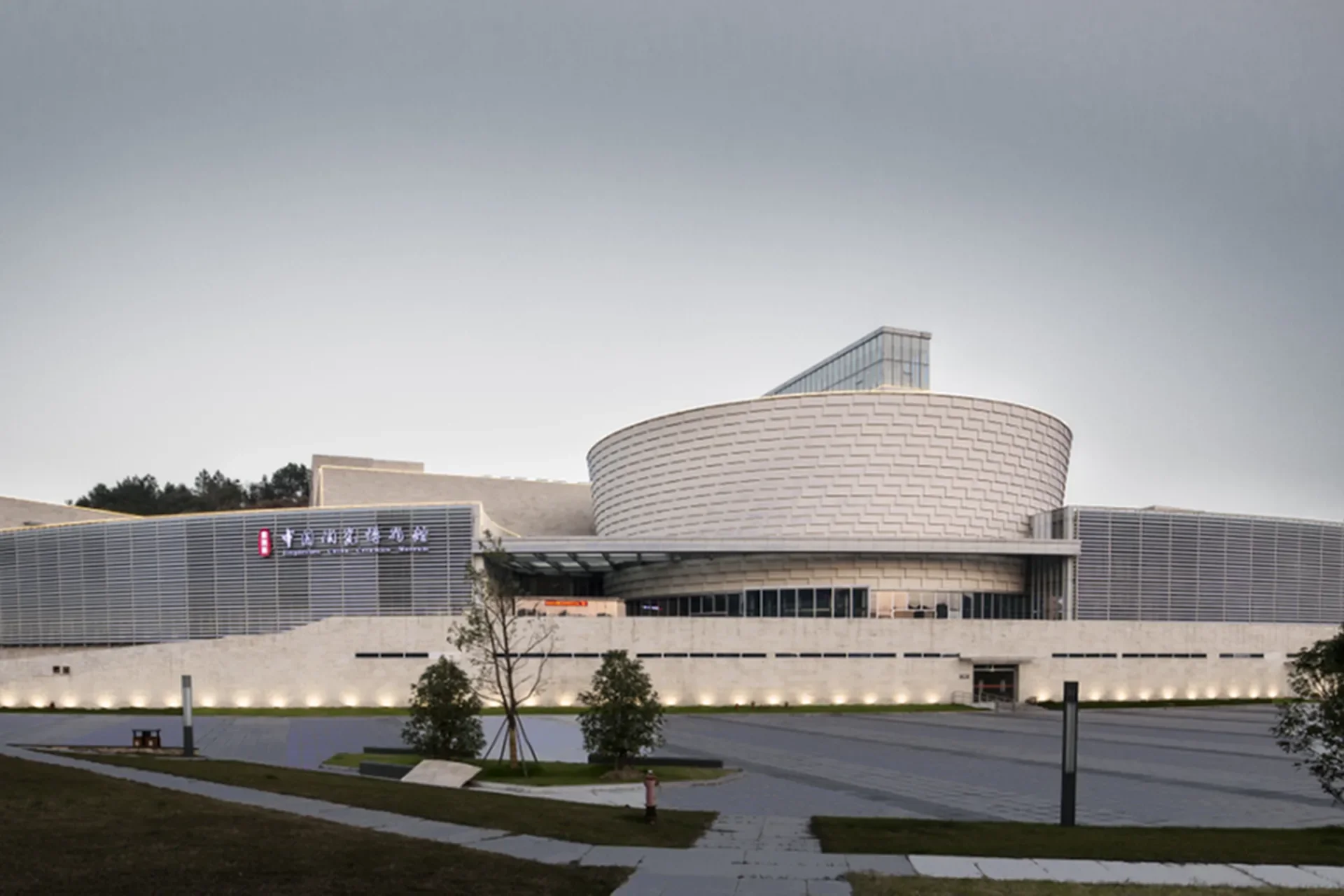
China Ceramics Museum (中国陶瓷博物馆, Zhōngguó Táocí Bówùguǎn)
"\"The China Ceramics Museum (中国陶瓷博物馆) in Jingdezhen, Jiangxi Province, holds the world's most comprehensive collection of Chinese ceramics, spanning over 1,000 years. Jingdezhen has been China's porcelain capital since the Song Dynasty (960–1279), when its kaolin clay and pine-wood kilns produced a translucent white body that European potters spent centuries trying to replicate. The museum traces this arc: early celadon (青瓷, qīngcí) and black-glazed wares, Song Dynasty qingbai (青白, bluish-white) porcelain, Yuan Dynasty blue-and-white (青花, qīnghuā) that revolutionized global ceramic art, Ming Dynasty imperial dragon-ware produced for the Forbidden City, and Qing Dynasty famille-rose export porcelain that adorned European palaces. Some pieces were excavated directly from the Imperial Kiln site (御窑厂, Yùyáo Chǎng) in central Jingdezhen, displayed alongside the wasters (discarded imperfect pieces) that tell the story of imperial quality control — the emperor received only one perfect piece from each kiln firing; the rest were smashed.\".".
Last updated:
Quick Answer
Is China Ceramics Museum worth visiting?
"A thousand years of imperial porcelain in Jingdezhen — the city that supplied emperors from Song to Qing — with kiln-site excavations and masterpieces that defined global ceramic art.".. 2026...
Quick facts
| Category | specialty |
|---|---|
| Ticket | Free. Passport required for entry registration. |
| Hours | 9:00–17:00, Tuesday–Sunday. Last entry 16:00. Closed Mondays. |
| Recommended duration | 2.5–3.5 hours. |
| Best time to visit | Weekday mornings, 9:00–11:30. The museum is popular with domestic tour groups on weekends. |
| How to get there | From Jingdezhen Railway Station: Bus 103 to Ceramics Museum stop (陶瓷博物馆站), 25 minutes. By Didi from central Jingdezhen: ¥15–20, 15 minutes. High-speed trains connect Jingdezhen to Nanchang (45 min) and Huangshan (1 hr). |
| English signage | partial |
Why visit
Jingdezhen is not on most foreign travel itineraries, which is exactly why it is worth the detour. In June 2026, I watched a ceramicist at the adjacent kiln workshop throw a bowl in 90 seconds — same motion, same clay, same wheel design used here for 1,000 years. The museum's Yuan Dynasty blue-and-white gallery shows pieces worth more than a Beijing apartment, displayed in perfect lighting with space to circle each vitrine. Understanding Jingdezhen illuminates why the West named an entire country after its most famous export — "china" the material traces directly to this city.
Collection highlights
- Yuan Dynasty blue-and-white gallery — cobalt-painted porcelain that defined the global standard for ceramic luxury, with pieces excavated from the Imperial Kiln.
- Imperial Kiln wasters display — shards and imperfect vessels from Ming Dynasty imperial firings, showing the extreme quality control that destroyed 90%+ of each kiln load.
- Song Dynasty qingbai porcelain — translucent bluish-white ware so refined it was called "artificial jade" (假玉, jiǎ yù).
- Qing Dynasty famille-rose gallery — export porcelain painted in overglaze enamels for European courts, with designs blending Chinese and Western motifs.
- Adjacent workshop demonstrations — master potters throwing, trimming, and painting in the traditional Jingdezhen style, open to visitors included with museum entry.
Tips
- Combine with the Jingdezhen Imperial Kiln Museum (御窑博物馆), a striking modern building 3 km away built over the actual Ming Dynasty kiln excavation site — they complement each other perfectly.
- Jingdezhen's ceramic markets are as interesting as the museum. The Sculpture Porcelain Factory (雕塑瓷厂) on Saturday mornings is a ceramics flea market with both antiques and student work.
- The museum is building a significant English-label expansion, but as of June 2026, approximately 50% of exhibits have full English. The Yuan and Ming galleries have the best translation coverage.
- Jingdezhen is best reached by high-speed rail from Nanchang (45 minutes) or Huangshan (1 hour). The city has good hotels and a growing art-student culture that makes it more interesting than its industrial reputation suggests.
Frequently asked questions
Why is Jingdezhen so important to ceramics?
Jingdezhen possesses the world's finest kaolin clay deposits — the key ingredient for true hard-paste porcelain. From the Song Dynasty onward, the city became the imperial kiln site, producing porcelain exclusively for the emperor's court. The combination of kaolin clay, pine-wood fuel, and 1,000 years of accumulated ceramic knowledge produced porcelain of unmatched translucency and strength. Jingdezhen's blue-and-white porcelain became China's most significant cultural export, influencing ceramic traditions from Persia to the Netherlands.
What is the difference between pottery, stoneware, and porcelain?
Porcelain (瓷器, cíqì) is fired at the highest temperature (1,200–1,400°C) using kaolin clay, producing a white, translucent, non-porous body that rings when struck. Stoneware (炻器, shíqì) fires at 1,100–1,300°C and is dense but opaque. Pottery (陶器, táoqì) fires at the lowest temperatures (800–1,100°C) and remains porous. The museum's early galleries trace this technological evolution, showing how Jingdezhen potters independently developed high-temperature kilns by the 10th century.
Can I buy ceramics at the museum?
The museum shop sells high-quality reproductions of famous pieces with certification. For original contemporary ceramics, visit the Sculpture Porcelain Factory weekend market (Saturday mornings) or the Taoxichuan Art Center (陶溪川) — both offer works by Jingdezhen's community of young ceramic artists at a range of prices.
How long should I spend in Jingdezhen?
Budget 2 full days at minimum. Day 1: China Ceramics Museum (3 hours) + Imperial Kiln Museum (2 hours). Day 2: ceramic markets + a pottery workshop experience + Yaoli Ancient Village (45 minutes outside the city) to see traditional wood-fired dragon kilns. Art students and ceramic enthusiasts often stay a week.
What is an imperial waster and why are they displayed?
Imperial wasters (御窑残片, yùyáo cánpiàn) are pieces broken and discarded during quality inspection for the emperor's order. Imperial kilns might fire 10,000 pieces to produce 50 perfect vessels for the court — the rest were ordered destroyed to prevent unauthorized possession of imperial-quality porcelain. Archaeologists excavate kiln waste pits to reconstruct the production process. The museum displays wasters alongside perfect pieces to illustrate imperial quality standards.
Is the museum accessible from Nanchang?
Yes — Jingdezhen is 45 minutes from Nanchang by high-speed train (G- or D-class trains, approximately ¥60). The museum is a 15-minute taxi from Jingdezhen Railway Station. A day trip from Nanchang is feasible: take the 8:00 train, arrive 8:45, visit the museum 9:00–12:30, lunch, then return on a 15:00 or 16:00 train.