Dunhuang · Visitor Guide
Mogao Caves (莫高窟, Mògāo Kū)
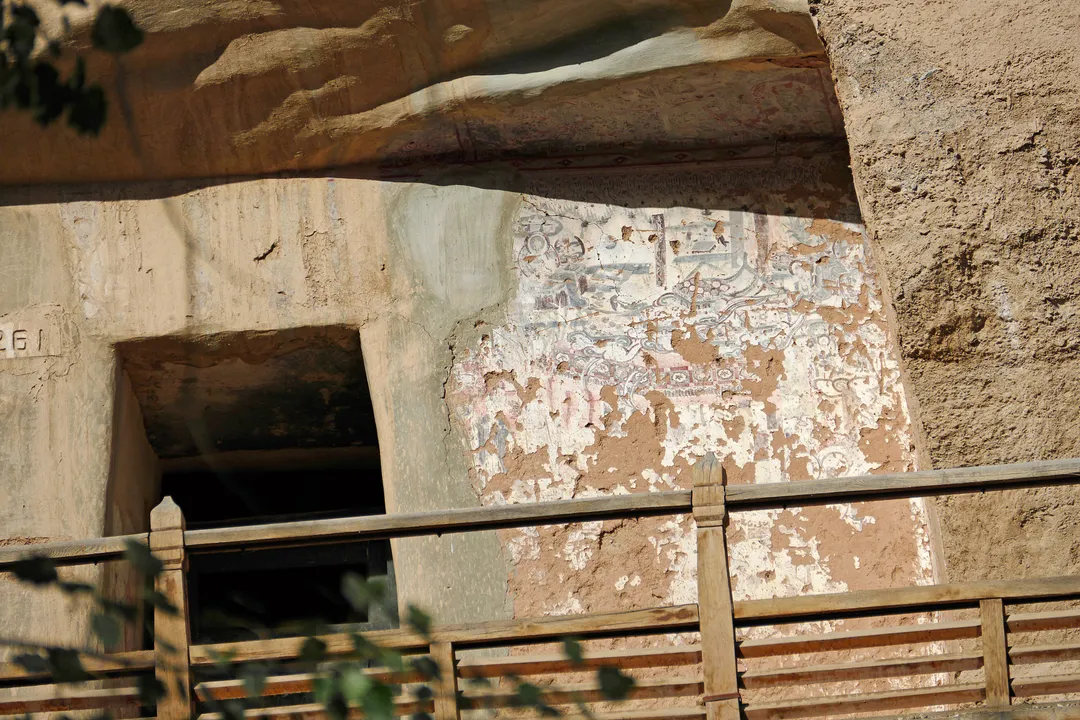
"\"The Mogao Caves (also known as the Thousand Buddha Grottoes) are 492 surviving cave temples carved into a 1.6 km sandstone cliff face near Dunhuang in Gansu Province, at the edge of the Gobi Desert. Constructed between the 4th and 14th centuries, they contain 45,000 m² of Buddhist murals and 2,415 painted clay sculptures — the largest and richest collection of Buddhist art in the world. The caves were a Silk Road waypoint where travelers, merchants, and monks commissioned art to ensure safe passage across the desert. In 1900, a hidden library cave (Cave 17) was discovered containing 50,000+ manuscripts in 17 languages — the most important archaeological find along the Silk Road. Visits are strictly regulated: timed entry, mandatory guided groups, limited caves open daily.\".".
Last updated:
Quick Answer
Is Mogao Caves worth visiting?
"492 cave temples carved into a desert cliff — the world's greatest repository of Buddhist art spanning 1,000 years on the ancient Silk Road. ¥238. Book weeks ahead.".
Quick facts
| Ticket | ¥238 (as of June 2026) for 8 caves with guide + 2 digital films. ¥148 for 4 caves (off-peak). Special caves ¥150–200 extra per cave. Book 2–4 weeks ahead on the official mini-program. |
|---|---|
| Hours | 8:00–18:00 (Apr–Oct), 9:00–17:00 (Nov–Mar). Timed entry slots every 30 minutes. |
| Recommended duration | 3–4 hours (2 films + guided cave tour + museum). Allow 4.5 hours with transport from Dunhuang. |
| Best time to visit | May–June and September–October (pleasant temps, clear skies). Avoid July–August (extreme heat 40°C+) and Chinese holidays. Book the 8:00 AM slot for the smallest groups. |
| How to get there | From Dunhuang city: shuttle bus from Mogao Caves Digital Exhibition Center (¥10, 20 min). Taxi from city center: ¥30–40, 25 min. Dunhuang Airport (DNH): flights from Xi'an, Lanzhou, Urumqi. |
| English signage | yes |
| Wheelchair accessible | no |
| Caves | 492 surviving (originally 1,000+) |
| Murals | 45,000 m² of Buddhist wall paintings |
| Sculptures | 2,415 painted clay sculptures |
| Time span | 4th–14th century (1,000 years) |
| Library Cave find | 1900 — 50,000+ manuscripts in 17 languages |
| UNESCO | 1987 (first Chinese UNESCO site) |
What to expect
The Mogao Caves exist at the surreal intersection of desert, history, and devotion. The cliff face is a 1.6 km wall of sand-colored rock riddled with dark rectangular entrances — from a distance, it looks like a sandstone honeycomb. Inside, the caves explode with color: 1,500-year-old murals in mineral blues and ochres cover every surface — ceiling, walls, niches — depicting Buddha lives, paradise scenes, donor portraits, and every detail of Silk Road life from musical instruments to camel caravans to fashion.
The visit is tightly choreographed: you start at the Digital Exhibition Center on the outskirts of Dunhuang for two films (one dome-projection, genuinely excellent), then shuttle to the caves for a 75–90 minute guided walk through 8 caves. You cannot wander freely — you join a guide with a key who unlocks and locks each cave door behind the group. This sounds restrictive but is justified: every breath adds humidity, and the murals are fading. I was initially frustrated by the structure but by cave 3 was grateful for it — the guide's explanations of iconography and technique add immense value.
Cave 45 (Tang Dynasty, 8th century) is the star, with seven perfectly preserved painted clay sculptures including a serene Buddha flanked by two disciples, two bodhisattvas, and two guardian warriors. The Library Cave (Cave 17) is tiny — barely large enough for three people — and the fact that 50,000 manuscripts were sealed inside for 900 years before being discovered by a Daoist monk named Wang Yuanlu in 1900 is almost incomprehensible.
How to get there
Fly to Dunhuang Airport (DNH) from Xi'an (2.5h), Lanzhou (1.5h), or Urumqi (1.5h). From Dunhuang city: book tickets on the official Mogao Caves mini-program (WeChat) first — the ticket determines your entry time. Shuttle bus (¥10) from the city center Digital Exhibition Center (莫高窟数字展示中心) departs every 30 minutes. Arrive 30 minutes before your time slot.
Best photo spots
- The cliff face exterior — honeycomb of cave entrances, best in late afternoon golden light
- The Nine-Storey Temple (九层楼) facade — the famous exterior pagoda, Cave 96, the 35 m Buddha visible outside
- The Dunhuang Research Academy museum (on-site) — replicas and context after your cave visit
- The library cave entrance (Cave 17) — tiny door, enormous significance
Tips
- Book tickets 2–4 weeks in advance via the official WeChat mini-program (莫高窟参观预约网) — tickets sell out, especially peak season
- Arrive 30 minutes before your timed entry slot — late arrivals forfeit their ticket
- No photography inside the caves — cameras and phones must be stowed. The museum shop sells excellent photo books
- Bring a flashlight — the cave interiors are deliberately dim, and a small light helps see details the guide's torch misses
- Visit the on-site museum after the tour — excellent English exhibits on cave conservation and the Silk Road
- Combine with a sunset visit to Mingsha Sand Dunes (鸣沙山, 30 min away) — climb the dunes for a impressive Gobi sunset
Scams to avoid
- Scam operators in Dunhuang city selling "Mogao Caves tickets without reservation" at 2–3x face value — they cannot deliver; tickets are tied to passport numbers
- Fake "extra caves" tours from taxi drivers offering to show you "unguarded caves with better art" — these are unofficial off-limits caves and the police take this seriously
Frequently asked questions
How do I book Mogao Caves tickets?
Only via the official WeChat mini-program (莫高窟参观预约网). Tickets are tied to your passport number and cannot be resold. Book 2–4 weeks ahead for peak season (May–October), 1 week ahead for off-peak. ¥238 includes 2 films + 8 caves with guide. English-language guide slots exist but are limited — request when booking.
Why can't I explore the caves independently?
Humidity, temperature, and CO₂ from human breath degrade the 1,000-year-old mineral pigments. Each cave has a sensor that triggers closure if conditions exceed safe levels. The guided-group system limits exposure. It is frustrating but essential for preservation — some caves have visibly faded even since the 1990s.
How many caves can I see?
The standard ticket (¥238) includes 8 caves with a guide. Overview tickets (¥148, off-peak only) include 4 caves. You can add 1–2 "special caves" (¥150–200 each) — these are the masterpieces (Cave 45, Cave 158, Cave 217) with the finest Tang Dynasty art. Request special caves when booking — they have limited daily capacity.
Is Dunhuang safe for foreign tourists?
Yes. Dunhuang is a small desert city (200,000 people) with a long history of international visitors on the Silk Road. It is in Gansu Province, far from Xinjiang. Standard precautions apply. The tourism infrastructure is well-developed, and English signage at Mogao is good.
How do I get to Dunhuang?
Fly: Dunhuang Airport (DNH) has direct flights from Xi'an (2.5h), Lanzhou (1.5h), Urumqi (1.5h), Beijing (4h seasonal). Train: overnight sleeper from Xi'an (14h) or Lanzhou (8h) to Dunhuang Station. The city is remote — plan 1–2 travel days to reach it.
What is the Library Cave and why is it important?
Cave 17 (the Library Cave) was discovered in 1900 by a Daoist caretaker named Wang Yuanlu. It contained 50,000+ manuscripts, paintings, and textiles sealed inside for 900 years — the single most important archaeological find along the Silk Road. Most manuscripts were subsequently sold or removed by foreign explorers (Aurel Stein, Paul Pelliot), a source of lasting grievance in China. The cave itself is tiny but profound.
Can I combine Mogao Caves with other Silk Road sites?
Yes. A classic Gansu corridor itinerary: Dunhuang (2 days — Mogao Caves + Mingsha Sand Dunes + Crescent Moon Spring) → Jiayuguan (1 day — Jiayu Pass, western end of the Great Wall, 4h train from Dunhuang) → Zhangye (1 day — Danxia rainbow-colored mountains). This route traces the Hexi Corridor of the ancient Silk Road and takes 4–5 days.
Read next
Other things to do in Dunhuang
Mingsha Mountain & Crescent Moon Spring
A 40 km belt of singing sand dunes rising ~200 m above the Gobi, with a spring-fed crescent lake at the base that has held water for at least 1,000 years.…
Mingsha Sand Dunes & Crescent Moon Lake
"Singing sand dunes and a spring-fed crescent lake in the Gobi Desert. Sunset camel rides, sandboarding. 5 km from Dunhuang. ¥120. Half-day to full day.".
Mogao Caves
A 1,600-year-old cliff-face complex of 492 painted Buddhist cave-temples holding 45,000 m² of murals and about 2,400 clay statues, 25 km southeast of Dunhuang.…
Yardang National Geopark
Wind-carved rock spires spread across ~346 km² of Gobi, 180 km northwest of Dunhuang. ¥190 (entrance + shuttle).…
Museums in Dunhuang
Dunhuang Museum
"The essential Silk Road context museum before visiting Mogao Caves. Free entry. Rich collection of Han Dynasty wooden slips, Silk Road coins, and Mogao replica caves. Allow 1.5–2 hours.".
Dunhuang Academy Research Center
"The research institute for the Mogao Caves (莫高窟) — the definitive collection of Dunhuang Buddhist art manuscripts, paintings, and artifacts, plus the cave conservation history.".. 2026 verified.