This page is archived and no longer updated — see the current guide: See the current guide
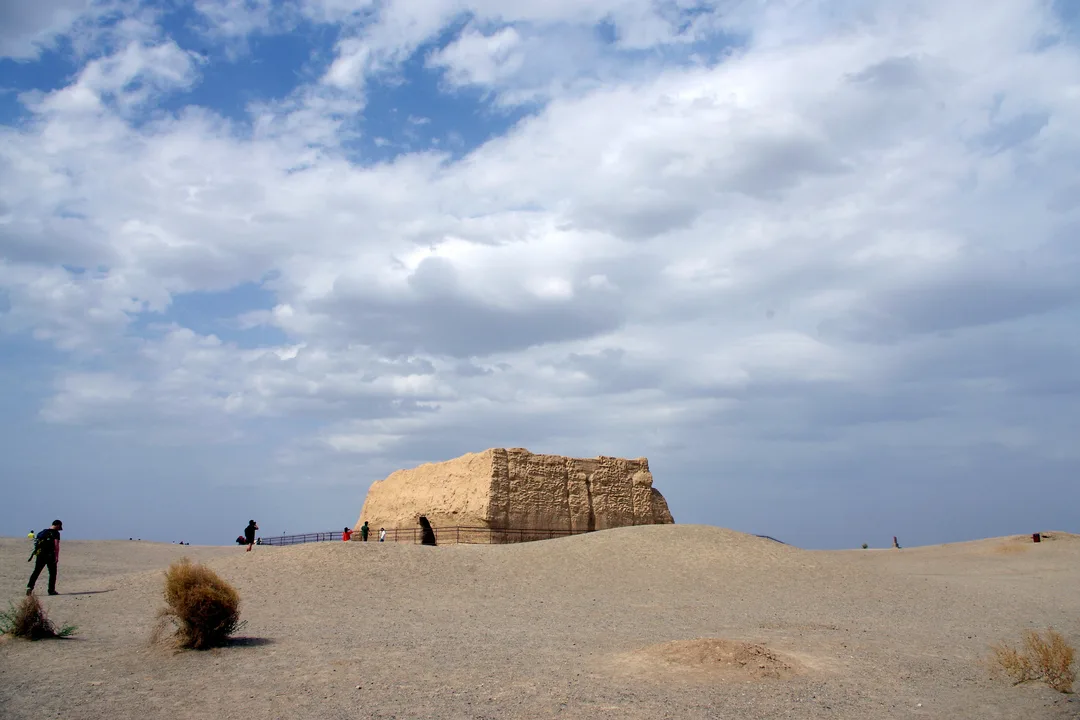
Yumen Pass (Jade Gate Pass)玉门关
Yumen Pass, the Han western customs post founded around 111 BC, guards the Gobi 90 km west of Dunhuang — Small Square City fort, Han Great Wall, UNESCO 2014.
Dunhuang · Visitor Guide2026-10-19
Quick Answer
Is Yumen Pass (Jade Gate Pass) worth visiting?
A 2,100-year-old rammed-earth frontier post 90 km northwest of Dunhuang, marking where the Han empire's Silk Road ended and the Western Regions began.
Quick facts
| Ticket | Approx. CNY 40 (as of 2026, verify on site). Usually visited as part of a chartered-car loop with Yardang Geological Park, whose entry is sold separately. |
|---|---|
| Hours | Roughly 08:00–18:00, extending later in summer (verify). Check before going in winter, when hours shorten. |
| Recommended duration | 1–2 hours on site; 8–10 hours as part of a combined Yumen Pass + Yardang day trip from Dunhuang. |
| Best time to visit | September–October — mild and less windy. May–June is workable. Avoid midsummer (40°C+, no shade) and the spring sandstorm season (March–May), which can close the road. |
| How to get there | No metro in Dunhuang. The pass is about 90 km northwest of the city off provincial road S314 — roughly 1.5 hours by chartered car, usually combined with Yardang Geological Park. Buses to Yumen city do not serve the gate. |
| English signage | Partial |
| Wheelchair accessible | |
| Founded | ~111 BC, Western Han Dynasty (Emperor Wu) |
| Distance from Dunhuang | ~90 km northwest, ~1.5 hr drive |
| UNESCO | Inscribed 2014 — Silk Roads: Chang'an–Tianshan Corridor (#1442) |
| Main ruin | Small Square City fort, ~24 × 26 m, walls up to ~10 m high |
| Name origin | Khotanese jade from the Kunlun Mountains entered Han China through this pass |
| Other on-site ruin | Hecang granary (河仓城), ~3 km away |
What to expect
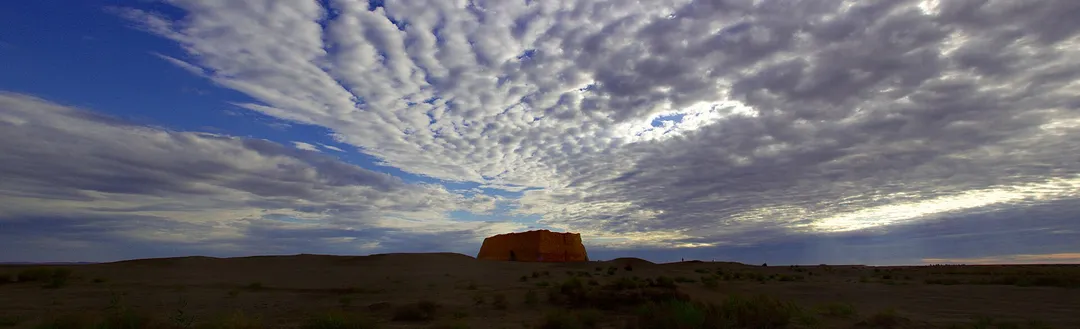
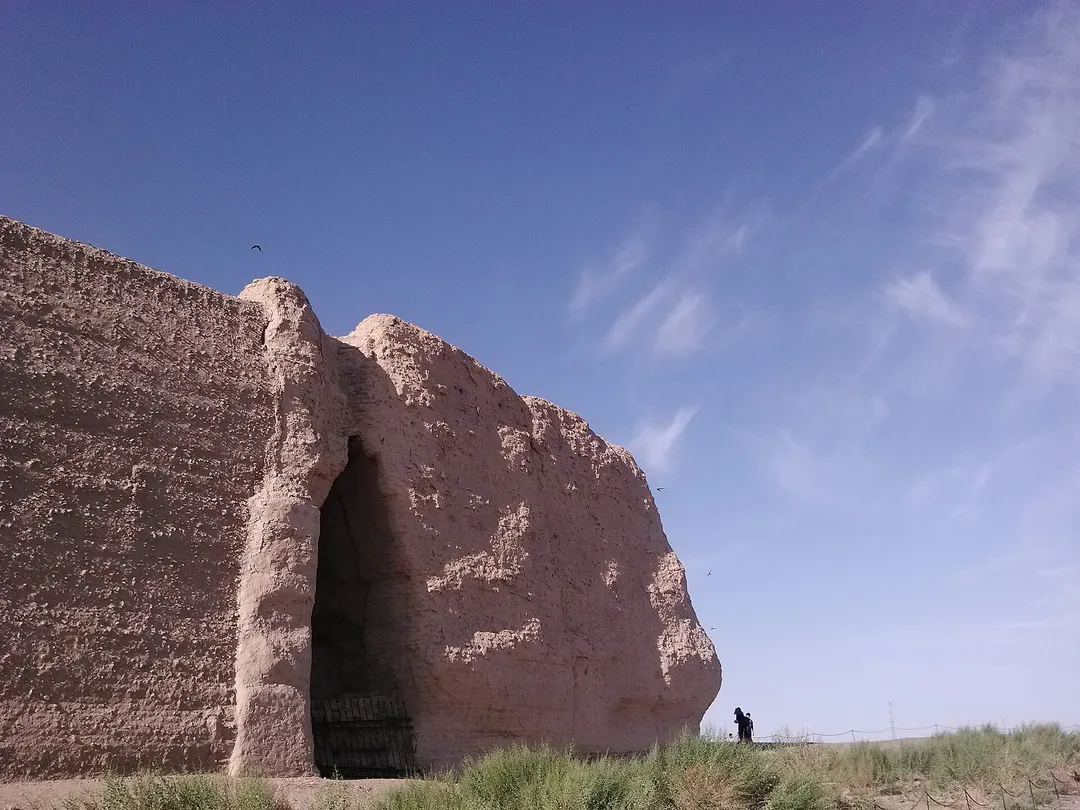
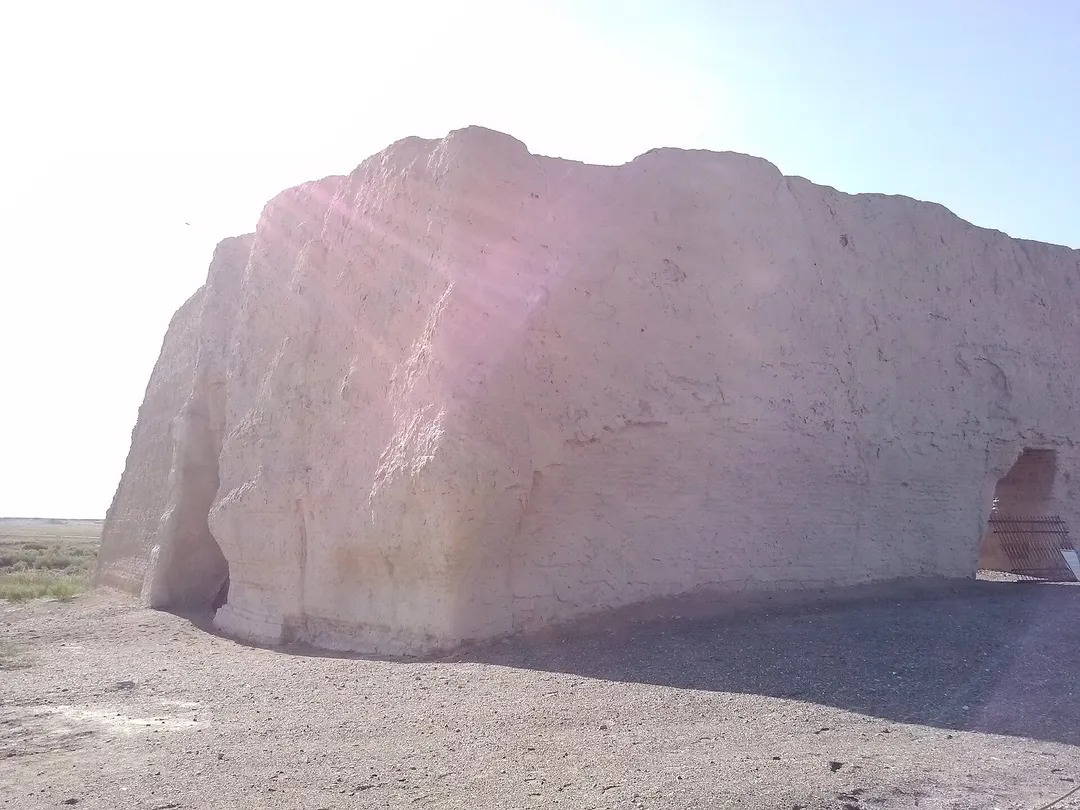
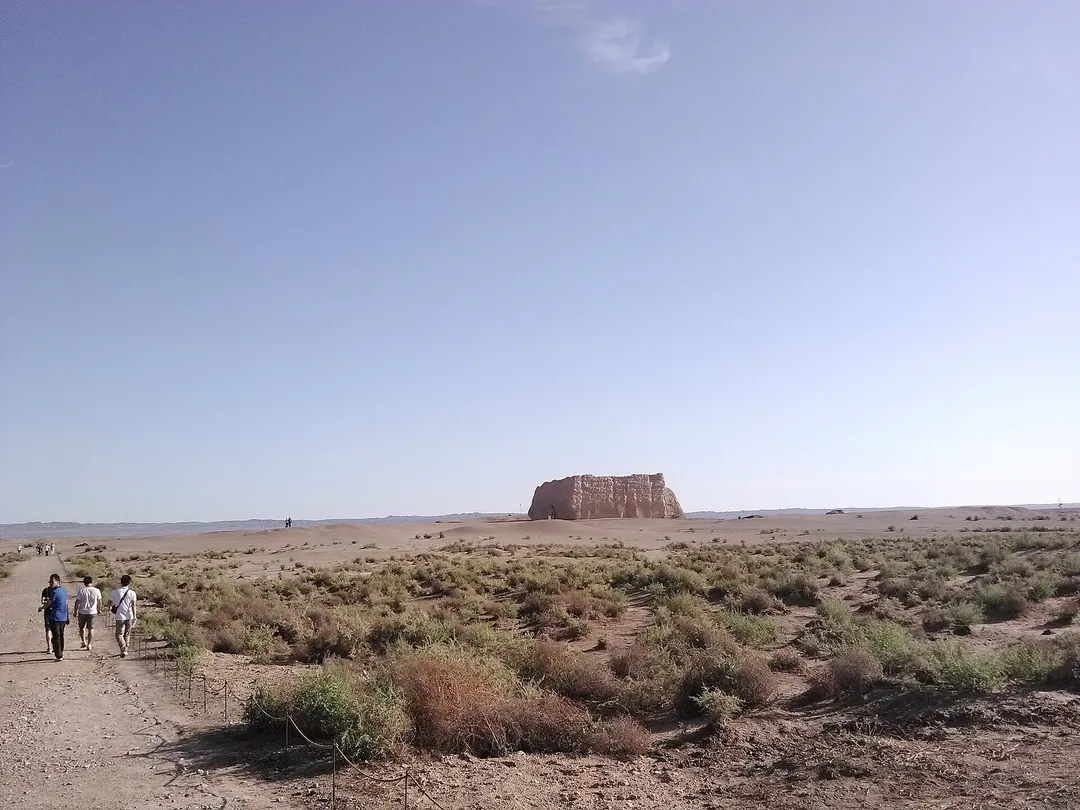
You drive 90 km of Gobi road northwest out of Dunhuang, cross flat gravel desert, and reach a parking lot fronted by a modern stone marker reading 玉门关. The actual monument is a rectangle of rammed earth — the Small Square City (小方盘城) — about 24 by 26 metres, with walls still standing close to 10 metres high in places. Around it sit low dunes, a couple of reconstructed beacon towers, and fragments of Han-era wall trailing off toward the horizon. There is no real visitor centre, almost no shade, and only a couple of bilingual boards for interpretation. Expect wind, dust, and a great deal of empty space.
Founded around 111 BC under Emperor Wu after the Han broke Xiongnu power in the Hexi Corridor, Yumen Pass served for roughly three centuries as the western customs gate of the empire — the line where Silk Road caravans were inspected, taxed, and either waved into China or sent on into the Western Regions. Its name comes from the Khotanese jade that passed through it from the Kunlun Mountains. It pairs with Yang Pass (阳关), about 60 km south, as the two gates of Dunhuang. The Tang poet Wang Zhihuan made the place immortal with 春风不度玉门关 — 'the spring wind never crosses Yumen Pass' — turning a customs post into shorthand for exile and the edge of the known world. In 2014 it was inscribed on the UNESCO World Heritage list as a component of the Silk Roads: Routes Network of Chang'an–Tianshan Corridor.
Honestly, as a building it underwhelms: a 2,000-year-old mud box in the desert. Come expecting grand architecture and you'll be disappointed; come to stand where the Han empire effectively ran out of road and it lands. Nearly everyone combines it with Yardang National Geology Park (雅丹) further west, doing both in a single long day out of Dunhuang rather than driving the 90 km twice. Carry water and sun cover — there is nothing to buy out there — and time your visit for late afternoon for softer light and thinner crowds. Skip July and August unless 40°C heat with zero shade appeals to you.
How to get there
No metro — Dunhuang is a small county-level city with no rail transit. From Dunhuang city centre, take provincial road S314 northwest for about 90 km (roughly 1.5 hours each way). Options: (1) Chartered car or DiDi for the full-day Yumen Pass + Yardang loop, typically 400–600 RMB — agree the total price and waiting time before you set off. (2) Hotel-arranged shared minibus, around 100–150 RMB per person, but schedules are rigid and you share the site with a loudspeaker tour group. (3) Public bus is impractical; the once-daily rural service does not sync with sightseeing. If you only want Yumen Pass and not Yardang, a one-way taxi is poor value because the driver has to deadhead back empty — charter the car for the whole day instead.
Best photo spots
- The Small Square City fort from the southeast corner, the long shadow of the wall stretching into the Gobi at golden hour
- The reconstructed Han beacon tower with open Gobi and the distant ridgeline behind it
- A low-angle shot along the surviving Great Wall fragment as it tapers into the desert
- The modern 玉门关 stone marker at the entrance — basic, but the standard 'I was here' frame
- The Hecang (河仓城) granary ruins about 3 km away — fewer crowds, more dramatic decay
Tips
- Pair Yumen Pass with the Yardang Geological Park in one chartered day trip — driving the 90 km route twice wastes time and money.
- Bring at least 2 litres of water and a wide-brimmed hat; there is no shade on site and no reliable kiosk.
- Go in the late afternoon for better light and thinner tour groups — but confirm winter closing times before setting out.
- Roads can close during spring sandstorms (March-May); check the forecast and ask your hotel before booking a car.
- Read Wang Zhihuan's famous poem and some Han frontier history before you go — otherwise the site is just mounds of earth; there is no museum or audio guide.
Scams to avoid
- Taxi and tout drivers quoting 800–1,000 RMB for a 'private day tour' that should run around 500 RMB — compare at least two quotes and confirm whether the Yardang entry fee is included.
- Self-styled 'guides' at the entrance charging 100–200 RMB to walk you around a fort you can read about yourself in 10 minutes; the site is small.
- Horse and camel ride touts near the parking area pushing overpriced photo ops — the animals have nothing to do with the Han-era site.
Frequently asked questions
How far is Yumen Pass from Dunhuang city?
About 90 km northwest of Dunhuang, a roughly 1.5-hour drive each way along provincial road S314.
How much is the entrance ticket?
Around 40 RMB (as of 2026, verify). It is usually visited as part of a chartered-car loop with Yardang National Geology Park, whose entry is sold separately.
Can I reach Yumen Pass by public bus?
Not practically. There is a rural service but its schedule does not match sightseeing hours. Charter a car or join a hotel-arranged minibus instead.
How long should I spend at the site?
1–2 hours on site is plenty. The full Yumen Pass plus Yardang day trip from Dunhuang runs 8–10 hours including driving.
Why is it called the Jade Gate?
Jade mined in Khotan (Hotan), south of the Kunlun Mountains, was carried through this pass into Han China, so the customs post took its name from the trade.
Is Yumen Pass a UNESCO World Heritage Site?
Yes. It was inscribed in 2014 as part of 'Silk Roads: the Routes Network of Chang'an–Tianshan Corridor' (UNESCO list entry #1442).
When was Yumen Pass built?
Around 111 BC, during the reign of Emperor Wu of the Western Han, after the Han secured the Hexi Corridor from the Xiongnu.
What can I actually see there?
The Small Square City fort (rammed earth, roughly 24 × 26 m, walls up to ~10 m), fragments of Han Great Wall and beacon towers, and the Hecang granary ruins (河仓城) a few kilometres away.
What is the best time of year to visit?
September to October — mild and less windy. May to June is acceptable. Avoid midsummer (40°C+) and the spring sandstorm season.
Is it worth visiting if I have already seen the Mogao Caves?
Different animal entirely — Mogao is art and devotion; Yumen Pass is frontier geography and the edge of empire. Worth it for history-minded travellers, skippable if ruins bore you.
Read next
Other things to do in Dunhuang
Mingsha Mountain & Crescent Moon Spring
A 40 km belt of singing sand dunes rising ~200 m above the Gobi, with a spring-fed crescent lake at the base that has held water for at least 1,000 years.
Mingsha Sand Dunes & Crescent Moon Lake
Singing sand dunes and a spring-fed crescent lake in the Gobi Desert. Sunset camel rides, sandboarding. 5 km from Dunhuang. ¥120. Half-day to full day.
Mogao Caves
492 cave temples carved into a desert cliff — the world's greatest repository of Buddhist art spanning 1,000 years on the ancient Silk Road. ¥238. Book weeks ahead.
Mogao Caves
A 1,600-year-old cliff-face complex of 492 painted Buddhist cave-temples holding 45,000 m² of murals and about 2,400 clay statues, 25 km southeast of Dunhuang.
Yardang National Geopark
Wind-carved rock spires spread across ~346 km² of Gobi, 180 km northwest of Dunhuang. ¥190 (entrance + shuttle).
Museums in Dunhuang
Dunhuang Museum
The essential Silk Road context museum before visiting Mogao Caves. Free entry. Rich collection of Han Dynasty wooden slips, Silk Road coins, and Mogao replica caves. Allow 1.5–2 hours.
Dunhuang Academy Research Center
The research institute for the Mogao Caves in Dunhuang, holding definitive Buddhist art manuscripts, paintings and artifacts plus cave conservation history; verified in 2026.