Dunhuang · history museum
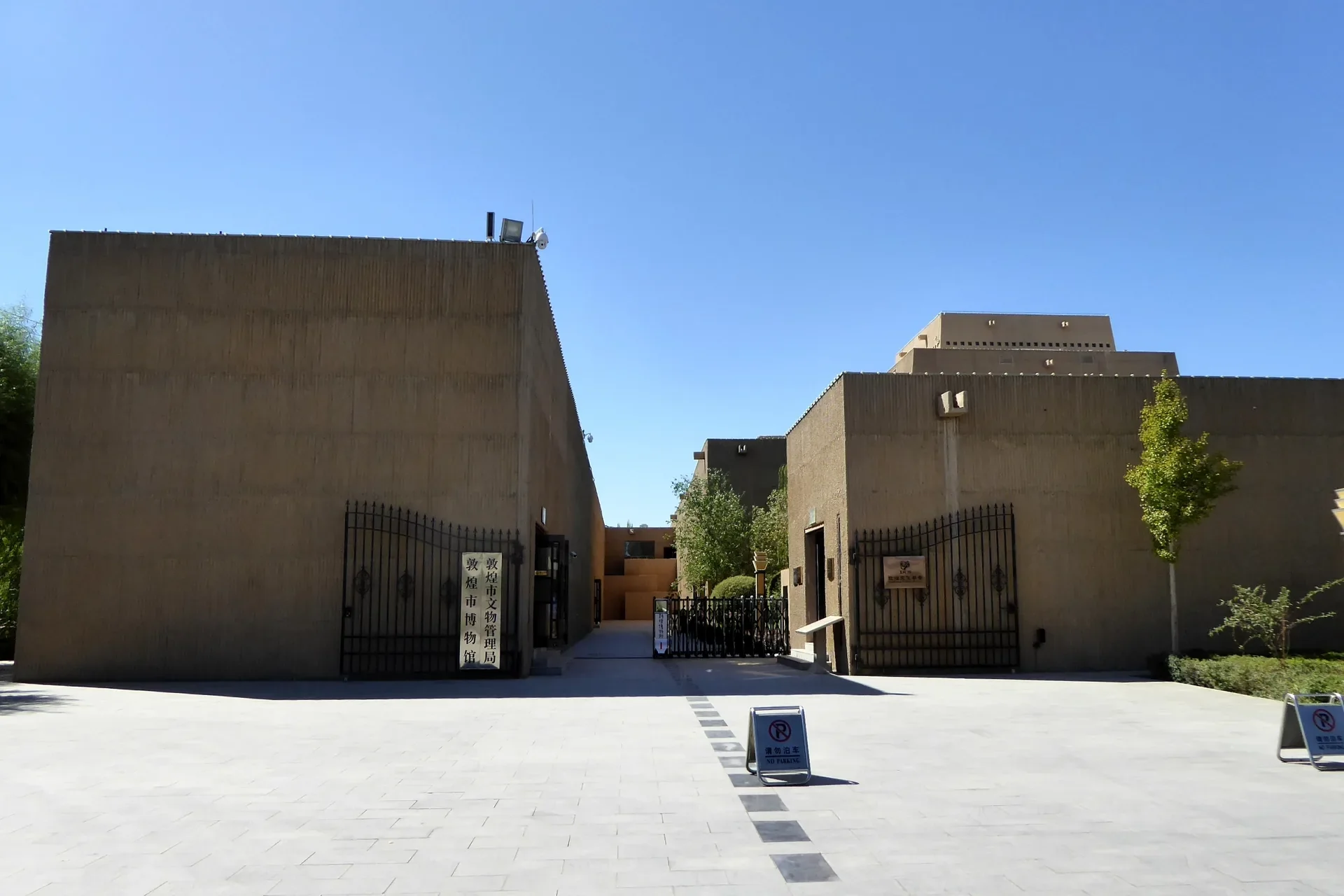
Dunhuang Museum (敦煌博物馆, Dūnhuáng Bówùguǎn)
"The Dunhuang Museum is the city's excellent — and free — Silk Road history museum, providing essential context for visits to the Mogao Caves. Its collection focuses on the history of Dunhuang as a Silk Road oasis, with artifacts spanning the Han Dynasty (when Dunhuang was founded as a military garrison in 111 BC) through the Yuan Dynasty (when the Silk Road declined). The museum houses a substantial collection of Han Dynasty wooden slips (the paper of their time), Silk Road trade goods, Buddhist art, and a full-scale replica of a Mogao cave (Cave 45) for visitors who cannot access the real caves.".
Last updated:
Quick Answer
Is Dunhuang Museum worth visiting?
"The essential Silk Road context museum before visiting Mogao Caves. Free entry. Rich collection of Han Dynasty wooden slips, Silk Road coins, and Mogao replica caves. Allow 1.5–2 hours.".
Quick facts
| Category | history |
|---|---|
| Ticket | Free. Passport required. No reservation needed — walk in. |
| Hours | 9:00-17:30 (Apr-Oct), 9:00-17:00 (Nov-Mar). Closed Mondays. |
| Recommended duration | 1.5-2 hours. |
| Best time to visit | Morning, before your Mogao Caves visit. The museum is rarely crowded — even in peak season (July-October) it is manageable. |
| How to get there | In central Dunhuang, on North Yangguang Road. 10-minute walk from the Dunhuang Hotel area. Bus route 3 stops outside. DiDi from anywhere in town is ¥10-15. |
| English signage | partial |
Why visit
Visit this museum BEFORE the Mogao Caves — it provides the historical framework that makes the caves meaningful rather than merely beautiful. The replica cave lets you photograph freely (photography is banned in the real caves).
Collection highlights
- Han Dynasty wooden slips (汉简) — thousands of bamboo and wooden documents recording military dispatches, grain accounts, and personal letters from Dunhuang garrison soldiers 2,000 years ago
- Full-scale replica of Mogao Cave 45 — the "Sutra Illustration Cave" with exquisite Tang Dynasty painted sculptures and murals, photographable
- Silk Road coin collection — Sasanian Persian silver drachms, Byzantine gold solidi, and Tang Dynasty bronze coins, evidence of Dunhuang's position as an international trading hub
- Tang Dynasty silk fragments — remarkably preserved textiles with Sogdian and Persian motifs
- Brick relief tiles from local Han Dynasty tombs — farming scenes, ox-carts, and banquets in miniature
Tips
- Spend 1.5 hours here before your Mogao Caves visit — it will dramatically improve your understanding of what you see in the caves
- The replica of Cave 45 is the best place in Dunhuang to take cave photographs — use it, because photography in the real Mogao Caves is strictly prohibited
- The museum is small and digestible — it does not overwhelm like the big provincial museums
- English signage exists but is inconsistent — download the Google Translate camera function or Pleco for the Chinese-only panels
- The museum shop sells good-quality replica Silk Road coins at ¥30-80
Frequently asked questions
Should I visit the Dunhuang Museum before or after the Mogao Caves?
Before — ideally the day before or the morning of your Mogao Caves visit. The museum explains the history of Dunhuang as a Silk Road garrison town and trading hub, which makes the cave art much more meaningful. The replica cave also helps you understand what to look for in the real caves.
Is the Dunhuang Museum free?
Yes, completely free. No reservation required. Bring your passport for registration at the entrance. It is one of the best free museums in western China.
How does the Dunhuang Museum compare to the Mogao Caves Visitor Center?
The Mogao Caves Digital Exhibition Center (visitor center) shows two films about the caves and Silk Road history — it is mandatory before your cave tour. The Dunhuang Museum is separate, focusing on the broader history of Dunhuang as a city and region. Both are valuable; the visitor center prepares you for the caves specifically, while the museum gives you the full historical picture.
How long do I need at the Dunhuang Museum?
1.5 hours at a comfortable pace. 2 hours if you read every panel and examine the coin collection closely. It is a small museum by Chinese standards — two floors, about 5,000 sq m of exhibition space.
Can I take photos at the Dunhuang Museum?
Yes — photography without flash is permitted throughout, including in the replica cave. This is the one place in Dunhuang where you can freely photograph high-quality Buddhist cave art.
What else can I see in Dunhuang besides the Mogao Caves?
The Mingsha Sand Dunes and Crescent Moon Spring (鸣沙山月牙泉), the Yumen Pass (玉门关) and Han Dynasty Great Wall ruins, the Yadan National Geological Park (ghost city rock formations), and the Dunhuang Night Market for excellent lamb skewers and local dried fruit. All are within 1-2 hours of town.
Read next
Other things to do in Dunhuang
Mingsha Mountain & Crescent Moon Spring
A 40 km belt of singing sand dunes rising ~200 m above the Gobi, with a spring-fed crescent lake at the base that has held water for at least 1,000 years.…
Mingsha Sand Dunes & Crescent Moon Lake
"Singing sand dunes and a spring-fed crescent lake in the Gobi Desert. Sunset camel rides, sandboarding. 5 km from Dunhuang. ¥120. Half-day to full day.".
Mogao Caves
"492 cave temples carved into a desert cliff — the world's greatest repository of Buddhist art spanning 1,000 years on the ancient Silk Road. ¥238. Book weeks ahead.".
Mogao Caves
A 1,600-year-old cliff-face complex of 492 painted Buddhist cave-temples holding 45,000 m² of murals and about 2,400 clay statues, 25 km southeast of Dunhuang.…
Yardang National Geopark
Wind-carved rock spires spread across ~346 km² of Gobi, 180 km northwest of Dunhuang. ¥190 (entrance + shuttle).…