This page is archived and no longer updated — see the current guide: See the current guide
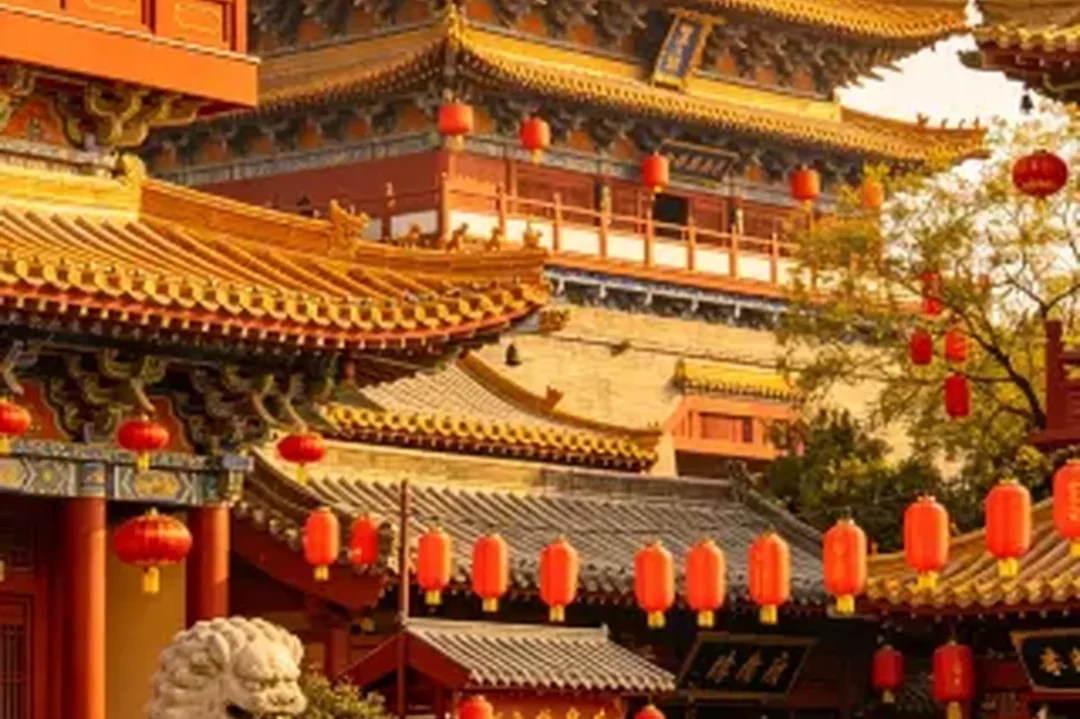
Yanqing Temple延庆观
Yanqing Temple stands near Bao Gong Lake in Kaifeng and is one of the three ancestral monasteries of Quanzhen Taoism, ranked with Beijing's White Cloud Temple and Shanxi's Yongle Palace. Founded in the Jin dynasty to commemorate Ma Yu, a disciple of founder Wang Chongyang, it blends Taoist and Mongolian architectural elements.
Kaifeng · Visitor Guide2026-10-19
Quick Answer
Is Yanqing Temple worth visiting?
One of the three ancestral Quanzhen Taoist temples, founded around 1242 in Kaifeng; entry 30 yuan, students 15 yuan, open 08:00-18:00, its halls blending Taoist and Mongolian yurt styles.
Quick facts
| Ticket | Adults ¥30; students and seniors ¥15 |
|---|---|
| Hours | 08:00-18:00 |
| Recommended duration | 1-1.5 hours |
| Best time to visit | Year-round |
| How to get there | City buses to the Yanqing Guan or Baogong Ci stops |
| English signage | Partial |
| Wheelchair accessible | Partial |
| First built | Jin dynasty (around 1242) |
| Religion | Quanzhen Taoism |
| Status | One of the three ancestral Quanzhen monasteries |
| Commemorated figure | Ma Yu (disciple of Wang Chongyang) |
| Architecture | Taoist halls fused with Mongolian yurt forms |
| Literary tie-in | Mentioned in Jin Yong's Legend of the Condor Heroes |
What to expect
Yanqing Temple was first built in the Jin dynasty under the name Chongyang Guan, an important Quanzhen Taoist monastery. Quanzhen (Complete Perfection) is a major school of Chinese Taoism founded by Wang Chongyang and carried forward by Qiu Chuji; this temple honors Ma Yu (style name Danyangzi), one of Wang's disciples.
The temple's most distinctive feature is its architecture. The main Jade Emperor Pavilion combines Han Chinese and Mongolian styles — an octagonal base crowned by a yurt-shaped dome — and is the only surviving Taoist building of this hybrid style in China.
Jin Yong's novel The Legend of the Condor Heroes mentions Yanqing Temple, adding a literary layer to its Taoist significance.
How to get there
City buses 15, 20, and others stop at Yanqing Guan or Baogong Ci, each about a 5-minute walk away; the site is roughly 10 minutes by car from Kaifeng railway station.
Best photo spots
- Panorama of the Jade Emperor Pavilion (Taoist-Mongolian hybrid)
- The octagonal pavilion base
- Old trees in the courtyards
- The Taoist culture exhibition
- The caisson ceiling inside the pavilion
Tips
- Compact site — about an hour covers it
- Easy to combine with Bao Zheng Temple and Bao Gong Lake
- Worthwhile if you are interested in Taoist culture
Scams to avoid
- No notable scam risk
Frequently asked questions
How does Yanqing Temple relate to Bao Zheng Temple?
They are very close (about a 5-minute walk) and easy to visit together. One is a Taoist monastery, the other a memorial temple to Bao Zheng — completely different in style.
Is the Yanqing Temple in The Legend of the Condor Heroes real?
The novel's version is literary fiction, but Kaifeng's Yanqing Temple is a real Quanzhen monastery with a long history.
What is special about the architecture?
The Jade Emperor Pavilion fuses Han and Mongolian styles — an octagonal base under a yurt-shaped dome — the only surviving Taoist building of this kind in China, with considerable research value.
Read next
Other things to do in Kaifeng
Kaifeng City Wall
One of China's best-preserved ancient city walls, running 14 km; the southeastern section is open for walks along the top.
Bao Zheng Temple
Memorial temple to Song-dynasty judge Bao Zheng in Kaifeng, first built in the Jin dynasty 800 years ago and rebuilt in 1984; entry 30 yuan, students 15 yuan, open 8:00-18:00.
Fan Pagoda
Kaifeng's oldest surviving building, begun in 976 — a hexagonal six-story brick pagoda about 36 m tall and a treasure of Song architecture. Grounds free; the relics office charges CNY 10.
Kaifeng Prefecture
Rebuilt in 2003 as a replica of the Northern Song's chief prefecture in Kaifeng, covering about 2.6 hectares; entry 65 yuan, students 35 yuan, open 08:00-18:30.
Longting Park
Qing-dynasty imperial garden on the site of the Northern Song palace in Kaifeng, its 30-metre hall of 1692 rising above 72 steps; entry 50 yuan, students 25 yuan, open 7:00-19:00.