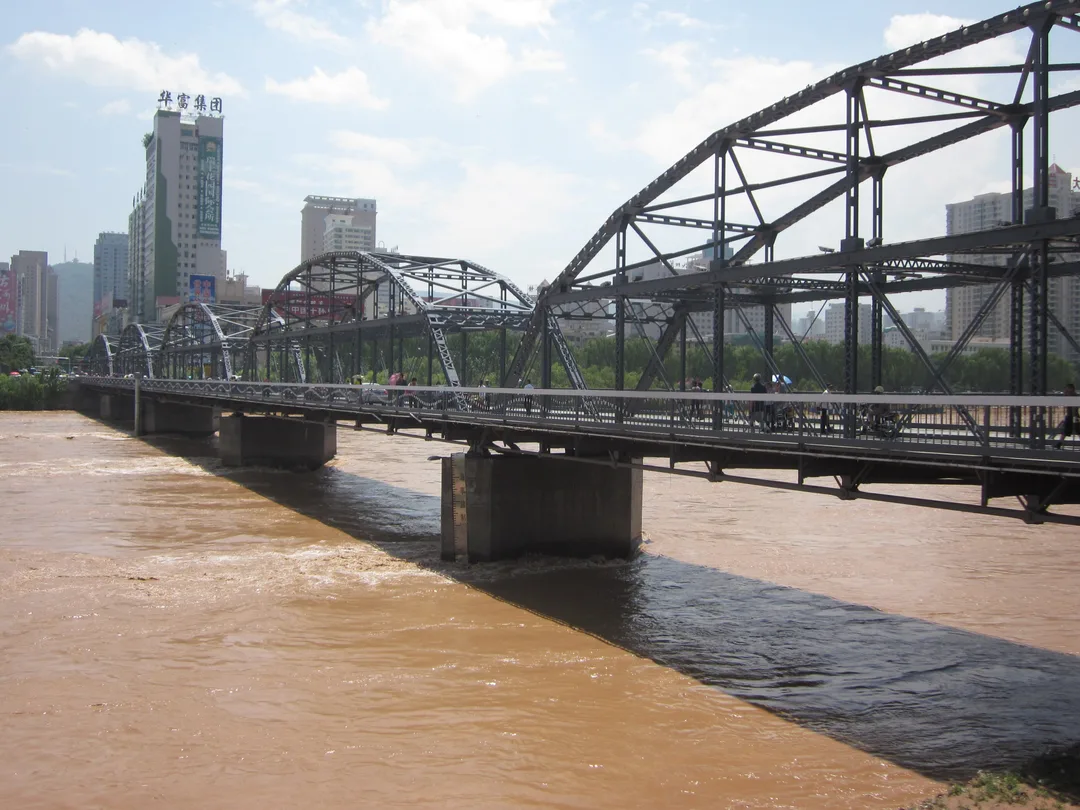
Zhongshan Bridge (Lanzhou)中山桥
Zhongshan Bridge (中山桥) is the classic of Lanzhou: a 1907 steel-truss crossing built with German engineering and materials hauled up the Yellow River, honored as the 'First Bridge over the Yellow River' and for decades the only permanent crossing in the city. Painted a striking red against the silt-heavy river, it served carts and travelers until 2004, when it became a pedestrian monument; today it links the southern riverside promenade to White Pagoda Hill (白塔山) park across the water, and the crossing at sunset — river churning below, pagoda above — is Lanzhou's signature hour. Free and open around the clock, it takes 30–60 minutes and pairs naturally with the beef-noodle breakfast streets, the Yellow River mother sculpture and the waterwheel garden on the same riverside.
Lanzhou · Visitor Guide2026-11-17
Quick Answer
Is Zhongshan Bridge (Lanzhou) worth visiting?
Lanzhou's 'First Bridge over the Yellow River' — a 1907 steel-truss bridge built with German engineering, now pedestrian-only, linking the riverside promenade to White Pagoda Hill.
Quick facts
| Ticket | Free — open pedestrian bridge. |
|---|---|
| Hours | Open around the clock; the bridge is lit into the evening (to roughly 23:00) and busiest at sunset. |
| Recommended duration | 30–60 minutes: the crossing, the promenade and White Pagoda Hill park; 2–3 hours with the hill climb. |
| Best time to visit | Sunset into evening lights; spring and autumn for comfortable riverside walking. Winter gives an icy, dramatic river; summer evenings fill the promenade. |
| How to get there | In central Lanzhou on the riverside — Metro Line 1 to Xiguanguan/Xiguan Shizi area, then a short walk; buses along Binhe Road stop nearby. The bridge is walkable from the city-center hotels and the riverside attraction strip. |
| English signage | Partial |
| Wheelchair accessible | Yes |
| Built | 1907 (Qing dynasty, German engineers and steel) |
| Title | 'First Bridge over the Yellow River' (天下黄河第一桥) |
| Status | Pedestrian-only since 2004 |
| Entry | Free, open around the clock |
| Pairing | White Pagoda Hill park directly across the river |
What to expect
Zhongshan Bridge is Lanzhou's founding image: commissioned in 1907 under the late Qing and assembled from German steel and engineering shipped laboriously upriver, it became the first permanent bridge across the Yellow River and, for decades, the only crossing in Lanzhou. The paint is a striking red against the brown, silt-heavy river; the trusses carry plaques and the story of camels, carts and machine parts hauled over ice roads; and in 2004 the bridge retired from traffic to become the pedestrian monument it is now — the walk every visitor to Lanzhou takes at least once.
The crossing works as a straight line between two symbols: on the south bank, the riverside promenade with its teahouses, the Yellow River Mother sculpture and the old waterwheel garden; on the north bank, White Pagoda Hill park climbing past pavilions to the white pagoda with the best city-river panorama, with a zip line descending back to the riverbank for those who want the shortcut. The bridge is lit after dark, the promenade fills with strollers and singers, and the river — always yellow, always moving — keeps the whole scene honest.
Practically, the bridge is a 30–60-minute free stop in central Lanzhou and the anchor of the riverside strip: start with a beef-noodle breakfast south of the river, walk the promenade, cross at sunset, climb White Pagoda Hill for the dusk panorama, and come back after the lights. Metro Line 1 and the Binhe Road buses make it easy; the crossing itself is step-free and wheelchair-accessible.
How to get there
Metro Line 1 to the Xiguanguan/Xiguan Shizi area or a Binhe Road bus, then a short walk to the riverside; the bridge sits directly between the southern promenade and White Pagoda Hill park. Walkable from central Lanzhou hotels.
Best photo spots
- The red truss lit at dusk with the pagoda behind
- Yellow River rapids churning under the bridge deck
- White Pagoda framed by the bridge from the south bank
- The riverside promenade's evening strollers and lanterns
Tips
- Cross at sunset and climb White Pagoda Hill — come back after the bridge lights switch on
- Pair with a beef-noodle breakfast in the streets south of the river for the complete Lanzhou ritual
- The bridge is pedestrian-only: boats and taxis cannot save you the walk, which is the point
- The riverside strip (Mother sculpture, waterwheel garden) runs along the same promenade — fold them into one walk
- Evening is when Lanzhou performs: singers, strollers and the lit bridge together
Scams to avoid
- Boat touts at the promenade steps quoting per-photo instead of per-cruise rates — settle terms before boarding
- Unofficial 'bridge history' guides charging near the plaques — the plaques read fine on their own
- Souvenir stalls selling 'German steel bolts' from the bridge — leave the fiction at the stall
Frequently asked questions
Is Zhongshan Bridge free?
Yes — the bridge is a free pedestrian monument, open around the clock and lit into the evening.
How old is it?
Built in 1907 under the late Qing with German engineering and steel — the first permanent bridge across the Yellow River.
Can cars cross?
No — the bridge has been pedestrian-only since 2004; crossing it on foot is the Lanzhou ritual.
What pairs with the crossing?
White Pagoda Hill park directly on the north bank, plus the riverside strip — the Yellow River Mother sculpture and the waterwheel garden — on the south.
How do I reach it?
Metro Line 1 to the Xiguanguan/Xiguan Shizi area or a Binhe Road bus, then a short walk to the riverside.
Read next
Other things to do in Lanzhou
Baita Park
The hillside park across the Yellow River from Zhongshan Bridge: pavilions and a Yuan-era white pagoda on a 200-meter climb (or cable car) — Lanzhou's best panorama at dusk.
Lanzhou City Markets & Night Markets
Lanzhou's market circuit — the Zhengning Road night market (from 18:00) and the Dazhong Alley food lane, walkable from Xiguan — free, loud and delicious; give it 2–3 hours.
Gansu Provincial Museum
Gansu Provincial Museum — free home of the Bronze Galloping Horse, China's national tourism symbol, with Silk Road galleries and Han wooden slips. Reserve 3 days ahead on WeChat; closed Mondays.
Hekou Ancient Town
Lanzhou's best-preserved river-port old town, at the confluence of the Yellow River and the Huangshui. Free entry to the streets; 2–3 hours, best at golden hour by the water.
Lanzhou Ink-Wash Danxia
Vast danxia badland of grey, black and ochre brush-painted ridges half an hour northwest of downtown Lanzhou in Yongdeng county. Entry+shuttle about CNY 80; 2–3 hours; Lanzhou's marquee sight.
Lanshan Park
Lanzhou's mountaintop balcony — free park rising from Wuquanshan's flank to the Sanshange pavilion on Gaolan Mountain (2,129 m), with the city's definitive Yellow River night view.
Lu Tusi Yamen (Liancheng)
China's largest and best-preserved tusi (native chieftain) compound. Yamen, Miaoyin Temple and chieftain's garden in one walled complex, ~2.5 hours' drive from Lanzhou; 2–3 hours on site.
Qingcheng Ancient Town (Yuzhong)
Lanzhou's heritage river town on the south bank of the Yellow River. Combined ticket ~¥30; 2–3 hours, best on a golden-hour walk by the river.
Shichuan Ancient Pear Orchard
The 'world's first ancient pear orchard' on a Yellow River bend in Gaolan County — nearly 10,000 century-old trees in a 600-year farming system, FAO-listed in 2025. Free; 1 hour from Lanzhou.
Tulugou National Forest Park
Lanzhou's green escape in the Qilian foothills — a gorge park of fir forests, waterfalls and grotesque rock towers in Yongdeng county, about 110 km northwest of the city.
Lanzhou Waterwheel Expo Garden
Giant Ming-era-style wooden waterwheels lifting Yellow River water on Lanzhou's riverside promenade — free 4A park on the Yellow River scenic line. Free; 1–2 hours.
White Pagoda Hill
The hill across the Yellow River from Zhongshan Bridge. Free; summer 6:00–21:30, winter 7:00–20:00; 2–3 hours.
Wuquan Mountain Park
Lanzhou's free temple-and-spring hillside. Free (4A, national relic); 2–3 hours.
Xinglong Mountain National Nature Reserve
A twin-peak forested reserve in Yuzhong county an hour southeast of Lanzhou — the 'First Mountain of Longyou', shelter of Genghis Khan's coffin in 1939. Tickets CNY 30–40 per peak; half a day.
Yellow River Mother Sculpture
Lanzhou's signature riverside monument — a 40-ton red-granite Mother and Child by sculptor He E (1986) that has become the emblem of the Yellow River itself. Free riverside stop; 20–40 minutes.
Yellow River Scenic Line
Roughly 40 km of riverside parks threading through Lanzhou along the Yellow River — the 1909 Zhongshan Bridge, the Yellow River Mother sculpture, and Ming-era waterwheels. Half to full day.
Zhengning Road Night Market
Lanzhou's most storied night market, running since 2008: milk-and-egg fermented-rice (the TV-famous 'Lao Ma' bowls), roast lamb, and northwestern snacks in Chengguan district.
Zhongshan Bridge
The Yellow River's first iron bridge (1907) — now a pedestrian promenade, famous red structure spanning China's second-longest river in central Lanzhou. Free. 30 minutes.
Zhongshan Bridge
Lanzhou's "First Bridge over the Yellow River": a 1907 German-built steel truss, pedestrian-only now, linking the riverside promenade to Baita Mountain Park — best at sunset.