Heyuan at a Glance
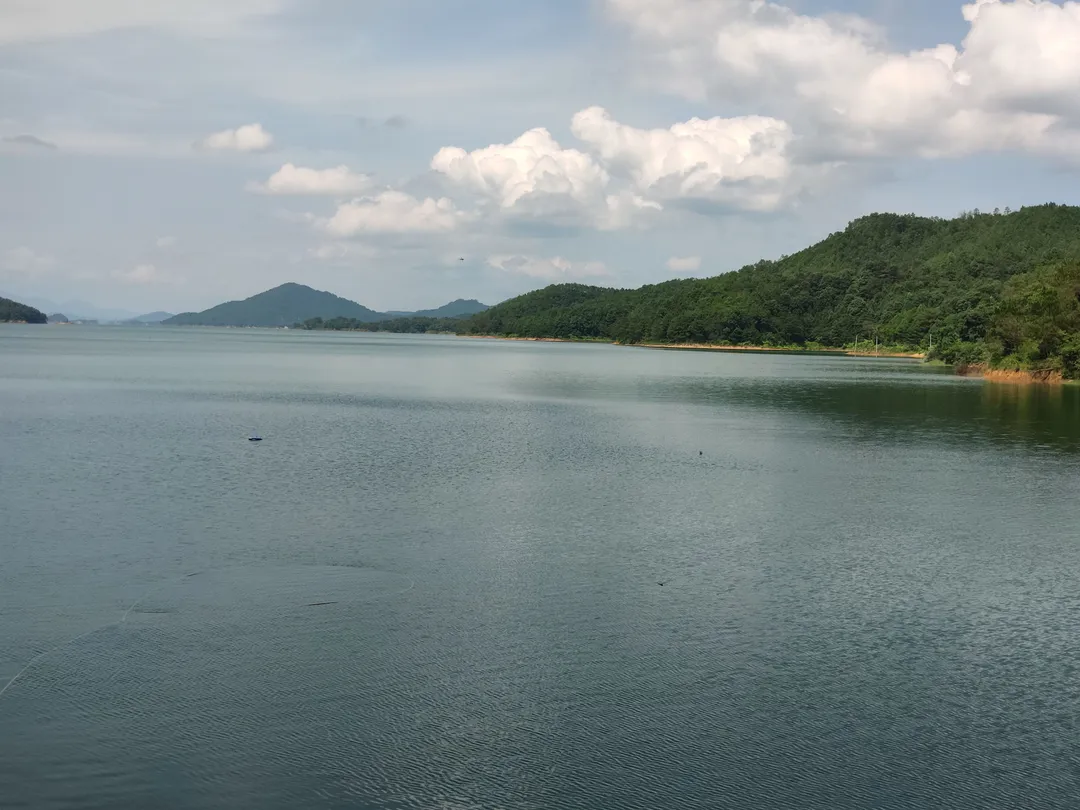
Heyuan is a Hakka city in northeastern Guangdong on the Dongjiang river, about 2 hours from Shenzhen by high-speed rail since the 2021 line opened, and it makes a focused 2-day trip — 3 if you add a village day. Its headline is Wanlü Lake, the reservoir behind the Xinfengjiang dam begun in 1958, which spreads over roughly 370 sq km of water and 360-plus green islands: a half-day boat loop through the bays, then the evening on the riverside. The surprise is the dinosaur hall — the city museum's egg fossils passed 10,000 specimens and set a Guinness record in 2004 — and the old Guifeng Pagoda, seven storeys raised in 1132, still watching the confluence where the Xinfeng meets the Dongjiang.
This guide gives you the order to see things in, the trains that get you there, and the costs: a mid-range day runs 500-1000 CNY per person including a 300-600 CNY hotel, and a backpacker can hold the line at 40.
Why Heyuan
Heyuan's argument is water plus heritage. The lake gives it the greenest big water in the Pearl River delta's orbit — the reservoir was built to flood-proof the delta and drowned two old county seats in the process — and the city kept the stories: the Hakka clans who re-founded themselves on the Dongjiang after the reservoir, the river villages with lineage houses intact, and a museum that accidentally became one of the world's great dinosaur-egg collections after road cuts in the red sandstone kept opening new nests.
The trade-offs are honest ones. Heyuan is a working city with a modest skyline; English signage is thin; and the top sights are spread — the lake, the museum and the villages each want a half-day. What you get is Guangdong at its greenest, at prices well below the delta, on a rail line that puts Shenzhen and Guangzhou within a day's loop — our Guangzhou guide and Huizhou guide bracket it on either side, and the Guangdong guide covers the province between them.
Wanlü Lake: the Reservoir of 360 Islands
Wanlü Lake (万绿湖, "the lake of ten thousand greens") is the reason the postcards exist. The dam at the Xinfeng river's mouth was begun in 1958 and flooded a valley so broad that the water now runs to the horizon in arms and coves; counts give it about 370 sq km of surface and 360-plus islands, most of them green to the waterline because the forest was left standing. Boat loops leave from the main pier and run half a day through two or three of the named bays.
Practical shape: take the morning boat, eat a river-fish lunch at the pier, and keep the afternoon for the lakeside parks — Guishan's secondary forest and the Yequgou stream trails run several degrees cooler than downtown, our trip data notes, worth a layer even in summer.
The Dinosaur Museum and Guifeng Pagoda
The Heyuan Dinosaur Museum is the strangest exhibit hall in Guangdong: its core collection is fossilized dinosaur eggs, over 10,000 of them, a count that earned a Guinness record in 2004 after construction cuts around the city kept opening new nests in the red sandstone. Skeletons and embryo fossils fill out the story, and the hall does not pretend to be more than it is — a single-subject museum done thoroughly.
Seven storeys away in height and eight centuries in age, Guifeng Pagoda (龟峰塔) has stood by the confluence since 1132, in the Southern Song; it remains the city's landmark silhouette and the best photo stop at dusk. Walk the riverside after: the embankment where the Xinfeng meets the Dongjiang is the city's evening promenade, lined with tea and BBQ stalls.
Sujiawei and the Dongjiang Villages
About 26 km east of downtown, Sujiawei (苏家围) is the river village that anchors the third day: a Su-family settlement lining the Dongjiang with 18 Ming-and-Qing houses, ancestral halls and old camphor trees. It is modest, walkable in an hour or two, and reads as the Hakka gentry version of village life — scholars' courtyards rather than fortress walls.
For fortifications, the 5-day plan adds Linzhai (林寨) and its 24 siqiaolou — the squat fortified manor houses the Hakka built against bandit years — a longer drive west of the river. Back in town, close the day at the city markets before the train from Heyuan East.
Day Trips: the Delta and the Hakka Interior
Heyuan sits at the hinge between the Pearl River delta and the Hakka uplands.
- Huizhou. West along the corridor, about an hour by rail: West Lake, monastery hills and the delta's laid-back middle city — see the Huizhou guide.
- Meizhou. North into the Hakka heartland, the dialect's home base — see the Meizhou guide.
- Guangzhou and Shenzhen. Both are about 2 hours away by the 2021 HSR line, which makes Heyuan a green two-day break from either — our Guangzhou guide has the big-city version.
The province-wide frame is in our Guangdong guide.
A Two-Day Plan (and a Third)
- Day 1 — the lake. Morning boat loop on Wanlü Lake, lunch at the pier, afternoon in the Guishan forest or along the quays, evening on the Xinfengjiang riverside.
- Day 2 — dinosaurs and the old tower. The dinosaur museum at opening, Guifeng Pagoda and the confluence walk after lunch, night markets downtown.
- Day 3 — the river village. Sujiawei's 18 houses and lineage halls in the morning, back for a market dinner and the evening train from Heyuan East.
Our 3-day Heyuan trip builder lays this out hour by hour, and the 5-day and 7-day versions fold in Guishan, Yequgou and the Linzhai stronghouses.
Getting There: HSR, Road and Local Transport
Heyuan East is the high-speed station on the line opened in 2021; the older Heyuan station keeps conventional trains. Downtown transport is taxis and DiDi; the lake gate is a short ride north, Sujiawei about 26 km east by road.
| Route | Time | Typical cost |
|---|---|---|
| Shenzhen → Heyuan East (HSR) | about 2 h | corridor fare |
| Guangzhou → Heyuan East (HSR) | about 2 h | corridor fare |
| Downtown → Wanlü Lake gate (road) | short ride | local bus or taxi fare |
| Downtown → Sujiawei (road) | about 1 h | taxi or chartered car |
| Taxi across downtown | 10-15 min | short fare |
Keep the Chinese name of your destination written down — drivers rarely read English.
Where to Stay
Stay downtown between the riverside and the station side: mid-range hotels in this band run about 300-600 CNY a night, business chains cluster near Heyuan East for early departures, and a lakeside resort night is the splurge that earns its keep in the morning quiet. Book two weeks ahead for the national holidays of early May and early October.
What to Eat in Heyuan
This is Hakka cooking country: salt-baked chicken, stuffed tofu (niang doufu, pork mince pressed into tofu slabs), braised pork belly with preserved mustard greens, and river fish from the Dongjiang and the lake. The markets downtown keep Hakka rice wines and tea cakes; the riverside strip does the evening BBQ round.
Mobile payment works nearly everywhere — Alipay with an international card covers restaurants and stalls — but carry 50-100 CNY in small notes for the few vendors that do not scan.
What a Day Costs
| Item | Price | Notes |
|---|---|---|
| Mid-range hotel | 300-600 CNY/night | riverside or station side |
| Meals | 100-200 CNY/day | stuffed tofu to lake-fish lunches |
| Local transport | 30-60 CNY/day | taxi and bus |
| Attractions | 50-150 CNY/day | boat loop and museum tickets |
Match this against our roster's estimate for the city: accommodation 300-600 CNY, food 100-200 CNY, transport 30-60 CNY and tickets 50-150 CNY, for a mid-range total of 500-1000 CNY per person per day. A backpacker day on buses and noodle shops lands near 40; the luxury ceiling is about 300 and mostly buys the lakeside room with the view.
When to Go
October-December is the best window — cool, dry and the lake at its greenest after the wet season fills it — with April-May the spring alternative. Summer is hot and humid with the rest of Guangdong; the forest parks run cooler but the boat decks do not. Avoid the national holiday weeks of early February, early May and early October, when the lake pier queue is the trip.
Practical Tips
- Payment: link an international card to Alipay or WeChat Pay before arrival, and keep 50-100 CNY in small notes for street vendors.
- eSIM: a tourist data eSIM (about 5-30 USD) avoids the phone-shop passport queue; install a VPN before you fly, since Google, WhatsApp and Instagram are blocked on the mainland.
- ATMs of ICBC and Bank of China are common downtown; cards are not widely taken at ticket windows.
- The lake, museum and Sujiawei each sit a half-day apart — plan one anchor per half-day, not three.
- Emergencies: police 110, ambulance 120, fire 119, national tourist hotline 12301.
Frequently Asked Questions
How many days do I need in Heyuan?
Two full days cover it: the lake on day one, the museum-pagoda-riverside trio on day two. The third day buys Sujiawei and the markets at an unhurried pace; a fifth adds the Guishan forest, the Yequgou streams and the fortified houses of Linzhai.
How do I get from Shenzhen or Guangzhou to Heyuan?
High-speed trains run on the line opened in 2021, about 2 hours from both Shenzhen and Guangzhou to Heyuan East, with departures through the day. Buy on the 12306 app or at the station with a passport; outside the holiday peaks there is no reservation drama.
Is Wanlü Lake worth it on a short trip?
Yes — it is the city's one headline. Take the morning boat loop, half a day door to door, and you will have the bays before the afternoon haze. If you only have one day in town, the lake is the half that matters; the museum-pagoda pair is the other.
What is the dinosaur museum about?
Dinosaur eggs, thousands of them: the collection passed 10,000 fossils and set a Guinness record in 2004, after roadworks kept opening nests in the red sandstone around the city. Skeletons and embryo fossils round out the halls, and the whole visit runs about two hours.
Do I need cash in Heyuan?
Mostly no: Alipay or WeChat Pay linked to an international card covers restaurants, taxis and most stalls. Keep 50-100 CNY in small notes — a few ticket counters and village vendors still prefer cash, and small notes solve it instantly.
What should I eat in Heyuan?
Hakka standards: salt-baked chicken, stuffed tofu, preserved-mustard braised pork, and river fish from the lake and the Dongjiang. Eat where the local queue is — the riverside strip and the night markets downtown are the reliable answers.
When is the best time to visit Heyuan?
October-December, when the weather cools and the reservoir sits full and green after the rains, with April-May as the spring alternative. Summer works if you keep to the water and the forest shade. Skip the early-October holiday week if you can — the lake pier queue is the one genuine bottleneck.
Useful Phrases
| Chinese | Pinyin | Meaning |
|---|---|---|
| 你好 | nǐhǎo | hello |
| 谢谢 | xièxie | thank you |
| 多少钱 | duōshǎo qián | how much |
| 河源 | Héyuán | Heyuan |
| 万绿湖 | Wànlǜ Hú | Wanlü Lake |
| 龟峰塔 | Guīfēng Tǎ | Guifeng Pagoda |
| 苏家围 | Sūjiāwéi | Sujiawei village |
| 客家 | Kèjiā | Hakka |
Final Notes
Every figure above — the 1958 dam, the lake's 370 sq km and 360-plus islands, the 10,000 egg fossils and the 2004 Guinness record, the 1132 pagoda, the 26 km to Sujiawei and its 18 houses, the 24 siqiaolou of Linzhai and the 2021 HSR line — was checked in October 2026 against our trip-days data for the city and cross-referenced with our published itineraries. Prices move; reconfirm within a fortnight of travel.
- Source: China National Tourism Administration — policy and seasonal notices.
- Source: Trip.com — live train and hotel listings for cross-checks.
Last verified 2026-10-16.