Summary
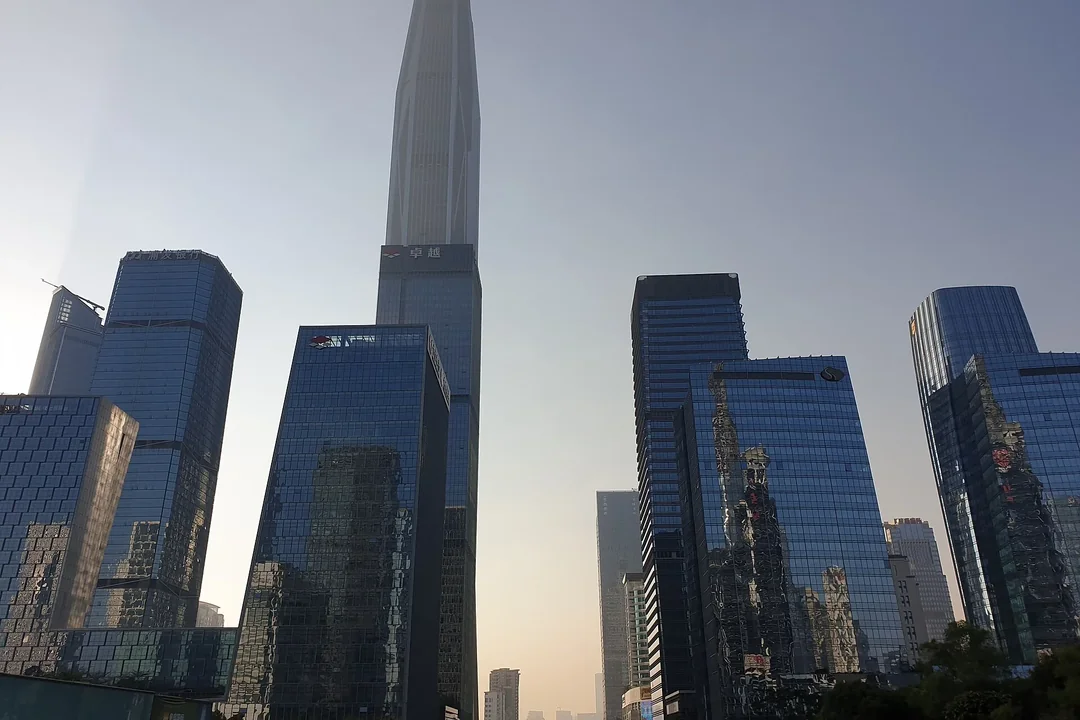
Shenzhen (深圳) is the city to visit if you want to understand what China built in the last forty-five years — and, increasingly, a destination that stands on its own. In 1980 this was a border county in Guangdong known mainly for oyster beds and farmland; today it is a metropolis of roughly 18 million people, the headquarters city of Tencent, Huawei, DJI and BYD, and the third-largest urban economy in China. We have watched first-time visitors arrive expecting a sterile office park and leave surprised by the beaches, the theme parks, the food and the sheer pace of the place.
This guide is written for a 2-3 day stay, which is the right length. Two days covers the core: the Futian Civic Center axis, Shenzhen Bay Park, one theme park, and one creative district. A third day buys you the Dapeng Peninsula coastline, or a hop across the border to Hong Kong, which sits 15 minutes away by high-speed rail. We focus on decisions rather than filler: Futian or Nanshan for your hotel bed, Window of the World or Happy Valley for your park ticket, which land port to use for Hong Kong, and which dishes actually justify a detour.
Practicalities are current as of 2026: metro fares (2-10 CNY covers almost any tourist ride), the 240-hour visa-free transit policy, mobile payment setup, and honest price bands for everything from a changfen breakfast (10-20 CNY) to the observation deck of the 599-metre Ping An Finance Center (roughly 200 CNY). Where a number can swing — hotel rates during the November trade fairs, for example — we give you the range and the reason behind it.
Why Shenzhen
The "fishing village to megacity" line is shorthand, but only slightly. Shenzhen was designated a Special Economic Zone in 1980, one of the first experiments in market reform, and grew from a county of a few hundred thousand people into a city of nearly 18 million in a single working lifetime. The growth came in waves: factories and "three-plus-one" assembly plants in the 1980s, an electronics supply chain in the 1990s and 2000s, then a full innovation economy in the 2010s as Tencent, Huawei, DJI and BYD scaled from local firms into global names. Nothing here is old except the pace of change itself.
The second reason to come is geography. The city runs along the border with Hong Kong for some 30 kilometres of land frontier plus the shared waters of Shenzhen Bay. Futian Port drops you into Hong Kong's MTR system; the high-speed rail link from Futian Station to West Kowloon takes about 15-20 minutes. No other pair of megacities on earth sits this close with a hard border between them, and the day-trip traffic flows both directions — Hong Kong families come north for cheaper hotpot and massages, mainland visitors go south for the skyline and milk tea.
Third, the city is simply easier than its reputation suggests. The metro is new, fast and fully signed in English; mobile payments work with foreign cards; the streets are among the safest in China; and because almost everyone in Shenzhen migrated from somewhere else, outsiders are unremarkable. Mandarin, not Cantonese, is the default language — a contrast with Guangzhou that locals will point out themselves.
What Shenzhen does not offer is deep historic fabric. There is no Forbidden City equivalent here. The Ming-era Dapeng Fortress and the Hakka towns in the hills are genuine, but they are day trips at the edge of the municipality, not city-centre monuments. Our honest framing: come to Shenzhen for the present and the future — architecture, design, theme parks, electronics, coastline and food — and get your dynastic history in Beijing or Xi'an.
The climate is subtropical, which shapes every itinerary. From May to September expect 30-35°C with heavy humidity and occasional typhoons; October to December is the dry, clear window that locals treat as a reward; January is mild; February and March can bring the clammy "returning south" damp season. We plan around this in the When to go section.
Top Attractions
Shenzhen's attraction map is a line, not a cluster: the city stretches east-west along the border, with Futian in the middle, Nanshan and the theme-park belt to the west, Luohu to the east, and the beaches of Yantian and Dapeng at the far eastern end. The five entries below are the ones we would defend in an argument. Splendid China Folk Village (1989, China in miniature plus ethnic-village performances, around 200 CNY combined) is a reasonable sixth if your appetite for theme parks exceeds one.
Window of the World or Happy Valley: pick one
You almost certainly do not need both, so here is the trade. Window of the World (世界之窗), opened 1994, is a 48-hectare park of roughly 130 scaled world landmarks: a 108-metre Eiffel Tower you can ride up, a mock Niagara Falls, Mount Rushmore, Angkor Wat, pyramid court after pyramid court. Day tickets run roughly 200-240 CNY, with cheaper evening sessions in summer when the light shows and occasional fireworks kick in. It is photogenic, absurd, and genuinely fun at night; it is also the single most crowded attraction in the city on national holidays.
Happy Valley (欢乐谷), opened 1998 in the same OCT resort area, is a conventional amusement park: roller coasters, drop towers, a zip line over the lake, and a separately ticketed water park for summer. Tickets run roughly 230-300 CNY depending on season, and queues for headline coasters can hit an hour on weekends. Metro access for both is easy — Lines 1 and 2 stop at Window of the World station, and Happy Valley is a 15-minute walk or one short taxi hop from there.
Our verdict: with teenagers or thrill-ride enthusiasts, take Happy Valley. With children under ten, photographers, or anyone curious about the distinctly Chinese genre of "world tourism compressed into one ticket," take Window of the World, ideally the evening session. Buy through the official WeChat account or Trip.com for modest discounts, and avoid both parks during Golden Weeks and school holidays unless queueing is your hobby. Budget half a day for either.
Shenzhen Bay Park
This free waterfront promenade is, in our opinion, the best public space in the city. It runs roughly 15 kilometres along the bay, with Hong Kong's hills directly across the water — close enough that on clear winter days you can watch container ships slide past the Shenzhen Bay Bridge at arm's length. The western sections near the bridge are for sunsets and picnics; the eastern sections around the Futian mangrove reserve are for birdlife, including the black-faced spoonbills that winter here from October to March. Runners own the path at dawn; families own the lawns at dusk.
Getting there is trivial: Line 9 terminates at Shenzhen Bay Park station. Bikes are restricted on the promenade at busy times, so plan to walk, and bring water — the stretch between exits is longer than it looks on the map. Combine it with the neighbouring Talent Park (人才公园), which lights up after dark, and with dinner in nearby Houhai or the Nanshan tech district. On summer weekends the seafront gets packed by 5 PM; on winter weekday mornings you may have it nearly to yourself, which is the version we would send a friend to.
OCT-LOFT creative district
OCT-LOFT (华侨城创意文化园) is a pair of blocks of converted 1980s factory buildings that the city let designers keep, and it is the most human-scaled district in Shenzhen. Expect independent bookstores — Old Heaven Books is the anchor — coffee roasters, graphics studios, vinyl shops, and B10 Live, a serious livehouse that books international touring acts with tickets typically 80-200 CNY. On weekends the T-Street creative market fills the lanes with zines, ceramics and illustration stalls. The Shenzhen-Hong Kong Bi-city Biennale of Urbanism\Architecture takes over the warehouses in its winter editions.
Entry is free. Take Line 1 to Qiaocheng East and walk about ten minutes. Our recommended rhythm: arrive late afternoon, browse the bookshop and galleries while the light is good, eat in the district, and stay for whatever is on at B10 that night. If your trip can only include one "creative Shenzhen" stop, make it this one rather than the newer, shinier mall-and-museum complexes — the district has the texture that the rest of the city is still growing into.
Dameisha and Jiaochangwei
Yes, Shenzhen has beaches, and two experiences define them. Dameisha (大梅沙) is the free public beach in Yantian, an arc of sand with lifeguards in season, palm-lined walkways and crowds to match; Metro Line 8 now reaches the coast directly. Entry is free, but on peak summer weekends the beach has used reservation quotas through the WeChat mini-program, so check before you go. The water is swimmable June to September and modest by tropical standards — come for the promenade, the seafood nearby, and the novelty of a metro-to-beach commute, not for snorkelling expectations. Its smaller neighbour Xiaomeisha is a rebuilt paid resort better skipped unless you have young children in tow.
Jiaochangwei (较场尾) is the other beast: a fishing village on the Dapeng Peninsula that reinvented itself as Shenzhen's first guesthouse village, with several hundred colour-washed inns stacked along the water at Daya Bay. On summer weekends it is a party strip with rates of 400-700 CNY and two-night minimums; midweek in the off-season it drops below 300 CNY and turns quiet enough to hear the tide. It sits next door to Dapeng Fortress (see Beyond the Highlights), which makes it the natural base for the peninsula. Reaching it takes 1.5-2 hours from Futian by bus or car — and note that Dapeng district has required advance reservations for private cars on weekends and holidays, so the metro-plus-bus route is often the saner plan.
Lianhuashan Park and the Civic Center
If you see one view in Shenzhen, make it this one. Lianhuashan Park (莲花山公园) is a free, 106-hectare hill in the middle of Futian; a 20-minute walk from the south gate brings you to the summit lawn and the bronze statue of Deng Xiaoping gazing south over the Civic Center's winged roof, down the central axis, and toward the Ping An Finance Center. At sunset this panorama compresses the entire Shenzhen story — planned capital district, supertall finance tower, and border hills — into one frame. The kite meadow on the way up is the city at its most relaxed on weekends.
Below the hill sits the Civic Center complex: the free Shenzhen Museum (its city-history floor is the best one-hour orientation to the Special Economic Zone story you will get anywhere), the Concert Hall, and the Central Library. Lines 3 and 4 stop at Children's Palace station on the park's south side. Finish the axis properly by walking 15 minutes east to the Ping An Finance Center — 599 metres, for years China's second-tallest building — whose Free Sky observation deck on floor 116 costs roughly 200 CNY with online discounts common; the sunset slot sells out, so book a day ahead.
Where to Stay
Shenzhen is a linear city, so choose your district first and your hotel second — a 10-kilometre mistake here costs you 40 minutes a day. Our three candidates, west to east:
Futian — the default for first visits. The central business district, and the most useful address in the city: the Civic Center, Lianhuashan, COCO Park's food and bars, the Futian high-speed rail station and the Futian border crossing are all within a few metro stops or a walk. Business four- and five-star hotels cluster here at 500-900 CNY on ordinary weekdays, with recognizable luxury names (St. Regis, Ritz-Carlton, Four Seasons) running 1,200-2,500 CNY. Solid mid-range chains run 300-600 CNY. The catch: rates spike hard during the November trade-fair season.
Nanshan — for the bay, the parks and a slower pace. The tech-district side of the city, closest to Shenzhen Bay Park, OCT-LOFT, the Window of the World belt and the universities. Evenings are quieter than Futian, and the Shekou corner has the most international dining in the city around the Sea World square. Expect 400-800 CNY for good four-star quality, and pick here if your itinerary tilts toward the waterfront and creative districts rather than the CBD.
Luohu — cheapest and best for border logistics. The original downtown around the Luohu port and the Dongmen shopping streets. Hotels are older and the gloss is thinner, but rates of 250-500 CNY buy perfectly serviceable three- and four-star rooms, hostel dorms run 60-150 CNY, and the MTR connection into Hong Kong is at your doorstep. Choose it for a one-night transit stop or a budget-conscious stay.
Book 2-3 weeks ahead for October-December, national holidays and the November fairs. Weekend rates in Shekou and Houhai can also jump when Shenzhen Bay concerts and marathons land; weekdays are soft everywhere. For longer stays, serviced apartments in Futian undercut equivalent hotel rates by 30-40 percent.
Gastronomy
Nobody comes to Shenzhen for one cuisine — the city is a referendum on the whole country's cooking, staffed by migrants. But four traditions anchor the local table, and we would build every trip around them.
Changfen (肠粉) is the breakfast of record: wide sheets of steamed rice batter rolled around egg, char siu or shrimp, drowned in seasoned soy. A portion costs 10-20 CNY at hole-in-the-wall operations that make them to order in front of you. Judge a stall by the translucency of the roll and the depth of the soy; the best ones are found in older residential neighbourhoods, not food courts.
Coconut chicken hotpot (椰子鸡) is the one dish Shenzhen can credibly claim to have popularized itself, a 1990s invention now spread across the country: a clear broth of fresh coconut water poaching Hainanese chicken, eaten with a ginger-scallion dip and plates of vegetables. It is light by hotpot standards and costs roughly 80-120 CNY per person at the established chains — Runyuan Siji is the local institution. We consider it the ideal first dinner off a long flight.
Chaoshan beef hotpot (潮汕牛肉火锅) is the city's other obsession, courtesy of the large Chaoshan diaspora. The beef arrives hand-cut by part — fatty chuck, skirt, tendon — and each cut gets its own blanch time in clear broth, often counted in seconds. Sa cha sauce on the side, rice porridge to finish. Budget 90-150 CNY per person and eat it late; the good rooms fill after 8 PM. Order the hand-beef balls at least once.
Morning tea (早茶) is the Cantonese inheritance: har gow, chicken feet, rice rolls and endless refills of pu'er, in dining halls where grandparents hold tables for hours. A proper sit-down runs 50-100 CNY per person; go between 8 and 10 AM, and take the trolley rooms over the menu-only ones. Add to these the Shajing oyster tradition (the beds that gave the old county its fame — best tried as a dish at Dapeng seafood streets, where you pick from tanks and pay by weight; always confirm prices per 500 grams before committing), and the province-wide religion of Hunan and Sichuan restaurants that feed the migrant workforce, plus 20-35 CNY braised-pork rice (隆江猪脚饭) lunches that are the city's true daily staple.
Street-food clusters worth planning around: Dongmen in Luohu for grazing, COCO Park in Futian for late volume, and the Sea World square in Shekou for open-air eating with a beer. Two rules keep you out of trouble: eat where the queue is local, and pay by QR — nearly every stall from oyster shack to dim sum hall takes Alipay or WeChat Pay, and small cash notes cover the rest.
Practical Information
Visa
There are three doors into mainland China as of 2026, and you should know which one you are using before you book. First, the 30-day visa-free entry trial: passport holders of a growing list of countries — most of the EU, plus others including Australia, New Zealand and Japan — can enter visa-free for stays up to 30 days under a scheme extended through the end of 2026. If your nationality is on the list, this is the simplest option by far.
Second, the 240-hour visa-free transit policy (extended from 144 hours in December 2024) covers 54 nationalities arriving with a confirmed onward ticket to a third country or region within 10 days. Hong Kong and Macau count as separate regions for this purpose, so an itinerary like Bangkok → Hong Kong → Shenzhen → fly home, or in via Shenzhen Bao'an airport and out through a Hong Kong port, qualifies. The list of eligible entry ports keeps expanding but not every crossing is included, so verify your specific port before committing — this is the single most common way travelers void the policy.
Third, the ordinary tourist visa from an embassy or consulate; agencies in Hong Kong turn these around in a day or two if you are already in the region. Whatever route you use, hotels register your stay automatically, and you should carry your passport for port and station checks.
Currency and Payments
The currency is the yuan, written CNY or RMB — one currency, two names. In practice Shenzhen runs on mobile payment: set up Alipay or WeChat Pay with a foreign Visa or Mastercard before arrival (both support international cards with a small currency fee), and you can pay from mango stalls to five-star hotels. Cash still works — exchange at bank counters with your passport, and ICBC or Bank of China ATMs are everywhere — but we would not carry more than a few hundred yuan of it. Hong Kong dollars are not accepted outside the border ports. Tipping is not practiced anywhere, including restaurants and taxis.
Transport
The metro is the reason Shenzhen is effortless: 17-plus lines and roughly 600 kilometres of track, with English signage and announcements throughout. Fares start at 2 CNY for short hops and a cross-city ride tops out around 10-14 CNY — practically every tourist journey lands between 2 and 10 CNY. Trains run from about 6:30 AM until midnight depending on the line. Pay with the Shenzhen Tong card, or more easily with the Shenzhen Metro QR code inside Alipay or WeChat. Rush hours (8-9:30 AM, 5:30-7:30 PM) on Lines 1, 3 and 11 are genuinely packed; start early or eat late to dodge them.
From Bao'an International Airport (SZX), Line 11 is the express — about 30 minutes to Futian for well under 10 CNY. Taxis flag-fall around 11 CNY and are metered and honest; Didi rides booked through Alipay or WeChat are cheaper still. The connections that define the city, though, are the Hong Kong crossings: Futian Port (linked to the Lok Ma Chau MTR), Luohu Port (Lo Wu MTR), Shenzhen Bay (coach traffic) and Liantang, with most ports open roughly 6:30 AM to midnight — confirm current hours if crossing late, as schedules have been extended in stages. The high-speed rail from Futian to West Kowloon takes 15-20 minutes at 70-90 CNY second class and skips the walking-concourse scramble. Shekou Cruise Center runs ferries to Hong Kong, the airport and Zhuhai from around 120 CNY. For Dapeng and the east coast, buses and pre-booked cars fill the rail gap.
Best Time to Visit
Ranked plainly: mid-October through December is the best window — dry, 18-27°C, clear skies over the bay. January is second: cool at 10-18°C, quiet, and fine for a city itinerary. April and May warm up pleasantly before the humidity arrives. June through September is hot, wet and typhoon-prone, but it is beach season and hotel rates soften. Give a hard pass to Chinese New Year (late January to mid-February) and the Golden Weeks in early May and early October, when domestic travel surges and the theme parks double their queues. November trade fairs raise hotel prices citywide even as the weather peaks — book early or shift dates.
Cultural Considerations
Shenzhen has an average age somewhere in the early thirties and almost no one is "from here" — the city was farmland two generations ago — which produces a culture that is pragmatic, informal and oddly transnational. Mandarin is the working language everywhere; Cantonese is present but far less dominant than in Guangzhou, and English is thinner than in Hong Kong, so keep a translation app ready and expect staff to reach for their own without embarrassment. That phone-across-the-counter exchange is normal here, not rude.
A few local codes help. At dim sum or tea, tap two fingers on the table when someone pours for you. Stand right on escalators, let passengers off the train before boarding, and move briskly — Shenzhen节奏 (rhythm) is a point of civic pride. Smoking is banned indoors and on platforms and actually enforced. Photography of people deserves an ask, especially the older fishermen around the ports and Dapeng; photography of checkpoints, port facilities, police and military installations is prohibited and enforced seriously — put the phone away in immigration halls entirely.
Two political notes worth stating plainly. Casual commentary on border politics, Hong Kong affairs or national leadership is unwise in public spaces, taxis and group settings. And if your visit coincides with sensitivities around anniversaries or major meetings, expect an occasional extra bag check at metro stations; it is routine, and the fastest path through is a passport produced without ceremony. Religious sites such as Hongfa Temple welcome visitors — modest dress, quiet voices, incense available on site. Public displays of affection beyond hand-holding draw attention, and same-sex couples should read the room and keep a low profile in most of the city outside Shekou's expat bubble.
None of this should read as frost. Shenzhen is arguably the easiest big city in China for a foreign visitor precisely because everyone in it recently arrived from somewhere else; patience with newcomers is the local default. Learn five words of Mandarin — hello, thank you, how much, too expensive, delicious — and doors open.
Two-Day Itinerary
Day one — the city core. Start with changfen at a neighbourhood breakfast stall (10-20 CNY), then take Lines 3 or 4 to Children's Palace and climb Lianhuashan while the morning is still cool — kites on the meadow, Deng's statue and the full Civic Center panorama from the top (free, two hours). Walk down to the Shenzhen Museum for the one-hour Special Economic Zone history floor, then eat around COCO Park at lunch (50-100 CNY). Spend the afternoon at altitude: the Free Sky deck on floor 116 of Ping An Finance Center, booked for late afternoon so you catch daylight fading into the grid of lights (roughly 200 CNY). At 5 PM take Line 9 to Shenzhen Bay Park and walk the promenade west toward the bridge for sunset; on winter weekends the black-faced spoonbills are in the mangroves behind you. Dinner is coconut chicken hotpot in Futian (80-120 CNY per person), and the night ends either in the COCO Park bar streets or with whatever is playing at the Concert Hall.
Day two — choose one of two tracks. The park-and-design track: spend the morning and early afternoon at Window of the World or Happy Valley (200-300 CNY, half a day, arrive at opening to beat the queues), then take the metro to OCT-LOFT for the late afternoon — Old Heaven Books, coffee, the T-Street market if it is a weekend — eat in the district, and close with a gig at B10 Live (80-200 CNY). The coast track instead: Line 8 out to Dameisha for a beach morning, then a bus or pre-booked car to the Dapeng Peninsula — Jiaochangwei's guesthouse lanes and the Ming garrison streets of Dapeng Fortress, with a tank-picked seafood lunch in between — returning to Futian by early evening. The coast track costs more time in transit but ends with the city's best sunset material.
Running totals for a mid-range pair: roughly 900-1,400 CNY per person per day with tickets, meals, transport and a shared hotel room at 400-600 CNY. A third day, if you have it, goes to Hong Kong or Guangzhou (see Day Trips) or to the quiet trio of Dafen, Fairy Lake and a Wutong Mountain sunrise hike.
Beyond the Highlights
The headline attractions tell the Shenzhen of billboards; these three tell older and stranger versions of the story, and we would trade a theme park for any one of them.
Dapeng Fortress (大鹏所城)
Founded in 1394 as a Ming dynasty coastal garrison, Dapeng Fortress is the oldest substantial thing in Shenzhen and the city's quiet rebuttal to its own no-history reputation. The walled village preserves flagstone lanes, generals' residences — the Lai family produced commanders who fought in the Opium War era — and a small museum on the peninsula's military past. Entry is free, crowds are thin on weekdays, and the scale is honest rather than reconstructed-tidy: people still live here. It pairs naturally with Jiaochangwei next door and the beaches further south on the peninsula. Remember the logistics: Dapeng district has required weekend and holiday reservations for private cars, so either secure one through the district's WeChat system or go by metro-and-bus, and allow 1.5-2 hours each way from Futian.
Gankeng Hakka Town (甘坑客家小镇)
At the other geographic extreme — Line 10 runs practically to the gate — Gankeng is a renovated Hakka market town folded into wooded hills in the north of the city. The crowds that fill it on weekends for the lantern-lit evenings and snack streets thin out dramatically midweek, when you can actually examine the Hakka architecture, the small museum on Hakka migration, and the restored timber buildings without queueing. Entry is free, with a few ticketed exhibits inside. Give it two to three hours, ideally in the late afternoon so you see it in daylight and lit. It is the easiest "old Guangdong" half-day in the city by a wide margin.
Dafen Oil Painting Village (大芬油画村)
Dafen is the world's largest oil-painting production district, a neighbourhood that has shipped hand-painted reproductions globally since the late 1980s, and it remains the strangest economy in Shenzhen — a city not short on strange economies. Line 3 stops at Dafen station; wander the lanes of working studios, watch painters turn out Monets in hours, commission a portrait from roughly 50-100 CNY, and climb the stairs of the gallery buildings where original work by resident artists sells at prices that shame any capital's art fairs. Two hours is enough, and it is the single best souvenir stop in the city. On your way back east, the Fairy Lake Botanical Garden (entrance around 15 CNY) with the Hongfa Temple inside it, and the 944-metre Wutong Mountain sunrise hike, round out the non-urban list.
Nightlife
For a city with a workaholic reputation, Shenzhen goes out hard, and the scenes are cleanly separated by district so you can pick your night. COCO Park in Futian is the default: two walkable bar streets of craft beer (40-80 CNY a pint), cocktail rooms (60-120 CNY) and rooftop terraces above the mall, mixed locals and expats, busiest Thursday to Saturday. OCT-LOFT is the alternative register — the B10 Live livehouse and its cafe-and-vinyl neighbours, where the city's design and music crowd drinks slowly and the ticket (80-200 CNY) is the point of the evening.
Shekou's Sea World square is the third scene: open-air tables around the moored Minghua ship, international pub culture, trivia nights and long expat memories. It is the least Chinese night out in the city and the easiest one for solo travelers. The big commercial clubs sit around Futian and Shekou with covers of roughly 100-200 CNY often including drinks. And the most Shenzhen night of all might be no club at all: a midnight Chaoshan beef hotpot — the strong rooms run until 2 AM — or a slow 2 AM taxi home past construction cranes still lit, which is the city showing you what it actually does at night.
Practical notes: last trains leave around 11 PM to midnight depending on the line, after which Didi rides are cheap and easy (Futian to OCT-LOFT runs about 25-35 CNY). Carry your hotel's address in Chinese. IDs are checked at clubs; passport copies do not always satisfy the door, so bring the document itself.
Day Trips
Two of the most useful day trips in China start from Shenzhen, and both ride the city's position on the border and the high-speed network.
Hong Kong
The neighbour is the obvious move, and the mechanics are simple. The high-speed train from Futian to West Kowloon takes 15-20 minutes (70-90 CNY second class), with both immigration checks done inside West Kowloon station before you step out under the skyline. The alternative is the walking ports: Futian Port connects to Lok Ma Chau MTR, Luohu Port to Lo Wu, and both put you on the East Rail line into Kowloon in about 40 minutes. Clear both borders at off-peak hours — mid-morning or after 7 PM — and the whole crossing takes 30-60 minutes; at peak on Sundays, when cross-border families move en masse, budget double.
Spend the day on a first-timer's loop: Star Ferry across Victoria Harbour, Central's escalators and mid-levels, dim sum, then Mong Kok's markets before an evening train back. Confirm your own visa situation for both directions before you go — many nationalities get Hong Kong visa-free entry while mainland China has its own separate scheme (see Visa above), and re-entering the mainland consumes another entry under whatever policy you are on. Get an Octopus card for Hong Kong transport; your Shenzhen QR codes will not cross the border.
Guangzhou
Thirty to forty minutes by high-speed rail from Shenzhen North to Guangzhou South (roughly 75-100 CNY), or about an hour from Futian to Guangzhou East, and you are in the province's 2,200-year-old capital. This is the contrast trip: where Shenzhen is new, planned and Mandarin-speaking, Guangzhou is layered, food-obsessed and Cantonese to its bones. Our one-day route: the Chen Clan Ancestral Hall's carved halls in the morning, a proper dim sum lunch, Shamian Island's colonial riverfront in the afternoon, Beijing Road for the excavated Song-dynasty roadbed under glass, and Canton Tower's light show at night before the last train home (leave Guangzhou by 9:30 PM to be safe).
A third option, mostly for Macau-bound travelers: the ferry from Shekou Cruise Center to Zhuhai (around 70-90 minutes) puts you at the Macau border gate, turning two SARs into one long day trip if you start early and your paperwork is in order. Check ferry schedules the day before — sailings thin out in the evening.
Events and Festivals
Shenzhen's calendar leans commercial and design-forward rather than ancient, which fits the city. The heavyweight is the China Hi-Tech Fair every November — running since 1999, it fills the Convention and Exhibition Center in Futian, and its side effect on travelers is concrete: hotel rates citywide jump for the week. Book around it or into it, but not naively. November also brings Shenzhen Reading Month, a citywide institution since 2000 whose book fairs and author talks reinforce the city's self-image as the nerd of Chinese megacities.
Spring belongs to Shenzhen Design Week (April), which scatters exhibitions through the design museums and OCT-LOFT and coincides with the city's best weather — the two facts are not a coincidence, and it is our favourite week to visit. In winter, the Shenzhen-Hong Kong Bi-city Biennale of Urbanism\Architecture takes over warehouses at OCT-LOFT and satellite venues, and it is the rare architecture biennale that a non-architect can enjoy for an afternoon.
The December marathon closes central roads and fills hotels in Futian for a weekend. The traditional calendar arrives mainly via the city's migrant families: Chinese New Year brings flower markets and temple fairs — and a strange, useful quiet, as a chunk of the population heads home and the streets calm; Mid-Autumn fills the bay parks with lanterns and picnics. National Day week (early October) is the one to plan around in the negative sense: parks triple their queues, Dapeng requires reservations for everything with wheels, and the border ports groan. If your dates are flexible, we would take a plain mid-November week over any festival slot.
Shopping
One name explains why shoppers cross the border for Shenzhen: Huaqiangbei (华强北). A few blocks of market towers around Huaqiang Road station (Lines 1, 2 and 7) form the densest electronics trading floor on earth — SEG Plaza and the Huaqiang Electronics World being the anchors. What you can actually buy well: cables, adapters and accessories at a third of Western prices; obscure components and tools by the bin; retro-gaming handhelds and drones at the stalls of the brands that build them; and phone everything, from cases at 10 CNY to flagship models at proper flagship prices.
Shop with rules. Compare the same item across three stalls before paying anything. Test electronics on the spot — every stall expects it. Bargain 10-30 percent at independent stalls, expect fixed prices at brand counters, and know that the warranty is the stall, full stop: it evaporates when you fly home, so for expensive branded goods (cameras, headphones) buy from official flagship stores — Huawei, Xiaomi and DJI all run them here — rather than grey-market windows. Payment is QR code or cash; foreign cards are rare outside malls. And check your home country's customs allowance before you buy a second drone.
Beyond the electronics district, the city's mall map is simple: MixC in Luohu for the luxury flagships, COCO Park in Futian for mid-market and a lively food floor, MixC World in Nanshan for the biggest single complex, and the Sea World square in Shekou for boutiques with sea air. Hong Kong visitors come north for all of it; on weekends the price advantage is measured against queues. For souvenirs with a pulse, we would skip the malls entirely: a commissioned portrait or original canvas from Dafen, design goods from the T-Street market at OCT-LOFT, and tea and oyster products from the Dapeng seafood streets beat anything in a duty-free bag.
Decision Support
Map
Hold one picture: Shenzhen is a strip about 50 kilometres long, running east-west along the Hong Kong border, with the sea to the south and hills to the north. Futian sits at the centre (Civic Center, CBD, main rail hub); Nanshan fills the west (theme parks, OCT-LOFT, Shenzhen Bay, Shekou, the airport beyond); Luohu sits just east of centre (old downtown, one border port); Yantian and the Dapeng Peninsula stretch to the far east (beaches, fortress, slowest transport). Lines 1, 2, 3, 4 and 11 cover nine-tenths of a tourist's movement; everything east of Luohu costs an hour or more each way.
Cost breakdown
Per person per day, realistic 2026 bands. Backpacker: 250-450 CNY — hostel dorm 60-150, food 60-120 from stalls and noodle shops, transport 10-25, and the core parks and promenades are free. Mid-range: 600-1,100 CNY — good hotel room split two ways at 350-600, meals 150-250 with one proper hotpot, transport 20-40, one paid attraction. Comfort: 1,500 CNY and up — five-star at 1,200-2,500, fine dining 300-600, observation decks and gig tickets without hesitating. Big one-off swings: a theme park day adds 200-300 CNY per person; a Hong Kong day trip runs on Hong Kong prices in HKD and should be budgeted separately. November fair weeks add 30-60 percent to hotel rates.
When to go
Our ranking, plainly. First: mid-October to December — dry, clear, 18-27°C, the bay at its best. Second: January — cool and quiet, ideal for a city-and-museums itinerary. Third: April to May — warm and green ahead of the humidity. Acceptable with caveats: June to September, hot and typhoon-prone but cheapest for hotels and warm enough for Dameisha. Avoid unless booked around: Chinese New Year, the early-May and early-October Golden Weeks (crowds everywhere, park queues doubled), and the November hi-tech fair week if you are booking late and hate paying premium rates for standard rooms.
Practical
The pre-departure checklist we actually run: confirm which visa door you qualify for (30-day visa-free list, 240-hour transit, or tourist visa) before booking flights; install Alipay and WeChat Pay and bind a foreign card while home networks still allow the verification texts; sort a tourist eSIM (5-30 USD for a week) or plan on an airport SIM counter with your passport; load the Shenzhen Metro QR mini-program; and save your hotel's name and address in Chinese characters. On the ground: carry your passport at ports and stations, keep hotel registration automatic, note that last metros run near midnight and Didi fills the gap cheaply, and if a Hong Kong leg is planned, verify both directions' entry rules and port hours the day before. Power sockets are Chinese standard (types A, C and I) — one universal adapter covers it.
Sources
https://www.szmc.net/ — Shenzhen Metro operator's official site: line map, fares, first and last train times (Chinese; auto-translate handles it).
https://www.trip.com/travel-guide/shenzhen/ — current ticket prices and booking for Window of the World, Happy Valley and the Ping An observation deck.
https://wtl.sz.gov.cn/ — Shenzhen's culture and tourism bureau: official event calendars, holiday announcements and port notices (Chinese).