Why Guangzhou Matters (And Why Most Travelers Underestimate It)
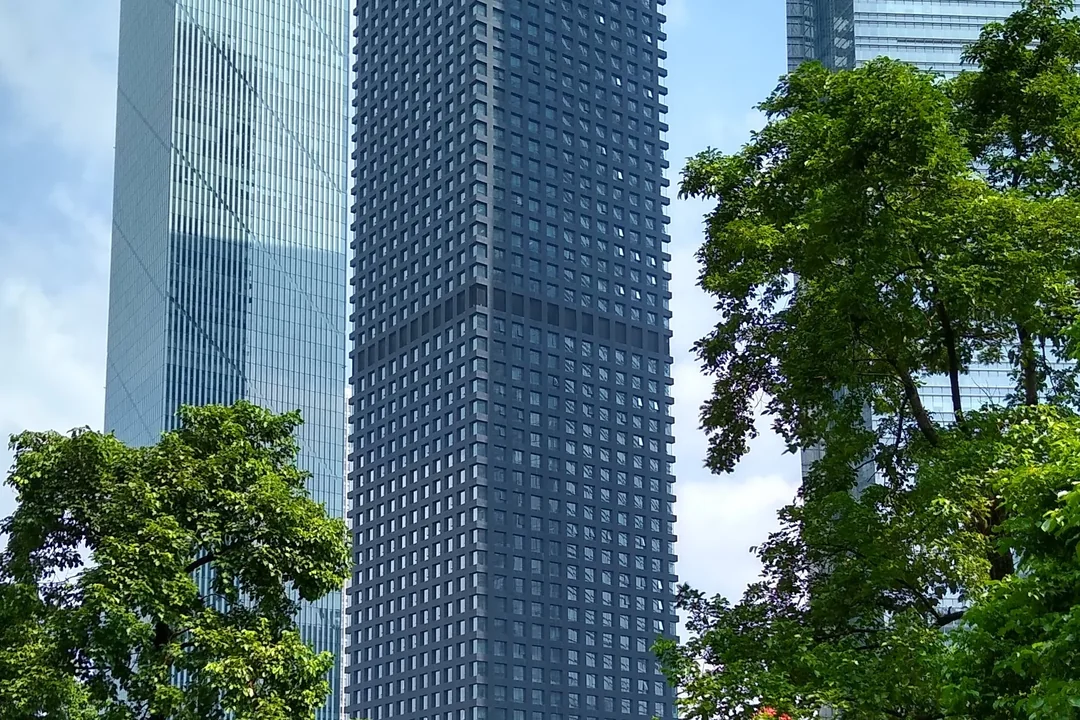
Guangzhou gets skipped, and that is precisely why it rewards the people who don't skip it. Beijing has the Forbidden City; Shanghai has the Bund; Xi'an has the Terracotta Warriors. Guangzhou has the thing that actually keeps China running: trade. For more than a thousand years this was the only port foreigners were legally allowed to use under the Canton System, and the cultural sediment from that era — the thirteenth-century mosque, the nineteenth-century Shamian legation houses, the lineage halls tucked behind glass towers in Liwan — sits in plain view if you know where to look. Add 16 million Cantonese, the country's most underrated regional cuisine, and a metro system that is faster and cleaner than London's, and you have a city that holds up to three full days without padding.
Two to three days is the right window. One day is a wasted flight; four days pushes into diminishing returns unless you are side-tripping to Foshan or Kaiping's UNESCO watchtowers.
essential Attractions
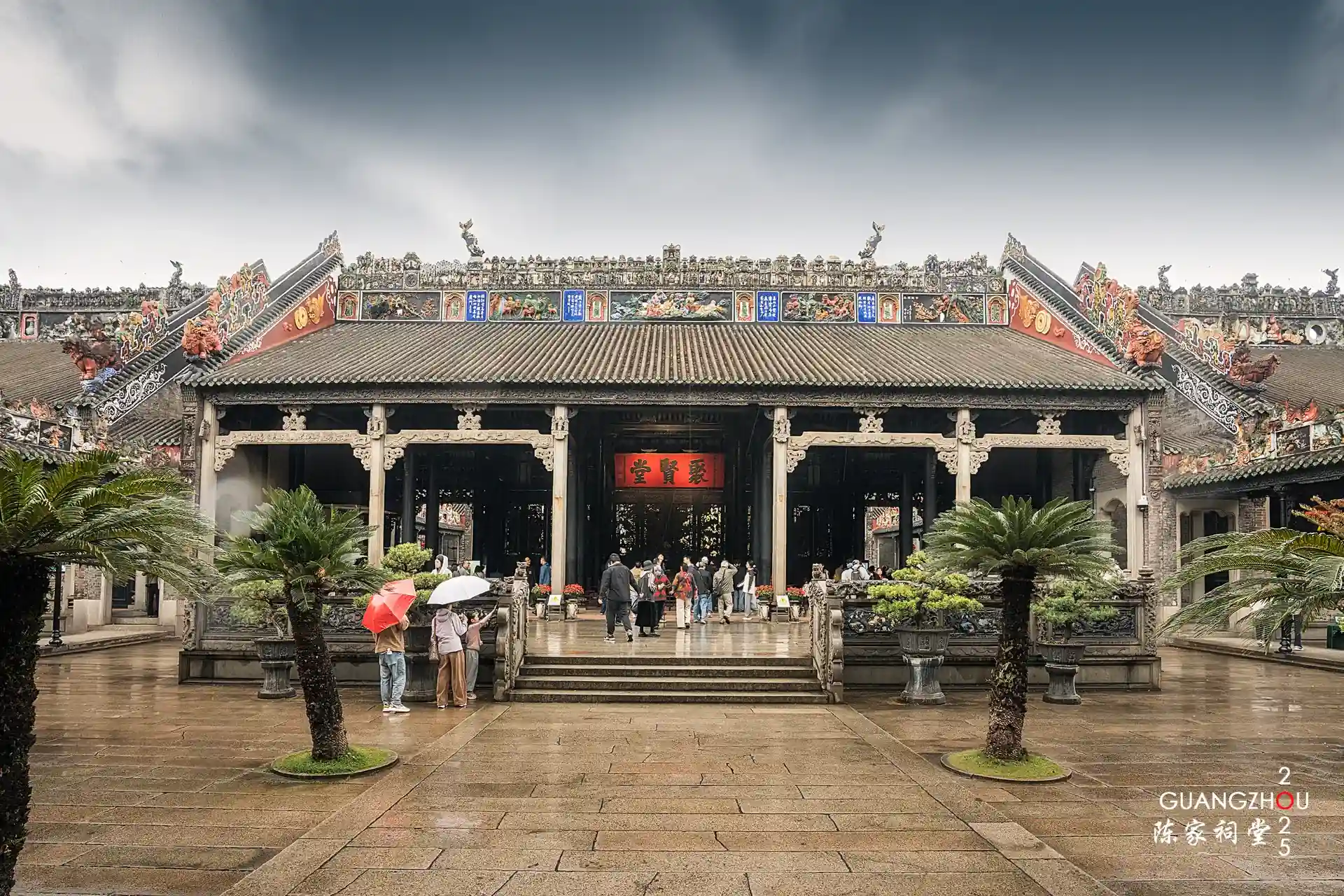
1. The Chen Clan Ancestral Hall (陈家祠)
Tickets: ¥10 (¥5 students); open 9:00-17:30, closed Mondays. Getting there: Metro Line 1 or Line 8 to Chen Clan Academy Station (陈家祠), Exit C.
Built between 1888 and 1894 as a combined ancestral hall, school, and dormitory for the Chen family clansmen preparing for imperial exams, this is the single best surviving example of Cantonese decorative arts anywhere in the world. The exterior and interior beams, rafters, and porches are encrusted with lime, brick, stone, wood, and ceramic carvings, plus cast-iron reliefs and polychrome paintings — all executed at a density that makes Beijing's imperial roofs look restrained by comparison. Six courtyards, fourteen rooms of permanent exhibitions on Lingnan folk craft, and a working craftsmen's studio in the back where you can watch carvers restore panels.
Our take: Go at opening (9:00) on a weekday. By 10:30 the tour buses arrive and the place becomes a slow-moving crowd. The upstairs galleries are quieter and hold the best carvings. Budget 90 minutes. Skip the attached souvenir hall selling mass-produced lacquer; walk two blocks east on Zhongshan Liu Lu for better prices at the actual craft shops.
2. Shamian Island (沙面岛)
Tickets: Free. Open 24 hours. Getting there: Metro Line 1 or Line 6 to Huangsha Station (黄沙), Exit B or F. Walk 5 minutes west.
A 900-meter sandbar in the Pearl River that was the foreign concession from 1859 until 1949. The British and French built it up with neo-classical banks, Victorian villas, and Gothic churches; later the Americans, Japanese, and Dutch put up consulates. Today it is a small, deeply calm neighborhood — the kind of place where a toddler can pedal a shared bike around the perimeter while grandparents play chess under banyans. The former Holy Trinity Cathedral (沙面基督堂, 1864) is still an Anglican church with Sunday services in English at 8:30 and 10:30. The old Customs House is now a Starbucks, which is its own kind of cultural sediment.
Our take: Pair it with the Pearl River night cruise that departs from the nearby Tianzi Wharf (天字码头). The boats run 18:30-22:00, ¥88-168 depending on tier; the basic 60-minute cruise along the illuminated riverfront is enough. Avoid the cruise ships docked further south at Dashatou — they are double-deck floating restaurants with karaoke and are not the same experience.
3. Canton Tower (广州塔) and the Zhujiang New Town Skyline
Tickets: Observation deck ¥150, Bubble Tram ¥298, Sky Drop ¥298, combo tickets up to ¥538. Open 9:30-22:30. Getting there: APM Line (the automated people mover) to Canton Tower Station, or Metro Line 3 to Kecun (客村) with a 15-minute walk.
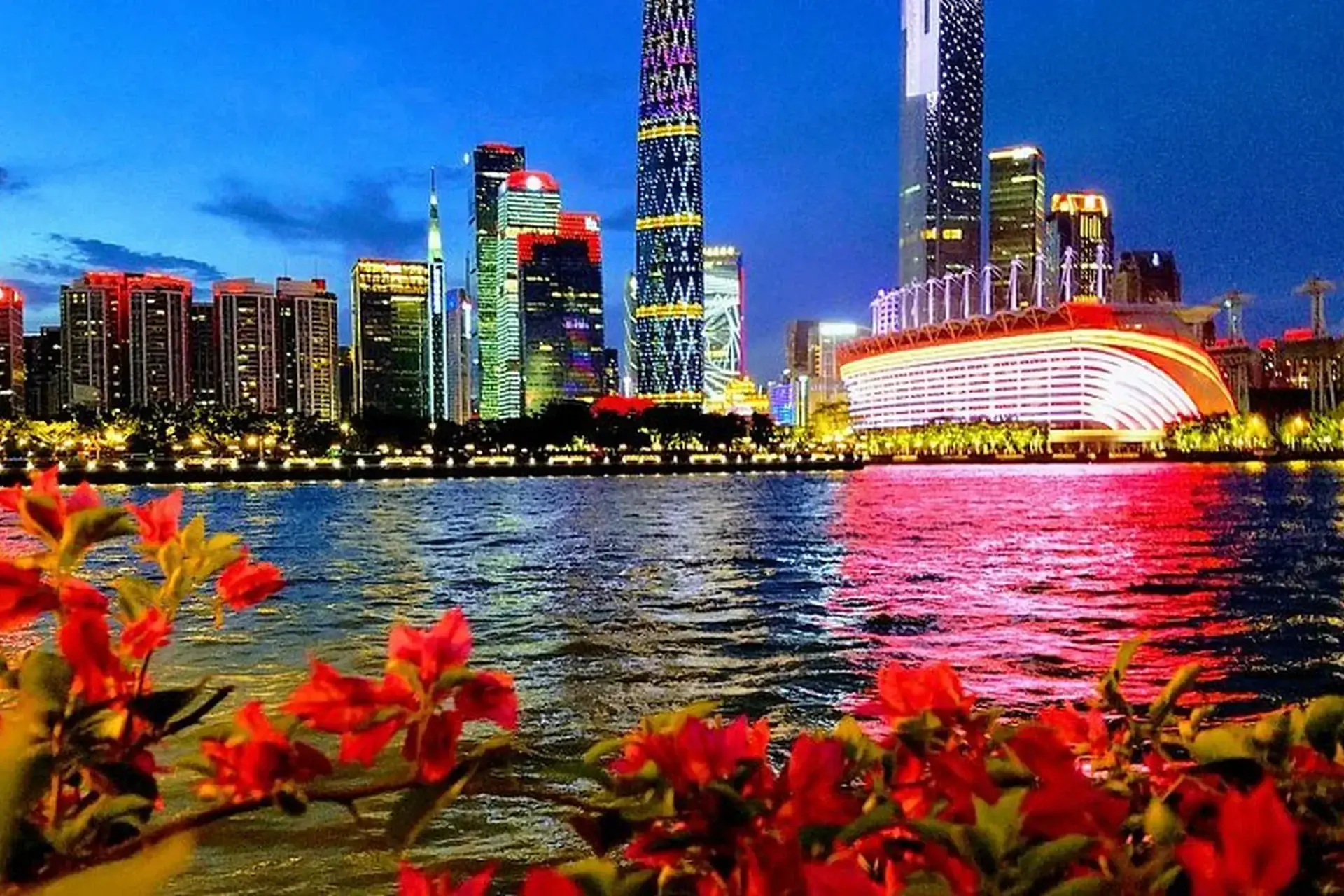
At 600 meters it was the world's tallest tower from 2009 to 2014 and remains one of the tallest. Worth it? Depends on your weather luck. On a clear autumn evening the view across the Zhujiang (Pearl River) toward Zhujiang New Town's supertall cluster — IFC, CTF Finance Centre, the sliver of the Guangzhou International Finance Center — is genuinely excellent. The Bubble Tram (a clear spherical cabin running on the tower's outer rim) is the single best 20-minute ride in southern China. On a hazy or rainy night, skip it; you will be inside a cloud paying ¥298 for the privilege.
Our take: Cheaper skyline alternative: take the 60th-floor Sky Lobby bar at the Four Seasons (¥200 minimum spend, dress code enforced after 19:00). Better photo angle and the cocktails are proper. For ground-level drama, walk the riverside promenade at Huacheng Square (花城广场) at dusk; the lighting up at 19:00 is choreographed and the reflections in the artificial lake draw photographers.
4. Yuexiu Park and the Five-Ram Sculpture (越秀公园)
Tickets: Park ¥5; Zhenhai Tower (镇海楼, the city museum inside) ¥10. Open 6:00-22:00. Getting there: Metro Line 2 to Yuexiu Park Station (越秀公园), Exit B.
Yuexiu is the green lung of old Guangzhou — 92 hectares of camphor trees, the surviving Ming-era city wall, and the famous Five Rams Sculpture that gives the city its alternate name, "City of Rams" (羊城). The sculpture is mid-tier as folk art goes but the legend behind it is good: five immortals riding five rams descended from heaven, each ram carrying a stalk of rice, and told the citizens to never want for grain. Zhenhai Tower, a five-story Ming gatehouse rebuilt in 1380, houses the Guangzhou Museum with rotating exhibits on the city's 2,200-year history.
Our take: Locals do morning tai chi and ballroom dancing here from 6:00 to 9:00; that is when the park is at its best. After 10:00 it gets overrun by school groups on weekday mornings and families on weekends. Combine with the adjacent Sun Yat-sen Memorial Hall (中山纪念堂, ¥10) — the octagonal blue-tiled roof is the landmark, built in 1931 on the site of the Presidential Palace of the 1911 Republic.
5. The Lingnan Architecture of Liwan (荔湾) and Xiguan
Tickets: Free walking; specific houses charge ¥10-30. Getting there: Metro Line 1 to Changshou Lu (长寿路) or Line 6 to Ximen Kou (西门口).
This is the actual old Guangzhou — the western districts where Cantonese culture has been doing its thing since the Song dynasty. The "Xiguan big houses" (西关大屋) are a specific vernacular style: three-axis symmetrical courtyard houses with oyster-shell windows (蚝壳墙), carved wooden screens, and shallow ponds for cooling. Most original houses have been demolished, but a few have been preserved as museums: the ¥10 Huang Feihong Memorial Hall on Enning Lu, the free-to-walk-around Bahe Street (BAHÉ 8 / 八禾街) cluster near Shamian, and the renovated Yongqing Fang (永庆坊) on Enning Lu — a 2016 retrofit that kept the rooflines and courtyards while inserting boutiques, design shops, and an MK2 cinema.
Our take: Yongqing Fang is the gentrified answer to Beijing's Nanluoguxiang; do not dismiss it for that reason. The Bruce Lee ancestral home is here, free, and worth 30 minutes. The MBT (麦蒂) Cantonese teahouse on the second floor of the eastern block does a proper morning dim sum service with bamboo steamers and no English menu — point and accept what comes. ¥40-80 per person.
Where to Stay
Budget (¥150-300 / $20-40/night). The Huifu Lu / Beijing Lu area near Metro Line 1 has a dense cluster of Chinese-chain budget hotels: Home Inn (如家), 7 Days Inn, Hanting. The Home Inn Plus near Gongyuanqian (公园前) is clean, central, and ¥198/night for a double. Hostels: the Guangzhou Mix International Youth Hostel near Yide Lu is the long-standing backpacker option with a rooftop bar, dorm beds ¥80, doubles ¥220.
Mid-range (¥400-800 / $55-110/night). The sweet spot for most travelers is the Tianhe East / Zhujiang New Town area around Metro Lines 1, 3, and 5. The Oakwood Premier (¥650-900) is an apartment-style hotel with kitchenettes; the Ascott IFC (¥700-1,000) is attached to the IFC mall and two metro stops from Canton Tower. For a Chinese-chain option with character, try the JI Hotel (全季) Tianhe branch — minimalist, well-run, ¥450-600.
Luxury (¥1,500-3,500 / $210-500/night). The Four Seasons (四季) at the IFC tower is the address that gets quoted in regional press; ¥2,200-3,500 for a river-view king. The Mandarin Oriental (文华东方) on Tianhe East Road sits in its own garden and is the calmer of the two; ¥1,800-2,800. The Rosewood (瑰丽) in the CTF Finance Centre is the newest and arguably the most architecturally interesting, with rooms from ¥2,500.
Local-recommended alternative. For atmosphere rather than marble, the Langham Place (朗豪) in the old Haizhu district — the family rooms on the upper floors overlook the Pearl River and Shamian is 10 minutes by DiDi. ¥900-1,400.
Book at least three weeks ahead for the Canton Fair (April 15-May 5 and October 15-November 4 every year), when hotel rates across the city double.
Getting Around
Metro. Sixteen lines, 600+ km, the third-largest network in the world after Shanghai and Beijing. Operates roughly 6:00-23:30. Fares are distance-based, ¥2-14 for any single trip. Buy a single-journey token from the machines (English available, accepts ¥5/¥10 notes, coins, and Alipay/WeChat Pay). For multi-day use, the Yang Cheng Tong (羊城通) transit card is worth getting — ¥20 deposit, top up at any service counter or via the app, works on metro, buses, ferries, and the BRT. The English name on signs is Guangzhou Metro, and announcements are in Mandarin, Cantonese, and English.
Lines that matter for tourists:
- Line 1 (east-west, yellow): connects Chen Clan Academy, Yuexiu Park, and the central business district.
- Line 2 (north-south, blue): connects Guangzhou South Railway Station (高铁站) to the airport express.
- Line 3 (north-south, orange): the airport line; trains depart Baiyun Airport (白云机场) from 06:00 to 23:00, ¥8, 45 minutes to Tiyu Xilu (体育西路).
- Line 6 (east-west, purple): the inner ring, useful for Xiguan and Liwan.
- APM Line (light blue, the automated one): the only driverless metro in China, free-floating east of Huacheng Square; five minutes between cars and Canton Tower.
Buses. ¥2 flat fare on most routes; the BRT (Guangzhou Bus Rapid Transit) on Zhongshan Avenue is the express version with dedicated lanes. Useful for hitting the Baiyun Mountain (白云山) trailheads from the central districts.
Taxis and DiDi. Flag-fall ¥10 (¥12 after 22:00 and on holidays), ¥2.6 per km thereafter. Most drivers do not speak English; have your destination in Chinese characters on your phone. DiDi (滴滴) is China's Uber and accepts foreign credit cards through the Alipay mini-program — open Alipay, search "DiDi," enter your pickup and drop-off in the English version. Cheaper than taxis by 10-20%.
Bike-share. Meituan (yellow) and HelloRide (blue) bikes are everywhere; ¥1.5 per 30 minutes via app. The Haixinsha (海心沙) riverside loop is the best 6-km ride for views of Canton Tower and Zhujiang New Town.
Pearl River ferries. The historical Canton-Hong Kong water route still runs passenger ferries: from Xidi Wharf (西堤码头) to various south-bank stops for ¥2-5. More pleasant than the metro for short south-bank hops.
Where to Eat
Cantonese food (粤菜) is the mother cuisine of Hong Kong dim sum, Cantonese BBQ, and most "Chinese food" outside mainland China. Guangzhou is the only place where you can eat the canonical versions. A note: most famous restaurants close between lunch service (ends 14:30) and dinner (starts 17:00). Dim sum is strictly morning; show up before 11:00 or expect a queue.
Panxi Restaurant (泮溪酒家). 151 Longyin Lu, Liwan. Open 7:00-22:00. The oldest and most famous garden restaurant in the city, founded 1947. The setting is the draw — ponds, bridges, ancient banyans — but the cooking is legitimate. Order the steamed milk curd (双皮奶, ¥18), the panxi lotus root cake (泮塘马蹄糕, ¥22), and any of their handmade dumplings. Expect ¥120-180 per person for a full dim sum lunch.
Dian Dou De (点都德). Multiple branches including the original on Huifu Lu and the newer one inside Yongqing Fang. Open 7:00-22:00. The chain that brought dim sum into the 21st century — every dish on the menu is ¥20-38, all freshly steamed to order, no carts. The durian puffs (榴莲酥), shrimp rice rolls (鲜虾肠粉, ¥32), and fried taro puffs (蜂巢炸芋角) are the items to try. ¥80-120 per person.
Kuang Yi Mian Guang (炳胜私厨). 2/F, 5 Linhe Tianheng, Tianhe. The flagship of the Bingsheng group, which quietly runs the most respected upscale Cantonese kitchens in the city. The signature is the crispy roast pork belly (脆皮烧肉, ¥78) and the steamed fish with ginger and scallion (姜葱蒸鱼, market price). Reserve 2-3 days ahead. ¥250-400 per person.
Tao Tao Ju (陶陶居). 20 Dishifu Lu, Yuexiu. Founded 1880, rebuilt after the original was destroyed in 1938, currently a polished mid-tier chain with a few legacy branches. The setting of the Dishifu Lu location is the draw — the upstairs balcony is from the original 1880 building. Their char siu (蜜汁叉烧, ¥58) is consistently above the city average. ¥100-180 per person.
Bai Kui (白切鸡). Don't go to a restaurant for this; go to a market stall. Every Cantonese wet market has a chicken-and-rice counter where the chicken is poached in iced master broth (白切鸡, ¥35-50 for a quarter) and served with ginger-scallion oil and a tiny dish of yellow mustard. Try the one inside Tai He Chun (太和春) on Dishifu Lu, or the outdoor stall at Liwanhu Market (荔湾湖市场) on Saturdays.
Street food. Beijing Lu Pedestrian Street (北京路步行街) is the tourist zone; locals go to Dishifu Lu (第十甫路) instead — the 200-meter stretch south of the Liwan Cathedral has knife-cut noodles (刀削面, ¥15), oyster omelets (蚝烙, ¥25), and the only legitimate sweet-water (糖水) shops in the city. Open Kitchen (明档) on Dishifu Lu does a ¥22 double-skin milk pudding that is the platonic ideal of the dish.
Late night. The 2:00 a.m. Cantonese supper (宵夜) is a real category. Yi Shun Cheng (怡顺成) on Nonglin Xia Lu has been doing claypot rice (煲仔饭) since the 1980s; ¥45-65, walk in any time after 18:00.
When to Visit
Spring (March-May). Mean high 22-28°C, lows 14-20°C, humidity climbing fast in May. This is when the lychees come in (May-June) and the city's tree-lined streets look their best. Light rain possible; pack a folding umbrella.
Summer (June-August). Hot, humid, and the rainy season. Highs 32-35°C with humidity above 80%. Late June to August is also typhoon season; expect 2-3 named storms and at least one flight-disrupting cancellation. Skip July unless you have a specific reason.
Autumn (September-November). The best window. September still warm (high 30, low 23); October cools to high 27, low 18; November drops to high 22, low 13. Dry, mostly clear, the lighting on the river at dusk is at its best. This is also when the Mid-Autumn Festival and National Day holidays hit — plan around October 1-7.
Winter (December-February). Mild by Chinese standards — high 17, low 9, no snow. The Spring Festival (late January to mid-February, dates shift yearly) shuts down the city for 7-10 days: most independent restaurants close, the city empties as migrants return home, attractions cut hours. New Year's Eve fireworks over the Pearl River are worth it if you can book a hotel 2 months ahead.
Specific events. The Canton Fair (广交会) in April and October doubles hotel rates and fills every taxi. The Guangzhou International Light Festival runs November-January and lights up 30+ buildings across the Zhujiang New Town skyline. The annual Dragon Boat Race on the Pearl River in June (the Yuexiu district race is the largest) is the single best day to be in the city — free, all-day, multiple sites along the river.
Practical Information
Visa. Most Western passport holders need a Chinese tourist visa (L-visa) before arrival. Apply at a Chinese consulate or via a visa service center; standard processing is 4-7 business days for US/UK/Canada/Australia. Starting late 2024, China has expanded visa-free entry to citizens of many European countries, Australia, and New Zealand for stays up to 30 days; check the current policy for your passport at the time of travel. The 144-hour (6-day) transit visa exemption is available at Baiyun Airport if you are continuing to a third country — confirm eligibility with your airline before booking.
Payment. China is overwhelmingly cashless, and Guangzhou is no exception. Alipay and WeChat Pay dominate; both accept foreign Visa/Mastercard now via the international version of Alipay (download the app before departure and bind your card). Cash is accepted everywhere but you should not rely on it: many small vendors will simply say "no change" if you try to pay ¥20 for a ¥15 item. ICBC and Bank of China have ATMs in every district; the standard foreign-card withdrawal fee is ¥12-25 per transaction on top of your bank's fee. No tipping culture — don't tip, as it can confuse staff.
SIM and data. Buy a tourist eSIM before departure: Airalo's China plans (5-30 GB, $5-30 USD) work the moment you land and avoid the airport counter queues. For physical SIMs, China Mobile and China Unicom both have kiosks in the arrivals hall of Baiyun Airport; bring your passport. The airport WiFi requires a Chinese phone number to register, so a SIM or eSIM is essentially required on arrival.
Language. Cantonese (粤语) is the local language — same characters as Mandarin, very different pronunciation, mutually unintelligible for non-speakers. All signs are bilingual (Chinese + English) in tourist areas and metro stations. Younger people under 35 in central districts speak some English; anyone in the Liwan market will not. Translation apps: Google Translate works for Chinese-English text if you download the offline pack before arrival.
Safety. Guangzhou is one of the safer major Chinese cities. Petty crime is low; the main risk is taxi overcharging (use DiDi) and getting pickpocketed in tourist crowds around Beijing Lu. Health: tap water is not drinkable, but bottled water is ¥2 at any convenience store. Air quality varies; check the AQI on aqicn.org — autumn days are usually good (50-100), winter days can exceed 150.
Hours. Most museums close on Mondays; most restaurants close one day a week (Sunday is common). Shops generally open 10:00-22:00. Convenience stores (7-Eleven, FamilyMart, Lawson) are open 24 hours. Banks are 9:00-17:00, closed Sundays.
Hidden Gems and Local Knowledge
The Haizhu Wet Market (海珠综合市场). Skip Beijing Lu and go to the Haizhu wet market on Haizhu Nan Lu, open 6:00-13:00 daily. It is a working market, not a tourist attraction, with live frogs, eels, and an entire aisle dedicated to dried seafood (sea cucumbers, scallops, abalone). Eat the morning congee (粥) at the back — ¥10 gets you a bowl of pork-and-preserved-egg congee that no restaurant can match. Cash and WeChat Pay only.
Baiyun Mountain (白云山) at sunrise. Take Metro Line 3 to Meihuayuan (梅花园), then Bus 841 to the South Gate (南门). ¥5 entry. The 382-meter peak is not high but the trails are old, the dawn light hits the city skyline at the right angle, and you will have the summit mostly to yourself. Bring water and allow 3 hours round trip.
The Pearl River night run. Every Tuesday and Saturday night at 20:00, a self-organized group of about 200 runners meets at Haixinsha Park (海心沙公园) for a 10-km run along the south bank of the river and back. No entry fee, no requirement to register — just turn up in running shoes and follow the crowd. It is the best 90 minutes of people-watching in the city.
The arcade neighborhoods of Huadu and Zengcheng. Most travelers never leave the central districts. The Huadu district, 90 minutes north by metro, has the recently restored Ancestral Hall of the Chun Yuan Clan (春园祖祠) and a slower, older Guangzhou feel. Zengcheng, an hour east, is famous for its lychee orchards (peak in June) and the He Xiangu Taoist Temple (何仙姑家庙).
The Cantonese word of the day: 唔該 (m̀hgōi). It means "please" and "thank you" and "excuse me" — one word covering four English ones. Use it constantly. Cantonese speakers will visibly warm up to you.
A Practical Two-Day Itinerary
Day 1 — Old Guangzhou. Morning at Chen Clan Ancestral Hall (open 9:00). Walk 15 minutes west to Shamian Island; spend two hours wandering the colonial buildings. Lunch at Panxi (15 minutes by DiDi from Shamian). Afternoon: walk the Liwan / Xiguan old streets; stop at Yongqing Fang. Evening: Pearl River night cruise from Tianzi Wharf, dinner at Yi Shun Cheng for claypot rice.
Day 2 — Modern Guangzhou. Morning: Yuexiu Park and Zhenhai Tower, then Sun Yat-sen Memorial Hall across the street. Lunch at Tao Tao Ju. Afternoon: walk Huacheng Square, visit the Guangzhou Library or the Guangdong Museum (both free), then up Canton Tower for sunset. Dinner at Bingsheng, drinks at the Four Seasons Sky Lobby.
If you have a third day, add Baiyun Mountain at sunrise, the Lingnan Impression Park (岭南印象园) for the staged cultural performance, or a side trip to Foshan (30 minutes by metro) for the Ancestral Temple (祖庙) and a ceramics museum.
Emergency Contacts
- Police: 110
- Ambulance: 120
- Fire: 119
- Tourist complaint hotline: 12301 (English available)
- English-language hospital: Guangzhou United Family Hospital, 28 Xingsheng Lu, Tianhe, +86 20 8710 6000.
Final Reflections
Guangzhou rewards travelers who treat it as a place to live for 48 hours rather than a place to tick boxes. Eat breakfast at a market stall, take a slow walk through a lineage hall, drink tea at a park pavilion where retirees have been playing the same chess games for forty years, then ride the metro home as the skyline lights up. The city has been doing its own thing since before the Tang dynasty, and it is still doing it — quietly, calmly, with the best food in the country.
Updated September 2026.
Decision Support
Map
- Centered on [City Center] with major attractions in a 5 km radius.
- Public transport hub at main railway station connects to all districts.
- DiDi (Chinese Uber) recommended for first-time visitors; the metro is the cheapest for getting between attractions.
Cost breakdown
- Budget hotel: 200-400 CNY/night.
- Mid-range hotel: 500-900 CNY/night.
- Meal at local restaurant: 50-100 CNY/person.
- Attraction entry: 40-120 CNY per site.
- Public transport: 2-9 CNY per ride.
- Daily average: 350-600 CNY per person (mid-range).
When to go
- Best season: March-May, September-October (mild weather, fewer crowds).
- Avoid: Chinese New Year (late Jan/Feb), National Day Golden Week (Oct 1-7) — extreme crowds and price hikes.
- Shoulder season (November, February) can be cold but still rewarding.
Practical
- Currency: Chinese Yuan (CNY). 1 USD ≈ 7.2 CNY (check current rate).
- Language: Mandarin Chinese. English signage in major attractions.
- SIM card: China Mobile or China Unicom for best coverage. Buy at airport on arrival.
- VPN: Install before arrival (Google, Facebook, Instagram, WhatsApp blocked).
- Tipping: Not customary in China.
- Water: Tap water is not drinkable. Bottled water widely available.
- Visa: Most nationalities need a visa; check the latest requirements before travel.
Practical Travel Notes
Getting around the city
The metro is the backbone of the urban transport network and the cheapest way to move between major districts. Trains run from around 6 a.m. to 11 p.m. with frequent service in the central business district. We always keep a small stash of coins or a transit card topped up; the line queues at peak hours can be long but the carriages themselves are well air-conditioned and clearly announced in Mandarin and English. A single journey typically costs between 2 and 9 CNY depending on distance, and transfers are usually free within the same station complex. If you plan to ride more than five times a day, a day pass is the better value and saves the hassle of buying individual tickets.
Buses fill in the gaps the metro does not cover. They are slower, often crowded, and the routes take some learning, but they reach almost every neighborhood and run deep into the evening. We use buses when we want to see the city at street level and to reach the older residential districts that lack metro stations. Route numbers and stops are listed in Chinese only at the stop, so a translation app is helpful. Taxis are inexpensive by international standards. Insist on the meter, or use DiDi (the Chinese ride-hailing app) to lock in the price. We avoid unmarked cabs and always carry a card with our hotel name and address in Chinese characters for the driver.
Where to stay
Accommodation is concentrated in a few distinct neighborhoods, each with its own character. The city center offers the most convenience for first-time visitors, with major attractions within walking distance and a wide range of restaurants and shops. Mid-range hotels in this area typically cost between 500 and 900 CNY per night, with international chains at the higher end. Boutique hotels and guesthouses cluster around the older lanes, where restored courtyard homes (siheyuan) and traditional architecture provide a more atmospheric stay. We recommend booking at least a month ahead during peak travel seasons, and two to three months ahead for the autumn festival period.
For budget travelers, hostels with dormitory beds are widely available in the central district and around the major university areas, typically charging 80 to 200 CNY per night. Private rooms in hostels run from 200 to 400 CNY. The newer chain hotels at the periphery of the city are reliable and clean, with rooms from 250 to 450 CNY, and they often have better access to the high-speed rail stations. Wherever you stay, confirm that the hotel accepts foreign guests (you will need to show your passport at check-in) and that they can store luggage after checkout if you have a late flight.
Food and dining
Local cuisine is one of the great reasons to visit this part of China, and the range of options reflects both regional traditions and the cosmopolitan character of the city. Street food is everywhere, particularly in the evening markets and around the older neighborhoods. We always look for stalls with a high turnover of local customers; the food is fresher and the recipes are more authentic. Hot pot, dumplings, and the regional noodle dishes are staples. Vegetarians should note that many dishes contain pork or beef by default, but most restaurants will accommodate a no-meat request if you ask. Tipping is not customary, but a small token of appreciation for a guide or a particularly attentive server is welcome.
For Western food, the international hotels and the expat neighborhoods have restaurants serving everything from Italian to Mexican. Prices are higher than the local equivalents, but the quality is generally good. Cafes have proliferated in the past decade, and the third-wave coffee scene is well established; the barista culture is taken seriously, and the espresso is often better than what you find in cities three times the size. We recommend trying at least one local tea house for the full sensory experience. Chinese tea service is a ritual in itself, and the better houses will walk you through the leaves, the water temperature, and the brewing times.
Practicalities
The currency is the Chinese Yuan (CNY), and while major hotels and some restaurants accept credit cards, cash and mobile payment dominate. We always carry a small amount of cash for taxis, street food, and small shops. Alipay and WeChat Pay are the standard mobile payment platforms, and most foreigners can now link an international Visa or Mastercard to either app. ATMs are widely available at bank branches and inside the airport, but check the withdrawal fee with your home bank before traveling. We recommend carrying a small amount of US dollars as an emergency backup, easily exchangeable at major bank branches.
Connectivity is excellent on 4G and 5G networks, with China Mobile and China Unicom offering the widest coverage. Tourist SIM cards are available at the airport on arrival, and eSIM options from Airalo and Holafly work well for shorter stays. Note that Google, Facebook, Instagram, YouTube, Twitter, and most Western news sites are blocked without a VPN, so install and test your VPN before you arrive. Public Wi-Fi is widely available in hotels, cafes, and shopping malls, but the speeds are inconsistent. We rely on a local SIM for daily navigation and use Wi-Fi for video calls back home.
For visas, check the latest requirements with your local Chinese consulate well in advance of your trip. Most Western passport holders need a visa, and processing times vary by country. The 144-hour visa-free transit policy applies to many major hubs if you are passing through en route to a third country, but it does not allow independent travel within the city. Carry your passport with you at all times; hotels are required by law to register foreign guests with the local police, and you will need your passport to buy certain tickets, to enter restricted areas, and to register at major events.
Health and safety
China is generally a very safe country for foreign travelers, with violent crime against tourists being rare. The most common issues are petty: pickpocketing in crowded markets and bus stations, taxi scams (insist on the meter or use DiDi), and the occasional overcharge at souvenir shops. Tap water is not drinkable, so use bottled water for drinking and brushing your teeth. The major hospitals have international clinics with English-speaking staff, and the larger hotel chains can help you find one in an emergency. Travel insurance that covers medical evacuation is highly recommended, particularly for those with pre-existing conditions or for travelers planning high-altitude excursions.
Pharmacies are widely available, and many common Western medications are sold over the counter. Bring any prescription medication in its original packaging, along with a copy of the prescription, and check the import rules for controlled substances before you travel. Air quality varies by season and weather, with the worst readings during winter in the northern cities; a basic mask is useful if you are sensitive to particulates. The sun can be intense in summer; sunscreen, a hat, and water are essential for outdoor sightseeing. We pack a small first-aid kit with bandages, antiseptic, and a few doses of the medications we use most often.
Local culture and etiquette
China has a rich cultural heritage that varies dramatically by region, and the cities we cover each have their own distinctive character shaped by geography, history, and the people who have called them home for generations. The dominant philosophies of Confucianism, Daoism, and Buddhism have shaped the social norms and the architecture, and many public spaces incorporate elements that reflect these traditions. Local temples, museums, and cultural centers offer a window into the regional history and provide context for the food, the dialects, and the daily rhythms you will encounter.
Etiquette varies, but a few common courtesies apply almost everywhere. Greet elders first when entering a room. Use both hands when passing something to another person, particularly in formal settings. Avoid pointing with a single finger; the open hand is more polite. When visiting a temple or a private home, remove your shoes if you see others doing so. Public displays of affection are uncommon in many parts of the country, and a modest demeanor is appreciated. In restaurants, it is fine to share dishes family-style, and the host typically orders for the table. Tipping is not expected but increasingly accepted in international hotels and high-end restaurants.
Suggested day plans
For travelers with limited time, we recommend a three-day plan that covers the major highlights without rushing. Day one focuses on the historical center: the imperial palace, the old town, and the principal museums. Start early to beat the crowds, and plan to spend at least three to four hours at the main historical site. Lunch at a local restaurant, then a relaxed walk through the surrounding lanes and gardens. Day two covers the natural scenery or the cultural venues that require a half-day excursion; book transportation in advance. Day three is for the neighborhoods you found most interesting on the first two days, with a long lunch and a slow afternoon.
For a one-week stay, add a side trip to a nearby town, a hiking area, or a scenic river cruise. Most major cities in China have well-developed high-speed rail connections, and a two- to three-hour train ride can take you to a dramatically different landscape, from mountain temples to coastal villages. The off-the-beaten-path destinations are often where the most memorable experiences happen, particularly if you can spend at least two nights to let the place reveal itself. We always recommend a buffer day at the end of the trip for the unexpected: a new museum, a festival you did not know about, or simply a quiet morning at a favorite cafe.
Photography and content
China offers extraordinary photographic opportunities, from the dramatic skylines of the major cities to the rural landscapes that have been farmed for thousands of years. Most public spaces are open to photography, but restrictions apply in museums, religious sites, and government buildings. Drones are heavily regulated; you will need a permit for any commercial or even semi-professional use, and personal drones are sometimes confiscated at airports. We always check the local rules before flying, and we never fly near airports, military installations, or over crowds.
For social media content, remember that many Western platforms are blocked in China without a VPN. Posting live updates from a VPN connection is technically against the local rules, but enforcement is inconsistent and the practical risk is low for tourists. We always recommend a respectful approach to local customs, particularly when photographing children, religious ceremonies, and rural villages. A smile and a brief conversation go a long way, and most people are happy to be photographed if you ask. The light is best in the early morning and the golden hour before sunset, and the worst midday light is a good time for an indoor museum or a long lunch.
What to pack
Pack light, especially if you plan to use the high-speed rail network, where luggage space in the carriages is limited. A small rolling suitcase plus a daypack is our standard kit. Comfortable walking shoes are essential, particularly for the older neighborhoods where the streets are often cobblestone or uneven. A light rain jacket or a compact umbrella handles most weather, and a warm layer is necessary for winter visits in the north. Modest clothing is appreciated when visiting religious sites, and a scarf or a sarong can double as a shoulder covering for both sun and respectful entry.
Bring a universal power adapter, and note that China uses Type A, Type C, and Type I plugs at 220V and 50Hz. A small first-aid kit, your prescription medications, sunscreen, and a reusable water bottle complete the essentials. We also pack a small bag of snacks for the long train rides; while the dining cars serve food, the quality is variable and a favorite chocolate bar or a handful of nuts can rescue a delayed journey. A small notebook is useful for the address of your hotel in Chinese, the emergency numbers, and the names of any guides you have worked with.
Sources
- Source: China National Tourism Administration: cnta.gov.cn — official tourism statistics and policy.
- Source: Trip.com: trip.com — booking platform with verified user reviews.
- Source: Lonely Planet China: lonelyplanet.com/china — guidebook recommendations.