
Hulunbuir at a Glance
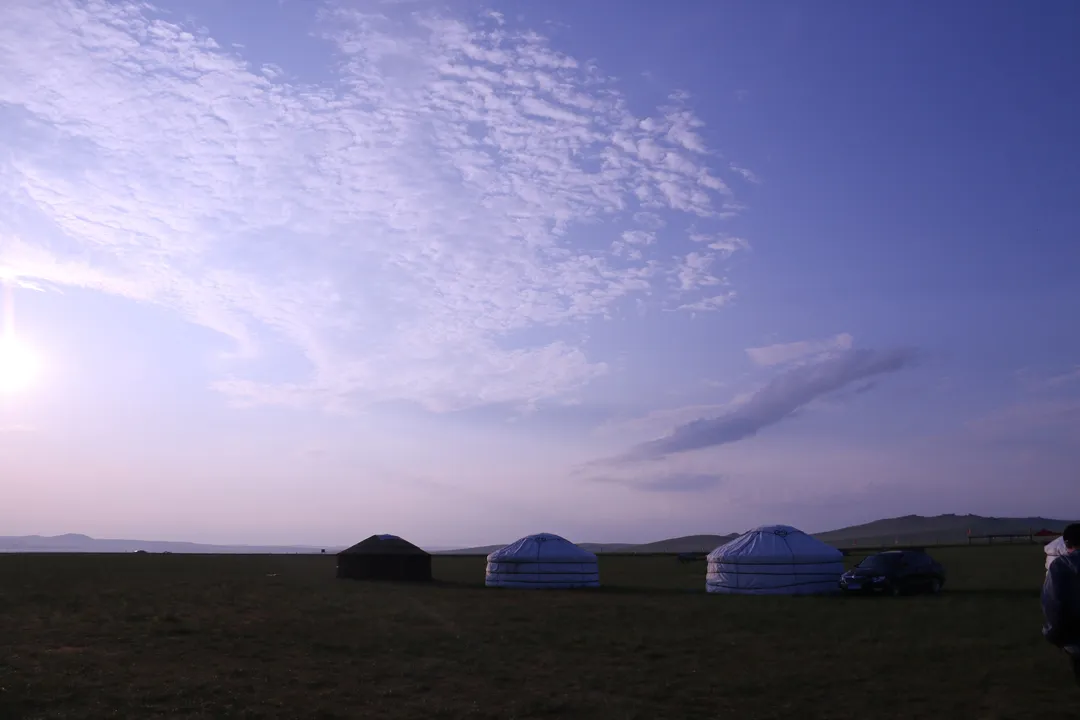
Hulunbuir is the prefecture-sized grassland of far northeastern Inner Mongolia, and Hailar is its practical base — a 3-day loop here is the classic north line. The shape is simple: day one in Hailar itself, Genghis Khan Square, the regional museum and the Yimin River bridges at dusk (the airport sits about 12 km east of downtown, a 20-minute taxi); day two out to the Mergel River camps at Jinzhanghan, 38 km north, where horse rides start around 200 yuan by route, then about 130 km on to Ergun for the wetland overlook two hours before sunset, sleeping in the Russian-descendant township of Enhe; day three along the border road to Shiwei, about 70 km on, for bakeries of the Russian descendants and a 30-minute boat on the Argun — before the roughly 290-km drive back to Hailar, budgeted at 4.5 hours with a lunch stop in Ergun.
This guide gives you the order to see things in, the cars that get you there, and the costs: a mid-range day runs 500-1000 CNY per person including a 300-600 CNY hotel, and a backpacker can hold the line at 40.
Why Hulunbuir
Hulunbuir is the grassland at its most cinematic scale — a prefecture bigger than many countries, where the Mergel River draws its loops through camps and the Argun marks the Russian border through birch and reed. Hailar, the seat, is a working city of the 20th century with a museum that explains the Mongol, Evenki and Russian-descendant history of the region better than any card you will read on a viewing platform.
The honest logistics: this is a driving destination. The loop runs 290-odd km on the return leg alone, so you charter a car — our trip data suggests roughly 600-800 yuan a day for a sedan in high season — or join a small-group tour; buses do not serve the villages. The season is short and real: June to early September greens the steppe, and everything from horse routes to guesthouses runs at summer pace. The trade-offs are distance, a thin English environment, and cold nights at the edge of the season — pack a layer even in August.
Hailar: Square, Museum and the River
Give the city its half-day. Genghis Khan Square is the civic centre and the city's evening promenade; the Hulunbuir museum nearby walks through the region's Mongol, Evenki and Russian-descendant past — context that makes the next two days on the steppe far richer. At dusk, walk the Yimin River bridges, where the city comes out to the water.
If you arrive by train, the overnight rail link from the northeast works fine; if you fly, Dongshan airport sits about 12 km east of downtown — a 20-minute taxi. Either way, arrange the charter car the night before: the drivers gather at the hotels and the square.
Jinzhanghan and the Mergel Camps
The Mergel (Moergele) River is the grassland of the postcards: tight loops of clear water through open steppe, camps of yurts along the bends. Jinzhanghan, about 38 km north of Hailar — under an hour — is the practical gateway: horse rides start around 200 yuan by route, and longer circuits run along the river's loops. Morning is the right time, when the light is flat and the herds are out.
Eat a yurt lunch, then push on: Ergun city is about 130 km further, and the wetland overlook above the town is best two hours before sunset, when the reed maze below turns gold.
The Ergun Wetland and Enhe
The Ergun wetland is one of the largest of its kind in Asia — from the overlook, the Argun's floodplain fans out in silver switches of water and reed, and the platforms trace the bend for kilometres. The visit is short but the light is everything: two hours before sunset, as our trip data sequences it, then down into the town.
Enhe, the Russian-descendant township, is the overnight: log-cottage homestays, bakeries turning out leba bread from Russian ovens, and dinner tables that run on blueberries and river fish. Sleep early — the border road waits.
Shiwei and the Argun Border
About 70 km of border-road villages from Enhe sits Shiwei, the prettiest of the Russian townships, its log houses facing the Argun river and the Russian bank beyond. Try the bakeries, take the 30-minute boat that runs the border water, and climb the viewpoint above the village for the full river bend.
Then the long ride: roughly 290 km back to Hailar, about 4.5 hours with a lunch stop in Ergun. Our trip data keeps Manzhouli — the Russian-flavored port city far to the southwest — for its own day; this short loop stays on the north line. With a fifth day, the additions are the birch forest corridor about 40 km north of Ergun, the log churches of the townships at leisure, and the Evenki reindeer camp at Aoluguya.
Day Trips: Hohhot, the Province and the Deeper Steppe
- Hohhot. The provincial capital, a flight away, holds the museums and temples that set this region in context — see the Hohhot guide.
- The province-wide steppe. Xilingol's horse country and the ruins of Xanadu are the southern half of the grassland story — our Inner Mongolia guide has the route.
- Manzhouli. The Russian-border port city needs its own day or three, southwest of the north line.
A Three-Day Plan (and More)
- Day 1 — Hailar. Land at Dongshan airport (12 km out, 20 minutes by taxi), Genghis Khan Square and the regional museum, the Yimin River bridges at dusk. Arrange the charter car.
- Day 2 — camps and wetland. The Mergel camps at Jinzhanghan, 38 km north, horse rides from about 200 yuan; 130 km on to the Ergun wetland overlook two hours before sunset; night in Enhe.
- Day 3 — Shiwei and the long ride. The border road 70 km to Shiwei, leba bread and the 30-minute Argun boat, then the 290-km run back to Hailar — 4.5 hours with lunch in Ergun.
Our 3-day Hulunbuir trip builder lays this out hour by hour, and the 5-day and 7-day versions fold in the birch corridor and the Aoluguya reindeer camp.
Getting There: Air, Rail and the Chartered Car
Dongshan airport connects Hailar with the provincial capitals; overnight trains serve the city from the northeast. Inside the prefecture there is no substitute for a car: charter roughly 600-800 yuan a day for a sedan in high season, or take a small-group tour.
| Route | Time | Typical cost |
|---|---|---|
| Airport → downtown Hailar | about 20 min | taxi fare |
| Hailar → Jinzhanghan camps (road) | under 1 h | part of the day charter |
| Jinzhanghan → Ergun (road) | about 130 km | part of the charter |
| Enhe → Shiwei (border road) | about 70 km | part of the charter |
| Shiwei → Hailar (return) | about 290 km, 4.5 h | part of the charter |
| Horse ride at Jinzhanghan | by route | from about 200 yuan |
Keep the Chinese name of each stop written down — drivers know the loop, but drivers rarely read English.
Where to Stay
A city night in Hailar near the square, then the townships: log-cottage homestays in Enhe and Shiwei trade plumbing for position, and the memory outlasts the room. Mid-range hotels in Hailar run about 300-600 CNY a night; the townships are simpler. Book the June-August window weeks ahead — the steppe season is short and everyone knows it.
What to Eat in Hulunbuir
The grassland table runs on lamb and dairy: hand-eaten boiled lamb, milk tea, cheese curds, and the Russian-descendant townships' own column — leba bread from wood ovens, blueberry jam (the region's bog cranberry), river fish from the Argun. The townships' homestay dinners are the trip's table, and Hailar's lamb restaurants bookend it.
Mobile payment works in Hailar and at most camps, but the border townships still run on cash at the smallest stalls — carry 50-100 CNY in small notes.
What a Day Costs
| Item | Price | Notes |
|---|---|---|
| Mid-range hotel | 300-600 CNY/night | Hailar; townships simpler |
| Meals | 100-200 CNY/day | lamb feasts to homestay dinners |
| Transport | 30-60 CNY/day in town | plus the charter, 600-800 CNY/day |
| Attractions | 50-150 CNY/day | overlooks, boat, museum |
Match this against our roster's estimate for the city: accommodation 300-600 CNY, food 100-200 CNY, transport 30-60 CNY and tickets 50-150 CNY, for a mid-range total of 500-1000 CNY per person per day — with the chartered car the big shared line on top. A backpacker day in Hailar itself lands near 40; the grassland days are driving days and should be split by the carload.
When to Go
June to early September is the grassland window and there is no honest substitute: green steppe, open guesthouses and the horse routes running. Early June and September trade crowds for cold nights at the season's edges. Winter shuts the townships down and turns the loop into a serious cold-weather drive. Avoid the national holiday week of early July's Interior peak and the early-October holiday, when the return road to Hailar jam together.
Practical Tips
- Payment: link an international card to Alipay or WeChat Pay in Hailar before you head out; the border townships run on cash at the smallest stalls — keep 50-100 CNY in small notes.
- eSIM: a tourist data eSIM (about 5-30 USD) avoids the phone-shop passport queue; install a VPN before you fly, since Google, WhatsApp and Instagram are blocked on the mainland.
- The charter car is the whole trip — agree the loop (camps, wetland, Enhe, Shiwei, return) and the price before you set off; 600-800 CNY a day for a sedan is the high-season bracket.
- Nights on the steppe are cold at any point of the season — a real layer, not a fashion one.
- Emergencies: police 110, ambulance 120, fire 119, national tourist hotline 12301.
Frequently Asked Questions
How many days do I need in Hulunbuir?
Three days is the classic north line: Hailar, the Mergel camps and the Ergun wetland, Enhe and Shiwei with the return drive. A fifth adds the birch corridor and the Aoluguya reindeer camp at an unhurried pace. Manzhouli and the southwest need their own trip.
How do I get to Hailar?
Fly into Dongshan airport, about 12 km east of downtown — a 20-minute taxi — or take the overnight trains that serve the city from the northeast. Either way, arrange the charter car the night before you need it: the loop out of Hailar has no bus alternative.
Can I visit Hulunbuir without joining a tour?
Yes — the standard pattern is a chartered car with a local driver: roughly 600-800 yuan a day for a sedan in high season, split by the carload. The route is straightforward (camps, wetland, Enhe, Shiwei, return), but buses do not serve the border townships, so self-guided means self-driven or chartered.
Are the horse rides at Jinzhanghan safe for beginners?
The camps run horses by route, from about 200 yuan for the short loops, with a handler leading the ride. Tell the camp your experience level honestly, wear long trousers, and keep the morning slots when the horses are fresh and the light is flat.
What is the Ergun wetland overlook like?
The Argun's floodplain fans out below the platforms in silver switches of water and reed — one of the largest wetlands of its kind in Asia. The visit is short; the light is everything. Go two hours before sunset as our trip data sequences it, then descend into Ergun town for the night.
What should I eat in Hulunbuir?
Lamb and dairy on the grassland — hand-eaten boiled lamb, milk tea, cheese curds — and in the Russian-descendant townships, leba bread from wood ovens, blueberry jam and Argun river fish. The homestay dinners in Enhe and Shiwei are the trip's table.
When is the best time to visit Hulunbuir?
June to early September. The steppe greens up, every guesthouse and horse route is open, and the light at the wetland overlook does its best work. The season's edges — early June, September — trade some crowds for cold nights. Winter is a serious cold-weather drive, not a grassland trip.
Useful Phrases
| Chinese | Pinyin | Meaning |
|---|---|---|
| 你好 | nǐhǎo | hello |
| 谢谢 | xièxie | thank you |
| 多少钱 | duōshǎo qián | how much |
| 呼伦贝尔 | Hūlúnbèi'ěr | Hulunbuir |
| 海拉尔 | Hǎilā'ěr | Hailar |
| 金帐汗 | Jīnzhànghán | Jinzhanghan |
| 额尔古纳 | É'ěrgǔnà | Ergun |
| 室韦 | Shìwéi | Shiwei |
Final Notes
Every figure above — the airport's 12 km and 20-minute taxi, Jinzhanghan's 38 km and 200-yuan horse routes, the 130 km to Ergun and the overlook timed two hours before sunset, the 70 km of border road to Shiwei with its 30-minute Argun boat, the 290-km, 4.5-hour return, the 600-800-yuan charter bracket and the birch corridor 40 km north of Ergun — was checked in October 2026 against our trip-days data for the prefecture and cross-referenced with our published itineraries. Prices move; reconfirm within a fortnight of travel.
- Source: China National Tourism Administration — policy and seasonal notices.
- Source: Trip.com — live flight and hotel listings for cross-checks.
Last verified 2026-10-16.