

Liuzhou at a Glance
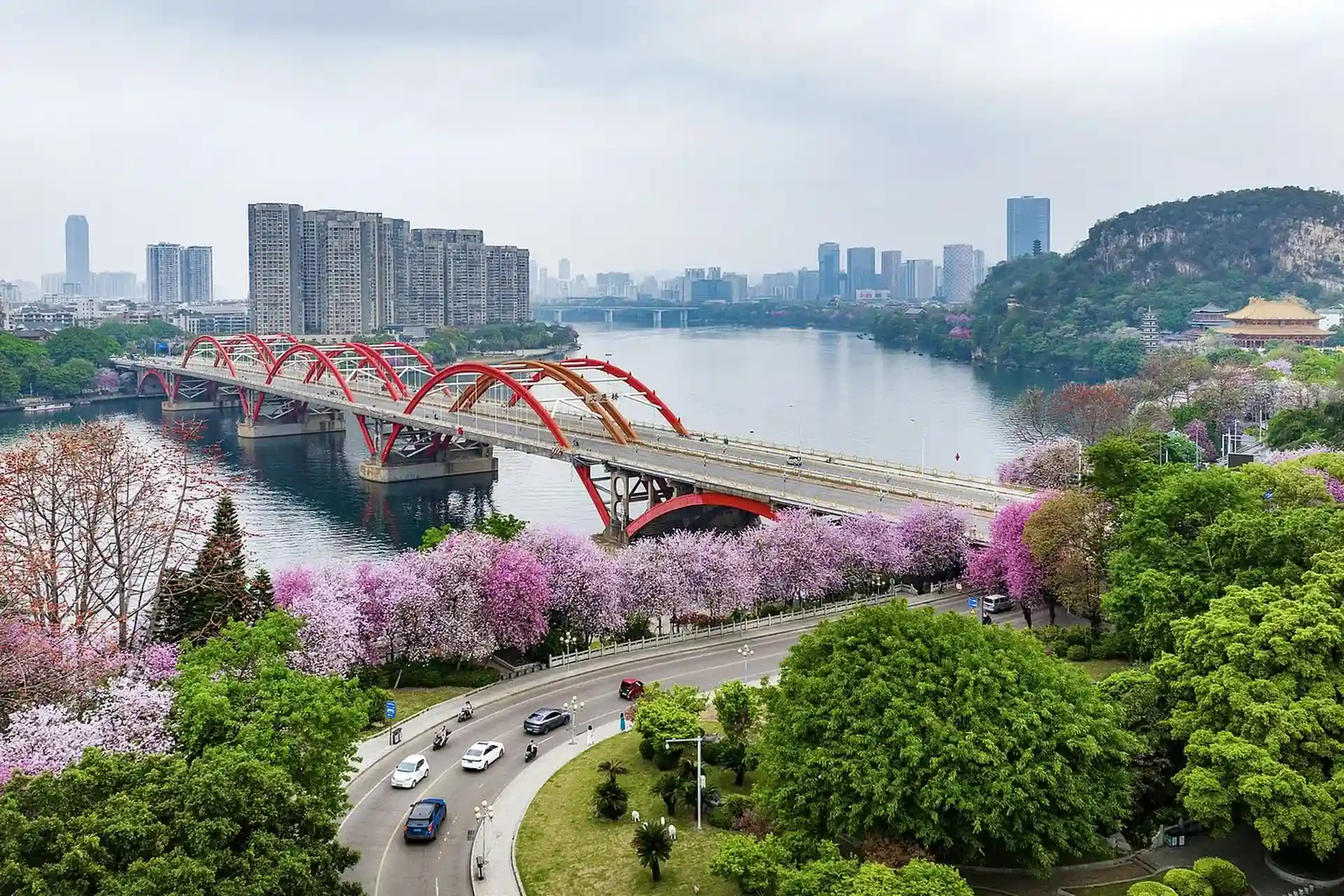
Liuzhou is the industrial city in Guangxi that everyone underestimates and everyone remembers — the one where the Liujiang river loops so tightly around the centre that locals call the city a kettle (壶城), where whole hills of karst stand inside the street grid, and where a single bowl of stinky river-snail noodles feeds an industry worth about 67 billion yuan a year. Give it two days, three with the villages: day one covers Liuhou Park, where the Tang poet Liu Zongyuan governed from 815 until his death in 819, the 270-metre climb of Ma'anshan for the kettle view, and a night cruise under the lit bridges; day two goes deep into luosifen — the industrial park where the craft, listed as national intangible heritage in 2021, is made in quantity — plus the industry museum and the riverside lanes of Yaobu old town; day three runs about 170 km north to Sanjiang county's Chengyang villages and their wind-rain bridge of 1912-1924.
The numbers: a mid-range day runs 500-1000 CNY per person including a 300-600 CNY hotel, a bowl of authentic luosifen starts around 10-15 CNY, and the best windows are April-May (bauhinia season) and September-November.
Why Liuzhou
Liuzhou works as a destination for three reasons that don't overlap. First, the setting: the Liujiang's hairpin loop frames the city like a moat, eleven bridges stitch the banks together, and karst peaks — Ma'anshan, Yufeng — rise out of the blocks like they were zoned in. Second, the smell: luosifen was born here, and the city treats it as infrastructure, not souvenirs — there is a luosifen industrial park you can visit, a luosifen museum angle inside the industry museum, and shopfronts boiling the broth at 7 a.m. Third, the door to the Dong country: Sanjiang's drum towers and wind-rain bridges are a half-day north, and Liuzhou is the practical base for them.
The honest trade-offs: this is a real industrial city — machinery, steel and automakers built the skyline — so the architecture between sights is functional; English signage is thin; and the famous smell divides travellers exactly as advertised. What you get is Guangxi's best street food economy, a river town that shows its best face at night, and prices below Guilin's.
Liuhou Park and the Poet-Governor
Liuhou Park (柳侯公园) is the city's front lawn and its memory. Liu Zongyuan — one of the Tang dynasty's greatest prose writers — was exiled here to govern in 815 and died in office in 819; the park holds his temple, his tomb and the lake that carries his honorific, Liuhou. Locals use it the way the data suggests: morning tai chi, boat rentals, and under the camphor trees, the stone tablets of his essays. It is free, flat and central; an hour is enough, two if you read the steles.
Across the river, the karst does its thing. Ma'anshan (马鞍山) — "saddle hill" — is about 270 metres and sits in the middle of the south bank; a lift or a stair path takes you up to the single best view of the Liujiang loop, best at dusk when the bridges switch on. Yufeng hill, north of the centre, carries its own legend of Liu Sanjie, the song fairy of Guangxi folklore.
The River at Night
The night cruise on the Liujiang is the city's set piece. Boats leave from the piers near the centre and run the lit loop — musical fountains, the twin towers of Yaobu, bridges in changing colours — for about an hour. Book a same-evening seat in high season; the April bauhinia bloom and the September-November clear air are the showy windows.
Luosifen: the Industry You Can Eat
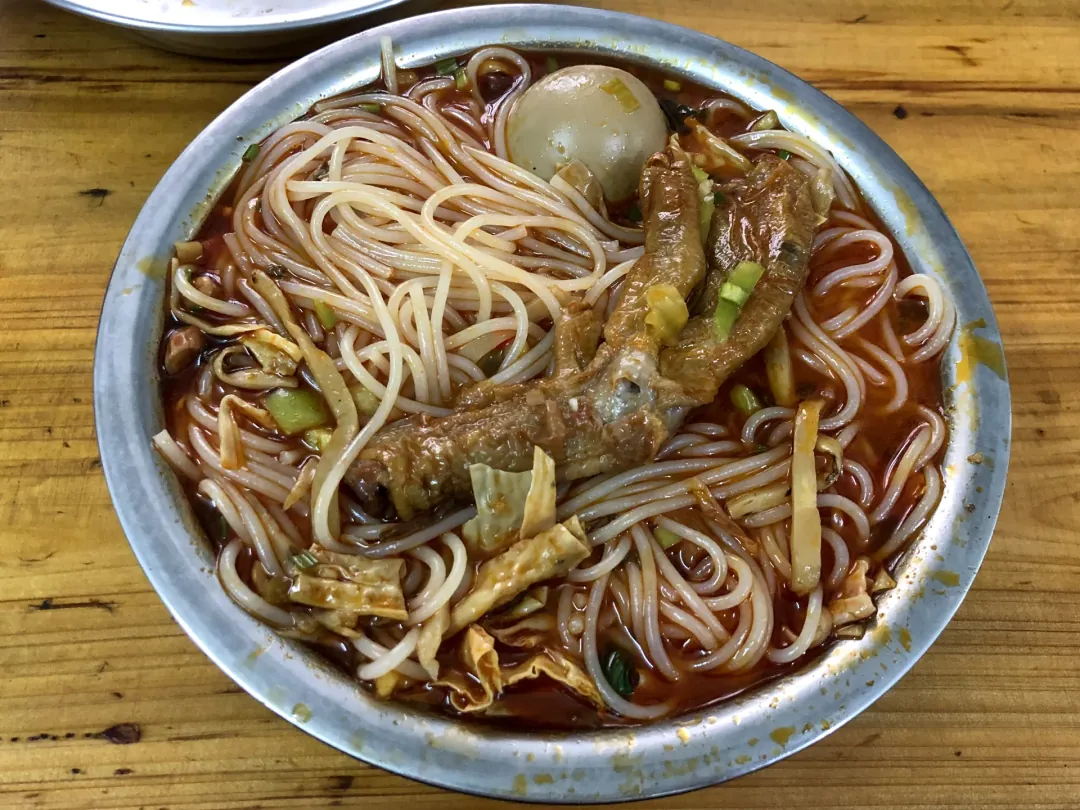
The bowl above is the point of the city for many visitors: rice noodles in a broth built from river snails and pickled bamboo shoots — funky, sour, chili-hot, with peanuts, fried tofu skin and a braised chicken foot if you order well. The craft joined China's national intangible heritage list in 2021, and the city's full luosifen chain — noodles, broth, packaging, delivery — sold about 67 billion yuan in 2023.
Do it properly: a bowl at an old street counter for 10-15 CNY (above), then the luosifen industrial park, where the production lines and tasting counters explain how a street smell became an export economy. The industry museum, set in old factory halls, finishes the story of a city that built lorries and machines — and then built a noodle.
Old Lanes and Yaobu
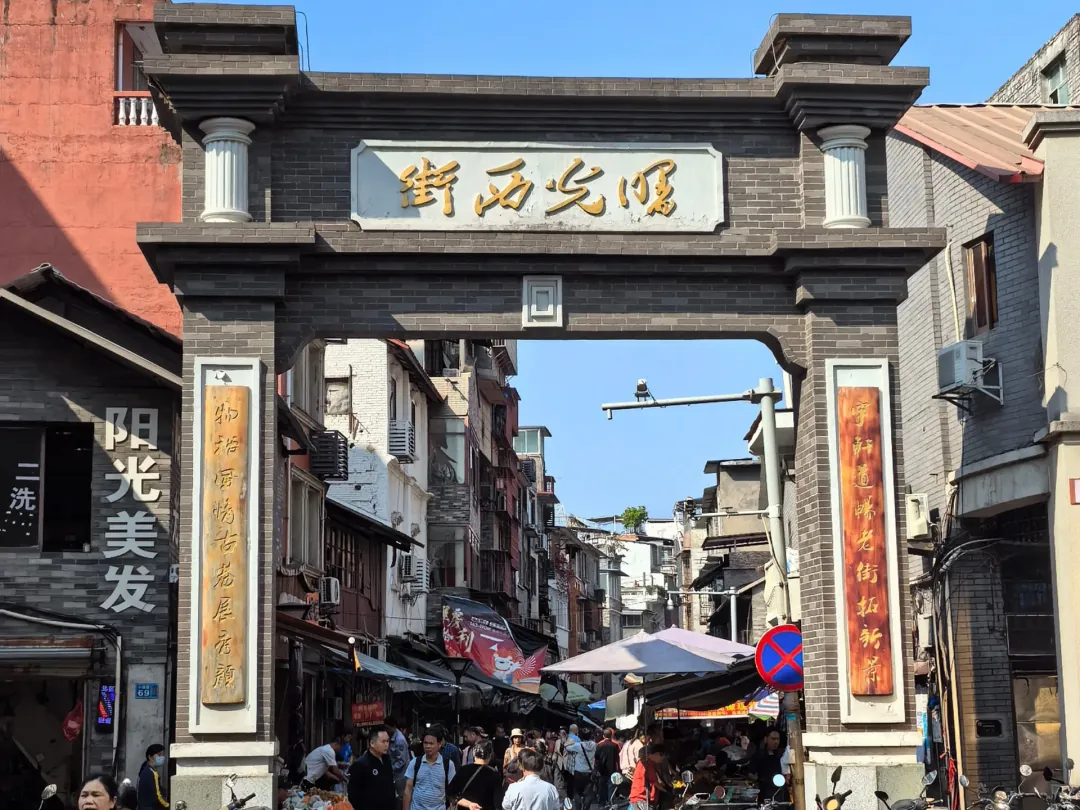
The old quarter survives in food lanes like the one above — grey-brick archway gates, steamer baskets, a queue at every second counter. East along the river, Yaobu old town rebuilds the wharf quarter beside the twin pagodas on Panlong hill; touristy in parts, but the riverside walk at lantern-hour earns its keep, and it connects to the cruise piers.
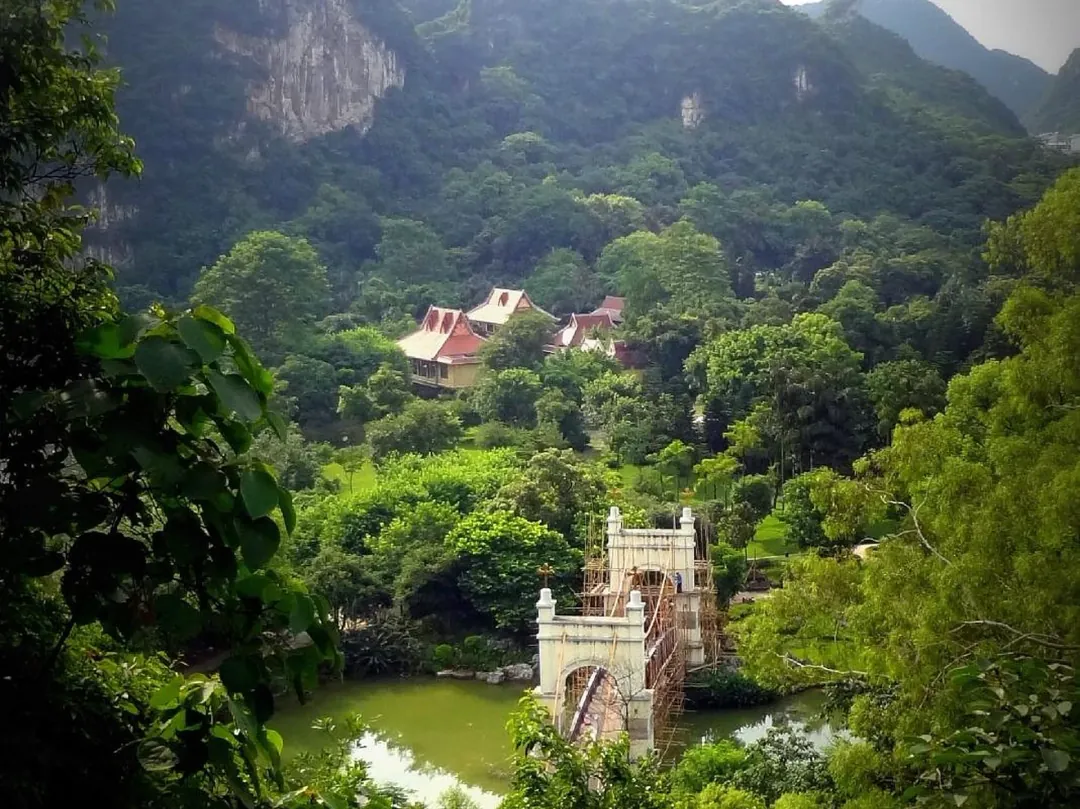
For parks, the karst south of the centre keeps its own: green ponds, stone bridges and pavilions folded between cliff walls, free or near-free to enter.
Chengyang: the Wind-Rain Bridge Day
About 170 km and 2.5 hours north in Sanjiang county, the Chengyang villages cluster around the Yongji wind-rain bridge, built between 1912 and 1924 without a single nail — close to 78 m of covered gallery on stone piers, nationally listed. Drum towers rise over the rice terraces; oil-tea is poured in the courtyards; and if your timing hits a festival, the Dong opera stage fills. It is a long day from Liuzhou — leave by 08:00 — or a relaxed overnight in a village guesthouse.
A Three-Day Plan
- Day 1 — poet and kettle. Liuhou Park in the morning, Ma'anshan at dusk for the loop view, night cruise after dinner.
- Day 2 — noodles and industry. Luosifen breakfast in the old lanes, the industrial park mid-morning, the industry museum after lunch, Yaobu and the riverfront for lantern hour.
- Day 3 — the Dong country. Early start for Chengyang; back by evening, or overnight in Sanjiang.
The hour-by-hour versions live in our 3-day Liuzhou trip builder, and the 5-day and 7-day routes fold in Guilin and the Guangxi loop.
Getting There: HSR, Airport and Local Transport
Liuzhou sits on the Guilin–Nanning HSR corridor: high-speed trains reach Guilin in about an hour and Nanning in about an hour as well, with the city centre a short ride from Liuzhou station. Flights land at Liuzhou Bailian airport, south of the river. Inside the city, buses and taxis are cheap; the sights cluster along the river loop.
| Route | Time | Notes |
|---|---|---|
| Guilin → Liuzhou (HSR) | about 1 h | Guilin–Nanning corridor |
| Nanning → Liuzhou (HSR) | about 1 h | corridor continues south |
| Liuzhou station → city centre / riverfront | 10-15 min by taxi | short hop |
| Liuzhou → Chengyang villages (Sanjiang) | about 2.5 h by road | about 170 km; day trip or overnight |
| City centre → luosifen industrial park | 20-30 min by taxi | production lines + tasting |
| Ma'anshan lift or stair climb | 10-20 min | 270 m viewpoint |
Keep the Chinese name of your destination written down — 柳州 for the city, 螺蛳粉 for the noodles — as drivers rarely read English.
Where to Stay
Stay inside the river loop, between Liuhou Park and the central bridges: mid-range hotels run 300-600 CNY a night, the old food lanes are walkable, and the cruise piers are close. Hotels near the HSR station suit early departures to Guilin or Sanjiang. The bauhinia weeks of April and the Golden Week of October fill the riverside band — book ahead.
What a Day Costs
| Item | Price | Notes |
|---|---|---|
| Liuhou Park | free | temple and lake included |
| Ma'anshan viewpoint | low single digits | lift optional |
| Night cruise | mid tens of CNY | book in season |
| Luosifen bowl | 10-15 CNY | old-street counters |
| Luosifen industrial park | low fee | tasting counters |
| Chengyang villages + bridge | combined ticket | covered bridge and drum towers |
| Mid-range hotel | 300-600 CNY/night | inside the river loop |
| Meals | 100-200 CNY/day | noodles to river-fish dinners |
| Local transport | 30-60 CNY/day | bus and taxi |
Match this against our roster's estimate for the city — accommodation 300-600 CNY, food 100-200 CNY, transport 30-60 CNY and tickets 50-150 CNY — for a mid-range total of 500-1000 CNY per person per day. A backpacker day on hostels, buses and luosifen lands near 40; the luxury ceiling is about 300.
When to Go
April-May brings the bauhinia bloom that turns whole riverside streets violet — the photo season. September-November is the calm, clear window with the best river nights. Summer is hot and rainy; winter is grey but the noodle pots never cool. Avoid the first week of October, when the whole country moves.
Practical Tips
- Payment: link an international card to Alipay or WeChat Pay before arrival; keep 50-100 CNY in small notes for the noodle counters.
- eSIM: a tourist data eSIM (about 5-30 USD) avoids the phone-shop passport queue; install a VPN before you fly, since Google, WhatsApp and Instagram are blocked on the mainland.
- The smell: luosifen's funk is the point — eat your first bowl in an open-air lane, not your hotel room.
- Chengyang timing: the bridge day runs 5-6 hours door to door; start by 08:00 or stay over.
- Emergencies: police 110, ambulance 120, fire 119, national tourist hotline 12301.
Frequently Asked Questions
How many days do I need in Liuzhou?
Two cover the city: the parks, the viewpoint, the night cruise, the noodle economy and the old lanes. The third goes to Chengyang's wind-rain bridge in Sanjiang — a long day trip or a quiet overnight.
What is luosifen and where do I try it first?
River-snail rice noodles: rice noodles in a snail-and-pickled-bamboo-shoot broth — sour, chili-hot, famously funky — topped with peanuts and fried tofu skin; add a braised chicken foot. Try the first bowl at an old-street counter for 10-15 CNY, then see the industrial park for how the chain reached 67 billion yuan of sales in 2023.
How do I get from Guilin or Nanning to Liuzhou?
High-speed trains on the Guilin–Nanning corridor take about an hour from either city to Liuzhou station, a 10-15 minute taxi hop from the river loop. Buy on the 12306 app with a passport.
Is the Ma'anshan climb hard?
No — a lift carries you most of the way up the 270-metre hill, or take the stair path. The sunset view of the Liujiang loop is the single best panorama in the city; arrive an hour before dark.
Is Chengyang worth the trip from Liuzhou?
Yes, if you have the day. The Yongji bridge — built 1912-1924 without nails, about 78 m long — and the drum towers around it make the best ethnic-architecture day in Guangxi. It is about 170 km and 2.5 hours each way, so start early or sleep in the village.
When do the bauhinias bloom in Liuzhou?
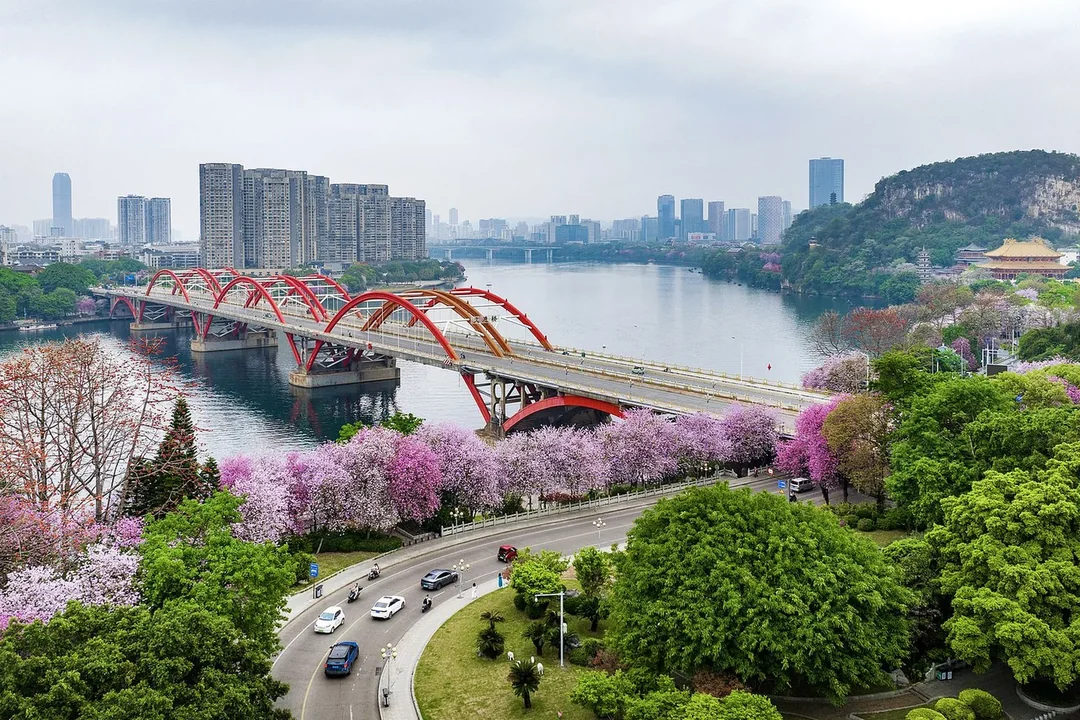
Usually April, with the peak shifting a few weeks either side with the spring. Whole avenues along the river turn violet; the red bridges framed by blossoms are the city's signature shot. Expect crowds at weekends.
Do I need cash in Liuzhou?
Mostly no: Alipay or WeChat Pay linked to an international card covers trains, taxis, parks and nearly all noodle counters. Keep 50-100 CNY in small notes for the oldest street stalls and the village tea courtyards in Sanjiang.
Useful Phrases
| Chinese | Pinyin | Meaning |
|---|---|---|
| 你好 | nǐhǎo | hello |
| 谢谢 | xièxie | thank you |
| 多少钱 | duōshǎo qián | how much |
| 柳州 | Liǔzhōu | Liuzhou |
| 螺蛳粉 | luósīfěn | river-snail rice noodles |
| 柳侯公园 | Liǔhóu Gōngyuán | Liuhou Park |
| 马鞍山 | Mǎ'ānshān | Ma'anshan hill |
| 程阳风雨桥 | Chéngyáng Fēngyǔqiáo | Chengyang wind-rain bridge |
| 百里柳江 | bǎilǐ Liǔjiāng | the hundred-li Liujiang |
Final Notes
Every figure above — Liu Zongyuan's 815-819 governorship, Ma'anshan's 270 metres, the intangible-heritage listing of 2021, the 67 billion yuan luosifen chain of 2023, the 170 km and 2.5 hours to Chengyang, the 1912-1924 nail-free bridge near 78 m long, and the 500-1000 CNY daily band — was checked in October 2026 against our Liuzhou trip-days data and published listings. Prices move; reconfirm within a fortnight of travel. Come for the noodles, stay for the river at night — and when the bauhinias fall, sweep your own path through the petals.
- Source: China National Tourism Administration — policy and seasonal notices.
- Source: Trip.com — live train and hotel listings for cross-checks.
Last verified 2026-10-16.