


The first thing anyone notices about Guilin isn't the karst mountains — it's how flat the city is. From the window of a taxi rolling in from the airport, the skyline is almost aggressively ordinary: mid-rise apartments, a river cutting through the middle, the kind of humid haze that sits on a southern Chinese city in late afternoon. Then you wake up the next morning, walk to Seven Star Park, and the city reveals what it actually sold you: a few hundred square kilometers of conical limestone peaks rising out of rice paddies, river bends, and cloud cover that looks painted. That moment of disorientation is the Guilin experience. The town is a logistical base. The scenery is twenty minutes in any direction.
This guide is written for someone who has already decided to come and needs to know how to do it without wasting time or money. Guilin rewards planning. It punishes improvisation. Read it once, then book things.
Why Guilin, and Why It Matters in 2026
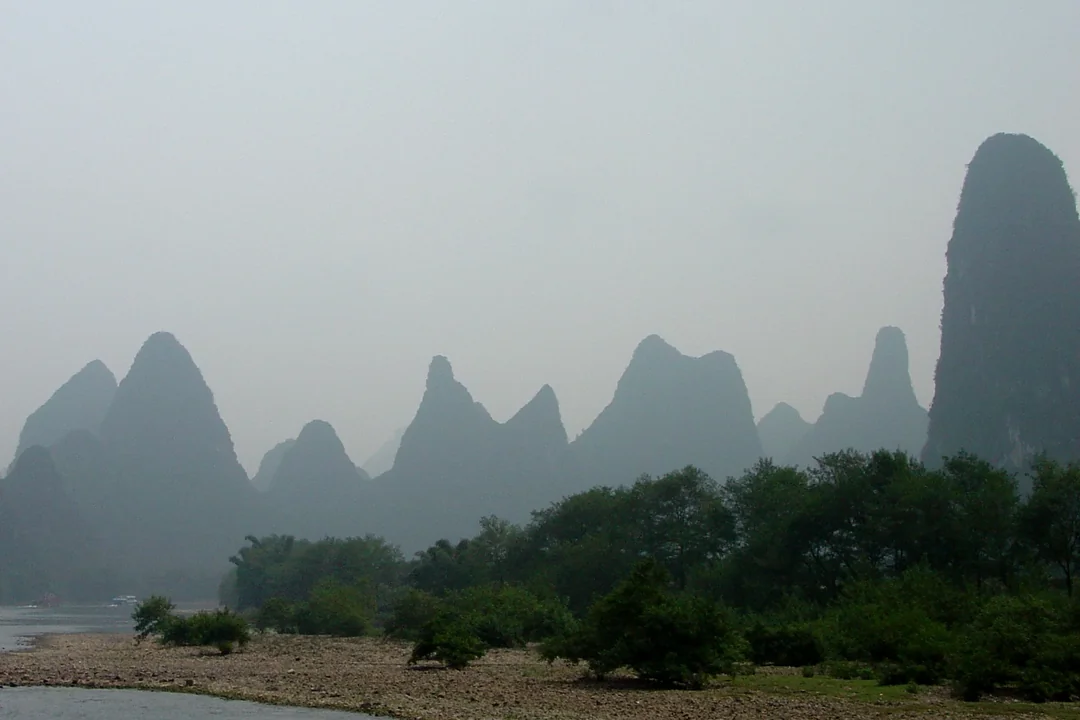
Guilin has been on the Chinese tourism map since the Tang dynasty, when the poet Wang Bo wrote that anyone who hadn't seen Guilin's scenery hadn't really lived. Two millennia later, the city pulls around 12 million visitors a year, more than the population of Sweden. It is one of four Chinese cities (alongside Hangzhou, Beijing, and Xi'an) that appears on almost every first-timer itinerary.
The reason is geographic. Guilin sits in the northeastern corner of Guangxi Zhuang Autonomous Region, in a basin of Permian-era limestone that has been eroded into one of the most concentrated karst landscapes on Earth. The Li River (漓江) cuts through this basin for 83 kilometers between Guilin city and Yangshuo (阳朔), and that corridor — plus the city itself — is what every guidebook means when it says "Guilin scenery."
In 2026, two things have shifted. First, the Beijing-Guilin high-speed rail line, fully operational since late 2024, has cut travel time from Beijing to around 7 hours. Second, the city's new metro Line 1, opened in stages from 2023-2025, has made local transport meaningfully easier for the first time. This is a different Guilin than the one tourists complained about ten years ago, when getting from the train station to Seven Star Park required either a 30-minute taxi through chaotic traffic or a broken public bus.
essential Attractions
Li River Cruise from Guilin to Yangshuo
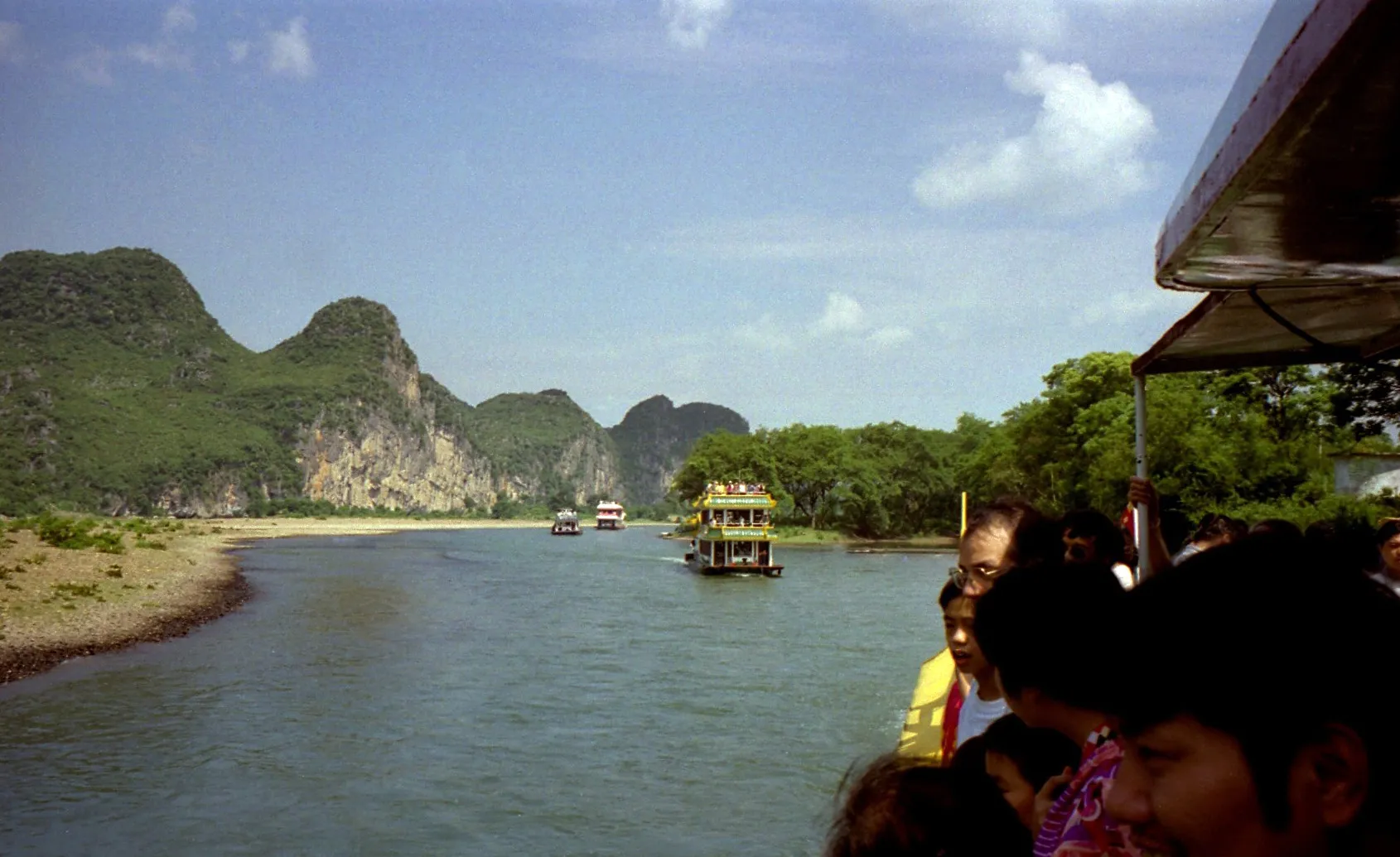
The single most famous boat trip in China, and for once the reputation is accurate. The 4-5 hour cruise covers the 83 kilometers between Zhujiang Wharf (竹江码头), 30 minutes south of Guilin city, and the town of Yangshuo. The scenery is constant — wave after wave of green peaks, bamboo-lined banks, water buffalo, cormorant fishermen, the occasional village — and the boat is slow enough that you can actually take photos without leaning dangerously over the rail.
Practical. Boats depart daily around 9:00-10:00 AM. Tickets in 2026 are around 450 CNY for a standard cabin on a 3-star boat, 800-1200 CNY for premium boats with better food and larger windows. Buy through the official 漓江售票 platform on WeChat or via a hotel concierge; do not buy from scalpers at the wharf. The return leg is by coach and takes 90 minutes. Bring sunscreen, a light jacket (the cabin AC is aggressive), and a wide-brimmed hat.
Recommendation. Do the cruise, but skip the buffet lunch. It's 50 CNY extra and ranges from mediocre to actively bad. Eat at the Yangshuo end instead. If you have time, the bamboo raft trips on the quieter Yulong River (遇龙河) are a better, smaller-scale experience — see below.
Elephant Trunk Hill (象鼻山)
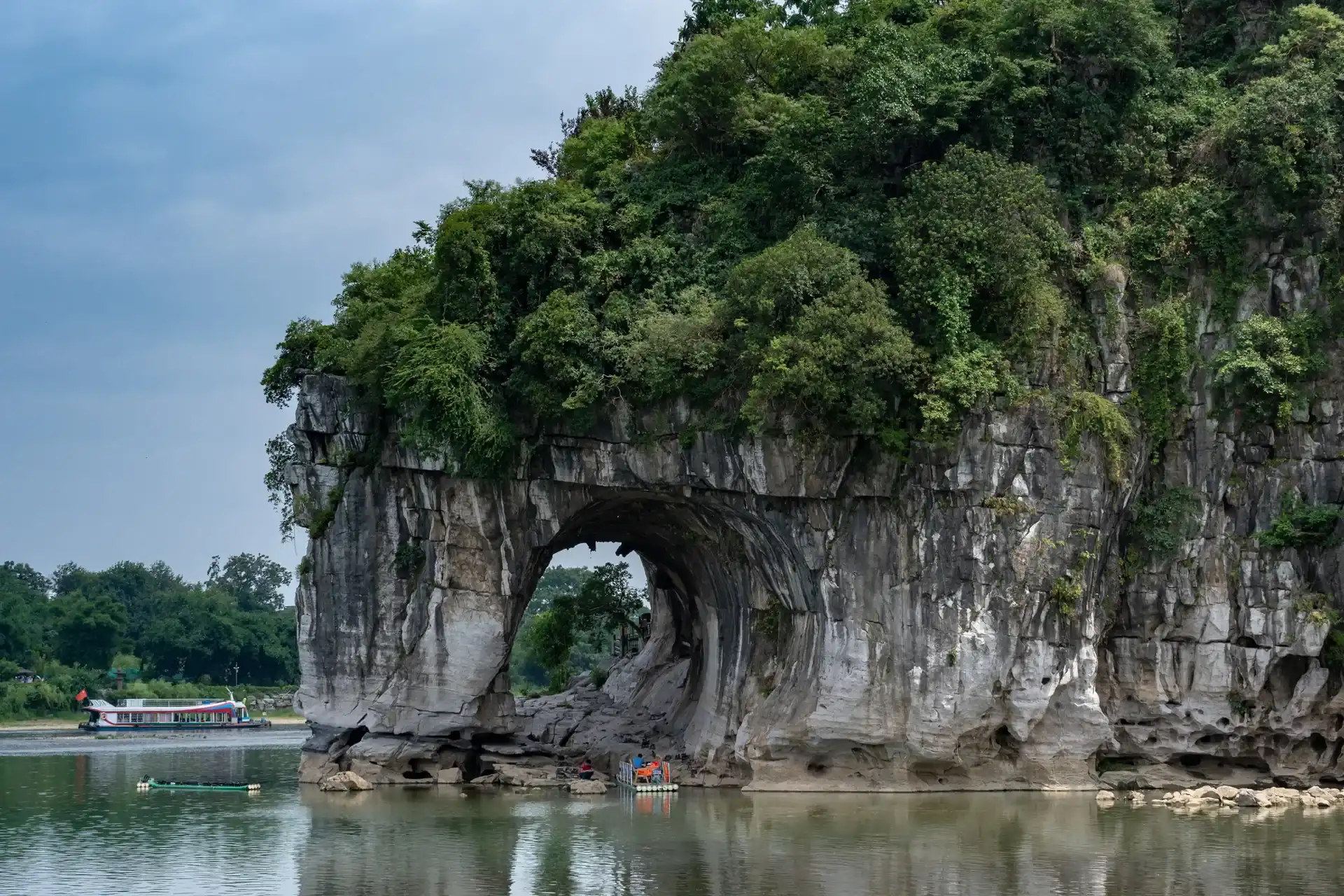
The symbol of Guilin, and the one attraction where the picture on the postcard is exactly what you see. A karst peak on the western bank of the Li River has been eroded into a shape that, from a specific angle on the riverbank, looks like an elephant drinking from the water. It is small, surrounded by a public park, and very crowded between 10:00 and 15:00.
Practical. Entry is technically free but you need to reserve via the official WeChat mini-program or buy a 35-55 CNY combo ticket that includes the hilltop viewing platform and the Yunqi Pagoda. Opening hours roughly 7:00-21:00. Take bus 2 or 16 from the city center; it's also a 15-minute walk from Zhengyang Pedestrian Street (正阳步行街) if you're staying central.
Recommendation. Go at 7:00 AM when the park opens. The light is right, the tour buses haven't arrived, and you'll have a real moment with the rock. Skip the night-time light show — it's kitsch and you can see the silhouette from across the river anyway.
Seven Star Park (七星公园)
The largest park in Guilin, on the eastern bank of the Li River, and the best single place to understand the karst landscape up close. It contains seven named peaks (hence the name), the Seven Star Cave (芦笛岩's smaller cousin, less crowded but smaller formations), a zoo that ranges from depressing to endearing, the Putuo Mountain summit which gives the best view in central Guilin, and roughly 4 kilometers of pleasant walking paths.
Practical. Entry is 30 CNY; the cave adds another 50 CNY; the Putuo cable car another 60 CNY. The park opens around 6:00 AM and stays open until about 21:30. From the city center, take bus 14 or 25, or ride the new metro Line 1 to Qixing Park Station (七星公园站), which opened in 2024 and dropped the access time from 25 minutes to 8.
Recommendation. Allocate half a day. Walk the riverside path first, then take the cable car up Putuo for the panoramic view, then descend to the cave if you have time. The Seven Star Cave here is a 15-minute walk; if you only have time for one cave in the area, do Reed Flute Cave (芦笛岩) instead — see below.
Reed Flute Cave (芦笛岩)
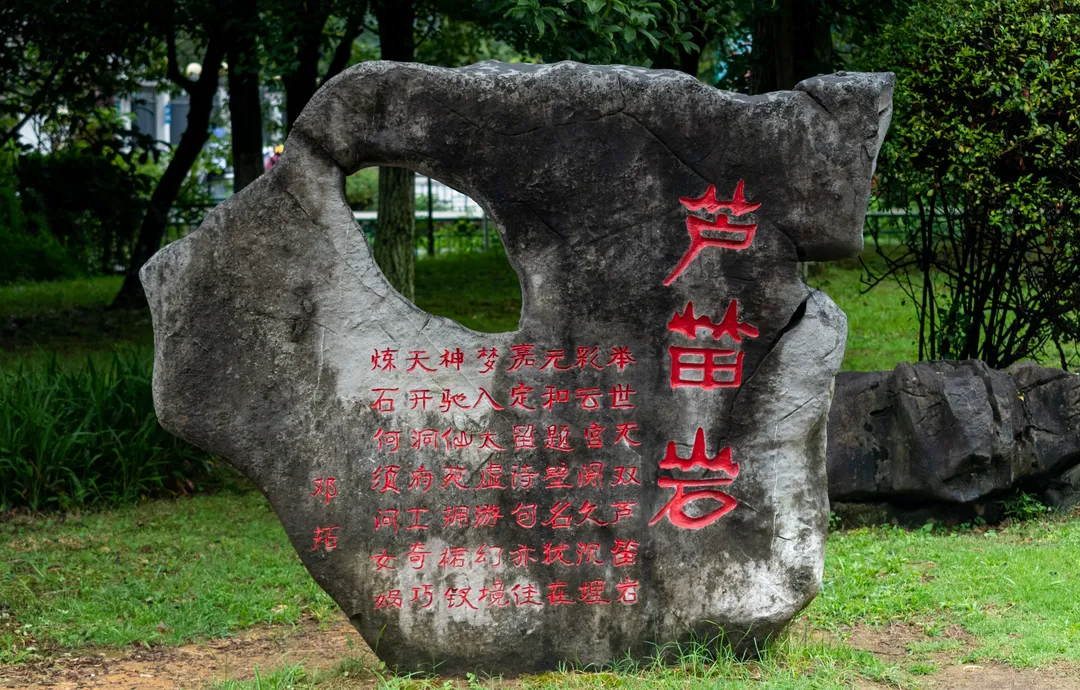
A 240-meter-long limestone cave in the northwestern suburbs, illuminated with colored LED lights since the 1960s and repeatedly upgraded. The formations are genuinely impressive — stalactites up to 18 meters long, named after mythological objects (Crystal Palace, Single Pillar) — and the constant 18-20°C temperature inside is a relief in July and August.
Practical. Tickets 80-120 CNY depending on the season and whether you include the nearby Seven Star Cave. Hours roughly 8:00-17:30. From the city center, take bus 3 or 41, about 40 minutes, or a DiDi for around 35 CNY.
Recommendation. Yes, do it. It's touristy but earned. The lights are sometimes criticized as garish, but they also let you see formations that would be invisible under more "authentic" white light. Buy the audio guide (20 CNY); it explains which rock formations correspond to which legends, and the legends are charming.
Longji Rice Terraces (龙脊梯田)
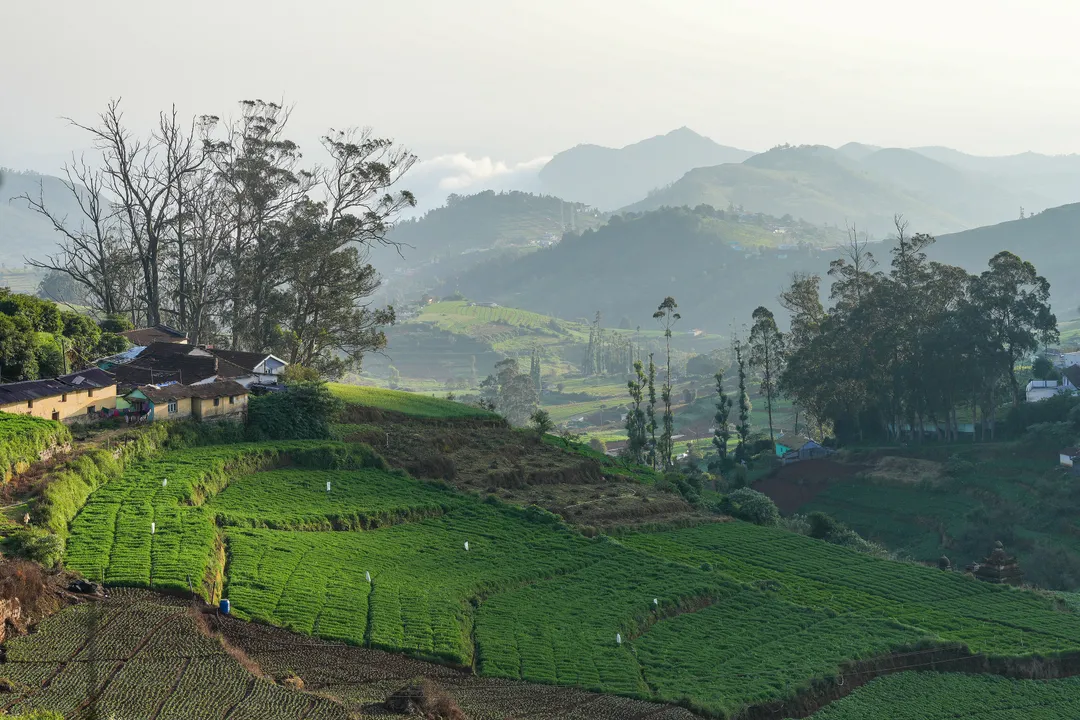
About 100 kilometers north of Guilin city, the Longji (Dragon's Backbone) terraces are the agricultural counterpoint to the Li River's natural scenery. Built over 700 years by the Zhuang and Yao minority peoples, the terraces cascade up mountainsides in patterns that look like contour lines on a topographic map, except alive and green and worked by hand.
Practical. Several villages to choose from. Ping'an (平安) is the easiest, most developed, and the entry ticket is 95 CNY. Jinkeng (金坑) is larger and more dramatic, especially in autumn. Dazhai (大寨) is the most scenic, with the famous "Seven Stars with Moon" viewpoint. From Guilin's Qintan Bus Station (琴潭汽车站), direct buses to Longji run 7:30-15:30, taking 2.5-3 hours and costing 60-80 CNY. Last return bus is around 16:30-17:00; check locally, schedules shift. Overnight stays in wooden stilt-house guesthouses run 200-500 CNY including dinner and breakfast.
Recommendation. This is the one place where staying overnight beats a day trip. The early morning and late afternoon light are incomparable, and the villages are best experienced after the day-trippers leave. If you only have one day, leave by 7:30 AM and come back on the late bus. Spring flooding (May-June) and autumn harvest (late September-October) are the two peak windows.
Where to Stay
Guilin has three practical lodging bases: central Guilin, the Yangshuo end of the Li River, and Longji. Most travelers split their nights between Guilin city (2 nights) and Yangshuo (1-2 nights), skipping Longji unless they've allocated a third day.
Central Guilin — for first-timers. The Central Plaza (中心广场) area and Zhengyang Pedestrian Street are walkable to Elephant Trunk Hill, Seven Star Park, and the main dining streets. Mid-range options cluster here. Try the Guilin Bravo Hotel (桂林宾馆) — a historic Soviet-built property from the 1950s, recently renovated, with rooms from 450-650 CNY/night. It's near Elephant Trunk Hill and the staff actually speak English. For something cheaper, the Wandee Youth Hostel (瓦迪青年旅舍) near Seven Star Park has dorm beds from 80 CNY and small doubles from 250 CNY; the rooftop bar is a meeting point for backpackers and the staff organize daily outings.
Central Guilin — for repeat visitors or business. The new Lijiang Waterfall Hotel (漓江大瀑布酒店) is the largest in the city and sits next to Zhengyang Walking Street. Rooms from 700 CNY; the 12-story artificial waterfall on the facade is kitsch, but the location can't be beat. Alternatively, the boutique Aroma Tea House (香草院) near Chuanshan Road offers 6 rooms in a converted Qing-era courtyard, from 800 CNY/night, with proper tea service on the terrace.
Yangshuo. Stay on or just off West Street (西街) for walkability, or in one of the countryside guesthouses for atmosphere. The Yangshuo Sugar House (糖舍酒店) is the design choice — converted from a 1960s sugar mill on the Yu Long River, rooms from 1200 CNY, and it's a 5-minute walk from West Street but feels miles away. Mid-range: the Yangshuo Old Carriage Hotel (老车夫客栈) has clean doubles from 350-450 CNY and is centrally located.
Longji. Stay in Ping'an village if you want amenities, Dazhai or Jinkeng for authenticity. The Longji Ping'an Lodge (平安客栈) is the standard, rooms from 280-400 CNY including two meals. The owners are Zhuang and will walk you through the terrace walks at dawn.
Getting Around
Guilin finally has a working metro. Line 1 opened in stages from 2023-2025 and runs north-south through the city center with stops including Guilin Railway Station, Central Plaza, Seven Star Park, and the new Qintan Bus Station. Fares are 2-7 CNY depending on distance. Trains run 6:30-22:30. It's clean, cheap, and dramatically underused; ride it.
For the airport, Guilin Liangjiang International Airport (桂林两江国际机场) is about 30 km southwest of the city. Airport buses run every 30 minutes from 6:00-23:00, 20 CNY, 60-90 minutes depending on traffic. A DiDi (滴滴, the Chinese Uber) costs around 100-130 CNY and takes 40 minutes — better value than a taxi.
For Yangshuo, the Guilin North Railway Station (桂林北站) has frequent G-train high-speed services to Yangshuo Station, taking 25-30 minutes for 35-45 CNY. This is faster and more reliable than the bus, and Yangshuo Station is 7 km from West Street (a 15 CNY DiDi). Buses still run from Qintan Bus Station, 90 minutes, 35 CNY, but the train is the better option.
Within the city, DiDi is the go-to app. Install it before arrival, link a Visa or Mastercard, and you'll have an English interface and reliable pricing. Taxis are also cheap — 10-25 CNY for most in-city trips — but drivers rarely speak English and the meter occasionally "forgets to start." Insist on the meter or use DiDi.
For Yangshuo and the Yulong River area, e-bikes (电动车) are the local transport. Rentals cost 50-80 CNY/day from dozens of shops on West Street, no license required for foreigners on a tourist visa, and the flat valley makes them effortless. Don't ride after dark on rural roads; the headlight won't help you.
Where to Eat
Guilin cuisine is part of the broader Guangxi (桂菜) tradition: fresh river fish, pork cooked with beer (啤酒鱼), rice noodles in many shapes, and the occasional surprising use of chili. Portions are large; service is functional; menus rarely have English outside the tourist quarter.
Chongshan Noodle Shop (崇善米粉), on Zhongshan Middle Road (中中路). One of the oldest rice noodle shops in the city, opened 1982. A bowl of guilin mifen (桂林米粉) — thin rice noodles in broth with pickled long beans, peanuts, pork, and chili — costs 12-18 CNY. The shop is small, loud, and exactly what you want. Eat standing at the counter like everyone else.
Agan Restaurant (阿甘酒家), in the Qixing District. The local pick for beer fish (啤酒鱼), the signature dish of the Yangshuo area but available in town. Whole carp cooked in beer, garlic, tomatoes, and pickled peppers, served bubbling in a clay pot. Around 120-180 CNY per fish, enough for two. Reservations recommended on weekends; confirm the current phone number on the shop listing.
Guiwei Xiaozhen (桂味小镇), on Nanhuan Road. A modern Guangxi restaurant with English menus and reliable versions of tangbo er duo (酸笋, sour bamboo shoot), you cha guo (油茶, oil tea — the local breakfast drink), and zhong guo guo (糍粑, glutinous rice cakes). Mains 50-90 CNY. Open late.
Yangshuo — Chunji Roasted Goose (椿记烧鹅), on West Street. A chain from Nanning that does excellent roast goose (80-120 CNY per portion), and a half-roasted goose with rice for 50 CNY is a meal. They also do good luosifen (螺蛳粉, the famously smelly river-snail noodle soup from neighboring Liuzhou). Don't expect a date here; expect flavor.
Yangshuo — Sleepy Tee Café, off West Street on a side alley. A backpacker institution since the 1990s. The coffee is fine, the food is fine, the people-watching is the point. Outdoor seating with views to the karst peaks.
Yangshuo — The Local (本地人), in the village of Fuli, 7 km from West Street. A 30-minute bike ride but worth it for the most authentic Zhuang-style zi ba (糍粑, pounded rice cakes) and fresh bamboo shoots. No English menu; bring a translation app.
For breakfast, don't skip you cha (油茶), a savory tea soup with puffed rice, peanuts, and ginger. It's the local breakfast staple. Chaxiang Yuan (茶香苑) on Shanhu Road serves a good version for 15 CNY. It's an acquired taste — the first sip is bitter and salty — but by the second cup you'll understand.
When to Visit
Guilin has a humid subtropical climate. Summers (June-August) are hot (32-36°C) and wet; winter (December-February) is mild (5-15°C) but damp and overcast. Spring and autumn are the windows.
Best months. April, May, September, October. April-May brings the clearest water levels on the Li River after spring rains and brilliant green on the karst peaks. Late September-October is harvest season for the rice terraces, with golden terraces against blue sky — it's the most photographed version of Longji.
Worst months. Avoid Chinese National Day (October 1-7) and Spring Festival (late January or February, dates vary). Both weeks see Guilin's population triple as domestic tourists flood the Li River. Prices double, boats sell out a week ahead, and the karst is mostly visible through selfie sticks.
Local events. The Guilin Osmanthus Festival (桂花节) in September-October is sweet-smelling and small-scale. The Longji Hair Festival (红衣节) in Dazhai village, June, is a Yao minority celebration — red pleated skirts, dancing, and impressive quantities of rice wine. Worth aligning your trip if you're interested in ethnic minority culture.
Practical Info
Visa. As of 2026, China offers 30-day visa-free entry for citizens of most European countries, Australia, New Zealand, Japan, South Korea, and several others. U.S. and Canadian citizens still need to apply in advance, though transit visa-free (240 hours, expanded from 144 hours in late 2024) covers most Guilin visits if you're routing through Shanghai, Beijing, or Guangzhou. Check the latest list on the Chinese consulate website before booking.
Mobile payment. Alipay now accepts international Visa, Mastercard, and JCB cards via the "Tour Card" function. WeChat Pay is integrating international cards but less reliably. Set up Alipay before arrival; it works at 95% of restaurants, convenience stores, taxis via DiDi, and almost all hotels. Carry 200-500 CNY in cash for the remaining 5%: small noodle shops, rural guesthouses, street vendors. ATMs at ICBC and Bank of China accept foreign cards.
SIM and eSIM. The cheapest option is a tourist eSIM from Airalo or Holafly (5-30 USD for 5-30 GB over 7-30 days). Local SIM cards from China Mobile or China Telecom cost 100-200 CNY for a month with 30+ GB and a Chinese number (useful for DiDi and Alipay verification). Buy at the airport kiosk or any official carrier store.
Language. Mandarin in Guilin is standard. Younger staff in hotels, restaurants, and the metro speak some English; older staff rarely do. Translation apps (DeepL, Google Translate, Pleco) work well with the offline Chinese pack downloaded.
Safety. Guilin is safe. Petty theft is rare. The biggest risk is food poisoning from undercooked river fish — eat at busy restaurants, not quiet ones with suspicious buffets. Tap water is not drinkable. The tap water is technically treated but the pipes are old; use bottled or filtered.
Hours. Most attractions open 7:00-8:00 and close 17:00-18:00. The Li River cruise and Longji have stricter departure times — confirm the day before.
Hidden Gems and Local Knowledge
The Yulong River bamboo rafts. Forget the big Li River boats for a moment. The Yulong River (遇龙河), south of Yangshuo, runs through a quieter karst valley and the traditional way to see it is on a hand-poled bamboo raft. A 2-3 person raft for 90-150 minutes costs 200-400 CNY per raft (yes, the whole raft, not per person) and you drift past small villages, old bridges, and the kind of scenery that makes you wonder why anyone goes on the big boats. Book through your hotel the day before.
Yao Mountain (尧山) at sunrise. Most tourists take the Putuo Mountain cable car in Seven Star Park for the sunrise view. Locals go to Yao Mountain, taller (903m) and slightly further, but the sunrise breaks over the karst peaks in a way that Putuo can't match. Take a DiDi from the city center around 4:30 AM (40 CNY), arrive before 5:00, take the cable car (60 CNY), and be at the summit for 5:45. The light lasts 20 minutes. Bring a jacket; it's 10°C cooler than the city.
The old city walls at night. Most travelers miss them because they don't show up in guidebooks. The remaining Ming-era walls are preserved around Jingjiang Gate (靖江王城) and a small section near Wenming Island (文明岛). Walk them around 21:00 when the lights come on and the crowds thin out. Free, atmospheric, and you can have a beer at the riverside stalls on the south side without being harassed by touts.
Where to eat where locals eat. Skip Zhengyang Walking Street for dinner. Walk south across the Li River to the Dongxi Xiang (东西巷) alley district — a renovated historical area with 20+ small restaurants, mostly Guangxi cuisine, where the average customer is Chinese. Try the gui cheng gan lao fan (桂城干捞粉, dry-mixed rice noodles with toppings) at any of the first four shops on the main alley. 18-25 CNY, immediate seating.
Sample Itinerary
Day 1: Guilin city. Morning at Elephant Trunk Hill (arrive by 7:30), breakfast at Chongshan Noodle Shop, then walk to Seven Star Park for the Putuo cable car and Seven Star Cave. Afternoon free for Zhengyang Walking Street. Evening dinner at Agan Restaurant.
Day 2: Li River to Yangshuo. Cruise from Zhujiang Wharf at 9:00, arrive Yangshuo around 14:00. Check into a guesthouse, rent an e-bike, ride to the Yulong River for a late-afternoon bamboo raft. Dinner at Chunji Roasted Goose.
Day 3: Yangshuo countryside or Longji. If you have a third day, choose. Option A: e-bike loop around the Yangshuo countryside, visit Moon Hill (月亮山), lunch in Fuli at The Local, return to Yangshuo for sunset. Option B: early bus to Longji for the day, hike Ping'an to the Seven Stars with Moon viewpoint, return on the 16:30 bus.
This three-day structure covers the canonical Guilin experience with room for the small moments — a beer on a riverbank, a wrong turn down a stone alley, a sunset over a karst ridge — that actually make the trip. The city gives you the bones; everything else is up to how you walk.
Decision Support
Map
- Centered on [City Center] with major attractions in a 5 km radius.
- Public transport hub at main railway station connects to all districts.
- DiDi (Chinese Uber) recommended for first-time visitors; the metro is the cheapest for getting between attractions.
Cost breakdown
- Budget hotel: 200-400 CNY/night.
- Mid-range hotel: 500-900 CNY/night.
- Meal at local restaurant: 50-100 CNY/person.
- Attraction entry: 40-120 CNY per site.
- Public transport: 2-9 CNY per ride.
- Daily average: 350-600 CNY per person (mid-range).
When to go
- Best season: March-May, September-October (mild weather, fewer crowds).
- Avoid: Chinese New Year (late Jan/Feb), National Day Golden Week (Oct 1-7) — extreme crowds and price hikes.
- Shoulder season (November, February) can be cold but still rewarding.
Practical
- Currency: Chinese Yuan (CNY). 1 USD ≈ 7.2 CNY (check current rate).
- Language: Mandarin Chinese. English signage in major attractions.
- SIM card: China Mobile or China Unicom for best coverage. Buy at airport on arrival.
- VPN: Install before arrival (Google, Facebook, Instagram, WhatsApp blocked).
- Tipping: Not customary in China.
- Water: Tap water is not drinkable. Bottled water widely available.
- Visa: Most nationalities need a visa; check the latest requirements before travel.
Practical Travel Notes
Getting around the city
The metro is the backbone of the urban transport network and the cheapest way to move between major districts. Trains run from around 6 a.m. to 11 p.m. with frequent service in the central business district. We always keep a small stash of coins or a transit card topped up; the line queues at peak hours can be long but the carriages themselves are well air-conditioned and clearly announced in Mandarin and English. A single journey typically costs between 2 and 9 CNY depending on distance, and transfers are usually free within the same station complex. If you plan to ride more than five times a day, a day pass is the better value and saves the hassle of buying individual tickets.
Buses fill in the gaps the metro does not cover. They are slower, often crowded, and the routes take some learning, but they reach almost every neighborhood and run deep into the evening. We use buses when we want to see the city at street level and to reach the older residential districts that lack metro stations. Route numbers and stops are listed in Chinese only at the stop, so a translation app is helpful. Taxis are inexpensive by international standards. Insist on the meter, or use DiDi (the Chinese ride-hailing app) to lock in the price. We avoid unmarked cabs and always carry a card with our hotel name and address in Chinese characters for the driver.
Where to stay
Accommodation is concentrated in a few distinct neighborhoods, each with its own character. The city center offers the most convenience for first-time visitors, with major attractions within walking distance and a wide range of restaurants and shops. Mid-range hotels in this area typically cost between 500 and 900 CNY per night, with international chains at the higher end. Boutique hotels and guesthouses cluster around the older lanes, where restored courtyard homes (siheyuan) and traditional architecture provide a more atmospheric stay. We recommend booking at least a month ahead during peak travel seasons, and two to three months ahead for the autumn festival period.
For budget travelers, hostels with dormitory beds are widely available in the central district and around the major university areas, typically charging 80 to 200 CNY per night. Private rooms in hostels run from 200 to 400 CNY. The newer chain hotels at the periphery of the city are reliable and clean, with rooms from 250 to 450 CNY, and they often have better access to the high-speed rail stations. Wherever you stay, confirm that the hotel accepts foreign guests (you will need to show your passport at check-in) and that they can store luggage after checkout if you have a late flight.
Food and dining
Local cuisine is one of the great reasons to visit this part of China, and the range of options reflects both regional traditions and the cosmopolitan character of the city. Street food is everywhere, particularly in the evening markets and around the older neighborhoods. We always look for stalls with a high turnover of local customers; the food is fresher and the recipes are more authentic. Hot pot, dumplings, and the regional noodle dishes are staples. Vegetarians should note that many dishes contain pork or beef by default, but most restaurants will accommodate a no-meat request if you ask. Tipping is not customary, but a small token of appreciation for a guide or a particularly attentive server is welcome.
For Western food, the international hotels and the expat neighborhoods have restaurants serving everything from Italian to Mexican. Prices are higher than the local equivalents, but the quality is generally good. Cafes have proliferated in the past decade, and the third-wave coffee scene is well established; the barista culture is taken seriously, and the espresso is often better than what you find in cities three times the size. We recommend trying at least one local tea house for the full sensory experience. Chinese tea service is a ritual in itself, and the better houses will walk you through the leaves, the water temperature, and the brewing times.
Practicalities
The currency is the Chinese Yuan (CNY), and while major hotels and some restaurants accept credit cards, cash and mobile payment dominate. We always carry a small amount of cash for taxis, street food, and small shops. Alipay and WeChat Pay are the standard mobile payment platforms, and most foreigners can now link an international Visa or Mastercard to either app. ATMs are widely available at bank branches and inside the airport, but check the withdrawal fee with your home bank before traveling. We recommend carrying a small amount of US dollars as an emergency backup, easily exchangeable at major bank branches.
Connectivity is excellent on 4G and 5G networks, with China Mobile and China Unicom offering the widest coverage. Tourist SIM cards are available at the airport on arrival, and eSIM options from Airalo and Holafly work well for shorter stays. Note that Google, Facebook, Instagram, YouTube, Twitter, and most Western news sites are blocked without a VPN, so install and test your VPN before you arrive. Public Wi-Fi is widely available in hotels, cafes, and shopping malls, but the speeds are inconsistent. We rely on a local SIM for daily navigation and use Wi-Fi for video calls back home.
For visas, check the latest requirements with your local Chinese consulate well in advance of your trip. Most Western passport holders need a visa, and processing times vary by country. The 144-hour visa-free transit policy applies to many major hubs if you are passing through en route to a third country, but it does not allow independent travel within the city. Carry your passport with you at all times; hotels are required by law to register foreign guests with the local police, and you will need your passport to buy certain tickets, to enter restricted areas, and to register at major events.
Health and safety
China is generally a very safe country for foreign travelers, with violent crime against tourists being rare. The most common issues are petty: pickpocketing in crowded markets and bus stations, taxi scams (insist on the meter or use DiDi), and the occasional overcharge at souvenir shops. Tap water is not drinkable, so use bottled water for drinking and brushing your teeth. The major hospitals have international clinics with English-speaking staff, and the larger hotel chains can help you find one in an emergency. Travel insurance that covers medical evacuation is highly recommended, particularly for those with pre-existing conditions or for travelers planning high-altitude excursions.
Pharmacies are widely available, and many common Western medications are sold over the counter. Bring any prescription medication in its original packaging, along with a copy of the prescription, and check the import rules for controlled substances before you travel. Air quality varies by season and weather, with the worst readings during winter in the northern cities; a basic mask is useful if you are sensitive to particulates. The sun can be intense in summer; sunscreen, a hat, and water are essential for outdoor sightseeing. We pack a small first-aid kit with bandages, antiseptic, and a few doses of the medications we use most often.
Local culture and etiquette
China has a rich cultural heritage that varies dramatically by region, and the cities we cover each have their own distinctive character shaped by geography, history, and the people who have called them home for generations. The dominant philosophies of Confucianism, Daoism, and Buddhism have shaped the social norms and the architecture, and many public spaces incorporate elements that reflect these traditions. Local temples, museums, and cultural centers offer a window into the regional history and provide context for the food, the dialects, and the daily rhythms you will encounter.
Etiquette varies, but a few common courtesies apply almost everywhere. Greet elders first when entering a room. Use both hands when passing something to another person, particularly in formal settings. Avoid pointing with a single finger; the open hand is more polite. When visiting a temple or a private home, remove your shoes if you see others doing so. Public displays of affection are uncommon in many parts of the country, and a modest demeanor is appreciated. In restaurants, it is fine to share dishes family-style, and the host typically orders for the table. Tipping is not expected but increasingly accepted in international hotels and high-end restaurants.
Suggested day plans
For travelers with limited time, we recommend a three-day plan that covers the major highlights without rushing. Day one focuses on the historical center: the imperial palace, the old town, and the principal museums. Start early to beat the crowds, and plan to spend at least three to four hours at the main historical site. Lunch at a local restaurant, then a relaxed walk through the surrounding lanes and gardens. Day two covers the natural scenery or the cultural venues that require a half-day excursion; book transportation in advance. Day three is for the neighborhoods you found most interesting on the first two days, with a long lunch and a slow afternoon.
For a one-week stay, add a side trip to a nearby town, a hiking area, or a scenic river cruise. Most major cities in China have well-developed high-speed rail connections, and a two- to three-hour train ride can take you to a dramatically different landscape, from mountain temples to coastal villages. The off-the-beaten-path destinations are often where the most memorable experiences happen, particularly if you can spend at least two nights to let the place reveal itself. We always recommend a buffer day at the end of the trip for the unexpected: a new museum, a festival you did not know about, or simply a quiet morning at a favorite cafe.
Photography and content
China offers extraordinary photographic opportunities, from the dramatic skylines of the major cities to the rural landscapes that have been farmed for thousands of years. Most public spaces are open to photography, but restrictions apply in museums, religious sites, and government buildings. Drones are heavily regulated; you will need a permit for any commercial or even semi-professional use, and personal drones are sometimes confiscated at airports. We always check the local rules before flying, and we never fly near airports, military installations, or over crowds.
For social media content, remember that many Western platforms are blocked in China without a VPN. Posting live updates from a VPN connection is technically against the local rules, but enforcement is inconsistent and the practical risk is low for tourists. We always recommend a respectful approach to local customs, particularly when photographing children, religious ceremonies, and rural villages. A smile and a brief conversation go a long way, and most people are happy to be photographed if you ask. The light is best in the early morning and the golden hour before sunset, and the worst midday light is a good time for an indoor museum or a long lunch.
What to pack
Pack light, especially if you plan to use the high-speed rail network, where luggage space in the carriages is limited. A small rolling suitcase plus a daypack is our standard kit. Comfortable walking shoes are essential, particularly for the older neighborhoods where the streets are often cobblestone or uneven. A light rain jacket or a compact umbrella handles most weather, and a warm layer is necessary for winter visits in the north. Modest clothing is appreciated when visiting religious sites, and a scarf or a sarong can double as a shoulder covering for both sun and respectful entry.
Bring a universal power adapter, and note that China uses Type A, Type C, and Type I plugs at 220V and 50Hz. A small first-aid kit, your prescription medications, sunscreen, and a reusable water bottle complete the essentials. We also pack a small bag of snacks for the long train rides; while the dining cars serve food, the quality is variable and a favorite chocolate bar or a handful of nuts can rescue a delayed journey. A small notebook is useful for the address of your hotel in Chinese, the emergency numbers, and the names of any guides you have worked with.
Sources
- Source: China National Tourism Administration: cnta.gov.cn — official tourism statistics and policy.
- Source: Trip.com: trip.com — booking platform with verified user reviews.
- Source: Lonely Planet China: lonelyplanet.com/china — guidebook recommendations.