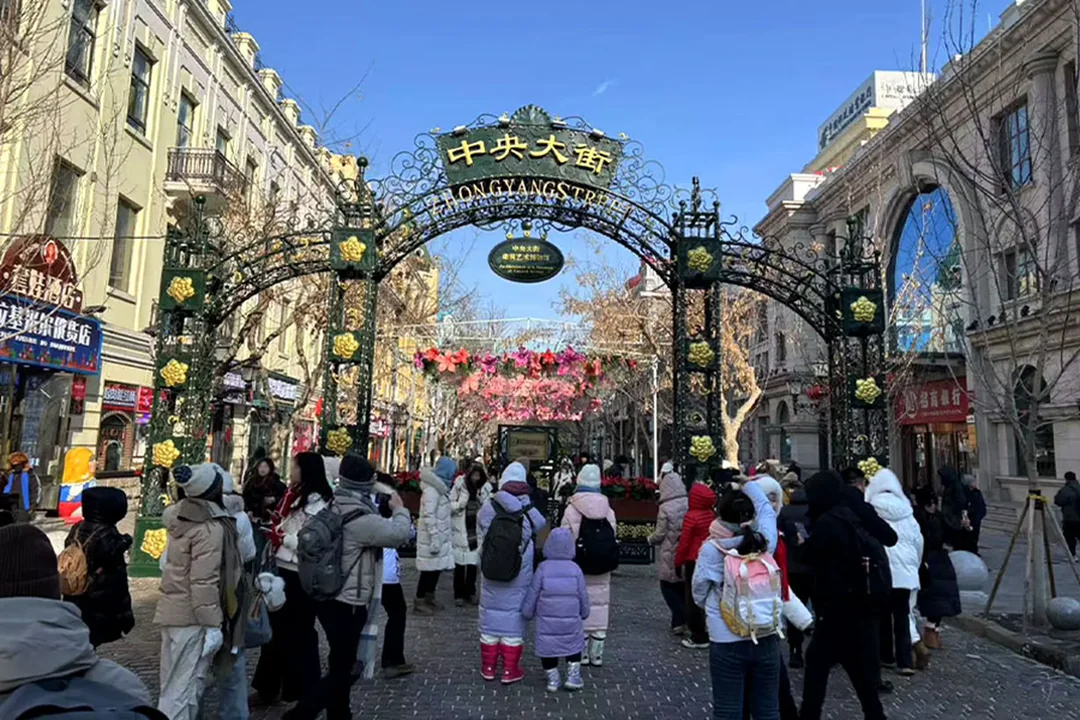
Central Street (Zhongyang Dajie)中央大街
Zhongyang Dajie is Harbin's cobblestone pedestrian street — 1.45 km of Baroque and Art Nouveau buildings built by Russian and European merchants during the railway boom, ending at the Songhua River promenade. Home of the Madie'er (Modern Hotel) ice pops and Russian bakeries.
Harbin · Visitor Guide2026-10-18
Quick Answer
Is Central Street (Zhongyang Dajie) worth visiting?
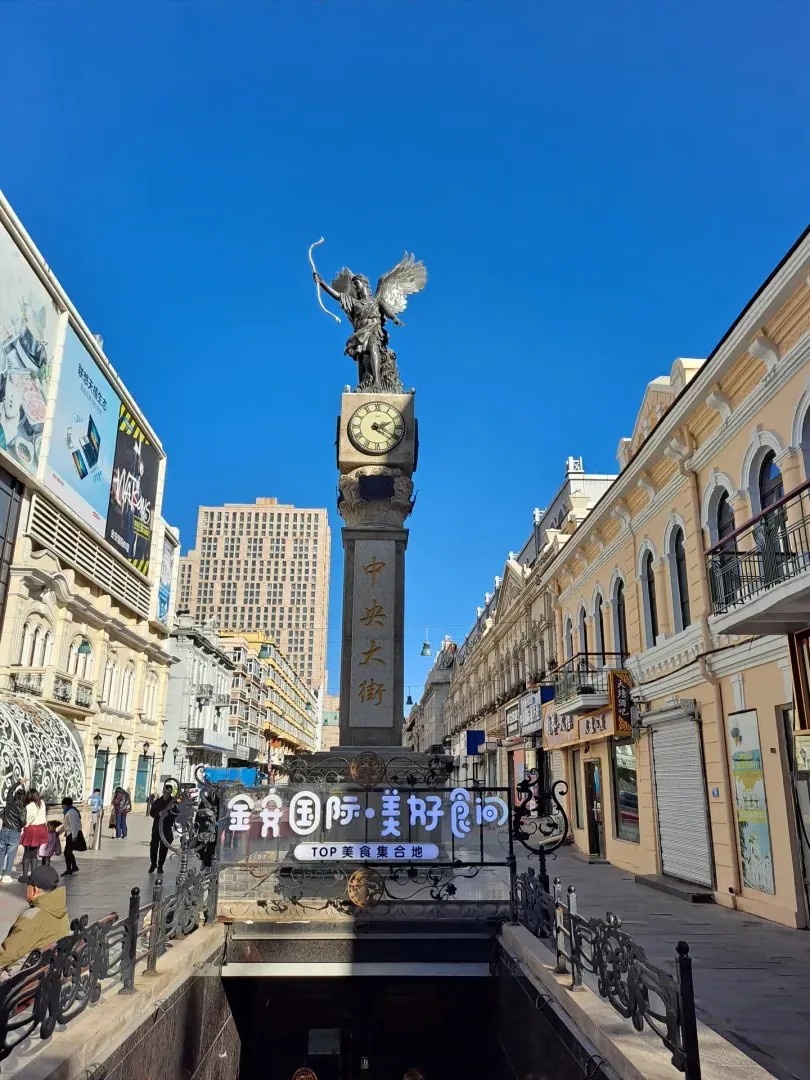
Harbin's 1.45-km cobblestone street of Baroque and Art Nouveau buildings — Russian-era shops, Madie'er ice pops and kvass bakeries, running from the old district to the Songhua River promenade.
Quick facts
| Ticket | Free |
|---|---|
| Hours | 24h (shops ~09:30-21:30) |
| Recommended duration | 1-2 hours |
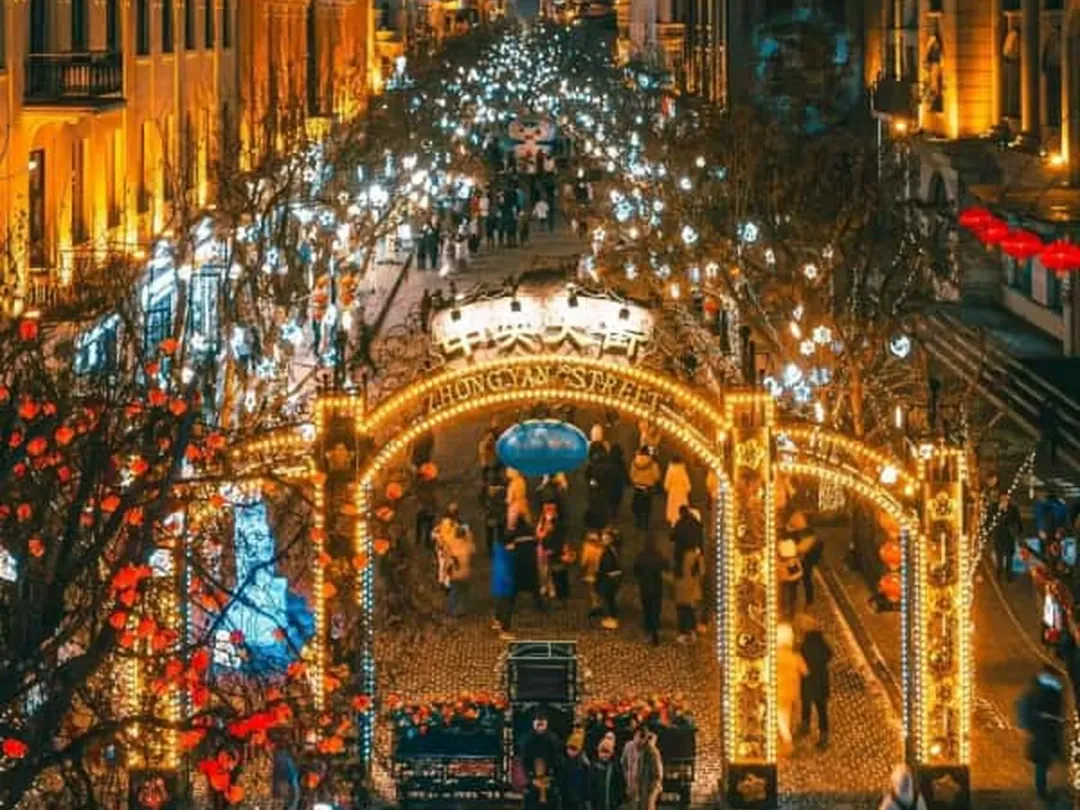
| Best time to visit | Evening lighting; winter ice sculptures |
| How to get there | Metro Line 2 to Shanghai Street station, 3-min walk |
| English signage | moderate |
| Wheelchair accessible | Yes |
What to expect
Built from 1900 onward as the commercial spine of the railway boom town, the street's 71 buildings span Renaissance, Baroque, Art Nouveau and eclecticism — the cobblestones are the original Russian-laid ones. The Modern Hotel (Madie'er) has sold its cream ice pops on the same corner for a century; Russian-style bakeries sell dalieba hard bread by the loaf.
The street ends at the Songhua River flood-control monument and promenade. In winter, ice sculpture blocks line the street and the riverfront freezes into an activity ground.
How to get there
Metro Line 2 to Shanghai Street station, Exit 1, then a 3-minute walk; the street runs to the Songhua riverfront.
Best photo spots
- Cobblestones and Baroque façades at dusk
- Madie'er ice pop corner
- The flood-control monument at the river end
Tips
- Try a Madie'er ice pop even in winter — it is the tradition
- Walk the street straight through to the river, then along the promenade
Frequently asked questions
What is special about Central Street?
It is the most complete Russian/European-style commercial street in China — 71 heritage buildings on original cobblestones from the Chinese Eastern Railway era.
Read next
Other things to do in Harbin
Saint Sophia Cathedral
Harbin's green-domed Russian Orthodox cathedral (1907/1923) on a red-brick square — the city's most photographed landmark, now an architecture museum. Magically lit at night and best with snow.
Siberian Tiger Park
A 144-hectare drive-through reserve on Harbin's north bank holding 500+ Siberian (Amur) tigers, viewed from a wire-mesh caged bus.
Sun Island
A roughly 38 km² river-island park that hosts the Harbin Snow Sculpture Expo every winter; allow a half-day in summer, a full day during snow season (December–February).
Museums in Harbin
Harbin Jewish History Museum
Documents the 20,000-strong Jewish community that flourished in Harbin 1898–1960s. Inside the old Main Synagogue. Free, 1 hour.
Heilongjiang Provincial Museum
Russian influence, Manchurian history, and the cultures of China's far northeast. Free entry in a historic 1904 building. Harbin's unique cross-cultural story.