Harbin · history museum
Heilongjiang Provincial Museum (黑龙江省博物馆, Hēilóngjiāng Shěng Bówùguǎn)
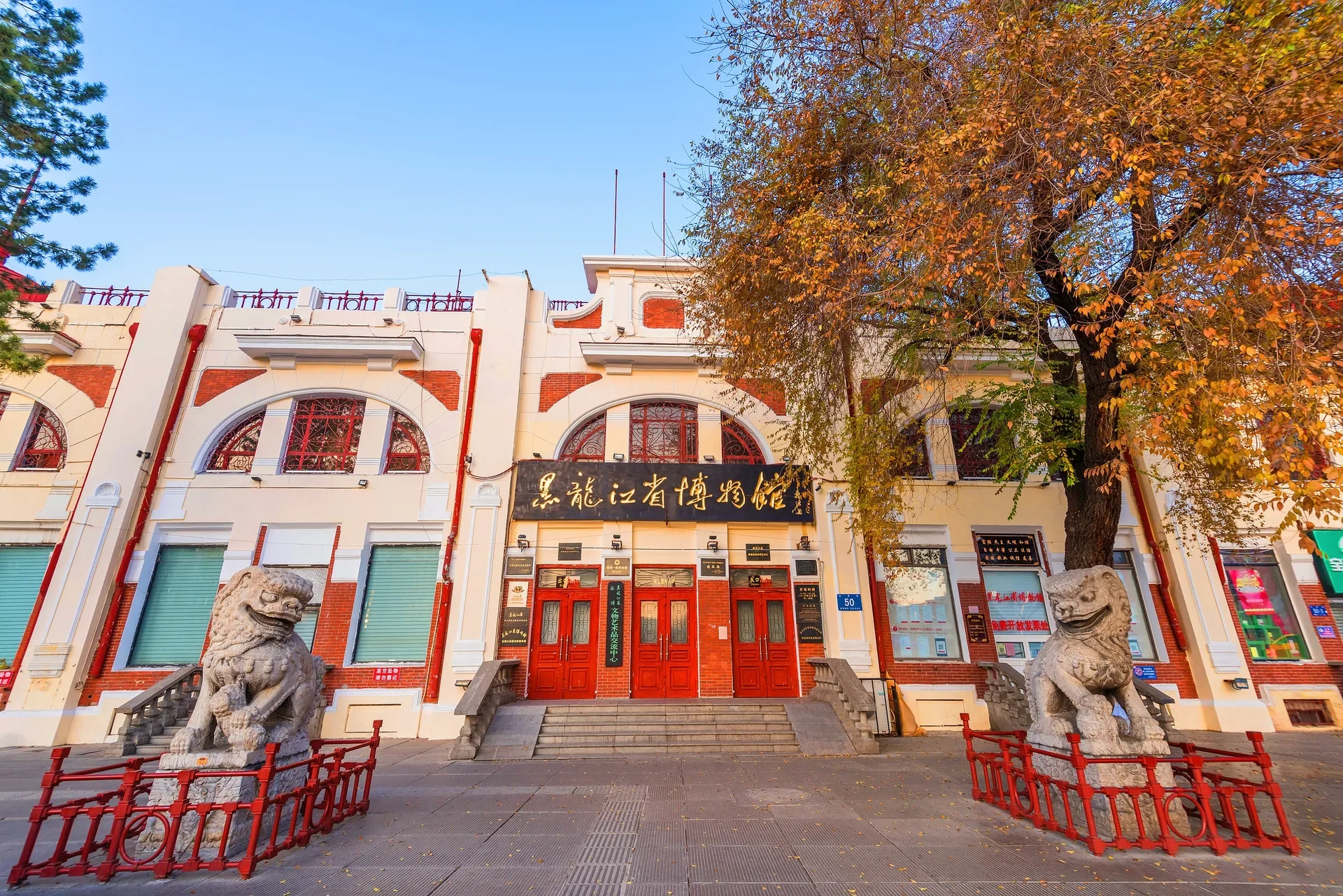
"The Heilongjiang Provincial Museum occupies a historic 1904 building that was originally a Moscow Department Store (莫斯科商场) — one of Harbin's finest surviving examples of Russian Art Nouveau architecture. The collection of 110,000+ objects traces the history of China's northernmost and coldest province, from prehistoric mammoth fossils through the rise of the Jurchen Jin Dynasty (which ruled northern China from Harbin's vicinity), to Harbin's development as a Russian-built railway city in the early 20th century. The museum's most distinctive feature is its coverage of Harbin's Russian and Jewish communities, which shaped the city's architecture, cuisine, and culture in ways still visible today.".
Last updated:
Quick Answer
Is Heilongjiang Provincial Museum worth visiting?
"Russian influence, Manchurian history, and the cultures of China's far northeast. Free entry in a historic 1904 building. Harbin's unique cross-cultural story.".
Quick facts
| Category | history |
|---|---|
| Ticket | Free. Passport required. Reserve via the Heilongjiang Museum WeChat mini-program or scan QR code at the entrance. |
| Hours | 9:00-16:30 (last entry 16:00). Closed Mondays. |
| Recommended duration | 1.5-2 hours. |
| Best time to visit | Weekday mornings. Harbin is famous for its Ice and Snow Festival (January-February), when the museum is a welcome warm refuge from outdoor temperatures of -20°C to -30°C. Summer (June-August) is the most comfortable season for walking around the city. |
| How to get there | Metro Line 1 to Museum (博物馆), Exit 3A. The museum is directly in front of the station. Or bus routes 2, 6, 7, 8, 13, 14, 16, 21, 28, 32, 42, 47, 64, 74, 94, 101, 103, 107, 108, 109, 115 to Bowuguan (博物馆) stop. DiDi from Harbin Railway Station is ¥10-15. |
| English signage | partial |
Why visit
The Russian Harbin gallery is unique among Chinese museums — it documents a city where Chinese, Russian, Jewish, Polish, and Japanese communities coexisted in the early 20th century, producing a hybrid culture reflected in everything from the city's architecture to its food (Harbin red sausage, Russian-style bread). No other Chinese museum tells this story.
Collection highlights
- Russian Harbin gallery — photographs, maps, and artifacts from Harbin's Russian-built period (1898-1945), when the city was a major center of the Russian diaspora. Includes items from the Harbin Jewish community
- Jurchen Jin Dynasty artifacts — the Jurchen people rose from the Harbin area to conquer northern China and establish the Jin Dynasty (1115-1234). The museum has Jin Dynasty ceramics, ironwork, and official seals
- Mammoth and woolly rhinoceros fossils — Heilongjiang's permafrost has yielded some of China's best-preserved Pleistocene megafauna, including a nearly complete mammoth skeleton
- The building itself — a 1904 Russian Art Nouveau structure with curved dormer windows, arched entryways, and red-brick facade. It is as much an exhibit as the collection inside
- Heilongjiang ethnic minorities — Oroqen, Hezhen, and Ewenki cultures: hunting, fishing, and reindeer-herding peoples of China's far north
Tips
- The building is a historic landmark — spend a few minutes admiring the exterior before entering. It is one of the best-preserved examples of Russian Art Nouveau in China
- The Russian Harbin gallery is on the 2nd floor — it is the museum's most distinctive section and the one least likely to be replicated elsewhere
- Combine with a walk down Zhongyang Street (中央大街), Harbin's Russian-built pedestrian boulevard with cobblestones and European architecture, 1.5 km north
- I visited in June 2026 and was struck by how genuinely different the Russian Harbin story felt from anything else in Chinese museums — it was like discovering a lost chapter
- In winter (January-February), the museum is an excellent warm break between outdoor visits to the Ice and Snow Festival and Siberian Tiger Park
Frequently asked questions
Why is there so much Russian influence in Harbin?
Harbin was essentially a Russian creation — it was founded in 1898 as a railway town during the construction of the Chinese Eastern Railway, a Russian-built line connecting Siberia to Vladivostok through Manchuria. By the 1920s, Harbin had over 100,000 Russian residents — refugees from the Russian Revolution, White Army officers, and Jewish emigrants. The city's architecture, food (Russian bread, red sausage, borscht), and even some loanwords in the local dialect reflect this history.
What is the historic building that houses the museum?
The building was originally the Moscow Department Store (莫斯科商场), built in 1904 in Russian Art Nouveau style. It is one of the best-preserved examples of early 20th-century Russian architecture in Harbin and is a protected cultural relic in its own right.
How does the Heilongjiang Museum compare to other provincial museums?
It is smaller than most provincial museums and the historic building constrains the exhibition space. However, its coverage of Harbin's unique Russian-influenced history is unmatched anywhere in China. The collection is not as deep as Liaoning or Jilin provincial museums, but the story it tells is more distinctive.
Is the Heilongjiang Provincial Museum free?
Yes, free for all visitors. Bring your passport for registration. The museum is compact and can be visited in under 2 hours.
When is the best time to visit Harbin and this museum?
Two very different seasons: (1) Winter (January-February) for the Harbin Ice and Snow Festival — the museum provides a warm indoor break from -20°C temperatures. (2) Summer (June-August) for comfortable walking weather to explore Harbin's Russian architecture. Avoid the Ice Festival's opening weekend (January 5) if you dislike crowds.
What is the Jurchen Jin Dynasty?
The Jin Dynasty (1115-1234) was founded by the Jurchen people, who originated in the Harbin area. They conquered the Khitan Liao Dynasty and then northern Song China, ruling over northern China for over a century. Their capital was at Huining (near present-day Acheng, 30 km southeast of Harbin) before moving to Beijing. They were the ancestors of the Manchu people who later founded the Qing Dynasty.
Read next
Other things to do in Harbin
Central Street
A 1.45-km cobblestone pedestrian avenue of 71 European-style buildings (1898-1925) running from Harbin's old quarter to the Songhua River — free, open 24 hours, and walkable end-to-end in 30-40 …
Siberian Tiger Park
A 144-hectare drive-through reserve on Harbin's north bank holding 500+ Siberian (Amur) tigers, viewed from a wire-mesh caged bus.…
St. Sophia Cathedral
Harbin's 1907 Russian Orthodox cathedral — green onion dome, red-brick walls, 2,000-seat interior — now a small architectural museum.…
Sun Island
"A roughly 38 km² river-island park that hosts the Harbin Snow Sculpture Expo every winter; allow a half-day in summer, a full day during snow season (December–February).".