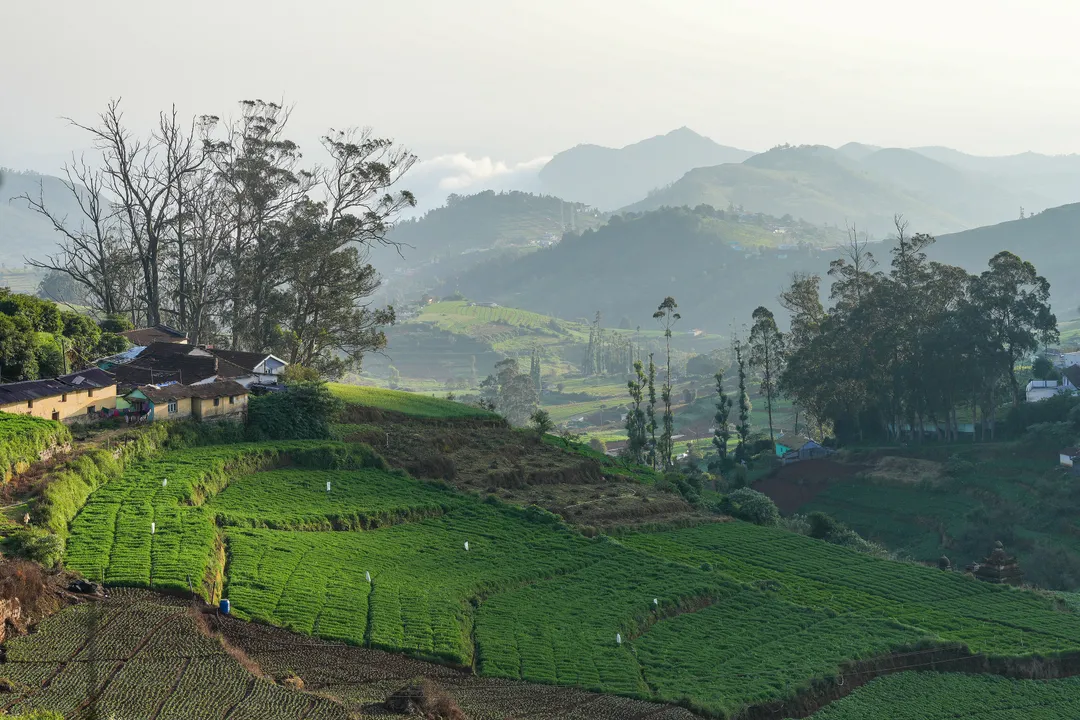
Harbin is the strangest big city in China. A黑龙江省 provincial capital of roughly ten million people where the average January high is -19°C, where the centre of town looks like a Tsarist railway pensioner's fever dream, where the winter festival draws more visitors than the local population, and where the food — guobaorou, dundui, the city's obsession with iced watermelon eaten outdoors in negative-twenty weather — is worth a flight on its own.
Most guidebooks treat Harbin as a one-trick winter destination. They're wrong. Yes, the Harbin International Ice and Snow Sculpture Festival (哈尔滨国际冰雪节) running from late December through February is the headline act, and yes, you should plan around it if you can tolerate the cold. But summer Harbin is green, the Songhua River runs through the middle of the city, and the Russian architectural inheritance — onion domes, Baroque facades, the world's longest pedestrian street — is there year-round. The city is also the gateway to China's most underrated nature: the Zhalong Nature Reserve (扎龙自然保护区) for red-crowned cranes, the Yabuli ski resort (亚布力滑雪场) two hours east, and the China-Russia border at Fuyuan if you've got the time.
This guide is written for someone landing at Harbin Taiping International Airport (HRB) with a 2-4 day window, looking for what to actually do, where to actually stay, and what to actually pay.
The essential Attractions
1. Central Street (中央大街, Zhongyang Dajie)
The 1.4-kilometre pedestrian street running through Daoli District (道里区) is Harbin's defining public space, and the only one most visitors need. Originally built between 1898 and 1900 as a Russian concession thoroughfare, it remains paved with the original Russian-imported cobblestones — uneven, often icy, bring flat-soled shoes — and flanked by Baroque, Art Nouveau, and Byzantine-style buildings that survived both the Japanese occupation (1932-45) and the Cultural Revolution mostly intact. Number 87 is the former site of the Russian-Jewish bank; the modern Hotel Modern occupies part of it. Number 85 is the former site of the Jewish community synagogue.
What you actually do here: walk slowly, eat Madier (马迭尔) ice cream — a Harbin institution since 1906, sold from a wooden kiosk year-round, including in -25°C weather when you genuinely see locals eating it standing on the street in parkas — at 5 CNY a bar, drink a kvass from a street vendor, and consider a sit-down meal at one of the Russian-leaning restaurants on or just off the street. The street is at its best in the early evening in winter when the lights come on and the temperature makes the whole thing feel like a Tsarist set piece.
Practical: Always open, free, no ticket. Avoid Friday and Saturday 17:00-21:00 in winter festival season (January 5-25) when it becomes a slow-moving crowd crush. To get there: take Metro Line 2 to Shangzhi Street Station (尚志大街站) or Line 1 to Xidaqiao (西大桥站) followed by a 10-minute walk. Most tourists just walk from their Daoli hotel.
Our take: Yes it's touristy, no you cannot skip it. The combination of ice cream, architecture, and atmosphere is unique to Harbin, and the street is genuinely the cleanest, most photographed, and most walked public space in northeast China. Budget 2-3 hours, including a stop at the Daoli Qiulin (道里秋林) department store area to the east for Russian-style bread and sausages.
2. Saint Sophia Cathedral (圣索菲亚教堂)
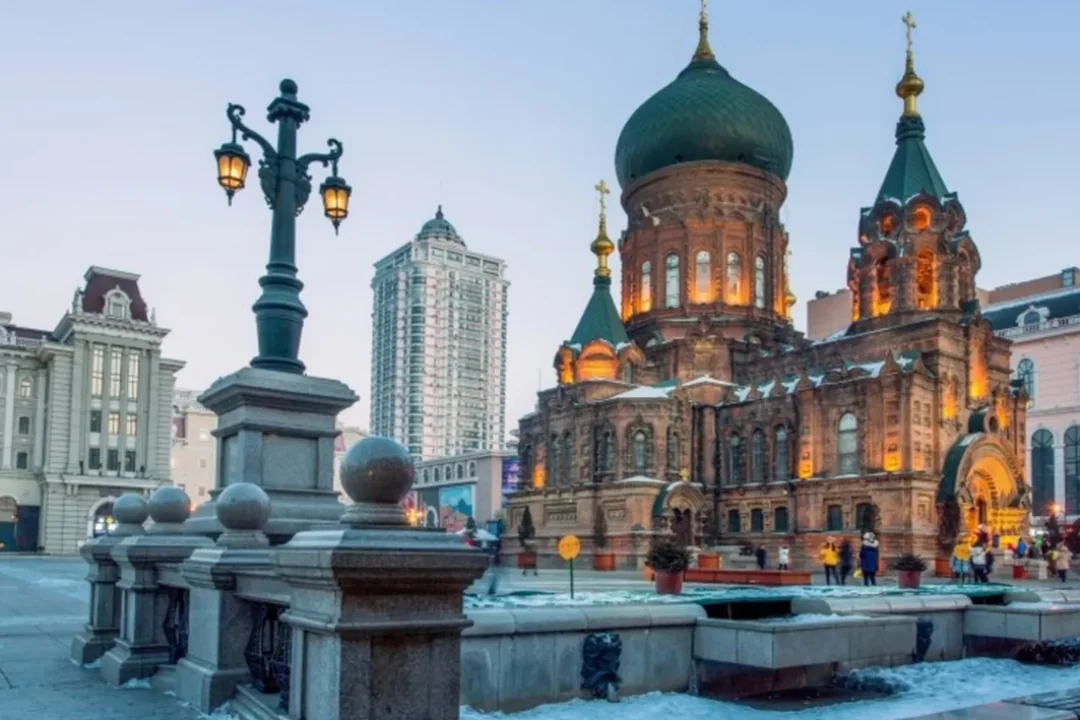
The green-domed Russian Orthodox cathedral at Toulong Street (透笼街) is the postcard image of Harbin, the building you see on every guidebook cover. Built in 1907 as a military church for the Russian garrison, converted to a warehouse during the Cultural Revolution, and restored to museum use in 1997, it now houses the Harbin Architecture Art Gallery (哈尔滨建筑艺术馆) — a small but worthwhile exhibit on the city's Russian, Jewish, and Japanese heritage.
What you actually do here: photograph the exterior, walk through the interior gallery (about 30-45 minutes), then walk around the surrounding square. The cathedral is small inside — a single nave — but the restoration work is good and the photos inside the building are better than the photos of it. The square in front often has a Christmas market in December and a lantern display in January-February.
Practical: Open 08:30-17:00, last entry 16:30. Closed on major Chinese holidays sometimes — check before you go. Tickets 20 CNY (as of 2026). Metro Line 2 to Shangzhi Street (尚志大街), then 5 minutes' walk east.
Our take: Worth the 20 CNY and the time, but don't expect a great museum. The exterior is the attraction, and you can photograph it from across the square for free. The reason to go in is the climb up the bell tower (an extra 20 CNY in some seasons) and the photography of the interior arches. Go in the morning for the best light and smallest crowds. Combined with Central Street, allow 2 hours.
3. Harbin Ice and Snow World (哈尔滨冰雪大世界)
The reason the vast majority of international visitors come to Harbin in winter. The festival site is on the northern bank of the Songhua River (松花江), across from Sun Island (太阳岛), and it is, simply, the world's largest annual ice and snow sculpture exhibition. Entire buildings are carved from blocks cut from the Songhua River in November, then stacked, lit, and sculpted over a four-week construction period into a temporary city of ice that runs from late December through late February (closed if temperature exceeds -5°C; check the WeChat official account the day of).
What you actually do here: arrive at dusk (around 16:30 in midwinter) to see it in daylight, then stay through the 17:00-19:00 transition into full illumination. The lit version is the famous one — every sculpture is internally lit with LEDs in shifting colours, the larger structures are 30+ metres tall, there are ice slides you can ride down (some free, some 50-100 CNY extra), a snowmobile zone, hot food vendors selling boiled corn (煮玉米, 10 CNY), tanghulu (candied hawthorn, 15 CNY), and Harbin beer (8-15 CNY), and temperatures inside the park that regularly drop below -25°C after sundown.
Practical: Tickets 328 CNY standard adult, 198 CNY for children/students with ID, free for kids under 1.2m. Open 11:00-22:00 in peak season, 10:00-21:00 shoulder season. Metro Line 3 to Ice and Snow World Station (冰雪大世界站), the dedicated stop at the gate. The site is enormous — easily 4-5 km of walking — so dress as if you will be outside for 3-4 hours at -25°C. This means: long underwear (top and bottom, silk or merino), a windproof outer parka (rentable for 50-80 CNY per day at shops near the gate if you don't have one), insulated boots rated to -30°C or warmer, two pairs of socks, a balaclava or buff covering nose and mouth, insulated gloves (mittens are warmer), and hand warmers (暖宝宝, 3-5 CNY each at any convenience store).
Our take: This is the single best reason to come to Harbin in winter, and it is worth the cost, the cold, and the crowds. Do not skip it. Do not come on a weekend if you have a choice. The two hours before closing are quieter and colder — bring more layers if you go then. Budget 3-4 hours plus travel time. Total for two adults including parkas and hot food: roughly 800-1000 CNY.
4. Siberian Tiger Park (东北虎林园)
Three hours minimum for the full experience, located in the northern suburbs of Songbei (松北区), about 40 km from central Daoli. China has the world's largest captive Siberian tiger population (over 1,000 individuals), most of them in this park, which is both a conservation facility and a tourism operation. You drive through caged enclosures in a caged bus while tigers — full-grown, often 200+ kg — approach the vehicle.
What you actually do here: take the caged tour bus (50 CNY), which takes about 40 minutes and lets you photograph and feed the tigers (chicken or live chicks thrown from a feeding port, 30-50 CNY per bundle). Then walk the pedestrian viewing areas, see the white tiger enclosure, the lion-tiger hybrids, and the cub nursery in spring.
Practical: Tickets 90 CNY (adult walk-in), 130 CNY with the caged bus tour (the only sensible option). Open 08:00-16:30 in winter, 08:00-17:30 summer. Closed Mondays. To get there: take bus 35 from central Harbin (90 minutes, slow) or a DiDi for 80-120 CNY (40-50 minutes). Most visitors book a half-day tour through their hotel (200-300 CNY per person including transport).
Our take: Genuinely worth a half-day, even if you have ethical reservations about captive wildlife. The tigers are obviously tigers, the park supports actual conservation (it has released tigers back into the wild as part of the China-Russian rewilding program), and the bus tour is memorable. The photo ops are real. Skip the cub-nursery walk if you're short on time.
5. Sun Island (太阳岛) and the Russian Village (伏尔加庄园 is the better alternative)
Most guides list Sun Island as a separate notable; in practice, you visit it on the way to or from Ice and Snow World, since they're connected by the Songhua River bridge. The island itself is a large riverside park with a Russian-style wooden architecture precinct, some snow sculptures in winter, and pleasant walking in summer. It is fine. It is not essential.
A better use of a half-day, especially in summer, is Volga Manor (伏尔加庄园), a private Russian-themed park 30 km east of central Harbin. It is a faithful recreation of a 19th-century Russian village, built from imported Russian timber by a single private developer over 20+ years, with a Russian restaurant serving borscht, pelmeni (Russian dumplings), and vodka, a small on-site distillery, summer boat rides on the Ashihe River (阿什河), and a winter ice-castle experience less crowded than Ice and Snow World.
Practical Volga Manor: Tickets 198-298 CNY depending on season, package tours from central Harbin run 300-450 CNY per person including transport and lunch. Half-day visit minimum. DiDi direct from central Daoli: 100-150 CNY, 40 minutes.
Our take: If you have three days in Harbin and want depth rather than breadth, swap Sun Island for Volga Manor. If you only have two days, skip both.
Where to Stay
Harbin has good hotel inventory at every tier, but it books out fast during the Ice and Snow Festival (roughly January 5 to February 15), so reserve at least six weeks out for that window.
The Budget-to-Mid-Range Backbone: Daoli District (道里区)
Daoli is the central district containing Central Street, Saint Sophia Cathedral, and most of what you came for. The hotel mix is wide, and you can walk to most major sights.
For budget travellers: Harbin Wofa Youth Hostel (哈尔滨沃夫青年旅舍), near Central Street, dorm beds 80-120 CNY/night, private rooms 220-280 CNY. Clean, basic English spoken, useful for meeting other travellers in winter festival season. Not luxurious but functional.
For mid-range: Harbin Baolong Business Hotel (哈尔滨宝隆商务酒店), 4-star equivalent, 380-520 CNY/night in shoulder season, 700-900 CNY in festival week. Has English-speaking front desk, central heating that works (non-negotiable in winter), and a 10-minute walk to Central Street.
For luxury without international-brand prices: Harbin Astoria Hotel (哈尔滨阿斯特里亚酒店), a converted early-20th-century Russian mansion, 800-1500 CNY/night. The architecture is the point — high ceilings, original tile work, balconies overlooking the street. Worth the upgrade.
International Brands for Loyalty Points: Songbei (松北区)
The newer convention-hotel district on the north bank of the Songhua River, 15-20 minutes by DiDi from Daoli. Lower room rates during the festival because it's not walking distance to Central Street, but the hotels are newer and often include breakfast.
Recommended: Shangri-La Harbin (哈尔滨香格里拉大酒店), 750-1100 CNY/night year-round, with winter festival peak at 1400-1800 CNY. River views from higher floors, the best hotel gym in town, and a proper breakfast buffet that justifies the room rate. The catch: you'll need a DiDi (20-30 CNY) or the metro to reach Central Street each day.
Sleeper pick: JW Marriott Harbin River North (哈尔滨 JW万豪酒店), 800-1200 CNY/night, comparable to the Shangri-La but slightly quieter and a 5-minute walk to the Ice and Snow World metro stop. Best for festival-focused itineraries where you're going to spend every other evening on the river.
For Repeat Visitors or Long Stays: Nangang District (南岗区)
The business district south of Daoli, cheaper hotels, more local restaurants, less tourist infrastructure. Mid-range business hotels like the Harbin Westward (哈尔滨西万达) run 350-500 CNY/night. You'll use the metro more but you'll eat better and pay 25-30% less.
Getting Around
Harbin has a small but functional metro system (3 lines as of 2026, expanding), an extensive but slow bus network, abundant DiDi (the Chinese Uber, paid via Alipay or WeChat Pay), and almost no cycling infrastructure outside the riverfront. Walking is the best way to experience Daoli.
Metro: Lines 1, 2, and 3 cover the central districts and reach the Ice and Snow World. Fares 2-5 CNY depending on distance. Signs in English and Chinese, announcements in Mandarin only. Hours roughly 06:00-22:30.
Buses: Cheap (1-2 CNY), comprehensive (200+ lines), and slow (frequently 30-50 minutes across town). You'll use them mainly to reach places the metro doesn't, like the Siberian Tiger Park bus or the Volga Manor shuttle. Have your destination written in Chinese to show the driver.
DiDi: The default for tourists without Chinese phone numbers is the international version, which works in Harbin with a foreign credit card and Google Maps integration. Fares 15-30 CNY within Daoli, 80-150 CNY to outer sights. Surge pricing kicks in around 17:00-19:00 and after concerts at the Ice and Snow World closing.
Taxis: Metered, 10 CNY flagfall, 2.5 CNY/km. Drivers rarely speak English. Have your destination in Chinese characters — most hotels will write it down for you. Avoid hailing taxis in the festival peak; they refuse short fares.
Walking: Daoli is walkable end-to-end in 30 minutes. The Songhua River embankment is walkable and well-lit at night in winter (despite the cold). Cross the river via the Songhua River Bridge (松花江公路大桥) if you're going to Sun Island or Ice and Snow World on foot — but in winter, just take the metro.
Where to Eat
Harbin cuisine is northeastern Chinese (东北菜) — heavy on pork, dumplings, pickled vegetables, and stews — with a strong Russian and Jewish heritage baked in. Expect large portions, salted flavours, and restaurants that are loud, smoky, and full by 18:30.
The Headliners
Lao Chang Spring Pancakes (老昌春饼), multiple branches in Daoli and Nangang. The defining Harbin dish is chunbing (春饼), thin wheat pancakes rolled around shredded pork, vermicelli, and scallions, eaten family-style. 60-90 CNY per person. Expect a 15-30 minute wait at dinner. Order the suocaile (酸菜, pickled cabbage) version for the most local experience.
Zhang Bao Pork Belly (张包铺 / 张包肉), near Central Street. Guobaorou (锅包肉), the city's signature dish — sweet-and-sour crispy pork in a bright orange glaze — invented in Harbin in the early 20th century. 80-120 CNY per person. The Daoli branch is the original.
Madier Restaurant (马迭尔西餐厅), on Central Street. Russian-Harbin cuisine in a 1906 building: borscht, stroganoff, pelmeni, smoked salmon, and kvass. Aimed at tourists, not cheap (150-250 CNY per person), but the borscht and the bread basket are worth the visit once.
Shangdong Kao Rou (山东烤肉), late-night barbecue chains all over the city. The Harbin after-hours default: skewered lamb (2-4 CNY per skewer), grilled eggplant, garlic mushrooms, and Harbin beer (哈尔滨啤酒, the city's famous lager). 80-120 CNY per person. Open until 02:00 most nights.
The Locals-Only Picks
He Yi Ma Russian Restaurant (合易玛俄式餐厅), off Central Street. The Russian-Harbin grandmother's-kitchen experience. Pelmeni by hand, slow-cooked shashlik (kebab), honey cake for dessert, and the only place in town where you can get a properly made okroshka (cold summer soup) when it's 30°C outside. 100-160 CNY per person.
Old Place Dumplings (老地方饺子馆), scattered branches. The dumplings here are boiled (水饺) or pan-fried (锅贴) by the basket. Pork-and-cabbage, pork-and-corn, and the local favourite: pork-and-pickle. 12-18 CNY per basket. A meal for two with beer: under 100 CNY.
Da Dong Night Market (大同夜市), open 17:00-23:30 in summer only (May-September). Outdoor seating, dozens of stalls, dundui (炖菜, slow-cooked stews), grilled squid, cold noodles, beer. Budget 50-80 CNY per person. The most local experience in the city.
What Not to Miss
- Madier ice cream on Central Street — 5 CNY, eat it at -25°C like a local.
- Harbin beer — the city's own brand, lighter than Tsingtao, 8-15 CNY at restaurants.
- Frozen fruit sold by river vendors in winter — frozen pears, persimmons, and tangerines sold on sticks. 5-10 CNY.
- Daoli Russian Bakery (道里面包房) — rye bread, borscht bread, and other Russian-style loaves, 15-30 CNY per loaf. Worth taking one back to your hotel.
When to Visit
This is the most important section. Harbin's weather dictates everything.
Winter (December - February)
Average highs -10°C to -19°C, average lows -20°C to -28°C. The Ice and Snow Festival runs roughly January 5 to late February, with peak crowds during Chinese New Year (late January or early February depending on year — check the lunar calendar). Expect hotel prices 1.5-3x higher, attractions 2x more crowded, and transport slower.
The honest take on winter: If you can dress for it, Harbin in January is one of the great travel experiences in Asia. If you can't, it's misery. There is no in-between.
What to bring if you come in winter: Long underwear (merino or silk, not cotton — cotton kills in this cold), a down parka rated to -25°C or lower (Uniqlo Ultra Light Down is not enough — bring or rent a heavier one), insulated boots with felt liners, two pairs of wool socks, insulated mittens (warmer than gloves), a windproof balaclava or buff, and a pack of 暖宝宝 (hand warmers) from any convenience store. Eye drops and lip balm — the air is so dry your skin will crack within hours.
Summer (June - August)
Average highs 25°C to 30°C, average lows 15°C to 20°C. Pleasant, occasionally humid. The Volga Manor and Zhalong Nature Reserve are at their best. The Ice and Snow World is closed, but the city has riverside parks, beer gardens, and night markets open until late.
Our take: Summer Harbin is genuinely under-rated by international visitors. Hotels are 50-70% cheaper, restaurants less crowded, the architecture still there, and you can actually enjoy walking around outside. If you don't care about the ice festival, June or September is the best time to come.
Shoulder Seasons (April-May, September-October)
Spring is muddy (the snowmelt turns unpaved surfaces to mud), windy, and not particularly scenic. Autumn is brief but beautiful — late September to mid-October, the leaves turn, and the daytime temperatures are 10-18°C. October 1-7 is a national holiday with extreme crowds and inflated prices — avoid.
Practical Information
Visa
Most Western passports get a 30-day visa-free entry to China as of 2026 (check current rules — they've been extended several times). The visa-free entry covers Harbin. If you need a visa, allow 5-7 working days for a standard tourist (L) visa.
Payment
Alipay and WeChat Pay are universal in Harbin, including at small restaurants and street vendors. Both apps now support foreign credit cards directly through their international versions — download Alipay, link your Visa or Mastercard, and you can scan-to-pay anywhere. Apple Pay and Google Pay do not work in China. Carry some cash (200-500 CNY in small bills) as backup — international ATMs in Harbin accept foreign cards, but bank on Alipay working.
SIM and Internet
Buy a China Unicom or China Mobile tourist SIM at the airport (80-150 CNY for 10-30 days, with data). The Great Firewall blocks Google, Facebook, Instagram, WhatsApp, and most Western news sites. You will need a VPN if you want to use these. Download the VPN before you arrive.
Alternatively, get an Airalo or similar eSIM before departure (5-30 USD, depending on data plan). Local SIMs are faster and cheaper; eSIMs are simpler for short trips.
Language
Mandarin only outside international hotels and major attractions. English signage is improving but not reliable. Download Pleco (offline dictionary) and Google Translate (works without VPN for Chinese-to-English translation via camera). Learning four phrases will help you enormously: duōshǎo qián (多少钱, how much?), wǒ yào zhège (我要这个, I want this one), bù yào là (不要辣, not spicy), and xièxie (谢谢, thank you).
Safety
Harbin is safe. Petty theft is rare. The main hazards are weather (winter cold, summer heat) and traffic (crosswalks are suggestions, not requirements). Avoid tap water; bottled water is universal and cheap.
Health
No special vaccinations required. Air quality is moderate to poor in winter (coal heating); bring a mask if you're sensitive. Hospital care is excellent and cheap if you pay out-of-pocket; travel insurance is strongly recommended.
Hidden Gems and Local Knowledge
Zhalong Nature Reserve (扎龙自然保护区)
A 1.5-hour drive from Harbin, this 2,100-square-km wetland reserve is the world's most important breeding ground for the endangered red-crowned crane. Best visited May-October, when you can watch the cranes (200+ free-flying individuals in summer, hundreds more migrating through in spring and autumn). Entry 65 CNY, full-day tours 350-500 CNY including transport. Book through your hotel.
Harbin Confucian Temple (哈尔滨文庙)
A massive 1929 Confucian temple complex in Nangang District, restored in the 1990s, modelled on the Beijing temple but half the crowd. 30 CNY entry, beautiful architecture, a genuine escape from the festival crowds. 90 minutes' worth of architecture and serenity.
Local Knowledge: The "Three-Day Ice Festival" Itinerary
If you only have three days and you're here for the festival, do this:
- Day 1: Walk Central Street in the morning. Saint Sophia Cathedral before lunch. Ice and Snow World from 16:00 to closing.
- Day 2: Siberian Tiger Park half-day. Evening on the Songhua River ice (winter only — local vendors set up on the frozen river, you can rent ice skates, ride snowmobiles, see ice fishing).
- Day 3: Volga Manor half-day. Final meal at He Yi Ma or Zhang Bao Pork Belly.
This covers the notables with breathing room for the cold, the food, and the inevitable DiDi back to the hotel.
Local Knowledge: Hotel Heating and Air Conditioning
Hotel central heating is reliable in winter — your room will be 22-26°C regardless of outdoor temperature. The trickier issue is summer air conditioning, which in older hotels may be weak or absent. Book newer hotels (Shangri-La, JW Marriott, anything built after 2010) if you're sensitive to heat.
Local Knowledge: Ice Festival Going Dark in Warm Years
If Harbin has an unseasonably warm winter (it happens — global warming is real), Ice and Snow World may close early or open late. Check the official WeChat account a week before you go. The festival has also reduced its scale in some years due to environmental concerns about water use.
Local Knowledge: Bargaining at the Night Markets
Don't, unless you're buying in bulk. Vendors at night markets give consistent prices to everyone; haggling is considered rude. At tourist-oriented shops on Central Street, you can ask for 10-20% off on larger purchases.
Final Reflections
Harbin is a city most visitors underestimate and most residents love. It is colder than you think, more Russian than you expect, and more food-focused than any other Chinese provincial capital of its size. It rewards preparation: pack properly for winter, book hotels early, learn four phrases of Mandarin, and you'll have a better trip than 90% of tourists.
If you only have one shot, come in January for the festival. If you can choose any time, come in June. Either way, eat the guobaorou, drink the Harbin beer, walk the Central Street, and let the cold (or heat) be part of the experience.
Updated 2026.
Practical Travel Notes
Getting around the city
The metro is the backbone of the urban transport network and the cheapest way to move between major districts. Trains run from around 6 a.m. to 11 p.m. with frequent service in the central business district. We always keep a small stash of coins or a transit card topped up; the line queues at peak hours can be long but the carriages themselves are well air-conditioned and clearly announced in Mandarin and English. A single journey typically costs between 2 and 9 CNY depending on distance, and transfers are usually free within the same station complex. If you plan to ride more than five times a day, a day pass is the better value and saves the hassle of buying individual tickets.
Buses fill in the gaps the metro does not cover. They are slower, often crowded, and the routes take some learning, but they reach almost every neighborhood and run deep into the evening. We use buses when we want to see the city at street level and to reach the older residential districts that lack metro stations. Route numbers and stops are listed in Chinese only at the stop, so a translation app is helpful. Taxis are inexpensive by international standards. Insist on the meter, or use DiDi (the Chinese ride-hailing app) to lock in the price. We avoid unmarked cabs and always carry a card with our hotel name and address in Chinese characters for the driver.
Where to stay
Accommodation is concentrated in a few distinct neighborhoods, each with its own character. The city center offers the most convenience for first-time visitors, with major attractions within walking distance and a wide range of restaurants and shops. Mid-range hotels in this area typically cost between 500 and 900 CNY per night, with international chains at the higher end. Boutique hotels and guesthouses cluster around the older lanes, where restored courtyard homes (siheyuan) and traditional architecture provide a more atmospheric stay. We recommend booking at least a month ahead during peak travel seasons, and two to three months ahead for the autumn festival period.
For budget travelers, hostels with dormitory beds are widely available in the central district and around the major university areas, typically charging 80 to 200 CNY per night. Private rooms in hostels run from 200 to 400 CNY. The newer chain hotels at the periphery of the city are reliable and clean, with rooms from 250 to 450 CNY, and they often have better access to the high-speed rail stations. Wherever you stay, confirm that the hotel accepts foreign guests (you will need to show your passport at check-in) and that they can store luggage after checkout if you have a late flight.
Food and dining
Local cuisine is one of the great reasons to visit this part of China, and the range of options reflects both regional traditions and the cosmopolitan character of the city. Street food is everywhere, particularly in the evening markets and around the older neighborhoods. We always look for stalls with a high turnover of local customers; the food is fresher and the recipes are more authentic. Hot pot, dumplings, and the regional noodle dishes are staples. Vegetarians should note that many dishes contain pork or beef by default, but most restaurants will accommodate a no-meat request if you ask. Tipping is not customary, but a small token of appreciation for a guide or a particularly attentive server is welcome.
For Western food, the international hotels and the expat neighborhoods have restaurants serving everything from Italian to Mexican. Prices are higher than the local equivalents, but the quality is generally good. Cafes have proliferated in the past decade, and the third-wave coffee scene is well established; the barista culture is taken seriously, and the espresso is often better than what you find in cities three times the size. We recommend trying at least one local tea house for the full sensory experience. Chinese tea service is a ritual in itself, and the better houses will walk you through the leaves, the water temperature, and the brewing times.
Practicalities
The currency is the Chinese Yuan (CNY), and while major hotels and some restaurants accept credit cards, cash and mobile payment dominate. We always carry a small amount of cash for taxis, street food, and small shops. Alipay and WeChat Pay are the standard mobile payment platforms, and most foreigners can now link an international Visa or Mastercard to either app. ATMs are widely available at bank branches and inside the airport, but check the withdrawal fee with your home bank before traveling. We recommend carrying a small amount of US dollars as an emergency backup, easily exchangeable at major bank branches.
Connectivity is excellent on 4G and 5G networks, with China Mobile and China Unicom offering the widest coverage. Tourist SIM cards are available at the airport on arrival, and eSIM options from Airalo and Holafly work well for shorter stays. Note that Google, Facebook, Instagram, YouTube, Twitter, and most Western news sites are blocked without a VPN, so install and test your VPN before you arrive. Public Wi-Fi is widely available in hotels, cafes, and shopping malls, but the speeds are inconsistent. We rely on a local SIM for daily navigation and use Wi-Fi for video calls back home.
For visas, check the latest requirements with your local Chinese consulate well in advance of your trip. Most Western passport holders need a visa, and processing times vary by country. The 144-hour visa-free transit policy applies to many major hubs if you are passing through en route to a third country, but it does not allow independent travel within the city. Carry your passport with you at all times; hotels are required by law to register foreign guests with the local police, and you will need your passport to buy certain tickets, to enter restricted areas, and to register at major events.
Health and safety
China is generally a very safe country for foreign travelers, with violent crime against tourists being rare. The most common issues are petty: pickpocketing in crowded markets and bus stations, taxi scams (insist on the meter or use DiDi), and the occasional overcharge at souvenir shops. Tap water is not drinkable, so use bottled water for drinking and brushing your teeth. The major hospitals have international clinics with English-speaking staff, and the larger hotel chains can help you find one in an emergency. Travel insurance that covers medical evacuation is highly recommended, particularly for those with pre-existing conditions or for travelers planning high-altitude excursions.
Pharmacies are widely available, and many common Western medications are sold over the counter. Bring any prescription medication in its original packaging, along with a copy of the prescription, and check the import rules for controlled substances before you travel. Air quality varies by season and weather, with the worst readings during winter in the northern cities; a basic mask is useful if you are sensitive to particulates. The sun can be intense in summer; sunscreen, a hat, and water are essential for outdoor sightseeing. We pack a small first-aid kit with bandages, antiseptic, and a few doses of the medications we use most often.
Local culture and etiquette
China has a rich cultural heritage that varies dramatically by region, and the cities we cover each have their own distinctive character shaped by geography, history, and the people who have called them home for generations. The dominant philosophies of Confucianism, Daoism, and Buddhism have shaped the social norms and the architecture, and many public spaces incorporate elements that reflect these traditions. Local temples, museums, and cultural centers offer a window into the regional history and provide context for the food, the dialects, and the daily rhythms you will encounter.
Etiquette varies, but a few common courtesies apply almost everywhere. Greet elders first when entering a room. Use both hands when passing something to another person, particularly in formal settings. Avoid pointing with a single finger; the open hand is more polite. When visiting a temple or a private home, remove your shoes if you see others doing so. Public displays of affection are uncommon in many parts of the country, and a modest demeanor is appreciated. In restaurants, it is fine to share dishes family-style, and the host typically orders for the table. Tipping is not expected but increasingly accepted in international hotels and high-end restaurants.
Suggested day plans
For travelers with limited time, we recommend a three-day plan that covers the major highlights without rushing. Day one focuses on the historical center: the imperial palace, the old town, and the principal museums. Start early to beat the crowds, and plan to spend at least three to four hours at the main historical site. Lunch at a local restaurant, then a relaxed walk through the surrounding lanes and gardens. Day two covers the natural scenery or the cultural venues that require a half-day excursion; book transportation in advance. Day three is for the neighborhoods you found most interesting on the first two days, with a long lunch and a slow afternoon.
For a one-week stay, add a side trip to a nearby town, a hiking area, or a scenic river cruise. Most major cities in China have well-developed high-speed rail connections, and a two- to three-hour train ride can take you to a dramatically different landscape, from mountain temples to coastal villages. The off-the-beaten-path destinations are often where the most memorable experiences happen, particularly if you can spend at least two nights to let the place reveal itself. We always recommend a buffer day at the end of the trip for the unexpected: a new museum, a festival you did not know about, or simply a quiet morning at a favorite cafe.
Photography and content
China offers extraordinary photographic opportunities, from the dramatic skylines of the major cities to the rural landscapes that have been farmed for thousands of years. Most public spaces are open to photography, but restrictions apply in museums, religious sites, and government buildings. Drones are heavily regulated; you will need a permit for any commercial or even semi-professional use, and personal drones are sometimes confiscated at airports. We always check the local rules before flying, and we never fly near airports, military installations, or over crowds.
For social media content, remember that many Western platforms are blocked in China without a VPN. Posting live updates from a VPN connection is technically against the local rules, but enforcement is inconsistent and the practical risk is low for tourists. We always recommend a respectful approach to local customs, particularly when photographing children, religious ceremonies, and rural villages. A smile and a brief conversation go a long way, and most people are happy to be photographed if you ask. The light is best in the early morning and the golden hour before sunset, and the worst midday light is a good time for an indoor museum or a long lunch.
What to pack
Pack light, especially if you plan to use the high-speed rail network, where luggage space in the carriages is limited. A small rolling suitcase plus a daypack is our standard kit. Comfortable walking shoes are essential, particularly for the older neighborhoods where the streets are often cobblestone or uneven. A light rain jacket or a compact umbrella handles most weather, and a warm layer is necessary for winter visits in the north. Modest clothing is appreciated when visiting religious sites, and a scarf or a sarong can double as a shoulder covering for both sun and respectful entry.
Bring a universal power adapter, and note that China uses Type A, Type C, and Type I plugs at 220V and 50Hz. A small first-aid kit, your prescription medications, sunscreen, and a reusable water bottle complete the essentials. We also pack a small bag of snacks for the long train rides; while the dining cars serve food, the quality is variable and a favorite chocolate bar or a handful of nuts can rescue a delayed journey. A small notebook is useful for the address of your hotel in Chinese, the emergency numbers, and the names of any guides you have worked with.
Sources
- Source: China National Tourism Administration: cnta.gov.cn — official tourism statistics and policy.
- Source: Trip.com: trip.com — booking platform with verified user reviews.
- Source: Lonely Planet China: lonelyplanet.com/china — guidebook recommendations.