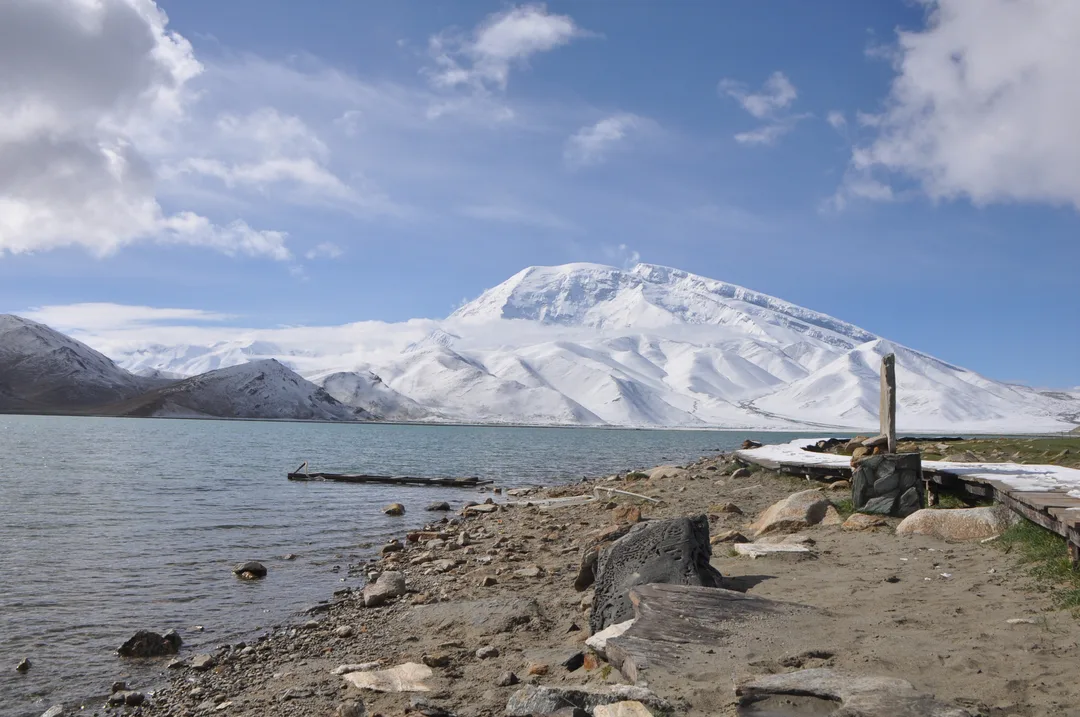
Karakul Lake喀拉库勒湖
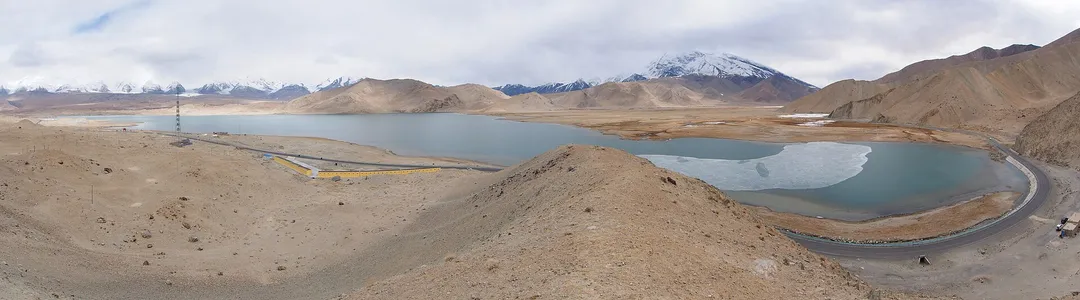
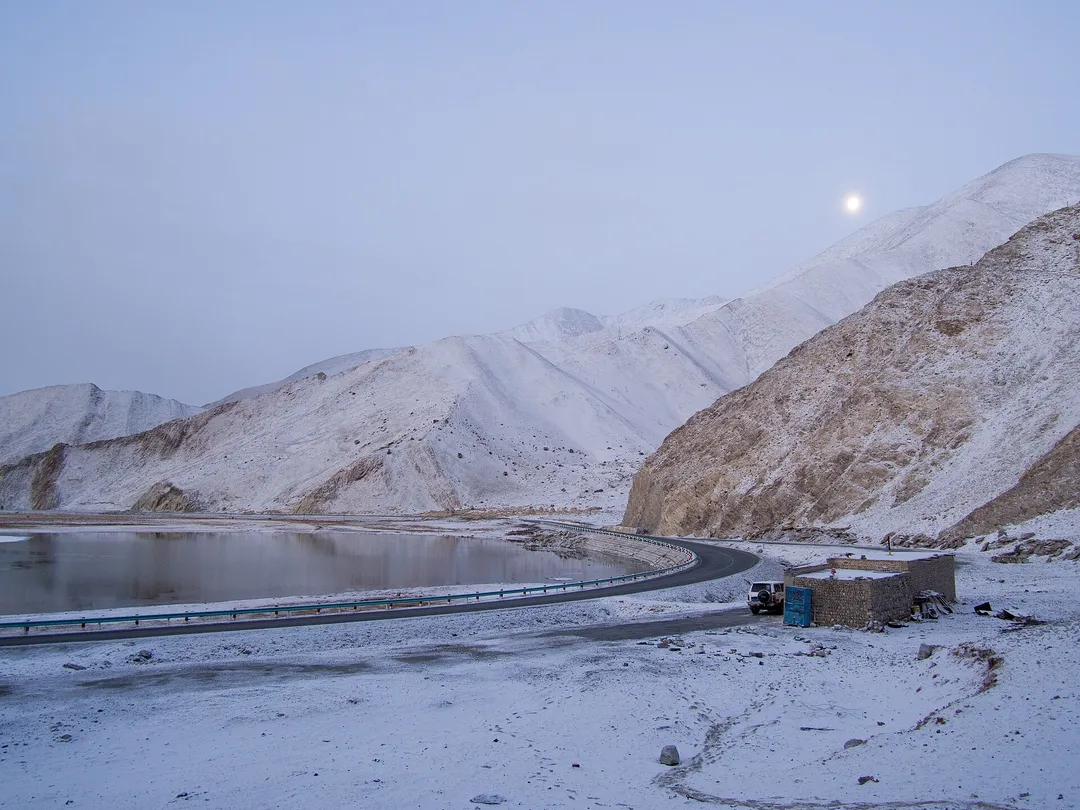
Karakul Lake - Kirgiz for 'black lake' - sits at roughly 3,600 m in the Pamir plateau, in Akto County on the G314, the Chinese stretch of the Karakoram Highway. The lake fills a glacial hollow at the foot of Muztagh Ata, the 7,546 m domed peak the Kyrgyz call the Father of Ice Mountains, whose snowy pyramid doubles perfectly in the water on still mornings. It is a stark, wind-scoured landscape of sedge flats, Kirgiz yurt camps and grazing camels rather than a lush alpine scene, and that austerity is exactly why travelers rank it among Xinjiang's essential sights. Almost everyone reaches it from Kashgar - about 3-4 hours each way by road - either as a long day trip on the Pamir highway or as an overnight stay in a lakeside yurt timed for sunrise.
Kashgar · Visitor Guide2026-11-17
Quick Answer
Is Karakul Lake worth visiting?
A 3,600 m glacier-fed lake on the Karakoram Highway about 190 km from Kashgar, famous for mirror reflections of Muztagh Ata (7,546 m), the 'Father of Ice Mountains'. Entry about CNY 45.
Quick facts
| Ticket | About CNY 45 adult (part of the Muztagh Ata - Karakul Lake scenic area); concessions around half price. |
|---|---|
| Hours | Roughly 10:00-20:00 in season; the lake itself is open landscape, so daylight dictates photography. |
| Recommended duration | 2-3 hours at the lake; a full day including the G314 drive from Kashgar, or overnight for sunrise. |
| Best time to visit | May to October, when the road and yurt camps operate; June-August for grazing season color, September-October for clearest mountain reflections. Calm mornings give the Muztagh Ata mirror shot. |
| How to get there | From Kashgar take the G314 (Karakoram Highway) southwest about 190 km - 3-4 hours by chartered car, private driver or small-group tour; public buses toward Tashkurgan can drop you at the lake gate. A border defense permit (bianfangzheng) for the Pamir area is required - arrange it in Kashgar with your passport. |
| English signage | Partial |
| Wheelchair accessible | No |
| Altitude | About 3,600 m - pace yourself on arrival |
| Backdrop | Muztagh Ata, 7,546 m, 'Father of Ice Mountains' |
| Name | Kirgiz for 'black lake' |
| Road | On the G314 Karakoram Highway, 190 km from Kashgar |
| Permit | Pamir border defense permit required (arrange in Kashgar) |
What to expect
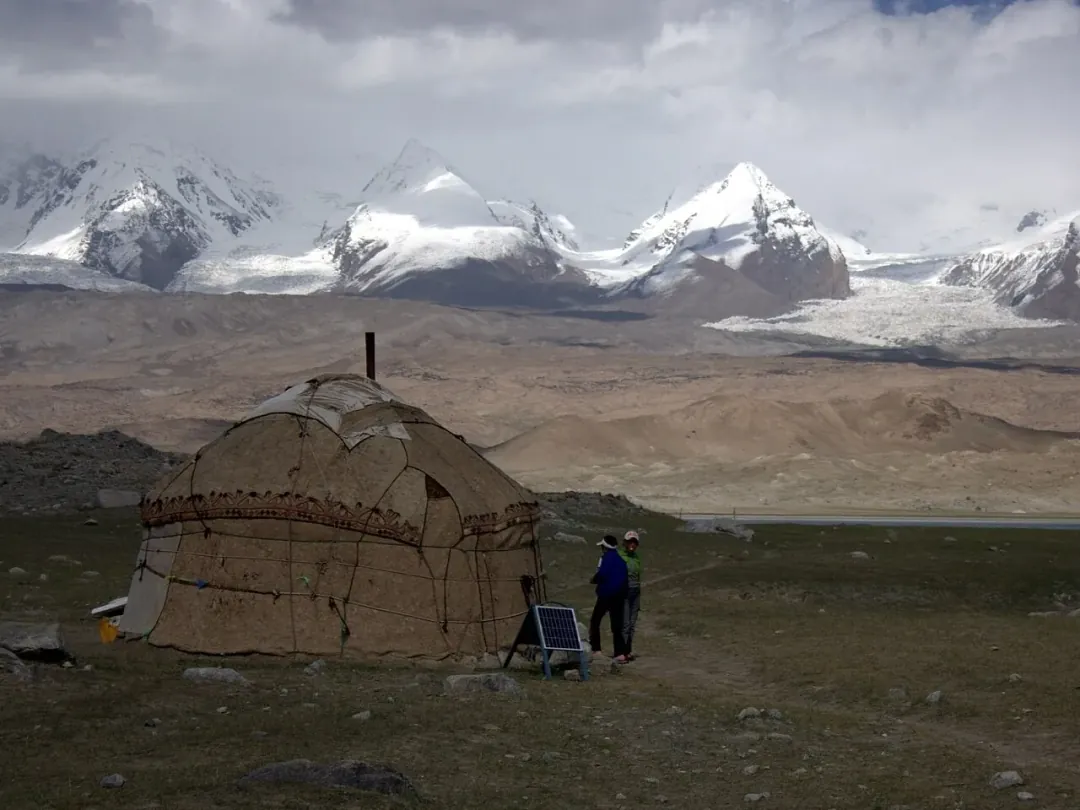
The Karakoram Highway leaves Kashgar's sprawl behind and climbs through red gorges and gravel fans onto the Pamir, and Karakul is where the plateau opens its hand: a ten-square-kilometer lake lying flat under a sky of improbable depth, with Muztagh Ata's glacial dome rising behind it. The Kirgiz name refers to the water's dark tone under storm skies; in still morning light the tone reverses, and the peak's reflection lies on the surface so cleanly that photographers set alarms for dawn. Kirgiz herders camp the shoreline in summer, and their yurts - hired by travelers for overnight stays - give the lake its second signature image: smoke rising from felt tents against 7,000-meter rock.
Everything here is high. The lakeshore sits higher than most European peaks, and visitors straight off Kashgar's 1,300 m plains routinely feel the thin air - headaches, breathlessness, a slow first hour. There is no formal trail system: you walk the sedge flats, watch camels graze, and let the weather perform. Afternoon wind regularly ruffles the mirror, storms build over the peak, and the light shifts from silver to copper in minutes; that volatility is part of the experience and the reason seasoned travelers prefer to overnight rather than day-trip.
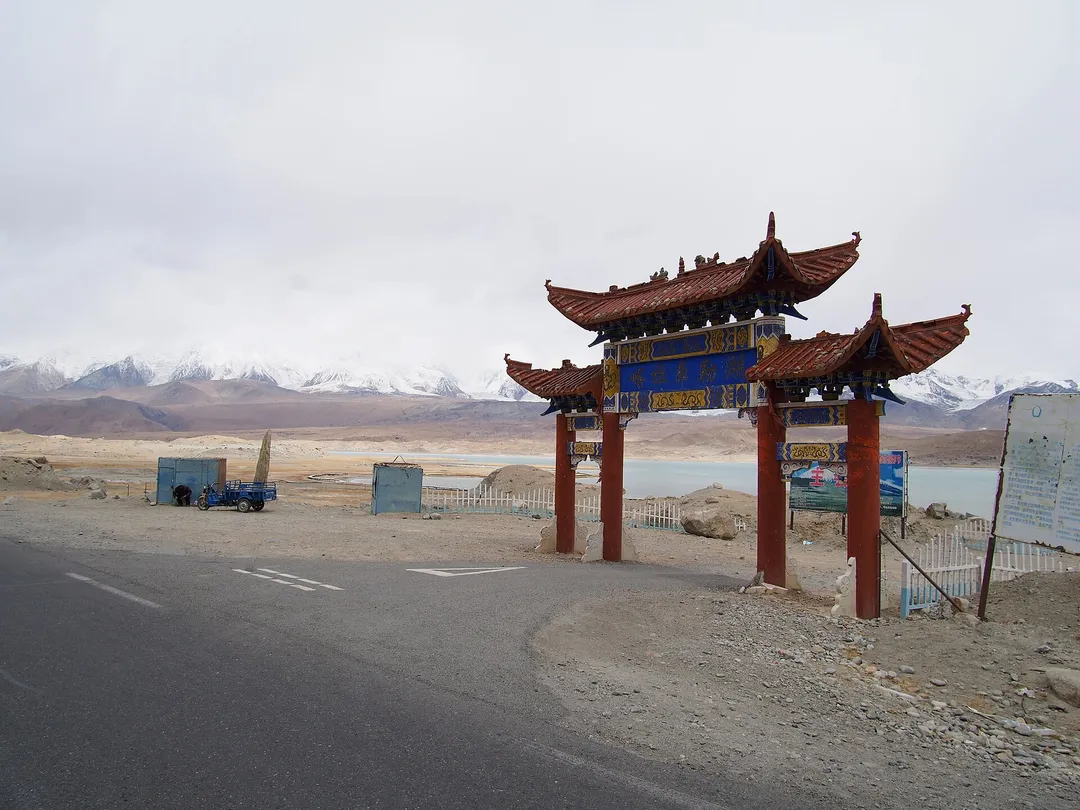
Practically, Karakul anchors the standard Pamir itinerary out of Kashgar, usually paired with White Sand Lake on the way up, the Tashkurgan stone fortress and grasslands deeper on. The border permit is non-negotiable - checkpoints on the G314 check passports - and independent drivers handle the paperwork as part of the trip. Facilities are minimal: a ticket gate, yurt camps with basic food, and no reliable mobile data at the lake itself. Bring warm layers year-round; even August nights drop near freezing at this altitude.
How to get there
From Kashgar, charter a car or join a small-group tour on the G314 southwest about 190 km (3-4 hours); buses toward Tashkurgan can drop you at the lake gate. Carry your passport and the Pamir border defense permit arranged in Kashgar. Overnight visitors book Kirgiz yurts at the lakeshore in advance through drivers or tour operators.
Best photo spots
- Dawn mirror of Muztagh Ata reflected in the still lake from the eastern shore
- Kirgiz yurt camps with smoke against the peak, best in early morning
- The G314 roadside viewpoint where the lake and highway frame each other
Tips
- Arrange the Pamir border permit in Kashgar a day ahead - checkpoints verify passports on the G314
- Overnight in a yurt if you can: sunrise is the mirror shot, and day-trippers miss the calm
- Take it slow for the first hour - the lake sits at 3,600 m and altitude headaches are common
- Bring warm clothes and snacks; facilities are basic and August nights approach freezing
Scams to avoid
- Unlicensed 'permit helpers' at Kashgar hotels charging inflated fees - permits are issued through official channels and drivers routinely include them
- Yurt hosts quoting a price then adding 'camel photo fees' - agree what is included before moving in
Frequently asked questions
Do I need a permit for Karakul Lake?
Yes. The lake is inside the Pamir border zone, so foreign and domestic visitors need a border defense permit (bianfangzheng), arranged in Kashgar with your passport - usually by your driver, agency or the local entry-exit bureau.
Can I visit as a day trip from Kashgar?
Yes - the drive is 3-4 hours each way, giving 2-3 hours at the lake. You miss the calm sunrise mirror, though; many travelers overnight in a lakeside yurt instead.
Will altitude sickness be a problem?
The lake sits around 3,600 m, so mild symptoms - headache, breathlessness - are common in the first hours. Ascend slowly, hydrate, avoid alcohol, and descend if symptoms worsen.
When is the lake at its most photogenic?
Calm mornings from May to October, when Muztagh Ata reflects cleanly in the water. June-August adds grazing yurts and camels; autumn gives the clearest air.
Is there accommodation at the lake?
Yes - simple Kirgiz yurt camps along the shore in season, with basic bedding, food and stoves. Book through your driver or tour; expect rustic conditions and cold nights.
Read next
Other things to do in Kashgar
Apak Khoja Mausoleum — alias page
Alias page — see kashgar-xiangfei-garden for the full guide.
Id Kah Mosque — alias page
Alias page — see kashgar-id-kah-mosque for the full guide.
Karakul Lake — alias page
Alias page — see kashgar-karakul-lake for the full guide.
Kashgar Craft Lanes (Wusitang Boyi Artisan Street)
The ~1 km artisan street beside the Id Kah Mosque where hundreds of family workshops still hammer copper, string dutars and forge iron — Kashgar's living craft tradition.
Gaotai Ancient Dwellings
Six centuries of stacked Uyghur homes on a 40-meter loess cliff above the Tuman River — Kashgar's legendary 'over-street rooms' quarter, reopened in 2023 after years of restoration. 1–2 hours.
Alar Golden Grassland (Tashkurgan)
The alpine wetland at the foot of Tashkurgan's Stone City — boardwalks looping through marsh meadows under 7,000-metre snow peaks; one ticket with Stone City (about ¥40–51), 1–2 hours.
Kashgar Grand Bazaar
The Central Asia trade market on the Tuman River's east bank — 'the East Gate Bazaar', one of the largest in the region. hours roughly 10:30–21:00.
Hotan Jade Bazaar (Zongzhakou)
The world's largest raw-jade market, in Hotan on the Yurungkash river — riverside stonesets where mutton-fat white jade is traded over tea. A 1-hour flight from Kashgar, or about 500 km by rail.
Hotan Cultural Museum
Hotan's flagship museum — free with reservation — holding the jade and Buddhist art of the ancient Khotan kingdom; split sessions 10:00–13:30 and 16:00–19:30, closed Mondays, 1–2 hours.
Hotan Tuancheng Old Quarter
Hotan's renovated Uyghur old quarter — a 4A-rated maze of carved courtyards and poplar-shaded lanes in the city core, free to wander.
Id Kah Mosque
The largest mosque in China's far west and the heart of Kashgar — a yellow-gated prayer hall complex on Id Kah Square since the 1440s. Visitor ticket ~¥20; about 1 hour.
Mor Temple Ruins
Kashgar's most important Buddhist site — two adobe stupas, one round and one square, standing like giant seals on the gobi 30-odd km northeast of the old city.
Kashgar Old City
A maze of mud-brick alleys and Uyghur courtyard houses on the western edge of Kashgar (1,289 m), rebuilt under a 2009-2015 quake-safety program but still lived in.
Kashgar Old Teahouse
The century-old teahouse of Kashgar's old city. No entry fee — pay for the tea, from around ¥10 a pot.
Panlong Ancient Road (Wacha Highway)
The famous 600-plus-hairpin road of the Pamirs — a 30–36 km mountain stretch climbing from ~3,000 m to over 4,200 m on the road to Wacha, its S-bends stacked like a black dragon on the hillsides.
Kashgar Sunday Livestock Bazaar
One of Central Asia's largest live-animal markets, where sheep, cattle, goats. Free entry, liveliest from about 10:00 with trading fading after lunch - go early, bring a dust mask.
Tashkurgan Stone City
Ruins of the ancient Puli/Qipantuo kingdom capital on a hill above Tashkurgan — 2,000+ years of Silk Road fortification at 3,100 metres, with broken stone walls.
White Sand Lake (Baisha Lake)
A 3,300 m glacier-fed lake backed by white sand dunes on the G314 Pamir road - the classic first stop between Kashgar and Tashkurgan, about 200 km out. pair it with Karakul Lake on the same drive.
Xiangfei Garden (Fragrant Concubine Garden)
The green-glazed domed mausoleum of the Khoja family (c. 1640) wrapped in a park of gardens and shows — Kashgar's grandest tomb and the legend of the Fragrant Concubine. Ticket ¥40; 2–3 hours.