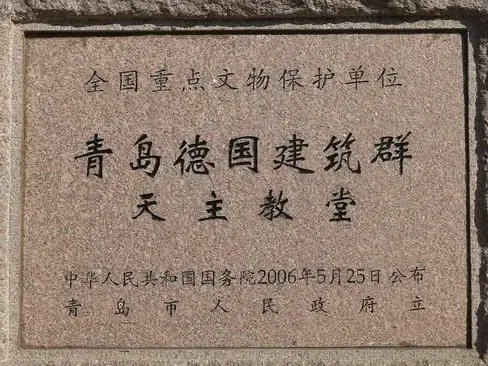
St. Michael's Cathedral圣弥厄尔教堂
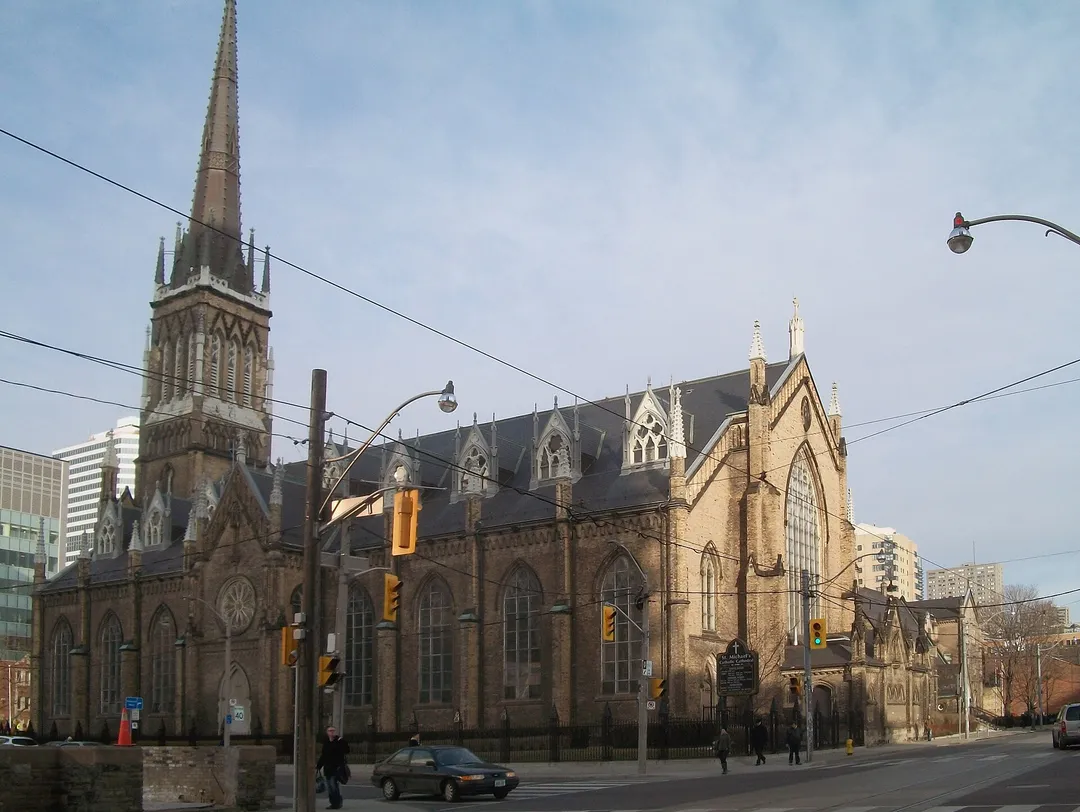
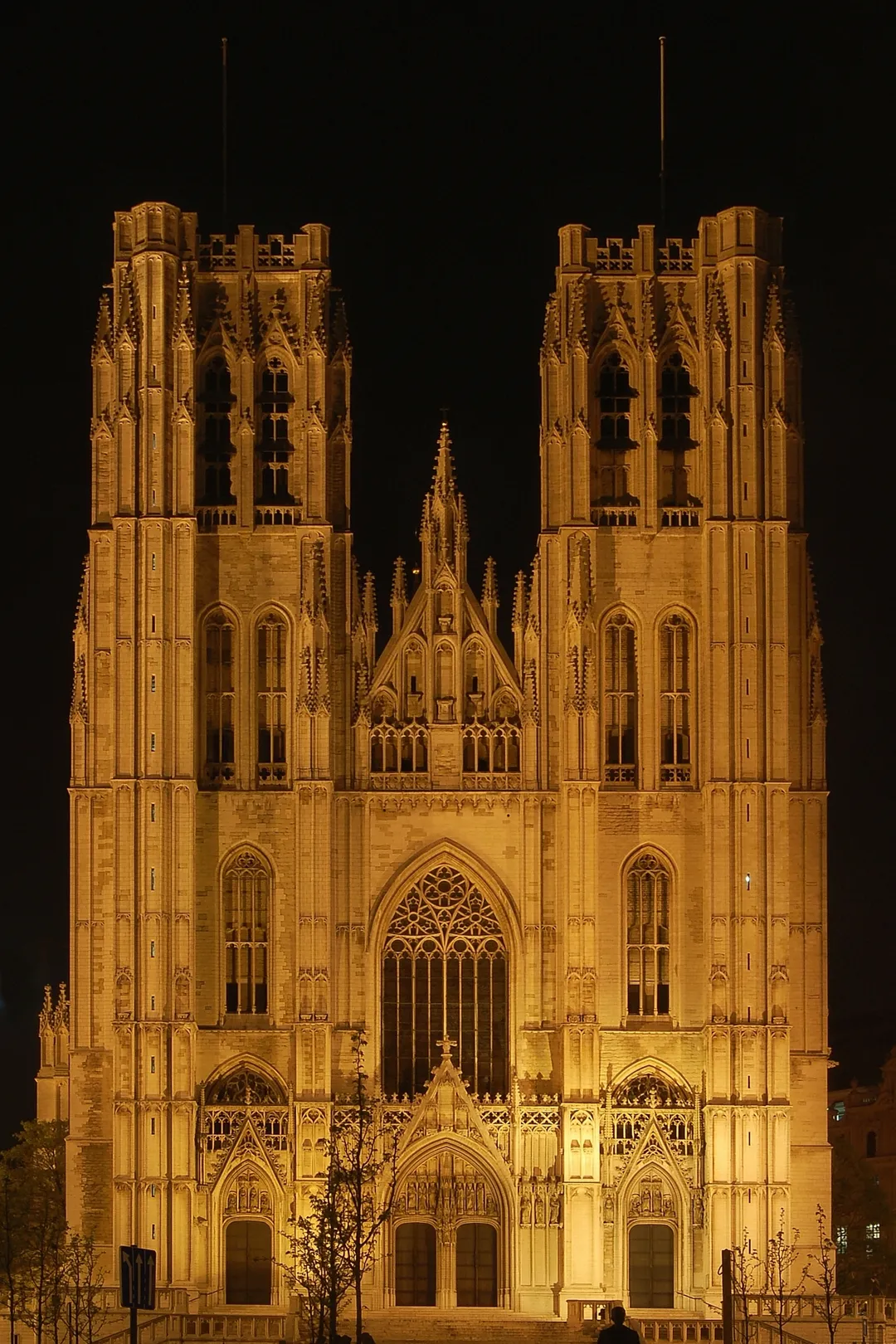
St. Michael's Cathedral is the largest surviving Catholic church in Qingdao and the only one still operating from the city's German colonial architectural legacy. Its twin spires and yellow-stone Gothic facade define the skyline of the old concession quarter. Most visitors come for the courtyard and surrounding wedding-photography scene rather than the interior.
Qingdao · Visitor Guide2026-10-18
Quick Answer
Is St. Michael's Cathedral worth visiting?
Qingdao's 92-year-old German-built Catholic cathedral on Zhongshan Road — 60m twin spires, 10 RMB courtyard admission, worth 30-45 minutes between Tsingtao Brewery and the Old Town.
Quick facts
| Ticket | Ticket: 10 RMB for courtyard access; interior church visits may require a separate ticket on non-Mass days (price (0 CNY) varies, verify on site). Free entry for those attending Mass. (as of 2026) |
|---|---|
| Hours | Daily approximately 08:30-17:00; interior may be closed during services. Sunday Mass schedule is typically 07:00 in Chinese. Verify on site as hours have shifted in past years. |
| Recommended duration | 30-45 minutes for the exterior and courtyard; 60-90 minutes if you walk the surrounding old-town streets and detour to the cathedral's small museum of religious artifacts. |
| Best time to visit | Weekday mornings between 09:30-11:00 — Saturday and Sunday are packed with wedding-photo parties (sometimes 20+ couples on a single Saturday), and the square becomes unphotographable. Late October to early November brings clear skies and low haze. |
| How to get there | Metro Line 3 to People's Square (人民广场) Station, Exit B, then a 10-minute walk east on Zhongshan Road — or one stop on Line 1 to Zhongshan Road Station if Line 1 is operational in your direction. Bus routes 6, 8, 221, and 228 stop within 3 minutes of the cathedral. A DiDi from downtown Qingdao costs roughly 15-25 RMB; from the brewery district about 20-30 RMB. Taxis from Qingdao Station run 12-18 RMB. |
| English signage | Partial |
| Wheelchair accessible | Partial |
| Built | 1932-1934 |
| Architect | Alfred Fräbel (German Divine Word Missionary Society) |
| Bell tower height | ~60 meters |
| Style | Gothic Revival with Romanesque elements |
| Capacity | ~1,000 seated congregants |
| UNESCO status | Not a World Heritage Site; the building is part of Qingdao's German concession historic district |
What to expect
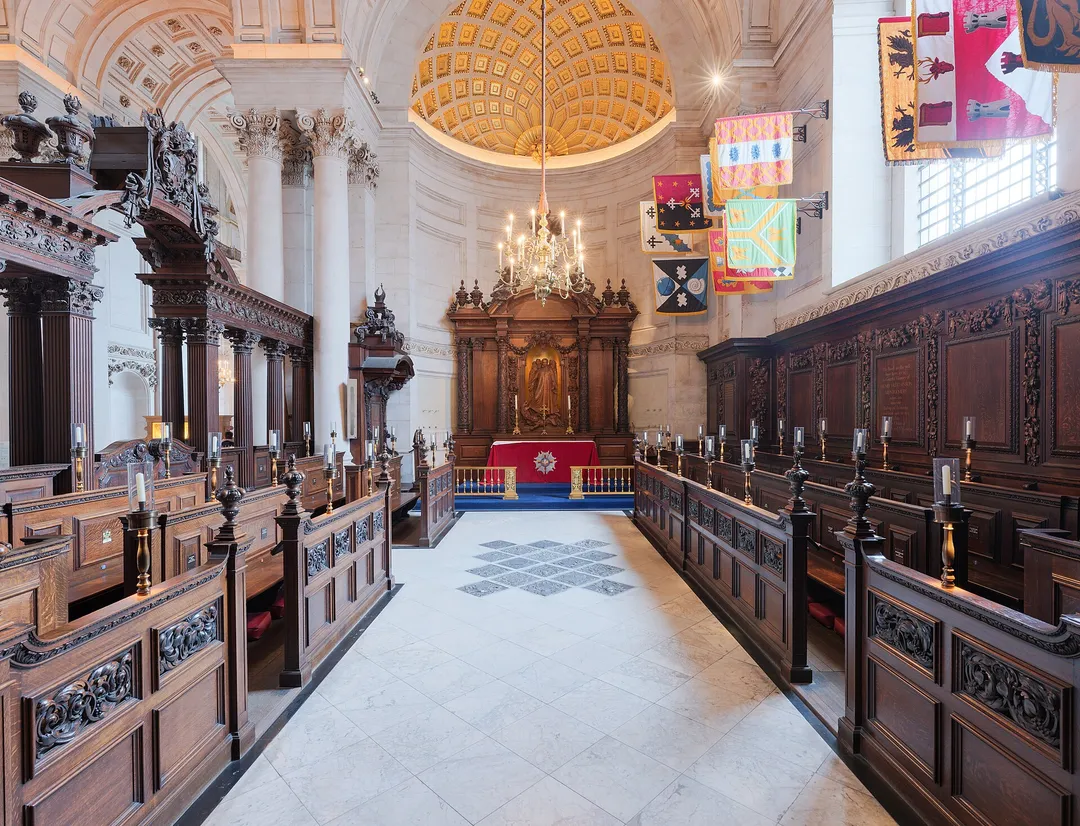
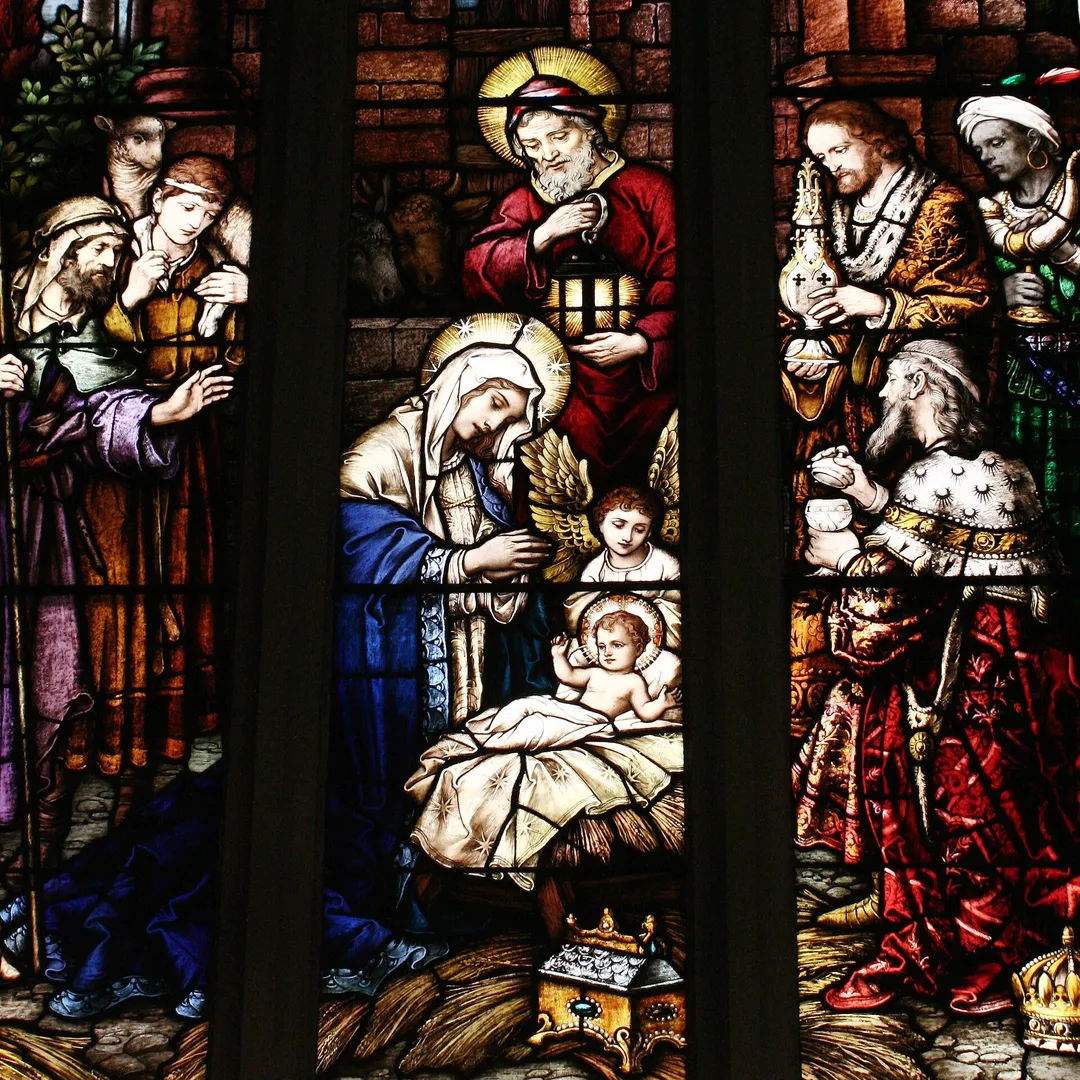
Walk up Zhongshan Road and you'll see the twin spires long before you see the front door. The courtyard in front of the cathedral is a stone plaza where, on any given weekend, you can find 10-20 couples in wedding gowns posing for photographers. The exterior stonework is yellow granite from nearby Laoshan, and the facade has a strictly symmetrical Romanesque doorway flanked by two pointed-arch windows. Inside, the nave is single-aisle with wooden pews, stained glass from the 1930s, and Stations of the Cross along the side walls — quieter than the cathedral's Instagram fame suggests, especially on weekday mornings.
Construction started in 1932 under the German Divine Word Missionary Society, with Alfred Fräbel, a young German priest-architect, designing a hybrid Gothic-Romanesque building atop the highest point of the former German concession. The German colonial period itself ended in 1914, so the cathedral is technically a post-colonial German project — funded by war-reparation money and German Catholic donors in the years after Japan occupied Qingdao. It was consecrated on November 2, 1934, dedicated to Saint Michael the Archangel. The cathedral survived the Cultural Revolution largely intact (unlike many Chinese churches), and was returned to active Catholic use in 1981.
Practical reality: the courtyard is the main attraction, and most visitors spend 20 minutes snapping photos and leaving. The interior is small and can be toured in 10 minutes. The cathedral is walkable from Tsingtao Brewery (15 minutes), Zhanqiao Pier (20 minutes), and the Signal Hill park entrance — making it the natural anchor for an old-town walking loop. Don't expect a European cathedral scale; this is a provincial Chinese Catholic parish that happens to have a remarkable facade and a surprising amount of square footage for so small a congregation.
How to get there
From Qingdao Station (train): Take Metro Line 3 one stop to People's Square, Exit B, then walk 10 minutes east on Zhongshan Road. A DiDi is cheaper and faster — about 12-18 RMB and 8 minutes depending on traffic. From Tsingtao Beer Festival site / brewery district: DiDi 20-30 RMB, 15 minutes. From Liuting Airport: too far for the metro — DiDi or taxi runs 90-110 RMB and 40-60 minutes (the new Jiaodong Airport is even further). Bus routes 6, 8, 221, 228, and 307 all stop at "教堂" (jiàotáng, cathedral) or within a 5-minute walk. By car, there is essentially no parking — do not drive; the surrounding streets are pedestrianized on weekends.
Best photo spots
- Zhongshan Road approach from the west: the facade framed by plane trees, best at golden hour.
- Courtyard from inside the gate: looking back at the spires against the Qingdao skyline — note that this shot requires a 10 RMB courtyard ticket, which buys you roughly 30 minutes of photo time.
- From the southwest corner of the square: low angle catches both spires without a wedding party blocking the entrance.
- Side elevation on Zhejiang Road: less crowded, gives the bell-tower volume a proper sense of scale.
Tips
- Weekday mornings before 11:00 are the only reliably crowd-free windows; Saturday is essentially a wedding-photography festival.
- The 10 RMB courtyard ticket is for the gated plaza in front, not the interior — pay at the small ticket window on the south side of the gate.
- Mass is in Chinese only; tourists are welcome to attend but should sit in the back pews and not photograph during services.
- The cathedral's small religious-art museum (inside the auxiliary building, west side) is inconsistently open — ask at the gate.
- Combine with Tsingtao Brewery and Signal Hill for a coherent 3-hour old-town loop; don't try to pair this with the Laoshan day trip, it's the wrong direction.
Scams to avoid
- Wedding photographers occasionally pressure tourists out of "their" spots — be polite but firm, the square is public.
- Souvenir sellers near the south gate occasionally inflate prices on rosaries and postcards — the official church bookstore (inside the gate, left side) has fixed prices.
- Generic tout warning: any "free tour guide" approaching you outside the cathedral is likely steering you to a commission-based shop; ignore them.
Frequently asked questions
How much is St. Michael's Cathedral in Qingdao?
10 RMB for the courtyard as of 2026; the interior may require an additional small fee on non-Mass days (typically 5-15 RMB). Verify at the gate as these prices have shifted across recent years.
Is St. Michael's Cathedral a UNESCO World Heritage Site?
No — it is not inscribed individually. Qingdao itself joined the UNESCO Creative Cities of Design network in 2019, but the cathedral is a provincial-level cultural heritage site, not a World Heritage Site.
How tall are the spires of St. Michael's Cathedral?
The twin spires are about 18 meters each, and the bell tower reaches approximately 60 meters at its peak.
When was St. Michael's Cathedral built?
Construction began in 1932 and the cathedral was consecrated on November 2, 1934.
Can I attend Mass at St. Michael's Cathedral?
Yes — Mass is held in Chinese, with a typical Sunday morning service at 07:00. Tourists are welcome to attend but should dress modestly, sit toward the back, and not photograph during services.
How do I get to St. Michael's Cathedral from Qingdao Station?
Metro Line 3 to People's Square Station, Exit B, then a 10-minute walk east — total about 20 minutes. A DiDi is faster: 8 minutes and 12-18 RMB.
Is St. Michael's Cathedral wheelchair accessible?
Partially — the courtyard is flat and paved, but the church interior has a step at the entrance and no ramp. The main doors are on the south side.
How long should I spend at St. Michael's Cathedral?
30-45 minutes for the exterior and courtyard; allow 60-90 minutes if you walk the surrounding old-town streets and visit the religious-art auxiliary building.
Can I see St. Michael's Cathedral from Signal Hill?
Yes — Signal Hill (信号山) park has a rotating observation deck where the cathedral is one of the clearest landmarks visible in the old-town panorama. The hill is a 10-minute walk from the cathedral.
What is the best time of day to photograph St. Michael's Cathedral?
Weekday mornings between 09:30 and 11:00, when wedding-photography parties are absent. Late afternoon golden hour works but the light comes from behind the facade — shoot from the side street on Zhejiang Road instead.
Read next
Other things to do in Qingdao
Badaguan (Eight Great Passes)
A tree-lined colonial estate district built in the 1920s–30s by European and American expatriates, with over 200 buildings in a dozen architectural styles from Spanish Colonial to English Country.
Laoshan Mountain
Foremost of China's seaside mountains at 1,132 m, the birthplace of Taoism's Quanzhen school, with millennium-old trees shading the Taiqing Palace.
May Fourth Square
A 10-hectare seaside civic plaza in central Qingdao, anchored by the 30-meter red "Wind of May" sculpture commemorating the 1919 May Fourth Movement — walkable in 30 to 45 minutes and free to en.
Olympic Sailing Center
Sailing venue of the 2008 Beijing Olympics and a symbol of Qingdao the sailing capital; sunsets from Lovers' Pier (Qingren Ba) are superb.
Jinshatan Beach
Qingdao's Golden Beach on Huangdao, 3500 m long and 300 m wide with fine golden sand; free entry with showers 10-20 yuan, 30 minutes from downtown via the Jiaozhou Bay tunnel.
Qingdao Museum
The best single place to get a grip on Qingdao's past, with a collection of more than 30,000 artifacts. Admission is free.
Tsingtao Brewery Museum
China's most-visited beer museum sits inside the 1903 Germania Brewery, where 1.2 million people a year walk through two floors of brewing history and leave with two free mugs of fresh draft — p.
Zhanqiao Pier
Qingdao's 440-meter waterfront pier juts into Jiaozhou Bay from a 1891 German-era causeway; free to walk, allow 30–60 minutes including the Huilan Pavilion turnaround.
Zhanqiao Pier
Zhuqian Pier, Shandong's 440-metre 1892 wooden landmark — free, illuminated 19:00-21:00, with gulls in winter.