
Summary
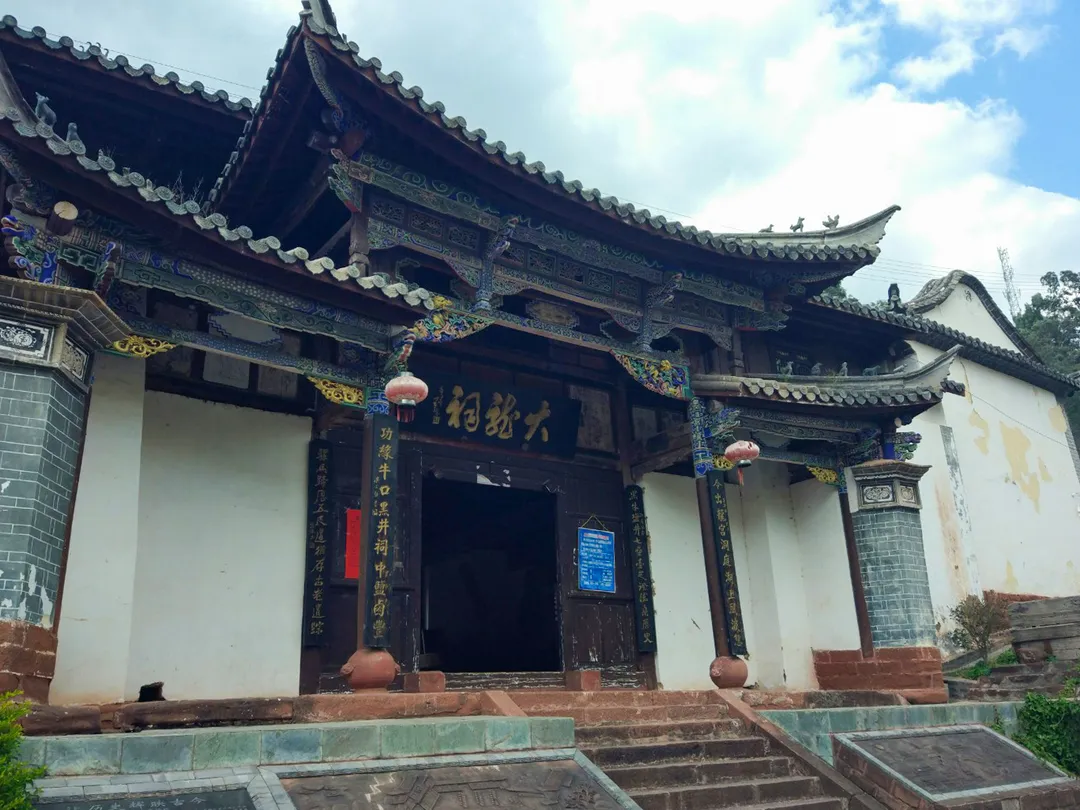
Chuxiong (楚雄) is the capital of Yunnan's Yi Autonomous Prefecture — one of China's two prefecture-level divisions under Yi autonomy, about an hour west of Kunming by train. Two headline sights earn the stop: the World Dinosaur Valley at Lufeng, where Early Jurassic skeletons some 180 million years old still lie in the rock of a hall opened in 2008, and the Yuanmou Man site, where two fossil teeth found on 1 May 1965 at Shangnabang defined the oldest hominid known in China, at roughly 1.7 million years. A first visit works in 2-3 days; aim for March-June or September-November.
This guide is written for travelers deciding whether Chuxiong earns a stop between Kunming and Dali, and how to chain the prefecture capital, Lufeng and Yuanmou without a car-dependent failure. Every figure below follows the same verified basis as our 3-day Chuxiong itinerary; the page was last verified on 2026-10-12.
Why Chuxiong
Chuxiong is a prefecture of about 2.4 million people (2,416,747 at the 2020 census), established in 1958 as one of China's two Yi autonomous prefectures — the other is Liangshan, in Sichuan. The Yi are the largest of its minority nationalities, and the prefecture's identity shows it: the museum in town sets out Yi history beside bronze drums, the Solar Calendar Culture Park marks the traditional Yi ten-month year of 36-day months, and the Torch Festival, on the 24th day of the sixth lunar month, is the date the whole prefecture plans around.
Geography made Chuxiong a corridor long before trains did: it sits on the low mountain route between Kunming and Dali that caravans, and later the highway and the Kunming–Chuxiong–Dali railway (opened on 1 July 2018, about 160 km of rail from Kunming), all followed west. That position is also the trip's logic — most visitors arrive by train from Kunming in about an hour and continue to Dali in another, using Chuxiong as the halfway camp.
The honest trade-offs: the prefecture capital itself is a workmanlike modern city whose best hour is the evening, when the rebuilt lanes of Yiren Ancient Town fill with food stalls and dance; sights are spread across a prefecture the size of a small province, and buses between counties are slow, so Lufeng, Yuanmou and Heijing each take a dedicated day; and English signage thins out fast once you leave the city. Two real days reward the trip; treating it as a rest-stop photo halt rewards nobody.
Top Attractions
Yiren Ancient Town: the evening anchor
The one sight inside the city is a purpose-built old town from the mid-2000s — reconstructed Yi-style streets around a central square, which is exactly the point: after dusk the lanes fill with barbecue smoke, costumed song-and-dance performances and crowd games, and entry is free. It is tourist-flavoured by design, and it is still the easiest evening in central Yunnan: arrive around 19:00, eat down the food-street rows, and follow the drumming to the square. During the Torch Festival period the whole compound turns into one firelit celebration, with neighborhoods lighting torches and dancing late into the night.
The Prefecture Museum and the ten-month calendar
The Chuxiong Prefecture Museum is the cultural primer: galleries of Yi costume and silverwork, bronze drums, and the story of the ten-month solar calendar — a year of ten 36-day months, with the remainder kept as festival days. The Solar Calendar Culture Park, a short taxi ride south, builds the same idea into stone observation courts you can walk in half an hour. Pair the two on one morning, then keep the afternoon for the mountain or the train.
World Dinosaur Valley at Lufeng
An hour east of the capital, at Lufeng, the World Dinosaur Valley opened in 2008 around the find that made the county famous: a quarry where Early Jurassic skeletons, some 180 million years old, still lie embedded in the rock, displayed in an in-situ exhibition hall you walk through above the bones. The site matters to paleontology because Lufeng's dinosaurs date from the very start of the Jurassic, when early sauropodomorphs were spreading across Pangaea. Beyond the hall, walkways, a museum wing and the usual theme-park furniture fill out a day; the bones and the museum wing are the reason to come, and they take most of it.
Yuanmou Man and the earth forest
Two hours north, Yuanmou County holds the prefecture's other claim to fame: at Shangnabang, two fossil teeth found on 1 May 1965 defined Yuanmou Man (Homo erectus yuanmouensis), dated to about 1.7 million years ago — the earliest hominid evidence in China. The site itself is a marked slope with a monument rather than a built attraction; the county museum in Yuanmou town supplies the context the slope lacks. Stay for the earth forest (tulin): at Wumao and Langbapu, an hour's drive apart, water has carved the clay into castles, columns and mushroom caps that photograph best in late light. Yuanmou West station also puts you on the classic Chengdu–Kunming railway, opened in 1970 — a reminder that this far-north corner of the prefecture has been a rail crossroads longer than the capital has had fast trains.
Heijing, the salt town
Deep in a Lufeng valley, Heijing is often called a thousand-year salt town: for centuries its brine wells bankrolled a town far larger than its setting explains, and Ming and Qing merchant houses still line the Longchuan River below cliffside temples. The old salt wells and the Wu family courtyard are open to visitors, and the slow lanes take an unhurried day. It is the prefecture's most atmospheric half-forgotten sight — reached by road or by the local rail line, and never crowded.
Zixi Mountain
Twenty kilometres northwest of the city, Zixi Mountain's pine forest sits around 2,500 metres, with old camellia trees and hillside temple courts, and the air up there runs ten degrees cooler than town. It is a half-day loop and the right last morning before an afternoon train.
Where to Stay
Base in the prefecture capital for all but the Yuanmou day. Mid-range chains near the railway station run roughly 200-350 CNY a night and put both the museum and the Yiren Ancient Town evening within a short taxi ride; the lanes inside the ancient town itself rent atmospheric guest rooms at similar prices, at the cost of evening noise. Yuanmou county town has simple business hotels from about 150 CNY — sleep there once, ahead of the earth-forest morning. Heijing has courtyard inns inside the old houses for travellers who want the valley after dark. Book two or three weeks ahead for the Torch Festival period and the first weeks of May and October; walk in otherwise.
Gastronomy
The table is highland Yunnan with a Yi accent. Mutton is the cold-weather standard — a shared pot of boiled mutton off the bone with dipping chili — and from June to September the prefecture's pine forests send wild mushrooms to market, Nanhua County's being famous across Yunnan: mushroom hotpot is the seasonal ritual, priced by the basket. The Yunnan staples all appear — rice-noodle bowls, erkuai rice cakes stir-fried or grilled, steam-pot chicken — and the Yiren Ancient Town food street compresses the list into one evening's walk. A noodle breakfast runs 8-15 CNY; a mushroom-hotpot dinner in season runs 80-150 CNY per person; barbecue skewers in the ancient town are a few yuan each. Eat where the queue is local and long.
Practical Information
Getting there
Rail does the core work. The Kunming–Chuxiong–Dali railway, opened on 1 July 2018, runs bullet trains from Kunming to Chuxiong in about an hour (roughly 160 km of line), continuing to Dali — Kunming to Dali takes under two hours through the prefecture. For Yuanmou, the classic Chengdu–Kunming line (opened 1970) stops at Yuanmou West; buses and hired cars cover the two-hour road north.
| Route | Best mode | Typical time | Notes |
|---|---|---|---|
| Kunming → Chuxiong | Bullet train | about 1 h | Kunming–Chuxiong–Dali railway, since July 2018 |
| Chuxiong → Dali | Bullet train | about 1-1.5 h | Natural onward leg; under 2 h Kunming–Dali through |
| Chuxiong → Lufeng dinosaur valley | Car or bus | about 1 h | Between Kunming and Chuxiong; a full-day visit |
| Chuxiong → Yuanmou | Car or bus, rail via Yuanmou West | about 2 h | Chengdu–Kunming line since 1970 |
| Chuxiong → Heijing | Road or local rail | half-day trip | Deep-valley salt town in Lufeng |
| Chuxiong city → Zixi Mountain | Taxi or car | about 40 min | Roughly 20 km; half-day loop |
Getting around
In the capital, taxis and the Didi app cover everything for 10-20 CNY a ride. Between counties there is no fast public spine: local buses run but crawl, so the dinosaur-valley day and the Yuanmou day are best done with a hired driver (about 500-700 CNY a day) or in a small tour group. Distances that look short on the map eat an hour each.
When to go
Ranked: first, March-June, before the summer rains peak, with clear air on the mountains; second, September-November, when the rains have passed and the mushroom season is ending; third, summer, cool at 1,800 metres elevation but wet. The Torch Festival falls on the 24th day of the sixth lunar month — usually July — and it is the prefecture at full volume: the year's biggest cultural event, with rooms and trains around the date needing weeks-ahead booking. Avoid the first week of May and the first week of October entirely.
Money and connectivity
Alipay and WeChat Pay both bind international cards and work at every ticket window and stall; carry about 200 CNY in cash for county-town vendors and the smaller sites, where signal can be patchy. Tourist eSIMs work fine across the prefecture; hotel Wi-Fi is routine.
Three-Day Core Itinerary
| Day | Base | Morning | Afternoon | Evening |
|---|---|---|---|---|
| 1 | Chuxiong city | Prefecture Museum, then the Solar Calendar Culture Park | Zixi Mountain loop, or an easy city afternoon | Yiren Ancient Town: food street, then the square |
| 2 | Chuxiong or Lufeng | Drive east; in-situ dinosaur hall at World Dinosaur Valley | Walkways and museum wing; return late | Mutton pot in the capital |
| 3 | Yuanmou | Shangnabang site and the county museum | Earth forest at Wumao in the late light | Return by car or the Chengdu–Kunming line |
For the Lufeng day, the sequence that wastes least:
- Leave the capital by 08:00 so the in-situ hall is reached before tour groups land.
- Walk the bone hall first — the quarry floor is the reason for the trip — then the museum wing.
- Take the walkways and photo stops after lunch, when the hall crowd has thinned.
- Be back on the road by 16:30 for a relaxed evening in the capital.
Two variations are worth making. With a fourth and fifth day, add the second earth-forest site at Langbapu and the Zixi Mountain morning — the 5-day Chuxiong itinerary lays it out. With a week, Heijing's salt town and Wuding's Lion Mountain — where temple courts hold the tradition that a Ming emperor found refuge in the early 1400s — complete the loop in the 7-day Chuxiong itinerary. Pairing onward is simple: the Kunming travel guide covers the arrival city, the Dali travel guide the onward leg, and the Yunnan guide stitches the province together.
Pacing notes: put the museum and calendar park on your arrival morning, never a Monday (museums close); give the dinosaur valley a full day rather than a stop between trains; and if rain is forecast, swap the earth-forest afternoon with the dinosaur day — the bones are indoors.
Beyond the Highlights
The prefecture's smaller sights reward the extra effort. Wuding's Lion Mountain carries pine ridges, the Zhengxu temple courts tied to the Ming-emperor tradition, and a spring display of thousands of peony plants. Nanhua's wild-mushroom market, in season, is a spectacle of baskets even if you cook nothing. And the Yi villages around the prefecture keep embroidery and silverwork traditions that the museum explains — buying a piece from a village workshop does more good than a souvenir street.
Decision Support
Map
Orient on two axes. East-west runs the corridor: Kunming, Lufeng, Chuxiong city, onward to Dali — rail and highway share it. North runs the branch to Yuanmou and its earth forest, two hours away. Everything else — Heijing, Zixi Mountain, Wuding — hangs off these two lines. Amap (Gaode) has the best local routing; offline-download it, because signal fades in the valleys.
Cost breakdown
Daily budget, mid-range, 2026, per person in CNY: accommodation 300-600; food 100-200; local transport 30-60; attractions 50-150 — a total of 500-1000 per day. The hired-driver days reset the math: add 500-700 split across the car, and subtract the next morning's taxi. Backpacker days on 150-250 are realistic in the capital; luxury days are scarce here — the ceiling is a good chain room plus a private driver, around 1200.
When to go
If you want one answer: April-May, before the rains, with October's second half as the crowd-free alternative. The Torch Festival window (around the sixth lunar month's 24th day, usually July) is the opposite choice — crowds and heat, but the prefecture's biggest cultural event. Avoid the first weeks of May and October.
Practical
Five calls carry the trip. One: base in the capital, near the station. Two: give Lufeng a full day and start it early. Three: sleep once in Yuanmou rather than day-tripping the earth forest. Four: carry 200 CNY cash for the counties. Five: if rain wins, swap the earth forest for the dinosaur hall — underground and indoors are weather-proof.
Glossary of Useful Terms
| Chinese | Pinyin | Meaning |
|---|---|---|
| 楚雄 | Chǔxióng | Chuxiong, the Yi Autonomous Prefecture's capital |
| 彝人古镇 | Yírén gǔzhèn | Yiren Ancient Town, the evening food-and-dance quarter |
| 世界恐龙谷 | Shìjiè kǒnglóng gǔ | World Dinosaur Valley, at Lufeng |
| 元谋人 | Yuánmóu rén | Yuanmou Man |
| 火把节 | huǒbǎ jié | Torch Festival |
| 多少钱 | duōshǎo qián | how much |
| 谢谢 | xièxie | thank you |
Emergency Contacts
- Police: 110
- Ambulance: 120
- Fire: 119
- Tourist hotline: 12301
Sources and Verification
Era dates and site facts — the 2008 opening and the Early Jurassic skeletons, roughly 180 million years old, at World Dinosaur Valley, and the two teeth found on 1 May 1965 at Shangnabang defining Yuanmou Man at about 1.7 million years — follow the same cross-checked basis as our Chuxiong itineraries; prefecture population follows the 2020 census; rail times follow the Kunming–Chuxiong–Dali railway in service since July 2018. Prices move with the seasons — reconfirm within a fortnight of travel.
Chuxiong rewards travelers who give it two real days: a museum morning, dinosaur bones at midday, an earth forest in the late light, and a torch-lit square in between. Last verified 2026-10-12. For the full day-by-day versions of everything above, start at the trip hub and the 3-day Chuxiong itinerary.